
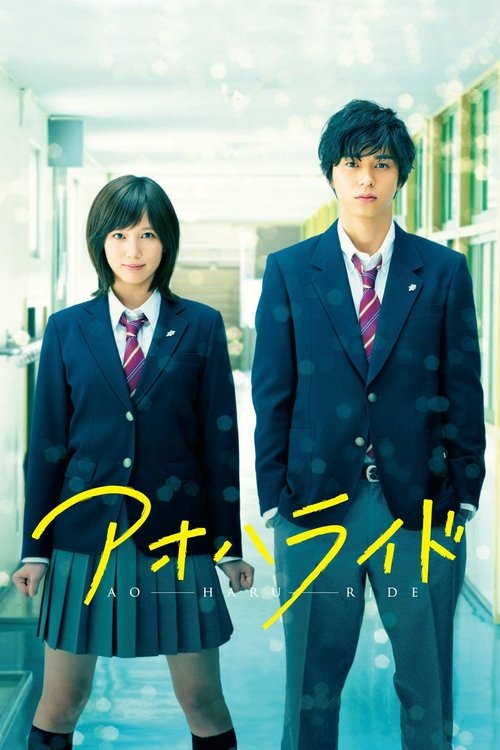















Popular
How do the supporting characters influence the main storyline?
What is the significance of the blue spring ride in the story?
How does Futaba's character evolve throughout the film?
What role does Kou play in Futaba's life and how does their relationship develop?
What challenges do Futaba and Kou face in their relationship?
Should I watch it?
Ask Your Own Question

What is the plot?
Sorry, we aren't able to watch and write up a full detailed plot yet. Check back in a few days.







What is the ending?
In the ending of "Blue Spring Ride," after a series of emotional ups and downs, Futaba and Kou finally confront their feelings for each other. They share a heartfelt moment that solidifies their relationship, leading to a hopeful future together.
As the film approaches its conclusion, the atmosphere is charged with anticipation and unresolved emotions. Futaba, having navigated the complexities of her feelings for Kou, finds herself at a pivotal moment. The scene opens with her standing in a school hallway, her heart racing as she reflects on the journey that has brought her to this point. The memories of their past interactions flood her mind--moments of joy, confusion, and heartache.
In the next scene, Kou is seen sitting alone on a bench outside, his expression contemplative. He is grappling with his own emotions, the weight of his past and the uncertainty of the future pressing down on him. As Futaba approaches, the tension is palpable. She hesitates, her heart pounding, but ultimately gathers the courage to speak. Their conversation is filled with vulnerability; they both express their fears and hopes, revealing the depth of their feelings for one another.
As they talk, the background fades away, emphasizing the intimacy of their connection. Futaba's eyes shine with determination as she tells Kou that she wants to be with him, despite the challenges they have faced. Kou, moved by her sincerity, finally opens up about his own feelings, admitting that he has always cared for her. This moment is a turning point, as they both acknowledge the bond that has grown between them.
The scene shifts to a beautiful outdoor setting, where the cherry blossoms are in full bloom. This picturesque backdrop symbolizes new beginnings and the blossoming of their relationship. Futaba and Kou stand together, surrounded by the delicate petals falling around them, creating a serene and romantic atmosphere. They share a gentle kiss, sealing their commitment to each other.
In the final moments of the film, we see Futaba and Kou walking hand in hand, their expressions filled with hope and determination. They are ready to face whatever challenges lie ahead, united in their love. The camera pans out, capturing the beauty of the moment and the promise of a bright future together.
As the credits roll, the fates of the main characters are clear: Futaba and Kou have chosen to embrace their feelings and move forward together, while their friends and classmates continue to navigate their own paths, reflecting the themes of growth, love, and the complexities of youth. The film concludes on a note of optimism, leaving the audience with a sense of closure and the belief that love can triumph over adversity.
Is there a post-credit scene?
In the movie "Blue Spring Ride," there is no post-credit scene. The film concludes with a focus on the emotional resolution of the main characters, particularly the relationship between Futaba Yoshioka and Kou Mabuchi. The ending emphasizes their growth and the rekindling of their feelings for each other, leaving the audience with a sense of closure regarding their journey. The absence of a post-credit scene allows the film to maintain its focus on the themes of love, friendship, and personal growth without any additional narrative distractions.
How do the supporting characters influence the main storyline?
The supporting characters, such as Ayumi and Shuko, play crucial roles in shaping Futaba's experiences and decisions. Ayumi serves as a friend who encourages Futaba to be more confident, while Shuko's presence introduces tension and rivalry, particularly in her interactions with Kou. These characters provide depth to the narrative, highlighting themes of friendship, loyalty, and the complexities of teenage relationships.
What is the significance of the blue spring ride in the story?
The blue spring ride symbolizes the fleeting nature of youth and the bittersweet memories associated with first love. It serves as a backdrop for pivotal moments between the main characters, particularly between Futaba and Kou, highlighting their emotional connection and the changes they undergo as they navigate their feelings.
How does Futaba's character evolve throughout the film?
Futaba starts as a shy and insecure high school girl who struggles with her self-image and the desire to fit in. As the story progresses, she learns to embrace her true self, confront her feelings for Kou, and stand up for her beliefs, showcasing her growth from a passive character to someone who actively pursues her happiness.
What role does Kou play in Futaba's life and how does their relationship develop?
Kou is a pivotal figure in Futaba's life, representing both her past and her potential future. Their relationship begins with a shared history from middle school, filled with unresolved feelings. As they reconnect, Kou's initially aloof demeanor gradually softens, revealing his vulnerabilities and deepening their bond, which is marked by moments of both joy and heartache.
What challenges do Futaba and Kou face in their relationship?
Futaba and Kou face several challenges, including misunderstandings stemming from their past, the presence of other romantic interests, and Kou's struggles with his own emotional baggage. These obstacles test their feelings for each other and force them to confront their insecurities, ultimately shaping the trajectory of their relationship.
Is this family friendly?
"Blue Spring Ride," produced in 2014, is a romantic drama that centers around the themes of young love, personal growth, and the complexities of relationships. While the film is primarily aimed at a teenage audience, there are some elements that may be considered objectionable or upsetting for children or sensitive viewers.
-
Romantic Tension: The film explores romantic relationships, which may include scenes of emotional conflict, jealousy, and misunderstandings that could be intense for younger viewers.
-
Bullying and Social Pressure: There are instances of bullying and social dynamics that can be distressing, as characters navigate their high school environment and face peer pressure.
-
Emotional Struggles: Characters experience feelings of loneliness, heartbreak, and anxiety, which may resonate deeply with sensitive viewers and could evoke strong emotional responses.
-
Family Issues: There are references to family dynamics and personal struggles that may touch on themes of abandonment or disappointment, which could be upsetting for some.
-
Mature Themes: The film touches on themes of love and loss, which, while not graphic, may be complex and require a level of maturity to fully understand.
Overall, while "Blue Spring Ride" is not overtly inappropriate, its emotional depth and the challenges faced by the characters may not be suitable for very young children or those who are particularly sensitive to such themes.









