











Popular
What motivates the main character, Sam, to confront the supernatural forces in Reaper?
How does the character of the Reaper manifest in the film, and what is its significance to the plot?
What role does the character of Lisa play in Sam's journey throughout the film?
How does the film depict the relationship between Sam and his father, and how does it affect the story?
What are the key supernatural elements that Sam encounters, and how do they impact his character development?
Should I watch it?
Ask Your Own Question

What is the plot?
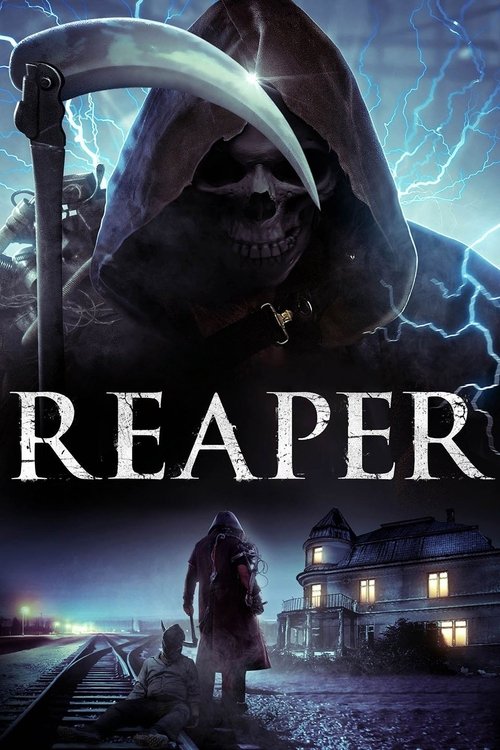
The film opens in punishment and defiance, with the legend of the Reaper taking shape as a death-row execution goes wrong: a former ordained preacher and cult leader is strapped into the electric chair, only for a freak power failure to interrupt the execution and let him survive when he should have died. The trailer frames this as "day seven of the nationwide manhunt", immediately casting him as something more than a fugitive and more dangerous than an ordinary killer. From the beginning, the film establishes that this man has returned from the threshold of death as a supernatural force, and that he now roams the country hunting people he believes are sinners.
At almost the same time, the story cuts to Natalie, a young hitchhiker moving across the United States with the raw, urgent goal of reaching her ailing mother in California. Before she even enters the main nightmare, Natalie leaves a message that sounds reassuring on the surface, telling her mother she is "in safe hands," even though the audience can already feel how fragile that promise is. The contrast is deliberate: the Reaper is a figure of religious judgment, while Natalie is a desperate daughter trying to gather money and keep moving, and the film makes clear that both people are traveling toward a collision they do not yet understand.
Natalie's first lift comes from Bill, a traveling salesman who initially presents himself as a harmless, even companionable drifter. He is older, sloppier, and lonely in the way road-horror predators often are, and when he and Natalie end up at the Last Chance Hotel, the supposed sanctuary feels immediately wrong. Bill and Natalie check in as a fake newlywed couple, pretending to be married so they can share a room without questions. Inside that room, the tension turns intimate and ugly: they drink, flirt, and get physically close, but the friendliness is only a mask. Bill quickly crosses the line, revealing the lecherous streak under his easy smile.
Natalie responds with colder intelligence than Bill expects. She spikes his Jack Daniels with a sleeping pill, waits until he is helpless, ties him up, and steals his wallet and car keys. The scene quietly reveals one of the film's central truths: Natalie is not merely a victim passing through a brutal landscape, but a cunning survivor who knows how to exploit men before they exploit her. She leaves Bill bound and embarrassed, and the motel room becomes a temporary prison for him. That decision seals his fate. With Bill incapacitated and humiliated, the supernatural world makes its first unmistakable strike: the Reaper enters and kills Bill with a scythe. The killing is quick and ceremonial, as if the Reaper is not murdering so much as carrying out a divine sentence.
From there Natalie keeps moving, and the road resumes its false promise of freedom. She stops at a diner, where another man enters the film's web of sin and greed: Brad, a drug runner or drug mule making a pickup for his criminal boss, Rob. Natalie watches Brad conduct a drug deal and immediately sees opportunity. She steals the drugs and cash from him, turning the criminal economy back on itself and again proving that she survives by reading people faster than they can read her. The diner scene also broadens the film's moral landscape. It is not just a story about a supernatural monster and a vulnerable hitchhiker; it is also a story about thieves, dealers, predators, and small-time crooks all drifting toward the same isolated place.
Natalie's car then breaks down, tightening the trap and pushing her back into the orbit of the people she has already crossed. She gets another ride, this time from Jack, a truck driver carrying a machete and a dangerous calm. At first he appears to be just another rough traveler, but the film steadily reveals that Jack is connected to Brad's drug business and is more involved in the criminal side of the story than he first admits. He brings Natalie back to the Last Chance Hotel, the ominously named roadside stop that is more than a motel: it is the film's central crossroads, a decaying pocket of American nowhere where drifters, dealers, and lost souls all end up in the same place.
Inside that motel, the atmosphere shifts from road-horror to something closer to a siege. The operator, Caine, hangs around the property with a neurotic, religiously charged presence that reinforces the film's symbolism of judgment, sin, and damnation. The hotel itself feels stained by the Reaper's influence long before he appears again in force. As Natalie, Brad, Jack, and eventually Rob and his associates converge around the motel, the film begins connecting all the human threads. Brad is no ordinary drifter; he is tied to Rob's criminal enterprise. Jack is not simply a trucker; he knows the drug trade and has his own reasons for being there. Natalie, meanwhile, has been quietly carrying stolen money and stolen drugs while trying to buy time and reach her mother.
The Reaper's backstory deepens through dialogue and visual clues. He is not merely a serial killer but a former cult leader and ordained preacher who once led a murderous death cult. His execution on death row was supposed to end that chapter, but the electrical fault during the chair execution transforms him into a supernatural revenant, a creature who can control electricity and unleash fear with shocks and flickering light. The film aligns his violence with a warped version of religious justice. He believes sinners deserve punishment, and his killings are framed as a kind of perverse sermon delivered in steel, electricity, and blood. That makes the Last Chance Hotel feel less like a refuge than a judgment chamber.
Once the Reaper starts actively stalking the motel, the human characters are forced into an uneasy alliance. The criminal trio and the hitchhiker no longer have the luxury of their separate agendas. Everyone now faces the same supernatural threat, and the film's tension comes from watching people who would normally prey on each other realize that they may have to cooperate simply to stay alive. The Reaper attacks with authority and theatrical menace, using his scythe and his electrical powers to dominate the space. The motel's fluorescent lights, power failures, and crackling appliances become part of the horror language, because every flicker suggests his presence. The film keeps returning to the same idea: he is an executioner who escaped death, and now the world itself seems to bend around him.
The violence escalates as the Reaper cuts down the "savoury characters" gathered at the motel, and the human survivors scramble between fear and resistance. The plot data provided does not enumerate every single death by name beyond Bill, but the film's structure makes clear that the Reaper's rampage consumes multiple criminals and minor figures as the night intensifies. Each confrontation adds another layer of dread. Natalie and Bill's earlier confrontation becomes retroactively tragic, because her tricking him only delays his end long enough for the Reaper to claim him. Natalie and Brad's encounter at the diner turns from petty theft into part of a larger collision between her desperation and the criminal underworld. Natalie and Jack's uneasy ride reveals that even apparent allies are compromised. And the motel's gathering becomes a pressure cooker where Rob's men, Brad, Jack, Natalie, Caine, and the Reaper all circle one another while the electricity seems to behave like a willful extension of the killer's rage.
Natalie's survival instincts remain the emotional center of the story. She is still trying to get home to her mother, still trying to turn stolen cash into a chance for treatment and recovery, but every attempt to move forward only pushes her deeper into the Reaper's orbit. The film makes her determination feel both heroic and morally messy. She lies, steals, seduces, and manipulates, yet those choices are grounded in desperation rather than malice. In contrast, the Reaper's judgment is absolute and self-righteous, which gives the film its central moral conflict: his violence is framed as righteous while Natalie's sins are transactional and human.
At some point in the mounting chaos, Natalie is captured by the Reaper and taken to the church building he uses to transport or hold his victims. That location sharpens the film's religious imagery to its most disturbing point. The Reaper is no longer just a figure haunting a motel; he is now shown in a space that mirrors his warped theology, a place where he can preach punishment as if it were salvation. He torments Natalie and plans to send her to hell, making the confrontation intensely personal. His rhetoric turns the violence into doctrine. Natalie, bruised and cornered, is forced to confront the fact that this is not a random killer but a man who sincerely believes he is carrying out divine justice.
The climax turns on a shocking return and an unlikely act of rescue. Jack, who has survived a gunshot wound, comes back into the story at the critical moment. In the final struggle, he drowns the Reaper in a bucket of water, a strange, almost grotesquely simple reversal of the supernatural menace that has dominated the night. The image is striking because it strips the Reaper of his theatrical power. All the electricity, all the judgment, all the cult-leader mystique collapses under something as plain as water. Jack saves Natalie's life, and in doing so he becomes the film's final human counterweight to the Reaper's apocalyptic certainty.
But the victory is not clean or triumphant. Jack is dying, and in his last moments he tells Natalie to "start your life all over" before he dies. The line lands as both a blessing and a command. Natalie, who has spent the entire film improvising survival, is finally pushed toward a future that is not merely about outrunning danger. She calls her mother to let her know she is on her way to see her, and for the first time the call sounds like a genuine return rather than another lie. The emotional payoff is quiet but powerful: the daughter who began by promising she was safe now speaks with the exhausted honesty of someone who has barely survived hell and is still moving toward home.
In the final stretch, Natalie takes off in Jack's truck, leaving the dead, the damaged, and the ruined motel behind. The road opens again, but the film refuses to give the audience complete relief. As she drives, she picks up a female hitchhiker, repeating the film's opening structure and closing the circle with a new traveler on the roadside. The newcomer asks Natalie about her story, and Natalie smiles with a look that is both hardened and knowing, asking, "How much time have I got?" The moment carries a chilling ambiguity. It suggests she has already been changed by everything that happened, and that the road has not ended so much as passed its curse forward to the next vulnerable stranger. Even after Jack's sacrifice, the film does not allow the Reaper to feel fully finished.
The final sting is that the Reaper does not stay down. He survives, rises to his feet, and continues on his way to reap again. The closing image preserves the film's supernatural threat and refuses a neat resolution. Natalie lives, escapes, and gains a chance to begin again, but the evil she escaped is not destroyed. The last scene leaves the Reaper active, undefeated in spirit if not in body, and the road remains open for more judgment, more violence, and more victims.




What is the ending?
In the ending of "Reaper," the main character, a young woman named Sarah, confronts the dark forces that have been haunting her and her friends. After a series of harrowing events, she ultimately faces the entity responsible for the chaos. In a climactic showdown, Sarah makes a sacrifice to save her friends, leading to a resolution that leaves her fate uncertain but hints at a possible redemption.
As the film approaches its conclusion, the tension escalates. Sarah, having witnessed the horrors inflicted upon her friends, is determined to confront the malevolent force that has been stalking them. The atmosphere is thick with dread as she gathers her remaining friends, who are weary and traumatized from their experiences. They find themselves in an abandoned building, a place that has become a focal point for the supernatural occurrences.
Scene by scene, the narrative unfolds:
The first scene of the climax begins with Sarah and her friends huddled together in a dimly lit room, the air heavy with fear. They discuss their next steps, each character revealing their emotional state--some are terrified, while others are resolute. Sarah, feeling the weight of responsibility, takes charge, her determination shining through despite her visible fear. She knows they must confront the entity that has been tormenting them.
As they venture deeper into the building, the atmosphere grows increasingly oppressive. Shadows flicker on the walls, and strange noises echo around them, heightening their anxiety. Sarah's heart races, but she pushes forward, driven by the need to protect her friends. The group reaches a large, dark room where the entity manifests, a swirling mass of darkness that seems to pulse with malevolence.
In this pivotal moment, Sarah steps forward, her voice steady despite the terror surrounding her. She confronts the entity, demanding to know why it has targeted them. The entity responds with a chilling whisper, revealing its desire to feed on their fear and despair. Sarah's friends, paralyzed by fear, watch as she stands her ground, embodying courage in the face of overwhelming darkness.
The confrontation escalates as the entity lashes out, causing chaos in the room. Sarah's friends begin to panic, and one by one, they are drawn into the entity's grasp, their screams echoing in the darkness. Sarah realizes that the only way to save them is to confront her own fears. In a moment of clarity, she understands that she must make a sacrifice.
With tears in her eyes, Sarah makes a desperate choice. She offers herself to the entity, hoping that her willingness to face the darkness will break its hold on her friends. As she steps closer to the entity, a blinding light envelops her, and she feels a surge of power coursing through her. The entity shrieks in rage as it begins to lose its grip on the others.
In the final moments, Sarah's friends are released from the entity's hold, collapsing to the ground as the darkness dissipates. They look up to see Sarah standing at the center of the light, her expression a mix of pain and peace. The entity, now weakened, retreats into the shadows, leaving behind a sense of calm.
As the light fades, Sarah's friends rush to her side, but she begins to fade away, her sacrifice having taken its toll. They reach out to her, desperation in their voices, but she smiles softly, reassuring them that they will be okay. In her final moments, she whispers words of encouragement, urging them to live their lives fully and not be haunted by fear.
The film concludes with Sarah's friends emerging from the building, forever changed by the experience. They carry the weight of her sacrifice with them, a reminder of the strength found in love and courage. The screen fades to black, leaving the audience with a lingering sense of hope amidst the darkness, as the fate of Sarah remains a poignant mystery.
Is there a post-credit scene?
In the movie "Reaper" (2014), there is no post-credit scene. The film concludes its narrative without any additional scenes or content after the credits roll. The story wraps up with the main characters facing the consequences of their actions, leaving the audience with a sense of closure regarding the events that transpired throughout the film.
What motivates the main character, Sam, to confront the supernatural forces in Reaper?
Sam is driven by a deep sense of loss and guilt over the death of his father, which he believes is connected to the supernatural events surrounding him. His internal struggle is compounded by his desire to protect his loved ones from the same fate.
How does the character of the Reaper manifest in the film, and what is its significance to the plot?
The Reaper is depicted as a dark, ominous figure that embodies death and serves as a harbinger of doom. Its presence escalates the tension in the film, representing the inescapable fate that looms over the characters, particularly Sam, as he grapples with his past.
What role does the character of Lisa play in Sam's journey throughout the film?
Lisa serves as both a love interest and a source of emotional support for Sam. Her unwavering belief in him and her own struggles with the supernatural events help to ground Sam, pushing him to confront his fears and ultimately seek redemption.
How does the film depict the relationship between Sam and his father, and how does it affect the story?
The relationship between Sam and his father is fraught with tension and unresolved issues. Flashbacks reveal a complicated dynamic, where Sam feels abandoned and misunderstood. This relationship drives Sam's quest for closure and understanding, influencing his decisions as he faces the Reaper.
What are the key supernatural elements that Sam encounters, and how do they impact his character development?
Sam encounters various supernatural phenomena, including visions of the Reaper and manifestations of his father's spirit. These experiences force him to confront his fears and regrets, leading to significant character growth as he learns to accept his past and fight for his future.
Is this family friendly?
"Reaper," produced in 2014, is not considered family-friendly due to its themes and content. The film contains several potentially objectionable or upsetting elements, including:
-
Violence: There are scenes depicting physical confrontations and aggressive behavior, which may be intense for younger viewers.
-
Death and Supernatural Themes: The film revolves around themes of death and the supernatural, which could be unsettling for children or sensitive individuals.
-
Dark Atmosphere: The overall tone of the movie is dark and foreboding, which may evoke feelings of fear or anxiety.
-
Emotional Distress: Characters experience significant emotional turmoil, including grief and despair, which may be difficult for younger audiences to process.
-
Mature Language: The dialogue includes strong language that may not be appropriate for children.
These elements contribute to a viewing experience that may not be suitable for all audiences, particularly younger viewers or those sensitive to such themes.









