








Popular
What role does the mountain itself play in the story?
What motivates the main character, Jack, to return to the mountain despite the dangers?
How does the ghost of Tom manifest throughout the film?
What challenges does Jack face while climbing the mountain?
How does the relationship between Jack and his estranged daughter, Emily, evolve during the film?
Should I watch it?
Ask Your Own Question

What is the plot?
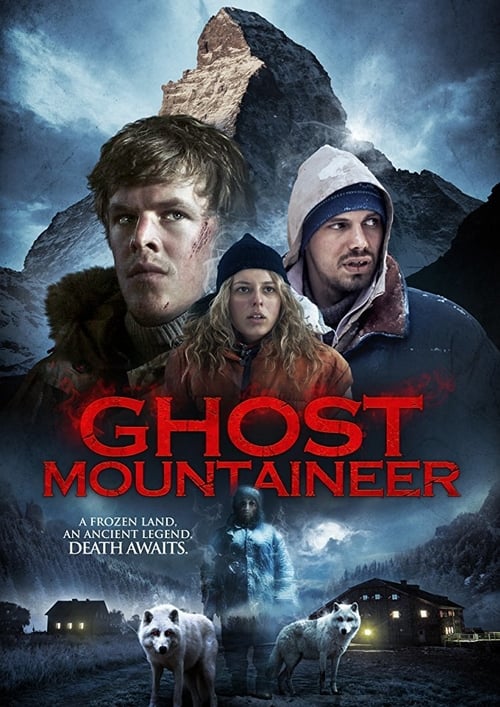
In 1989, in the late Soviet era, six Estonian university students board a trans-Siberian train and travel east across the USSR toward Buryatia, near the Mongolian border, for what is supposed to be a winter hiking expedition and a mineral-hunting trip in search of nephrite, the jade-like green stone that has drawn them into the frozen mountains. The journey already feels like a test of character before they ever reach the snow: the group is young, restless, and divided, with some members treating the expedition as serious fieldwork and others treating it as an adventure, a holiday, and an excuse to drink, joke, and flirt. At the center of that tension is Olle, played by Reimo Sagor, the unpopular team leader, a geology-minded organizer who wants discipline, efficiency, and purpose from the others, but whose rigid seriousness only deepens the friction inside the group. Opposite him is Eero, played by Priit Pius, the more liberal-minded, adventurous, and socially magnetic member of the party, who becomes a constant rival to Olle and embodies the looser, more playful spirit that Olle cannot tolerate.
As the train pushes them toward the Soviet east, the film establishes a mood of youthful bravado sliding slowly into unease. The students are isolated from home and from the familiar logic of ordinary life, and the landscape outside grows larger, whiter, and more hostile as they enter Siberia. The mountains themselves become an antagonistic presence: the expedition takes place in a poorly charted or almost unmapped range, where winter conditions, steep descents, and whiteout visibility make every decision feel consequential. The group has set out for fun, adventure, and rare mineral prospecting, but the environment quickly strips away any illusion that they are in control. They are surrounded by cold, silence, and snow so overwhelming that the terrain begins to feel less like a destination than a trap.
One of the early emotional fault lines in the story runs through the tension between Olle and Eero, and that tension is sharpened by a rivalry over a girl. The summaries do not name every romantic detail with certainty, but they make clear that Olle's frustration with the group deepens after interpersonal conflict, especially after Eero and Olle clash over attention and affection. Olle grows more isolated and more dissatisfied with his companions, and his irritation makes him even less popular among the others. Eero, by contrast, remains animated and playful, and one of the film's key early scenes has him telling the story of a "ghost mountaineer," a local-style legend about a lost climber whose spirit haunts the region. The story works on several levels at once: it is a campfire joke, a warning, a piece of folklore, and a piece of foreshadowing. In the moment, the group can treat it like drunken entertainment. Later, it starts to feel like prophecy.
As the hiking trip continues, the students move through harsh winter terrain, trying to find the route and the mineral they came for while friction among them keeps growing. The expedition is physically exhausting and psychologically corrosive. They argue about the right way forward, about speed, about leadership, and about whether Olle's methodical approach is useful or just self-important. Snow and cold magnify every disagreement. The landscape offers no relief, no shelter, and no easy way to retreat. What begins as a student adventure steadily turns into survival under pressure, and the group's internal cracks widen with every difficult step.
The decisive break comes on the mountain, on the final day of the hike, when the team is descending through dangerous slopes and Olle goes ahead on his own to find a safer path or route off the mountain. In one account, he leaves on skis; in another, he is simply isolated during the descent. Either way, the result is the same: a sudden avalanche or lethal landslide sweeps him away, and he disappears from the group's sight. Eero is crucial in this moment because he is the last person to see Olle alive. Depending on the telling, Eero tries to follow him and is himself buried in the snow before digging out, only to emerge to find Olle gone. The effect is immediate and terrifying. The mountain has taken their leader in an instant, and the others are left staring into a white void where a person has just vanished.
The students dig frantically through the avalanche snow, but they cannot recover Olle's body. Their desperation is not just emotional but practical: they are stranded, in freezing conditions, with no clear way to continue, and the loss of their leader threatens to dissolve the group completely. The absence becomes its own kind of menace. They do not know whether Olle is dead, injured, buried too deeply, or somehow still alive. But as the hours pass and the search fails, they are forced to accept that they cannot remain on the mountain forever. With no body recovered and no rescue in sight, they leave the slope and head toward the nearest Buryat village or town to report what has happened and seek help.
What they find there only deepens the nightmare. The village is remote, sparse, and oddly empty, with a tense Soviet bureaucratic atmosphere that feels both mundane and sinister. Instead of assistance, they meet suspicion. The local Soviet chief of police or post commander, played by Vadim Andreev, receives them not as distressed hikers but as potential culprits, and he immediately seizes their passports and keeps them confined in a room or jail-like holding space. This is one of the film's sharpest shifts in tone: the story moves from environmental survival horror into a nightmare of administrative imprisonment. The students cannot leave, cannot prove their innocence, and cannot effectively communicate their version of events. Their documents are taken, their movement is controlled, and the state's cold machinery becomes as threatening as the mountain itself.
The confinement also exposes them to the local population, whose hostility grows as the situation becomes more emotionally charged and culturally fraught. The villagers do not simply view the students as unlucky outsiders. They suspect them of violating something sacred, and this accusation becomes central to the film's second half. The major revelation is that the students have taken a sacred mountain stone, a detail that reframes the entire conflict from a mysterious disappearance into a story involving cultural trespass, spiritual offense, and possibly local retribution. The exact symbolic meaning of the stone is tied to Buryat belief and shamanistic tradition, and the film uses it to sharpen the clash between Soviet rationalism and indigenous spiritual life. What looked like a student expedition gone wrong now carries the weight of sacrilege. The locals' anger is not arbitrary; it is rooted in the belief that the outsiders have crossed a forbidden boundary.
At the same time, the film keeps feeding the audience uncertainty about causality. The missing stone, the ghost story, the faceless body, the hostility of the villagers, and the oppressive bureaucracy all overlap until no single explanation feels sufficient. The story repeatedly suggests that the ghost mountaineer legend may be connected to what is happening, but it never settles cleanly on a supernatural answer. Instead, it keeps the horror suspended between the possible and the merely believed. Is Olle somehow behind the escalating chaos? Is the legend just a local way of explaining trauma and fear? Or is the real horror the collision of human arrogance, state suspicion, and mountain danger?
That uncertainty intensifies when Olle's body is finally recovered and brought back after the group has already been detained. This is the film's most striking physical revelation. The body is real, and yet it is wrong. It appears to be missing its face. The image turns the presumed accident into something grotesque and uncanny, as if the mountain has not merely killed Olle but stripped away his identity. The faceless corpse becomes a source of dread that reverberates through the rest of the film. It is impossible not to wonder whether the body's condition is due to the avalanche, to animals, to mutilation, to the mountain, or to some other human act hidden beneath the surface of the story. The return of the body does not solve the mystery; it deepens it.
As the villagers react with growing anger and fear, the students remain trapped in the custody of a hostile local authority that seems more interested in containment than truth. The Soviet chief of police/post commander uses the passports and the locked room to control them, while the local population treats them with increasing suspicion and resentment. The tension is not just external. Inside the group, panic, guilt, and distrust begin to erode the last traces of solidarity. Every character is forced to reassess what happened on the mountain and what role each person may have played in it. The dead leader is no longer merely absent; he is becoming a presence, a possibility, a rumor, and maybe a judgment.
Eero, who has already been defined by his opposition to Olle, becomes especially important in this trapped phase of the story because he is the last person to see Olle alive. That detail makes him vulnerable both to official suspicion and to the group's unspoken anxieties. He is the one who guided the descending hikers into the village to seek help, and he is also the one who had the closest ideological and emotional contrast with Olle. His earlier ghost story now feels less like harmless mischief and more like a dangerous invocation, as though he has been preparing the group, consciously or not, to interpret events through folklore rather than facts. The film never confirms that Eero is responsible for anything beyond bad timing and youthful recklessness, but his position at the center of the narrative makes him a conduit for suspicion.
Anne, played by Liis Lass, becomes another pressure point in the village sequence, because the available summaries note that at least one local man displays predatory or perverse behavior toward one of the two women in the group, and Anne is specifically identified as the focus of this unwanted attention. This adds a layer of gendered threat to the already suffocating atmosphere. The hostility in the village is not abstract; it takes on bodily, social, and sexual dimensions. The students are not only detained and accused but also vulnerable as young outsiders in a place where they do not understand the rules and where nobody is inclined to protect them. The scene contributes to the film's escalating sense that every boundary has collapsed at once: political, cultural, sexual, and psychological.
The plot's momentum in its final stretch comes from the collision of all these pressures. The mountain has taken Olle, the village has taken the students' passports, the police have taken control of the room, the locals believe the sacred stone has been stolen, and the ghost story has begun to seem less like a joke and more like an explanatory framework that everyone can grasp even if no one can prove it. The film's final movement is not described in every scene-by-scene detail in the available summaries, but the end state is clear: the students remain trapped under suspicion, the returned body of Olle intensifies rather than resolves the mystery, and the legend of the ghost mountaineer hangs over the whole affair like a curse.
What makes the ending so unsettling is that it refuses to assign a single neat cause. The summaries support only one confirmed death, Olle's, who dies after the avalanche or landslide on the mountain. No other named character death is clearly established in the available material, and the film appears to preserve that uncertainty rather than escalate into a body count. Instead, the horror comes from ambiguity itself: the faceless corpse, the stolen passports, the sacred stone accusation, the village jail, the ghost legend, and the sense that Olle may somehow be orchestrating events even after his disappearance. Some summaries explicitly describe the strange chain of events as seeming to be orchestrated by the missing Olle. Whether that is meant literally, supernaturally, or as a result of the other characters' fear is left deliberately unresolved.
By the time the film reaches its last scenes, the students have not escaped cleanly into safety. They are still inside the web of suspicion created by the mountain, the village, and the state, and the recovered body has not provided peace so much as a new layer of dread. The final atmosphere is one of cold, exhausted disbelief: a group that began as excited students chasing mineral wealth and adventure has been reduced to frightened witnesses trapped in a foreign place, trying to survive the consequences of a disappearance they cannot fully explain. The ghost mountaineer story lingers over everything, but the film's power comes from how it keeps refusing to say whether the ghost is a real presence, a cultural warning, a psychological projection, or simply the shape fear takes when people are stranded in snow, bureaucracy, and grief.
More Movies Like This
Browse All Movies →
What is the ending?
In the ending of "Ghost Mountaineer," the protagonist, a seasoned climber named Jack, confronts the ghost of his deceased friend, Tom, on a treacherous mountain. Jack ultimately finds closure and forgiveness, allowing him to move on from the guilt that has haunted him since Tom's death. The film concludes with Jack descending the mountain, a sense of peace washing over him as he leaves the past behind.
As the final act unfolds, the scene opens with Jack standing at the edge of a cliff, the wind howling around him. The sun is setting, casting an orange glow over the snow-capped peaks. Jack's face is etched with determination, but his eyes betray a deep-seated sorrow. He has come to this mountain not just to conquer its heights but to confront the specter of his past--Tom, his best friend who perished during a climbing expedition years ago.
Suddenly, the air grows colder, and the atmosphere shifts. Jack feels a presence behind him. Turning slowly, he sees Tom's ghostly figure, translucent and shimmering in the fading light. Tom's expression is a mix of sadness and understanding. Jack's heart races as he grapples with the emotions flooding back--guilt, regret, and a longing for forgiveness.
"Why did you leave me?" Jack's voice trembles, echoing against the rocky walls. Tom's ghost steps closer, his face softening. "I didn't leave you, Jack. You have to let go of the past. I'm not here to haunt you; I'm here to help you find peace."
The two engage in a heartfelt conversation, with Jack pouring out his feelings of guilt over not being able to save Tom. He recalls the fateful day of the accident, the sound of the ice cracking, and the moment he lost his grip on Tom's hand. The weight of those memories is palpable, and Jack's anguish is evident as he relives the moment of loss.
Tom's ghost listens patiently, his expression shifting from sorrow to compassion. "You did everything you could. It was an accident, Jack. You have to forgive yourself." Jack's eyes well up with tears, and he struggles to accept this truth. The wind howls louder, but in that moment, it feels as if time stands still.
As the conversation deepens, Jack begins to understand that holding onto his guilt has prevented him from truly living. He realizes that Tom would want him to embrace life, to climb again, and to find joy in the mountains they both loved. The ghostly figure of Tom begins to fade, but not before he imparts one last message: "Live for both of us, Jack."
With a newfound sense of clarity, Jack watches as Tom's spirit dissipates into the twilight. The weight on his heart begins to lift, and he feels a sense of liberation. He takes a deep breath, inhaling the crisp mountain air, and for the first time in years, he feels a flicker of hope.
The final scene shows Jack beginning his descent down the mountain. The sun has fully set, and the stars twinkle brightly above him. He moves with purpose, each step lighter than the last. As he navigates the rocky terrain, a smile breaks across his face, a stark contrast to the burden he carried before. The camera pans out, capturing the vastness of the mountain range, symbolizing the journey ahead of him.
In the closing moments, Jack reaches the base of the mountain, where his fellow climbers await. They greet him with cheers, but Jack's expression is one of serenity. He has faced his demons and emerged stronger. The film ends with Jack looking back at the mountain, a silent promise to honor Tom's memory by living fully and fearlessly.
Is there a post-credit scene?
In the movie "Ghost Mountaineer," there is indeed a post-credit scene that adds an intriguing layer to the story. After the credits roll, the screen fades back in to reveal a snowy landscape, the camera panning slowly over the serene, untouched snow. The atmosphere is eerily quiet, with only the sound of the wind whispering through the trees.
As the camera continues to move, it focuses on a distant figure standing at the edge of a cliff, silhouetted against the pale sky. The figure is dressed in mountaineering gear, suggesting a connection to the film's themes of adventure and the supernatural. As the camera draws closer, the figure turns slightly, revealing a familiar face--one of the main characters who had previously faced a tragic fate during the film.
The character looks out over the vast expanse of the mountains, a contemplative expression on their face. There's a sense of longing and unresolved tension, as if they are still tethered to the world of the living while also being part of the spectral realm. The scene is imbued with a haunting beauty, emphasizing the character's internal struggle between their past life and their current existence.
Suddenly, a soft, ghostly whisper echoes through the air, calling the character's name. The figure turns sharply, eyes wide with recognition and a mix of fear and hope. The screen fades to black just as the whisper grows louder, leaving the audience with a lingering sense of mystery and the possibility of further adventures in the afterlife.
This post-credit scene serves to deepen the film's exploration of themes such as loss, redemption, and the thin veil between life and death, inviting viewers to ponder the unresolved stories of those who have ventured into the mountains.
What role does the mountain itself play in the story?
The mountain serves as both a physical and metaphorical obstacle for Jack. It represents his internal struggles, fears, and the haunting memories of his past. As he climbs, the mountain challenges him not only with its physical dangers but also with the emotional weight of his memories, forcing him to confront his grief and guilt.
What motivates the main character, Jack, to return to the mountain despite the dangers?
Jack is driven by a deep sense of guilt and unresolved grief over the loss of his climbing partner, Tom, who died during a previous expedition. This emotional burden compels him to confront his past and seek closure, believing that facing the mountain again might help him find peace.
How does the ghost of Tom manifest throughout the film?
Tom's ghost appears to Jack in various forms, often as a shadowy figure or a whisper in the wind. These manifestations serve as reminders of Jack's past mistakes and his unresolved feelings of guilt, pushing him to confront his fears and ultimately leading to moments of introspection.
What challenges does Jack face while climbing the mountain?
Jack encounters treacherous weather conditions, including blizzards and avalanches, which test his physical and mental limits. Additionally, he faces hallucinations and psychological challenges stemming from his grief, blurring the line between reality and the supernatural.
How does the relationship between Jack and his estranged daughter, Emily, evolve during the film?
Initially, Jack's obsession with the mountain strains his relationship with Emily, who feels abandoned and hurt. As the story progresses, their communication improves, and Emily's support becomes crucial for Jack's emotional journey, ultimately leading to a reconciliation that highlights the importance of family.
Is this family friendly?
"Ghost Mountaineer," produced in 2015, contains several elements that may not be suitable for children or sensitive viewers. Here are some potentially objectionable or upsetting aspects:
-
Supernatural Themes: The film revolves around ghostly apparitions and the concept of the afterlife, which may be frightening for younger audiences.
-
Tense Situations: There are scenes of suspense and danger, particularly involving the characters' struggles against the elements and their encounters with supernatural forces.
-
Emotional Turmoil: Characters experience grief, loss, and fear, which may be intense for sensitive viewers. The emotional weight of these experiences is portrayed in a raw manner.
-
Isolation: The setting in a remote mountain area can evoke feelings of loneliness and despair, which might be unsettling for some.
-
Mild Violence: There are moments of peril that may include physical confrontations or threats, which could be distressing.
Overall, while the film may have engaging elements, its themes and emotional depth could be challenging for younger audiences or those who are sensitive to such content.









