












Popular
What is the significance of the device that allows characters to access alternate realities?
How does the protagonist, Sarah, change throughout the film?
What role does the antagonist, Dr. Hargrove, play in the story?
How do the alternate realities affect the relationships between characters?
What emotional struggles does Mark face in the alternate realities?
Should I watch it?
Ask Your Own Question

What is the plot?
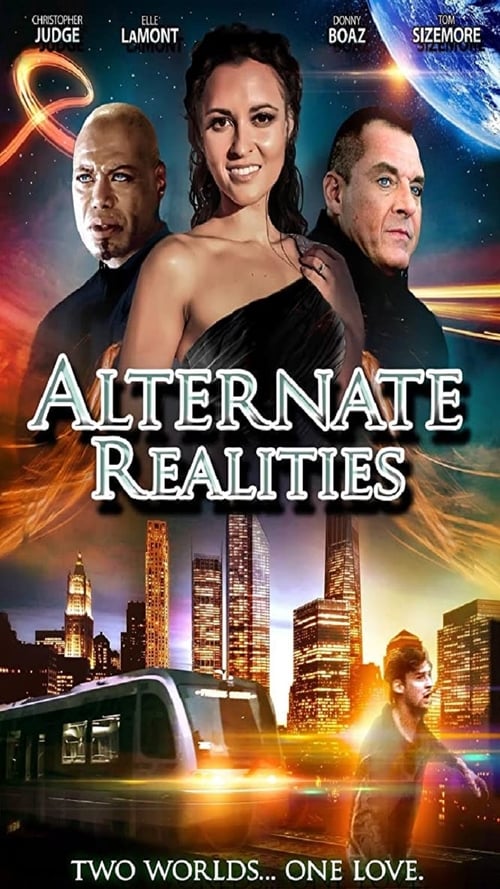
John Rotit's life begins to fracture long before he understands what is happening to him, and Alternate Realities treats that fracture as both a psychological crisis and a literal split across parallel lives. The film opens on John trying to hold himself together inside a world that already feels unstable, and the central tension is immediately clear: he is not simply confused or depressed, but caught in a recurring experience of "flashes" that throw him between three different versions of existence, each one carrying its own emotional logic and its own version of who he is.
In one reality, John Rotit lives the life he most desperately wants. He has a loving wife, a sense of domestic stability, and the comforting illusion that his world is intact. In another, he is a rock star, but that success is hollow and poisoned, because he is shooting up heroin and living inside self-destruction rather than triumph. In the third, the one he fears most, the tone turns sinister: John is connected to violence, with some sources describing him as "something sinister / a killer," implying that this reality is marked by bloodshed and moral rot. The film's structure is built around the repeated interruption of these lives, so each time John starts to settle into one version of reality, the other breaks through, jolting him back into confusion.
At first, John cannot tell whether he is slipping into madness, hallucination, or some kind of neurological disorder. That uncertainty becomes the engine of the story. According to the available synopsis-level sources, John seeks help from a psychologist, and the doctor believes the problem may be simpler than John fears: he may not be taking his prescribed medication. That detail is crucial because it reframes the film's mystery for a time. John is not yet treated as a multiversal traveler or a chosen one; he is treated like a patient whose perceptions may be failing him. The psychologist's explanation gives the narrative a grounded, medical possibility, but the movie keeps undermining that explanation by repeatedly showing the alternate lives with enough consistency that they feel less like delusions and more like parallel truths.
As John continues to flash between these realities, the emotional contrast between them grows sharper. The loving-wife reality offers warmth and tenderness, but it also carries the ache of impermanence, because John can never remain there long enough to trust it. The rock-star reality is frantic and chemically numbed, the kind of life in which applause and addiction become inseparable. The darker reality tightens around him like a trap, suggesting a version of John who may be capable of violence or already implicated in it. The film builds tension by forcing the audience to track which version of John is in control at any given moment, while the man himself becomes increasingly desperate for a single stable identity.
The story's momentum comes from the sense that these lives are not just separate fantasies but parts of a larger pattern. The sources indicate that the narrative culminates only when the three storylines converge, and that this convergence is the moment when John realizes his perceptions were wrong. That revelation changes everything. For most of the film, John believes the problem lies in one of the realities being true and the others being false, or in his own mind failing to distinguish them. When the convergence begins, the movie makes clear that the reality he trusts least may actually be the one from which the truth can finally be seen.
Because the available material does not preserve a trustworthy full scene-by-scene chronology, the precise order of the confrontations is not fully recoverable from the sources alone. What can be said with confidence is that John's struggle intensifies as he tries to determine whether the psychologist is right, whether he is mentally ill, or whether some other explanation exists for the recurring flashes. The emotional center of the film remains his need to stop the shifting and preserve one life long enough for it to mean something. His plea is not for power or revelation, but for relief. He wants the flashing to stop.
That wish becomes tragic because the film seems to suggest that the stopping can happen only through recognition, not denial. John's increasing inability to trust any single identity forces him toward the film's central twist: the realities are connected in a way he has not understood. The truth is not that one life is real and the others are hallucinations, but that his sense of self has been split across multiple possible existences. The convergence of the storylines reveals that the emotional and narrative contradictions he has been living with are not random. They are evidence of a deeper structure at work.
The climax arrives when those three lives finally press into one another. The sources do not provide a detailed transcript of the climax, but they do establish the key dramatic result: John realizes that his perceptions have been wrong all along. That means the film's final revelation is not merely that the worlds exist, but that John has misunderstood his own experience from the beginning. Instead of being a single man plagued by symptoms, he is a self fragmented across parallel realities, and the horror lies in the realization that each life he has tried to protect or escape is part of the same larger truth.
The ending resolves this by refusing to return John to a neat, singular reality. Instead, the convergence functions as the moment of comprehension, the point at which he finally sees the structure behind the flashes. The film's ultimate emphasis is on that recognition: the loving wife, the drug-addled rock-star life, and the violent third reality are not isolated episodes but coexisting strands of one identity. Once John understands that, the emotional crisis changes shape. The terror is no longer just that he cannot tell where he is; it is that all of these lives are his, and none of them can fully contain him.
The available sources do not reliably document every death, so a precise death-by-death accounting cannot be given without risking invention. Likewise, the records available here do not securely identify every named supporting character, every location, or exact dates and times within the film's diegesis. What they do support is the broad arc: John Rotit moves through three parallel lives, consults a psychologist who suspects medication noncompliance, endures growing instability as the realities bleed together, and eventually comes to understand that the pattern he has been fighting is real and that his own interpretation of it has been wrong.
The final effect is less a conventional resolution than a revelation about perception. Alternate Realities ends with John no longer able to think of his life as one thing. The film's last emotional beat is the knowledge that the world he thought he knew has been hiding a more complicated truth all along, and that the only way forward is to accept the coexistence of those selves rather than pretend they can be erased.
More Movies Like This
Browse All Movies →







What is the ending?
In the ending of "Alternate Realities," the protagonist, Alex, confronts the consequences of his choices across different dimensions. He ultimately decides to sacrifice his own happiness to save his loved ones, leading to a bittersweet resolution where he fades from existence in one reality but ensures a better future for those he cares about.
As the climax unfolds, Alex stands in a dimly lit room filled with swirling lights and echoes of alternate versions of himself. The air is thick with tension as he grapples with the weight of his decision. He has discovered that each choice he makes creates a ripple effect across multiple realities, and he is faced with the ultimate dilemma: to pursue his own desires or to protect the people he loves.
In the first scene of the ending, Alex is surrounded by holographic images of his alternate selves, each representing a different path he could take. The flickering lights cast shadows on his face, reflecting his inner turmoil. He watches as one version of himself embraces a life of luxury and success, while another struggles with loneliness and regret. The emotional conflict is palpable as he realizes that every choice has led to pain and joy in equal measure.
Next, Alex's thoughts drift to his closest friend, Sarah, who has been a constant source of support throughout his journey. In a moment of clarity, he understands that his happiness cannot come at the expense of her well-being. He recalls their shared laughter and the moments of vulnerability that have defined their bond. This realization fuels his determination to make the ultimate sacrifice.
In the following scene, Alex confronts the antagonist, a shadowy figure representing the darker aspects of his desires. The confrontation is intense, filled with sharp dialogue and emotional stakes. The antagonist taunts Alex, tempting him with visions of a perfect life if he chooses to abandon his friends. However, Alex stands firm, his resolve strengthening as he recalls the love and support he has received from Sarah and others.
As the climax reaches its peak, Alex makes his choice. He steps forward, embracing the swirling energy around him. In a heart-wrenching moment, he bids farewell to Sarah, who watches in horror as he begins to fade. Tears stream down her face as she realizes the depth of his sacrifice. Alex reassures her with a final smile, conveying his love and the hope that she will find happiness in the reality he is leaving behind.
In the final scene, the camera pans out to show Sarah standing alone in the now quiet room, the holographic images of Alex's alternate selves dissipating into the air. She clutches a small token he left behind, a symbol of their friendship and the choices they made together. The weight of loss hangs heavy in the air, but there is also a sense of hope as she resolves to honor his memory by living fully in the reality they shared.
The film concludes with a poignant reminder of the interconnectedness of choices and the sacrifices made for love. Each character's fate is intertwined, with Alex's selfless act ensuring a brighter future for Sarah, even as he fades from existence. The emotional resonance of the ending lingers, leaving the audience to reflect on the complexities of relationships and the impact of our decisions across the tapestry of life.
Is there a post-credit scene?
In the movie "Alternate Realities," there is indeed a post-credit scene that adds an intriguing layer to the narrative.
As the credits roll, the screen fades to black before transitioning to a dimly lit room filled with monitors displaying various timelines and alternate realities. The camera pans slowly across the screens, each flickering with glimpses of different versions of the main characters, showcasing their lives in divergent paths.
In the center of the room, a figure is seated, shrouded in shadows, their face obscured. They are intently observing the screens, a look of deep contemplation etched on their features. As the camera zooms in, the figure leans forward, revealing a hint of a smirk, suggesting a sense of control and knowledge over the fates of the characters we have come to know.
The scene cuts to a close-up of one particular screen, where we see a version of the protagonist, Alex, making a choice that leads to a drastically different outcome than what was portrayed in the main film. The figure in the shadows chuckles softly, muttering, "So many possibilities... and yet, they never learn."
The screen then fades to black again, leaving the audience with a lingering sense of mystery and the implication that the exploration of alternate realities is far from over. This post-credit scene not only teases potential future developments but also reinforces the film's central theme of choice and consequence, leaving viewers pondering the infinite paths their lives could take.
What is the significance of the device that allows characters to access alternate realities?
The device serves as a pivotal plot element, enabling characters to explore different versions of their lives and confront their choices. It symbolizes the allure and danger of escapism, as each reality presents both opportunities and consequences that deeply affect the characters' emotional states.
How does the protagonist, Sarah, change throughout the film?
Sarah begins as a disillusioned scientist, struggling with her past decisions and the loss of her family. As she navigates through alternate realities, she confronts her regrets and learns to embrace her true self, ultimately finding a sense of closure and purpose by the film's climax.
What role does the antagonist, Dr. Hargrove, play in the story?
Dr. Hargrove is a former mentor to Sarah who becomes obsessed with the power of the device. His motivations stem from a desire to control the alternate realities for personal gain, leading to a conflict that forces Sarah to confront not only him but also her own ethical boundaries regarding the use of the device.
How do the alternate realities affect the relationships between characters?
The alternate realities create complex dynamics among characters, revealing hidden truths and desires. For instance, Sarah's relationship with her best friend, Mark, is tested as they explore different outcomes of their lives, leading to moments of tension, vulnerability, and ultimately, deeper understanding.
What emotional struggles does Mark face in the alternate realities?
Mark grapples with feelings of inadequacy and loss as he witnesses various versions of his life where he made different choices. Each reality forces him to confront his fears of failure and the impact of his decisions on his relationship with Sarah, leading to a profound internal conflict that shapes his character arc.
Is this family friendly?
"Alternate Realities," produced in 2015, contains several themes and scenes that may not be suitable for children or sensitive viewers. Here are some potentially objectionable or upsetting aspects:
-
Existential Themes: The film explores deep philosophical questions about reality, identity, and the nature of existence, which may be confusing or unsettling for younger audiences.
-
Intense Emotional Moments: Characters experience significant emotional turmoil, including grief, loss, and existential dread, which could be distressing for sensitive viewers.
-
Mature Language: There are instances of strong language that may not be appropriate for children.
-
Dark Visual Imagery: Some scenes feature dark or surreal visuals that could be frightening or unsettling, particularly for younger viewers.
-
Conflict and Tension: The film includes scenes of conflict between characters that may involve shouting or aggressive behavior, which could be alarming for some.
-
Philosophical Discussions: The dialogue often delves into complex and abstract concepts that may be difficult for children to grasp, potentially leading to confusion or discomfort.
Overall, while the film has thought-provoking elements, its themes and content may not be suitable for a family-friendly viewing experience.







