




Popular
Should I watch it?
Ask Your Own Question

What is the plot?
Sorry, we aren't able to watch and write up a full detailed plot yet. Check back in a few days.






What is the ending?
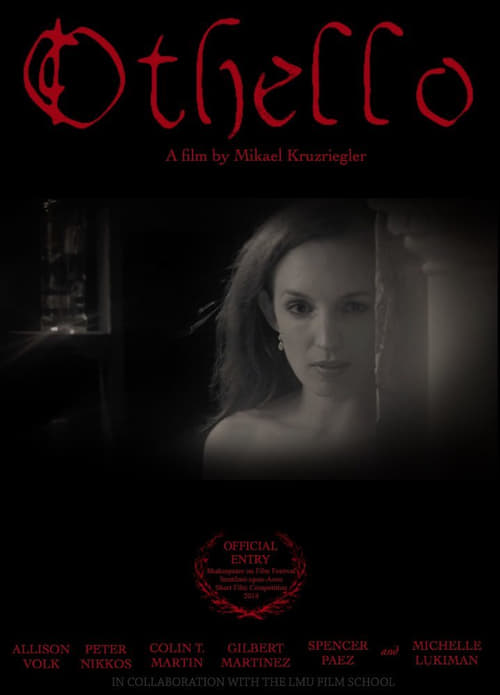
In the ending of the 2015 film "Othello," Othello, consumed by jealousy and betrayal, confronts Desdemona, believing she has been unfaithful. In a tragic culmination of misunderstandings and manipulation, he kills her. When the truth of Iago's deceit is revealed, Othello, devastated by his actions, takes his own life. Iago is arrested, facing the consequences of his treachery.
As the film approaches its climax, the tension escalates in a series of emotionally charged scenes.
Scene 1: Othello, portrayed with a deep sense of turmoil, enters his chamber where Desdemona lies asleep. The dim light casts shadows across the room, emphasizing the weight of his internal conflict. He stands over her, grappling with the lies fed to him by Iago. His heart races, torn between love and the poison of jealousy. The audience can feel the suffocating atmosphere as he recalls Iago's insinuations about Desdemona's fidelity.
Scene 2: In a moment of tragic resolve, Othello awakens Desdemona. She is disoriented, her eyes wide with confusion and fear. Othello's voice trembles as he accuses her of infidelity. Desdemona, bewildered and hurt, pleads her innocence, her voice breaking with emotion. The room is thick with despair as she tries to reach out to him, but Othello's mind is clouded by Iago's manipulations. The audience witnesses the heartbreaking disconnect between the couple, as love turns to suspicion.
Scene 3: In a fit of rage and sorrow, Othello's jealousy overwhelms him. He takes a pillow and, in a moment that feels both inevitable and tragic, he smothers Desdemona. Her struggles are desperate, and the room fills with her muffled cries. The camera captures Othello's face, a mask of anguish as he realizes the gravity of his actions. The moment is haunting, underscoring the destructive power of jealousy and betrayal.
Scene 4: After Desdemona's lifeless body lies still, Othello is consumed by regret. He collapses beside her, the weight of his actions crashing down upon him. The realization that he has killed the woman he loved sends him into a spiral of despair. He cries out, his voice echoing in the silence of the room, filled with remorse and disbelief. The audience feels the depth of his sorrow, a poignant reminder of the tragic consequences of manipulation.
Scene 5: The final confrontation occurs when Iago's treachery is unveiled. Othello learns the truth about Iago's deceit and the falsehoods that led him to murder Desdemona. The revelation hits him like a thunderclap, and he is left shattered, grappling with the irreversible damage he has caused. In a moment of profound despair, Othello takes his own life, a tragic end to a noble character brought low by jealousy and betrayal.
Scene 6: Meanwhile, Iago is apprehended, his plans unraveled. The film closes with a sense of justice, albeit too late for Othello and Desdemona. Iago's fate is sealed as he faces the consequences of his actions, but the emotional toll on the other characters lingers. The audience is left with a haunting sense of loss, reflecting on the fragility of love and the devastating impact of deceit.
In the end, Othello's tragic downfall serves as a powerful reminder of the destructive nature of jealousy, while Desdemona's innocence is a poignant contrast to the chaos that ensues. Iago, the architect of this tragedy, is left to face the repercussions of his malicious schemes, but the damage done to Othello and Desdemona is irrevocable.
Is there a post-credit scene?
The 2015 film "Othello" does not feature a post-credit scene. The movie concludes with the tragic resolution of the story, focusing on the intense emotional fallout from the characters' actions. The final moments are heavy with the weight of betrayal, jealousy, and loss, leaving the audience to reflect on the consequences of Othello's decisions and the manipulation by Iago. The film ends on a somber note, emphasizing the themes of tragedy and the human condition without any additional scenes after the credits.
What motivates Iago to betray Othello?
Iago's motivations stem from a deep-seated jealousy and resentment towards Othello. He feels slighted after being passed over for promotion in favor of Cassio, which fuels his desire for revenge. Additionally, Iago harbors suspicions about Othello's relationship with his own wife, Emilia, which further intensifies his animosity. His manipulative nature and desire for power drive him to orchestrate Othello's downfall.
How does Othello's jealousy manifest throughout the film?
Othello's jealousy is ignited by Iago's deceitful insinuations about Desdemona's fidelity. As Iago plants seeds of doubt, Othello's emotional state deteriorates, leading him to become increasingly paranoid and irrational. His jealousy manifests in violent outbursts and a growing mistrust of Desdemona, culminating in tragic decisions that reflect his internal turmoil and the destructive power of jealousy.
What role does Desdemona play in Othello's tragic downfall?
Desdemona is central to Othello's tragic downfall, as her innocence and loyalty are manipulated by Iago. Despite her unwavering love for Othello, she becomes a pawn in Iago's scheme. Othello's misguided belief in her infidelity leads him to doubt her character, ultimately resulting in her tragic fate. Desdemona's vulnerability and the societal constraints placed upon her amplify the tragedy of her situation.
How does Iago manipulate the other characters to achieve his goals?
Iago employs a range of manipulative tactics to exploit the weaknesses of those around him. He uses flattery, deceit, and strategic misinformation to turn characters against one another. For instance, he convinces Roderigo to pursue Desdemona, while simultaneously planting doubts in Othello's mind about Cassio and Desdemona's loyalty. His ability to play on the insecurities and emotions of others showcases his cunning and malevolent nature.
What is the significance of the handkerchief in the story?
The handkerchief serves as a pivotal symbol in the narrative, representing Othello's love for Desdemona and the trust that is ultimately shattered. Iago uses the handkerchief to frame Desdemona, convincing Othello of her infidelity. Its loss and misplacement become a catalyst for Othello's jealousy and rage, illustrating how a simple object can hold immense power over relationships and fate.
Is this family friendly?
The 2015 film "Othello," directed by the acclaimed filmmaker, presents a modern adaptation of Shakespeare's classic tragedy. While it is a powerful interpretation, it contains several elements that may not be suitable for children or sensitive viewers.
-
Violence: The film includes scenes of physical altercations and emotional confrontations that can be intense and distressing.
-
Themes of Betrayal and Jealousy: The central themes revolve around betrayal, manipulation, and jealousy, which may be difficult for younger audiences to fully grasp and could evoke strong emotional responses.
-
Mature Language: The dialogue includes strong language and mature themes that may not be appropriate for younger viewers.
-
Depictions of Death: The film addresses mortality and features scenes that depict death, which can be upsetting.
-
Emotional Turmoil: Characters experience profound emotional struggles, including despair and rage, which may be unsettling for sensitive viewers.
Overall, while "Othello" is a significant work of art, its content may be challenging for children and those who are sensitive to themes of violence, betrayal, and emotional distress. Viewer discretion is advised.








