
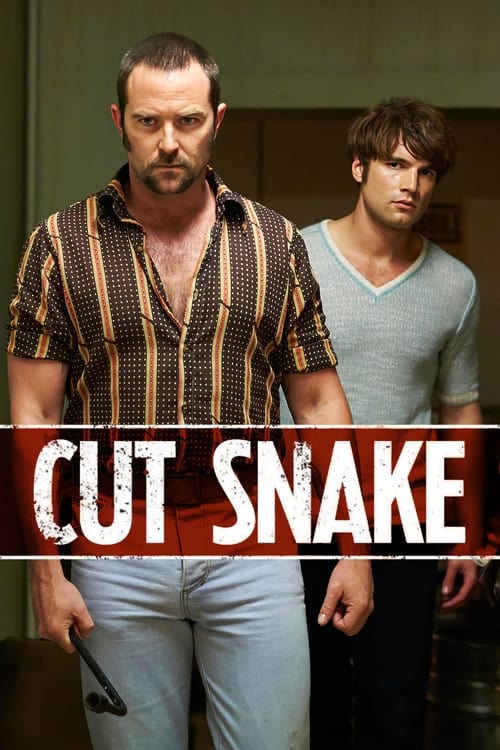







Popular
What is the significance of the tattoo on the main character's arm?
How does Sparra's relationship with his girlfriend, Tash, evolve throughout the film?
What role does the character of Pommie play in Sparra's life?
What events lead to the climax of the film involving Sparra and Pommie?
How does Sparra's internal conflict manifest throughout the film?
Should I watch it?
Ask Your Own Question

What is the plot?
Sorry, we aren't able to watch and write up a full detailed plot yet. Check back in a few days.


What is the ending?
In the ending of "Cut Snake," the tension culminates in a violent confrontation between the main characters. The protagonist, who has been trying to escape his past, faces the consequences of his choices. The film concludes with a tragic resolution that leaves the characters irrevocably changed.
As the final act unfolds, we find the protagonist, Sparra, grappling with his tumultuous emotions and the weight of his past. He is living a seemingly normal life with his new partner, but the shadow of his former life looms large. The film builds to a climax when his past catches up with him in the form of his former partner, Pommie, who is determined to reclaim Sparra and confront the betrayal he feels.
Scene by scene, the tension escalates. Sparra is at home, trying to maintain a facade of normalcy with his girlfriend, but he is haunted by memories of his time with Pommie. The atmosphere is thick with unease as he receives a visit from Pommie, who has been searching for him. Pommie's arrival is marked by a sense of foreboding; he is aggressive and confrontational, revealing his deep-seated anger and feelings of abandonment.
As the confrontation escalates, Sparra's internal conflict becomes palpable. He is torn between his desire to move on and the loyalty he feels towards Pommie, despite the violence that characterized their past. The emotional stakes are high, and the tension in the room is almost suffocating. Pommie accuses Sparra of betrayal, and the dialogue is charged with unresolved feelings and past grievances.
The climax reaches its peak when Pommie, unable to control his rage, attacks Sparra. The fight is brutal and raw, showcasing the physical and emotional scars that both men carry. Sparra fights back, not just for his life but for his freedom from the chains of his past. The struggle is not just a physical one; it represents Sparra's fight for his identity and future.
In the aftermath of the confrontation, the consequences are dire. Pommie is left severely injured, and Sparra, though victorious in the physical sense, is left emotionally shattered. The film closes on a somber note, with Sparra standing alone, reflecting on the choices he has made and the life he has tried to build. The weight of his past is evident in his expression, and the audience is left to ponder the cost of escaping one's history.
Ultimately, Sparra's fate is one of isolation; he has fought to break free from his past but at a significant emotional cost. Pommie, on the other hand, is left in a state of defeat, embodying the destructive nature of their relationship. The ending serves as a poignant reminder of the complexities of love, loyalty, and the inescapable nature of one's past.
Is there a post-credit scene?
The movie "Cut Snake," produced in 2015, does not have a post-credit scene. The film concludes its narrative without any additional scenes or content after the credits roll. The story wraps up with a focus on the emotional and psychological aftermath of the characters' experiences, leaving the audience to reflect on the themes of love, betrayal, and the consequences of one's past.
What is the significance of the tattoo on the main character's arm?
The tattoo on the main character, Sparra, symbolizes his past and the life he is trying to escape. It serves as a constant reminder of his former life in prison and the violent world he left behind. The tattoo's presence creates an internal conflict for Sparra as he struggles to reconcile his desire for a normal life with the haunting memories of his past.
How does Sparra's relationship with his girlfriend, Tash, evolve throughout the film?
Sparra's relationship with Tash begins with a sense of innocence and hope as they share moments of intimacy and connection. However, as the film progresses, the tension escalates due to Sparra's unresolved issues and the looming threat of his past. Tash's growing concern for Sparra's well-being and her eventual realization of the danger he poses create a rift between them, highlighting the emotional strain of their relationship.
What role does the character of Pommie play in Sparra's life?
Pommie serves as a pivotal figure in Sparra's life, representing both a connection to his past and a catalyst for his internal struggle. As Sparra's former cellmate, Pommie's reappearance brings back memories of their shared history and the violent lifestyle Sparra is trying to escape. Pommie's relentless pursuit of Sparra and his attempts to draw him back into a life of crime create a sense of urgency and danger, forcing Sparra to confront his fears and ultimately make a choice about his future.
What events lead to the climax of the film involving Sparra and Pommie?
The climax of the film is set in motion by Pommie's increasing aggression and his refusal to let Sparra go. Tensions rise as Pommie confronts Sparra, leading to a violent showdown that forces Sparra to confront his past head-on. The culmination of their conflict occurs in a tense and emotionally charged scene where Sparra must decide whether to protect his new life with Tash or succumb to the violent impulses of his past, resulting in a dramatic and pivotal moment.
How does Sparra's internal conflict manifest throughout the film?
Sparra's internal conflict is portrayed through his emotional turmoil and the physical manifestations of his anxiety. He experiences flashbacks to his time in prison, which haunt him and disrupt his attempts to build a new life. His struggle is evident in his interactions with Tash, where moments of tenderness are often overshadowed by his fear of losing her and the threat posed by Pommie. This conflict drives Sparra's actions, leading him to make choices that ultimately reveal his deep-seated fears and desires.
Is this family friendly?
"Cut Snake," produced in 2015, is not considered family-friendly due to its mature themes and content. Here are some potentially objectionable or upsetting aspects that may affect children or sensitive viewers:
-
Violence: The film contains scenes of physical violence, including fights and confrontations that can be intense and graphic.
-
Sexual Content: There are explicit sexual scenes and themes that may be inappropriate for younger audiences.
-
Drug Use: The film depicts drug use, which may be disturbing or unsuitable for children.
-
Emotional Turmoil: Characters experience significant emotional distress, including themes of betrayal, guilt, and trauma, which may be heavy for sensitive viewers.
-
Crime and Criminal Behavior: The narrative involves criminal activities and the consequences of such actions, which may not be suitable for younger audiences.
Overall, the film's exploration of dark themes and adult situations makes it more appropriate for mature viewers.









