




















Popular
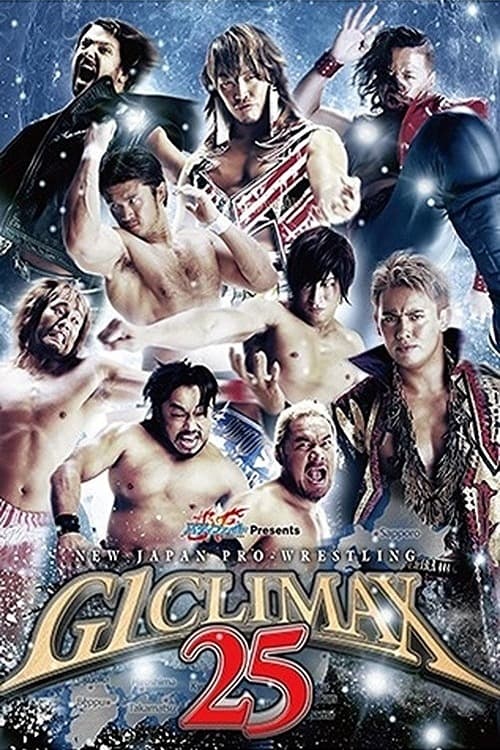
What were the key matches that took place on Day 16 of the NJPW G1 Climax 25?
How did Hiroshi Tanahashi's performance on Day 16 impact his standing in the G1 Climax?
What was the significance of the match between Kazuchika Okada and Shinsuke Nakamura on Day 16?
What were the emotional stakes for Tetsuya Naito during his match against Hiroshi Tanahashi?
How did the crowd react to the matches on Day 16, particularly to the main event?
Should I watch it?
Ask Your Own Question

What is the plot?
NJPW G1 Climax 25: Day 16 is not a movie, so there is no literal opening scene, deaths, or character-driven ending in the cinematic sense; instead, the event unfolds as a sequence of matches that build toward the tournament final, with the decisive story being whether Hiroshi Tanahashi or Shinsuke Nakamura claims the G1 Climax 25 victory. The event's narrative is the rhythm of wrestling momentum: opening undercard action, title defenses, faction clashes, and finally the high-stakes final that crowns the winner.
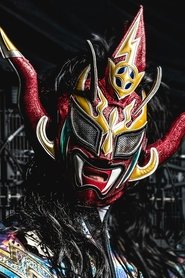
The show begins with a lively six-man tag atmosphere as Ryusuke Taguchi, Máscara Dorada, and David Finlay defeat Jushin Thunder Liger, Sho Tanaka, and Yohei Komatsu. The result is straightforward, but the contrast in experience and style gives the bout its early texture: Taguchi's comic energy, Dorada's speed, and Finlay's aggression push against the veteran composure of Liger and the youthful resistance of Tanaka and Komatsu. The crowd settles into the rhythm of the event, understanding that this is the warm-up before the card intensifies.
The next match keeps that momentum moving but shifts the tone toward a more rugged, faction-based struggle as Tencozy--Hiroyoshi Tenzan and Satoshi Kojima--team with Captain New Japan to defeat Manabu Nakanishi, Jay White, and Yuji Nagata. The bout places established names and rising talent together in a way that emphasizes contrast rather than simple victory. Jay White, still in an early phase of his career, stands in the ring with veteran icons and is forced into a more brutal, grounded contest than a showcase bout would allow. The win for Tencozy and Captain New Japan reinforces the veterans' ability to control the tempo, while the presence of White signals the promotion's ongoing attention to the future.
The card then turns to singles competition, where Michael Elgin defeats YOSHI-HASHI. This match sharpens the emotional stakes because it feels less like a warm-up and more like a test of wills. Elgin's power-based dominance frames the action as a contest of force against resilience, and the result places him firmly ahead in that battle. For YOSHI-HASHI, the loss deepens the sense of struggle that defines his role on major cards: he fights hard, but the stronger physical presence wins the decisive moments.
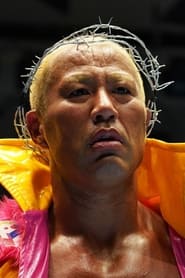
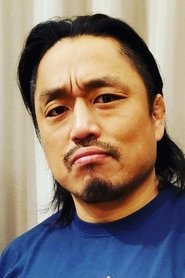
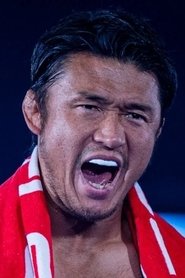
From there, the show moves into a faction collision with more intensity, as CHAOS--Tomohiro Ishii, Toru Yano, and Kazushi Sakuraba--defeat Bullet Club trio Tama Tonga, Bad Luck Fale, and Yujiro Takahashi. This is the kind of match where the crowd can feel the tension in the shifting alliances, because both groups are built on attitude as much as athleticism. CHAOS wins, and the result adds to the sense that Bullet Club is being pushed back in the night's early chapter. Ishii's grit, Yano's chaos, and Sakuraba's enigmatic legitimacy combine into a strange but effective unit, while Bullet Club's heavy, interference-friendly identity is checked by the outcome.
The next tag bout keeps the faction warfare alive and raises the emotional stakes further as Hirooki Goto, Kota Ibushi, and Katsuyori Shibata defeat Tetsuya Naito and Great Bash Heels representatives Togi Makabe and Tomoaki Honma. The match feels like a collision of styles and personalities: Goto's determination, Ibushi's explosive athleticism, and Shibata's fierce precision all press against Naito's defiant cool and the rough, crowd-pleasing stubbornness of Makabe and Honma. The victory for Goto, Ibushi, and Shibata gives the card a more serious edge, especially because Shibata's presence adds an almost punishing intensity to everything around him. Naito, meanwhile, remains a focal point even in defeat because his aura makes every match feel like part of a larger chessboard.
The event then reaches one of its first true championship stakes, and the atmosphere changes immediately. reDRagon--Bobby Fish and Kyle O'Reilly--defeat The Young Bucks--Matt Jackson and Nick Jackson--to win the IWGP Junior Heavyweight Tag Team Championship. The title change gives the night a major turning point. The Young Bucks enter as champions, but reDRagon leave with the belts, and the shift marks a meaningful transfer of momentum in the junior tag division. The matchup plays like a collision between speed, synchronization, and relentless technical sharpness, and the title switch makes the crowd absorb the reality that the night is no longer just a string of exhibition contests; it is changing the landscape of the division. The visual of Fish and O'Reilly taking control of the championship scene becomes one of the card's defining images.
The next championship match keeps that energy surging as KUSHIDA defeats Ricochet to retain the IWGP Junior Heavyweight Championship. This contest matters because it places one of the division's most polished champions against one of its most spectacular challengers. Ricochet brings aerial danger and athletic flash, but KUSHIDA's title defense confirms his ability to survive and adapt under pressure. The defense reinforces the champion's credibility and prevents the earlier title change from feeling like a wholesale upheaval; instead, the division now looks unstable in a more interesting way, with one belt changing hands and another remaining securely in place.
The momentum then shifts again as Bullet Club--AJ Styles, Doc Gallows, and Karl Anderson--defeat Kazuchika Okada and The Kingdom team Matt Taven and Michael Bennett. This is one of the show's most loaded matches, because Okada is always the center of attention when he enters a major New Japan event, and the presence of AJ Styles and the rest of Bullet Club turns the contest into a high-profile faction battle. Bullet Club's victory gives them a major rebound after the earlier six-man loss, and the win over Okada's side matters both symbolically and strategically. The result sharpens the tension heading into the final because any show with Okada and Bullet Club on it automatically carries the sense that bigger consequences are being built underneath the surface.
At last, the card reaches its decisive culmination: the G1 Climax 25 final, where Hiroshi Tanahashi defeats Shinsuke Nakamura. This is the night's emotional peak, the match around which everything else has quietly revolved. The tournament final is not a death scene or a revelation scene, but in wrestling terms it functions as the story's climax and resolution, because the winner's path through the G1 defines the rest of the promotion's future. Tanahashi and Nakamura enter as elite competitors whose names carry the weight of the company's identity, and the match is charged with the sense that this is not just a contest but a statement about who will stand at the center of New Japan Pro-Wrestling's next chapter.
The atmosphere around the final is electric because the entire card has been building toward it: title changes, faction victories, and major singles results all feed into the pressure surrounding Tanahashi and Nakamura. Tanahashi's victory closes the event with triumph rather than ambiguity, and the final scene is the one essential payoff the whole day has been waiting for. The result confirms him as the G1 Climax 25 winner, ending the night on the image of his success rather than on chaos, betrayal, or defeat. In the logic of the event, that final pinfall is the resolution: the tournament is decided, the winner is crowned, and the audience leaves with the clear understanding that Tanahashi has conquered one of New Japan's most demanding annual tests.
If you want, I can also rewrite this as a more match-by-match live recap style version, still in flowing prose, with each bout given fuller in-ring texture and transition detail.









What is the ending?
In the ending of NJPW G1 Climax 25: Day 16, the final matches determine the outcomes of the tournament. The main event features Hiroshi Tanahashi facing off against Tetsuya Naito. Tanahashi emerges victorious, securing his place in the finals of the G1 Climax tournament. The atmosphere is electric, filled with tension and anticipation as the crowd reacts to the intense battle. Naito, despite his loss, shows resilience and determination, hinting at his ongoing journey in the wrestling world.
As the event concludes, Tanahashi stands tall, celebrating his hard-fought victory, while Naito reflects on his performance, embodying the spirit of a true competitor. The night ends with a sense of closure for this chapter of the tournament, but also leaves the door open for future rivalries and storylines.
As the final moments of NJPW G1 Climax 25: Day 16 unfold, the arena is charged with an electric atmosphere, the crowd buzzing with anticipation. The camera pans across the audience, capturing the fervent expressions of fans, their eyes glued to the ring where two titans of wrestling are about to clash. Hiroshi Tanahashi, the ace of New Japan Pro Wrestling, stands in one corner, his expression a mix of focus and determination. Across from him, Tetsuya Naito, with his trademark cocky demeanor, exudes confidence, ready to prove himself against the legendary Tanahashi.
The bell rings, and the match begins with a slow, deliberate pace. Both wrestlers circle each other, gauging their opponent's movements. Tanahashi, known for his technical prowess, attempts to ground Naito with a series of holds, showcasing his experience and skill. Naito, however, counters with his own agility, slipping out of Tanahashi's grasp and delivering a swift kick that sends a ripple of excitement through the crowd.
As the match progresses, the intensity escalates. Tanahashi executes a series of high-impact moves, including his signature High Fly Flow, but Naito refuses to stay down. Each near-fall elicits gasps from the audience, their emotions swinging with every close count. Naito's resilience shines through as he absorbs punishment, his internal motivation fueled by the desire to prove himself against the established star.
The turning point comes when Naito, with a burst of energy, counters Tanahashi's offense, launching into a series of strikes that showcase his own fighting spirit. The crowd rallies behind both competitors, chanting their names, creating a cacophony of support and tension. Naito's determination is palpable; he knows this match is not just about winning but about establishing his place in the hierarchy of New Japan wrestling.
As the match nears its climax, both wrestlers are visibly exhausted, their bodies showing the toll of the battle. Tanahashi, with a fierce look in his eyes, digs deep, channeling his years of experience. He manages to catch Naito in a critical moment, executing a devastating move that leaves Naito sprawled on the mat. The referee counts--one, two, and just as the hand is about to hit three, Naito somehow kicks out, igniting the crowd into a frenzy.
In the final moments, Tanahashi, sensing victory within reach, climbs to the top rope for one last High Fly Flow. The arena holds its breath as he leaps, connecting perfectly with Naito. The referee counts again--one, two, three. The bell rings, and the crowd erupts into cheers and applause. Tanahashi has won the match, securing his place in the finals of the G1 Climax tournament.
As the dust settles, Tanahashi stands in the center of the ring, arms raised in triumph, a look of relief and joy washing over his face. He acknowledges the crowd, who chant his name, celebrating his hard-fought victory. Meanwhile, Naito, though defeated, sits on the mat, a mix of frustration and determination etched on his face. He knows this loss is a setback, but it fuels his desire to rise again, to continue his journey in the wrestling world.
The event concludes with Tanahashi basking in the glory of his victory, while Naito reflects on the match, embodying the spirit of a true competitor. The night ends with a sense of closure for this chapter of the tournament, but also leaves the door open for future rivalries and storylines, hinting at the ongoing saga of these two remarkable wrestlers.
Is there a post-credit scene?
NJPW G1 Climax 25: Day 16 does not feature a post-credit scene. The event concludes with the matches and the aftermath of the wrestling bouts, focusing on the outcomes and the implications for the G1 Climax tournament. The emphasis remains on the performances and the emotional stakes of the wrestlers involved, rather than any additional scenes or narratives following the main event.
What were the key matches that took place on Day 16 of the NJPW G1 Climax 25?
On Day 16 of the NJPW G1 Climax 25, several key matches took place, including Hiroshi Tanahashi vs. Tetsuya Naito, and Kazuchika Okada vs. Shinsuke Nakamura. These matches were pivotal in determining the standings in the tournament.
How did Hiroshi Tanahashi's performance on Day 16 impact his standing in the G1 Climax?
Hiroshi Tanahashi's performance on Day 16 was crucial as he faced Tetsuya Naito. Tanahashi's victory not only showcased his resilience and skill but also solidified his position as a top contender in the G1 Climax, reflecting his determination to reclaim his status in NJPW.
What was the significance of the match between Kazuchika Okada and Shinsuke Nakamura on Day 16?
The match between Kazuchika Okada and Shinsuke Nakamura was significant as it featured two of NJPW's biggest stars. Their rivalry added intensity to the G1 Climax, and the outcome had major implications for both wrestlers' paths in the tournament, highlighting their contrasting styles and personal stakes.
What were the emotional stakes for Tetsuya Naito during his match against Hiroshi Tanahashi?
Tetsuya Naito entered his match against Hiroshi Tanahashi with a deep emotional investment, driven by a desire to prove himself against a legendary figure in NJPW. Naito's frustration with past failures and his quest for redemption fueled his performance, making the match a personal battle beyond just tournament points.
How did the crowd react to the matches on Day 16, particularly to the main event?
The crowd's reaction on Day 16 was electric, especially during the main event matches. Fans were vocal and emotionally invested, with cheers and chants that reflected their support for their favorite wrestlers. The atmosphere was charged with anticipation, as the audience recognized the significance of each match in the context of the G1 Climax.
Is this family friendly?
NJPW G1 Climax 25: Day 16 is a professional wrestling event, and while it is primarily focused on athletic competition, there are elements that may not be suitable for all audiences, particularly children or sensitive viewers. Here are some potentially objectionable aspects:
-
Violence: The matches feature physical confrontations, including strikes, throws, and submission holds, which can be intense and may be perceived as violent.
-
Aggressive Behavior: Wrestlers often display aggressive behavior, including taunting opponents and engaging in heated rivalries, which might be unsettling for younger viewers.
-
Mature Themes: The storylines can include themes of rivalry, betrayal, and personal conflict, which may be complex for children to understand.
-
Crowd Reactions: The audience can be very vocal, sometimes using strong language or expressing intense emotions, which might not be appropriate for all viewers.
-
Costumes and Presentation: Some wrestlers may wear costumes that are exaggerated or provocative, which could be considered inappropriate for younger audiences.
Overall, while the event is centered around sports entertainment, the physicality and emotional intensity may not be suitable for all children or sensitive individuals.