
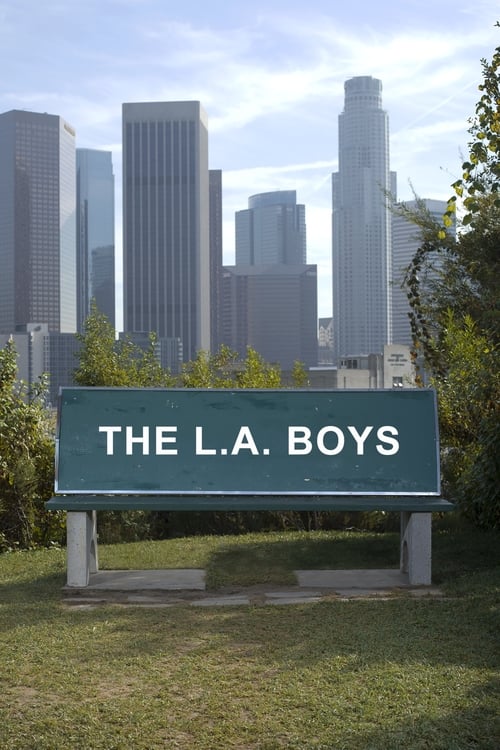






Popular
What specific events lead to the climax of the film?
What role does friendship play in the dynamics of the group?
How does the character of Jake evolve throughout the film?
What challenges do the main characters face in their pursuit of success in the music industry?
How does the character of Mia influence the group's journey?
Should I watch it?
Ask Your Own Question

What is the plot?
Sorry, we aren't able to watch and write up a full detailed plot yet. Check back in a few days.









What is the ending?
In the ending of "The L.A Boys," the main characters confront their personal struggles and relationships, leading to a resolution that reflects their growth and the choices they have made throughout the film. The story culminates in a series of emotional confrontations and reconciliations, ultimately leaving the characters at a crossroads in their lives.
As the film approaches its conclusion, the tension among the group of friends reaches a peak. Each character grapples with their individual demons, and the weight of their past decisions becomes increasingly apparent. The climax unfolds during a pivotal gathering where secrets are revealed, and long-standing grievances come to the surface.
In the final scenes, the characters begin to understand the importance of friendship and support. They confront their fears and insecurities, leading to heartfelt exchanges that allow them to express their vulnerabilities. The resolution is bittersweet, as some characters choose to part ways to pursue their own paths, while others find a renewed sense of connection and commitment to one another.
The film ends on a note of hope, suggesting that while the journey may be fraught with challenges, the bonds formed through shared experiences can lead to personal growth and healing.
As the final act of "The L.A Boys" unfolds, the atmosphere is thick with tension. The camera pans over a dimly lit room where the group of friends has gathered for what seems to be a final confrontation. The air is heavy with unspoken words, and the characters' faces reflect a mix of anxiety and determination.
The first scene shows Jake, visibly shaken, pacing back and forth. He is wrestling with the consequences of his choices, particularly his strained relationship with his father. His internal conflict is palpable as he grapples with feelings of inadequacy and the desire for approval. The camera captures his furrowed brow and clenched fists, emphasizing his emotional turmoil.
Next, we shift to Sarah, who stands apart from the group, her arms crossed defensively. She has been harboring resentment towards her friends for not understanding her struggles with self-identity and the pressure to conform. As the conversation begins, she finally speaks up, her voice trembling but resolute. She reveals her feelings of isolation, and the room falls silent as her vulnerability resonates with the others.
In response, Mark, who has been the group's unofficial leader, steps forward. He acknowledges his own failings and the burden of expectations he has placed on himself and his friends. His admission is a turning point; the camera zooms in on his face, capturing the raw emotion as he expresses regret for not being more supportive. The tension begins to dissipate as the group realizes they are all fighting similar battles.
The next scene shifts to a more intimate setting, where the friends sit in a circle, sharing their stories. Each character takes turns revealing their struggles, from addiction to family issues. The dialogue is rich with emotion, and the cinematography captures the nuances of their expressions--tears, laughter, and moments of silence that speak volumes. This cathartic exchange serves as a healing moment for the group, allowing them to reconnect on a deeper level.
As the night progresses, the characters begin to make decisions about their futures. Jake decides to confront his father, seeking closure and a chance to redefine their relationship. Sarah, inspired by the support of her friends, resolves to embrace her true self and pursue her passion for art, despite the fear of judgment. Mark, realizing the importance of balance, chooses to step back from his leadership role, allowing others to take the reins.
The final scene is set against a backdrop of a sunrise, symbolizing new beginnings. The friends stand together, united yet aware of the paths they must take. They share a group hug, a moment of solidarity that encapsulates their journey. As they part ways, the camera lingers on their faces, each reflecting a mix of hope and uncertainty about the future.
In the closing moments, the screen fades to black, leaving the audience with a sense of resolution. The characters have faced their demons and emerged stronger, ready to embrace whatever comes next. The film concludes with the message that while the road ahead may be challenging, the bonds of friendship can provide the strength needed to navigate life's complexities.
Is there a post-credit scene?
In "The L.A Boys," there is indeed a post-credit scene that adds an intriguing layer to the film's narrative. After the credits roll, the screen fades back in to reveal a dimly lit room filled with various art pieces and photographs. The camera pans slowly across the walls, showcasing the vibrant and eclectic styles that reflect the personalities of the main characters.
As the camera continues to move, it settles on a large canvas that features a striking mural, reminiscent of the characters' journeys throughout the film. The mural is a collaborative piece, symbolizing the unity and friendship that developed among the boys despite their individual struggles.
Suddenly, the door creaks open, and one of the main characters, Alex, enters the room. He looks around, a mix of nostalgia and pride washing over him as he takes in the artwork. His expression shifts to one of determination as he picks up a paintbrush that rests on a nearby table. With a deep breath, he begins to add his own touch to the mural, signifying his commitment to growth and creativity.
The scene closes with a close-up of Alex's focused face, a hint of a smile breaking through as he immerses himself in the art. The screen fades to black, leaving the audience with a sense of hope and the promise of new beginnings for the characters. This post-credit moment encapsulates the film's themes of friendship, creativity, and the ongoing journey of self-discovery.
What specific events lead to the climax of the film?
The climax of the film is reached during a pivotal performance at a major music festival, where the characters must confront their fears and insecurities. Leading up to this moment, tensions rise as personal conflicts come to a head, including a betrayal that threatens to tear the group apart. As they prepare for the performance, each character reflects on their journey, leading to a powerful moment of unity on stage. The stakes are high, and their success or failure hinges on their ability to work together and support one another despite their differences.
What role does friendship play in the dynamics of the group?
Friendship is a crucial element in the dynamics of the group, serving as both a source of strength and conflict. The characters share a deep bond that is tested by jealousy, ambition, and personal struggles. Moments of camaraderie, such as late-night jam sessions and shared dreams, highlight their connection, while disagreements over artistic direction and personal choices create rifts. The film poignantly illustrates how their friendships evolve, showcasing the importance of support and understanding in overcoming obstacles together.
How does the character of Jake evolve throughout the film?
Jake, one of the central characters, begins as a hopeful yet naive musician, eager to make a name for himself. As the story progresses, he faces setbacks that challenge his optimism, including betrayal from friends and the harsh realities of the music business. His internal struggle is palpable as he wrestles with the temptation to compromise his artistic integrity for commercial success. By the end of the film, Jake emerges more resilient and self-aware, having learned the importance of staying true to himself and his music.
What challenges do the main characters face in their pursuit of success in the music industry?
The main characters, a group of aspiring musicians, face numerous challenges in their pursuit of success in the competitive music industry. They struggle with self-doubt, the pressure to conform to industry standards, and the constant threat of being overshadowed by more established artists. Each character grapples with personal demons, such as addiction and family issues, which complicate their journey. Their relationships are tested as they navigate the highs and lows of their careers, leading to moments of tension and conflict within the group.
How does the character of Mia influence the group's journey?
Mia, a talented singer and songwriter, plays a significant role in influencing the group's journey. Her passion for music and unwavering belief in the group's potential inspire the other characters to push through their struggles. However, her own ambitions create tension, as she grapples with the desire for solo success versus her loyalty to the group. Mia's character serves as a catalyst for change, prompting the others to confront their own motivations and ultimately leading to pivotal decisions that shape their collective path.
Is this family friendly?
"The L.A Boys," produced in 2016, is a documentary that follows the lives of a group of young skateboarders in Los Angeles. While it primarily focuses on their passion for skateboarding and the camaraderie among them, there are some aspects that may be considered objectionable or upsetting for children or sensitive viewers.
-
Language: The film contains instances of strong language, which may not be suitable for younger audiences.
-
Substance Use: There are scenes that depict the use of alcohol and possibly other substances, reflecting the lifestyle of some of the characters.
-
Risky Behavior: The skateboarders engage in dangerous stunts and risky behavior, which could be concerning for parents watching with children.
-
Emotional Struggles: The film touches on themes of personal struggles, including issues related to family dynamics and the pressures of youth, which may be heavy for sensitive viewers.
-
Violence: While not graphic, there are moments that may involve confrontations or aggressive behavior among peers.
Overall, while the film celebrates youth culture and skateboarding, these elements may warrant caution for family viewing.