












Popular
What is the significance of the gold that Hans receives at the beginning of the story?
How does Hans's character evolve throughout the film?
What role do the various characters Hans meets play in his journey?
What does the final scene with Hans signify about his journey?
How does the theme of luck manifest in Hans's experiences throughout the film?
Should I watch it?
Ask Your Own Question

What is the plot?
Sorry, we aren't able to watch and write up a full detailed plot yet. Check back in a few days.






What is the ending?
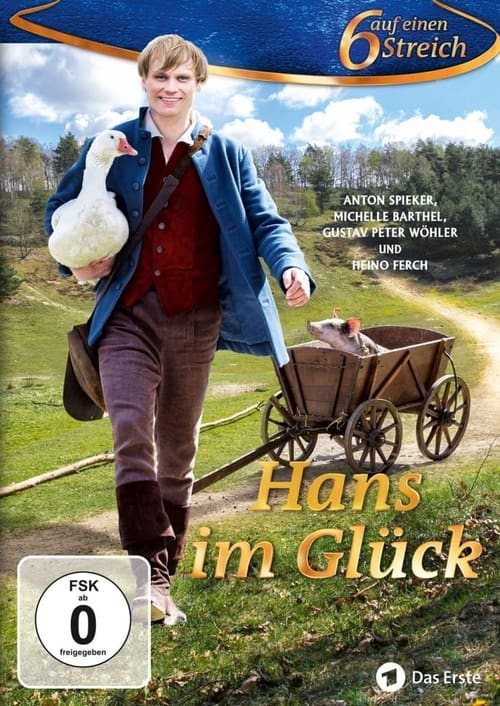
In the ending of "Hans im Glück," Hans finally realizes that true happiness does not come from material wealth or possessions. He chooses to return to his simple life, embracing the joy of being content with what he has. The film concludes with Hans finding peace and fulfillment in his humble existence, surrounded by friends and nature.
As the final scenes unfold, we see Hans standing at a crossroads, reflecting on his journey. He has accumulated various possessions throughout his adventures, including gold, a horse, and a cow, but none of these have brought him the happiness he sought. The weight of his burdens becomes apparent as he struggles to carry them, both physically and emotionally.
In a pivotal moment, Hans encounters a wise old man who reminds him of the importance of simplicity and the joy of living in the moment. This encounter sparks a realization within Hans. He begins to shed his possessions one by one, starting with the gold, which he tosses away, feeling a sense of liberation as he does so. The camera captures his expression of relief and newfound clarity as he lets go of the material things that have weighed him down.
Next, Hans decides to part with the horse, which he had once valued highly. He finds a kind farmer who is in need of a strong horse to help with his work. Hans feels a sense of joy in giving the horse away, knowing it will be of use to someone else. The farmer expresses gratitude, and Hans feels a warmth in his heart, realizing that true happiness comes from helping others rather than accumulating wealth.
As he continues on his journey, Hans comes across the cow. He meets a family who is struggling to feed their children. Without hesitation, he offers them the cow, feeling a deep sense of fulfillment as he watches the family rejoice at their good fortune. This act of kindness reinforces his understanding that happiness is found in connection and generosity.
Finally, Hans reaches a serene meadow where he sits down, surrounded by nature. He reflects on his journey, feeling a profound sense of peace. The camera pans out, showing him in harmony with the world around him, a stark contrast to the chaos of his earlier pursuits. The film closes with Hans smiling, content in his decision to embrace a simple life filled with love and friendship.
In the end, Hans has transformed from a naive dreamer chasing after wealth to a wise individual who understands the true essence of happiness. The other characters, such as the wise old man, the farmer, and the family, serve as reflections of Hans's growth, each playing a role in guiding him toward his ultimate realization. The film concludes with a sense of hope and fulfillment, emphasizing the importance of simplicity, generosity, and the joy of living in the moment.
Is there a post-credit scene?
In the movie "Hans im Glück," produced in 2016, there is no post-credit scene. The film concludes its narrative without any additional scenes or content after the credits roll. The story wraps up with Hans's journey and the lessons he learns about happiness and contentment, leaving the audience with a sense of closure.
What is the significance of the gold that Hans receives at the beginning of the story?
The gold that Hans receives symbolizes his initial wealth and the burden that comes with it. It represents the material possessions that he believes will bring him happiness, but as the story unfolds, it becomes clear that this wealth is more of a hindrance than a blessing.
How does Hans's character evolve throughout the film?
Hans starts as a naive and optimistic character, believing that wealth will lead to happiness. As he encounters various characters and situations, he learns valuable lessons about contentment and the true meaning of happiness, ultimately leading to a transformation where he values simplicity over material wealth.
What role do the various characters Hans meets play in his journey?
The characters Hans meets, such as the farmer, the merchant, and the beggar, serve as catalysts for his growth. Each interaction challenges his perceptions of wealth and happiness, providing him with insights that contribute to his evolving understanding of what it means to be truly happy.
What does the final scene with Hans signify about his journey?
The final scene with Hans signifies his acceptance of a simpler life and the realization that true happiness comes from within rather than from external possessions. It encapsulates his journey from a materialistic mindset to one that values relationships and personal fulfillment.
How does the theme of luck manifest in Hans's experiences throughout the film?
Luck manifests in Hans's experiences as a double-edged sword. Initially, he believes he is lucky to have found gold, but as he trades it away for seemingly better options, he learns that what he perceives as luck often leads to unexpected challenges. This theme highlights the irony of his journey, where his misfortunes ultimately lead him to a more fulfilling life.
Is this family friendly?
"Hans im Glück," produced in 2016, is a family-friendly film that generally promotes positive themes such as happiness, contentment, and the value of simple living. However, there are a few scenes and aspects that might be considered potentially objectionable or upsetting for children or sensitive viewers:
-
Conflict and Tension: The film includes moments of conflict where characters face challenges and disagreements, which may evoke feelings of anxiety or discomfort.
-
Emotional Struggles: Hans experiences moments of doubt and frustration as he navigates his journey, which could resonate with sensitive viewers who empathize deeply with characters' emotional states.
-
Mild Peril: There are scenes where Hans encounters situations that could be perceived as dangerous or threatening, though they are handled in a light-hearted manner.
-
Moral Lessons: Some themes may involve the consequences of greed or the pursuit of material wealth, which could prompt discussions about values that might be complex for younger audiences.
Overall, while the film is designed to be uplifting and entertaining, these elements may require parental guidance for younger viewers to help contextualize the experiences of the characters.








