

















Popular
What motivates Dobrica to embark on his journey throughout the film?
How does Dobrica's relationship with his family evolve during the film?
What role does the setting play in Dobrica's character development?
Who are the key supporting characters in Dobrica's journey, and how do they influence him?
What specific events trigger Dobrica's moments of self-discovery?
Should I watch it?
Ask Your Own Question

What is the plot?
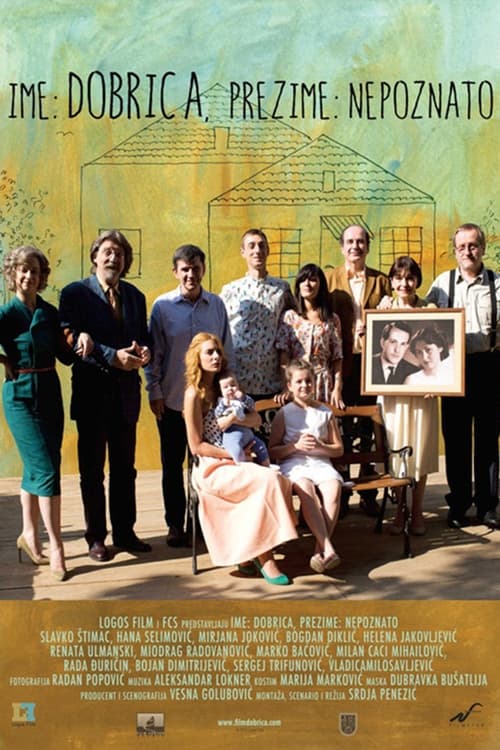
Dobrica's story opens like a modern fairy tale in a Belgrade that feels rough-edged and alive, a place where kindness looks almost supernatural. He is abandoned as an infant by his parents and left on a trash heap, but before the system can swallow him completely, an elderly married couple finds the baby and takes him in, naming him Dobrica. For a brief, precious stretch, he knows real love. Then society intervenes: once he starts school, the law strips him from the couple and sends him into the orphanage system, and the "system" becomes the force that shapes the next twenty-eight years of his life. He drifts between orphanages and prison, carrying the scars of neglect, yet what stands out immediately is that nothing in him hardens in the usual way. He grows up poor, unwanted, and mocked, but he remains almost disarmingly open, as if his first lesson in life is not how cruel people can be, but how stubbornly one can choose not to become cruel in return.
The film frames him from the beginning as a man whose face invites ridicule from those around him, because he seems too trusting, too gentle, too eager to believe that people mean well. Yet that naivety is not treated as stupidity; it is his spiritual engine. In his world, goodness is not a fragile moral preference but a practical method of surviving. Dobrica moves through Belgrade like someone looking for the hidden tenderness inside every hard surface. While his city contains another thread of story--a trio of young vandals moving through different parts of Belgrade and systematically damaging property--the film keeps returning to Dobrica, because he is the human center around which the other fragments begin to make sense. The city is restless and damaged, but Dobrica keeps insisting, by the way he lives, that damage is not the final truth.
As the story develops, Dobrica's life starts to ripple outward into other people's lives. He is repeatedly approached by people who expect to exploit him, laugh at him, or use his generosity against him, and each time the moment turns in an unexpected direction. The first major emotional shift comes when he falls in love with a young prostitute. The relationship begins in the language of transaction and distance, but Dobrica does what he always does: he sees a person where others see only a role. He does not approach her as a client or a moral judge, but as someone capable of being loved. That alone destabilizes the usual power dynamics around her, because Dobrica's affection is not cynical, strategic, or manipulative. It is sincere enough to make honesty feel possible.
The film then sharpens its moral point through one of its clearest scenes of deception and reversal. A drug-addicted woman tries to scam Dobrica by claiming that her young daughter is gravely ill with cancer and needs money for an operation. It is the sort of lie that depends on fear, compassion, and urgency all at once. Dobrica, instead of hesitating, gives her all the money he has without complaint. When he later learns the truth--that the child is not sick and that he has been manipulated--he does not become angry. He becomes happier. The lie, which should have humiliated him, turns into proof that the little girl is healthy. "She's not sick," is the emotional logic of his reaction, and that is all that matters to him. The mother and the daughter are thrown off balance by his response. They have expected outrage, accusation, maybe violence. Instead, they are met by a man whose heart is so intact that even deception is transformed into a source of relief. In that moment, the film makes its central claim explicit: Dobrica's trust does not merely survive betrayal; it alters the moral atmosphere around the betrayal itself.
From there, the film expands the circle of people drawn into his orbit. Dobrica's home slowly becomes more than a private residence. It becomes a refuge, a gathering place, a kind of accidental sanctuary where family and friends and nearly everyone he has ever met can find shelter. The house is not presented as a grand symbol of success. It is lived-in, crowded with memory and contradiction, but it radiates welcome. People who once stood outside Dobrica's life begin to step in. The drama is not driven by revenge or upward mobility; it is driven by the gradual softening of hardened people. Suspicion gives way to trust. Despair gives way to hope. One lie after another is answered not with punishment but with mercy, and that mercy starts changing the people who receive it.
At one point, the film introduces a strikingly intimate image: a single white room with a blue tent in it, associated with Boban and Boris and a relationship that seems beyond ordinary language. The room feels like a private universe carved out of the larger chaos of the story, a space of tenderness, secrecy, and vulnerability. The white walls and blue tent create a visual contrast that suggests both purity and shelter, as if the film is pausing to show that love and companionship can exist in forms society does not know how to name. The story does not stop to over-explain this bond; it lets the image do the work. In a film so committed to the possibility of human goodness, this room functions like a visual promise that intimacy itself can be a form of resistance.
Dobrica's own past remains a shadow over everything. He is not a man who has simply "stayed nice" despite hardship; he is someone who has had to build a soul in the ruins of institutional life. The orphanages and prison are not background details. They are the machinery of his suffering. And yet the film refuses to make suffering the final definition of his identity. Instead, it shows how his brief early experience of being loved by the older couple survives inside him like a buried ember. That is the explanation for everything that follows. He knows what it is to be wanted, and because of that he cannot fully surrender to the world's ugliness. He keeps acting as though love is normal, as though generosity is rational, as though people can be redeemed by being treated as if redemption is already possible.
There are no confirmed deaths in the available story material, and the film does not appear to hinge on a body count or a violent massacre. Its tension is moral and emotional rather than lethal. The major confrontations are built around suspicion, exploitation, misunderstanding, and ridicule. People test Dobrica, mock him, and attempt to use him, but each confrontation ends with his good nature disarming them. The prostitute is not destroyed by his love; she is exposed to a different way of being seen. The addict and her daughter are not punished; they are transformed by the fact that he refuses to respond to their lie with contempt. The vandalizing youths remain a separate thread in the city's life, a reminder that Belgrade contains more anger and destructiveness than Dobrica alone can solve, but the film's emphasis stays fixed on his influence rather than on their crimes. The world is not "fixed" in some grand political sense. Instead, small human miracles begin accumulating around one man who refuses to stop believing.
As the narrative moves toward its end, the tone becomes increasingly restorative. The film has set up Dobrica as someone the world repeatedly misunderstands, but the ending shifts that dynamic. Those around him begin to recognize that what seemed like foolish optimism is actually a kind of wisdom. His faith in people is not naive in the shallow sense; it is active, patient, and contagious. The people who once laughed at him are no longer simply laughing. They are beginning to feel ashamed of their cynicism, or at least disturbed by the contrast between his openness and their own defensiveness. The energy of the film changes from accusation to reconciliation.
The final movement is not about a shocking twist or a hidden villain being unmasked. The twist is Dobrica himself. The viewer begins to understand that the "plot" is not leading toward punishment for bad people, but toward the revelation that goodness can be structurally transformative. The prostitute, the addicted mother, the child, the friends, the family, and the drifting people who pass through Dobrica's home all become part of the same emotional ecology. His house, once just one more battered place in the city, becomes a living proof of the film's thesis: if someone keeps opening the door, eventually the world starts learning how to come in without fear.
The story ends on a note of fulfilled hope. Dobrica's love does not erase pain, and his life history remains tragic in its origin, but the final feeling is one of earned grace. He has not been rewarded with wealth or power. He has been rewarded with connection. The people around him have been changed by the simple, astonishing experience of being trusted. The movie closes as a modern adult fairy tale should: not with a miracle that ignores reality, but with a miracle that bends reality toward mercy. Dobrica remains who he has always been--abandoned, battered, overlooked--but now the space around him has become less hostile, more human, and more like the world it could have been all along.









What is the ending?
In the ending of "Dobrica, Last Name Unknown," the film culminates in a poignant confrontation between Dobrica and the ghosts of his past. As he grapples with his identity and the weight of his choices, he ultimately finds a sense of closure. The film concludes with Dobrica accepting his past and moving forward, leaving behind the shadows that have haunted him.
As the final scenes unfold, we see Dobrica standing alone in a dimly lit room, the air thick with tension. The camera captures the flickering shadows on the walls, reminiscent of the memories that have plagued him throughout the film. He takes a deep breath, his face a mixture of determination and vulnerability. The weight of his past decisions hangs heavily on his shoulders, and the audience can feel the internal struggle as he confronts the ghosts of his former self.
In the next scene, Dobrica steps outside into the cool night air. The streetlights cast a soft glow, illuminating his path as he walks with purpose. Each step signifies a move away from the burdens he has carried for so long. The sound of his footsteps echoes in the silence, a rhythmic reminder of his resolve to change.
As he reaches a familiar spot from his past, the memories flood back--faces of friends and foes, moments of joy and sorrow. The camera lingers on his expression, capturing the flicker of regret and the glimmer of hope. He pauses, allowing the memories to wash over him, but instead of succumbing to despair, he embraces them as part of his journey.
In a powerful moment of realization, Dobrica looks up at the night sky, the stars twinkling above him. This moment symbolizes his acceptance of the past and his readiness to forge a new path. The film emphasizes the importance of acknowledging one's history while also moving forward.
The final scene shows Dobrica walking away from the camera, his silhouette gradually fading into the distance. The audience is left with a sense of resolution, as Dobrica has chosen to leave behind the shadows that once defined him. The film closes on a note of hope, suggesting that while the past may shape us, it does not have to dictate our future.
Throughout this ending, the fates of the main characters are intertwined with Dobrica's journey. While some characters remain in the shadows of his past, their presence serves as a reminder of the choices he has made. Dobrica's acceptance of his past signifies a turning point, not just for him, but for those who have been affected by his actions. The film leaves viewers contemplating the complexities of identity, redemption, and the possibility of change.
Is there a post-credit scene?
In the movie "Dobrica, Last Name Unknown," there is no post-credit scene. The film concludes its narrative without any additional scenes or content after the credits roll. The story wraps up with a poignant reflection on the life and legacy of the protagonist, Dobrica, leaving the audience with a sense of closure regarding his journey and the themes explored throughout the film. The absence of a post-credit scene emphasizes the film's focus on its central message rather than extending the narrative further.
What motivates Dobrica to embark on his journey throughout the film?
Dobrica is driven by a deep sense of loss and a quest for identity. As he navigates through his past, he grapples with the memories of his family and the impact of his upbringing, which fuels his desire to understand himself and his place in the world.
How does Dobrica's relationship with his family evolve during the film?
Throughout the film, Dobrica's relationship with his family is strained and complex. Initially, he feels disconnected from them due to unresolved issues and past traumas. As the story progresses, he confronts these feelings, leading to moments of reconciliation and understanding, which ultimately help him heal.
What role does the setting play in Dobrica's character development?
The setting serves as a reflection of Dobrica's internal struggles. The contrasting environments he encounters--ranging from his childhood home to the bustling city--symbolize his journey from isolation to connection. Each location evokes specific memories and emotions, pushing him to confront his past and grow.
Who are the key supporting characters in Dobrica's journey, and how do they influence him?
Key supporting characters include Dobrica's childhood friend, who represents a link to his past, and a mentor figure who challenges him to face his fears. These characters provide guidance and provoke introspection, ultimately shaping Dobrica's decisions and growth throughout the film.
What specific events trigger Dobrica's moments of self-discovery?
Several pivotal events trigger Dobrica's self-discovery, including a confrontation with a family member that forces him to confront his past, and a chance encounter with a stranger that opens his eyes to new perspectives. These moments are emotionally charged, leading him to reflect on his choices and aspirations.
Is this family friendly?
"Dobrica, Last Name Unknown" is a film that delves into complex themes and emotional struggles, which may not be suitable for younger audiences or sensitive viewers. Here are some potentially objectionable or upsetting aspects:
-
Themes of Loss and Grief: The film explores deep emotional pain related to loss, which may be distressing for children or those sensitive to such topics.
-
Family Conflict: There are scenes depicting intense family dynamics and conflicts that can be emotionally charged and may be difficult for younger viewers to process.
-
Mental Health Struggles: The film addresses issues related to mental health, which may include scenes that portray anxiety, depression, or other psychological challenges.
-
Violence or Threatening Situations: There may be moments of tension or implied violence that could be unsettling for children.
-
Emotional Turmoil: Characters experience significant emotional struggles, which could evoke strong feelings in viewers, particularly those who are sensitive to emotional distress.
Overall, the film's exploration of heavy themes and emotional depth may not be appropriate for all audiences, especially younger children.









