





























Popular
What motivates the main character, Yakovlev, to engage in duels throughout the film?
How does the relationship between Yakovlev and the character of Princess Mary develop throughout the film?
What role does the character of the Count play in Yakovlev's life and the duels he participates in?
What is the significance of the duel between Yakovlev and the Count, and how does it impact the story?
How does the film portray the societal expectations of masculinity through the character of Yakovlev?
Should I watch it?
Ask Your Own Question

What is the plot?
Sorry, we aren't able to watch and write up a full detailed plot yet. Check back in a few days.




What is the ending?
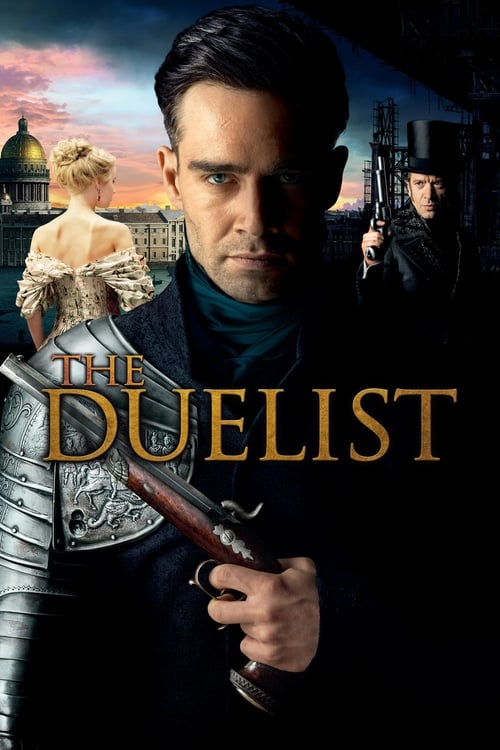
In the ending of "The Duelist," the protagonist, Yakovlev, confronts his rival, the nobleman, in a final duel. The duel culminates in a tragic resolution, revealing the complexities of honor, love, and revenge. Yakovlev's fate is sealed as he faces the consequences of his choices, while the nobleman's fate intertwines with the repercussions of their conflict.
As the film approaches its climax, the tension builds around the impending duel between Yakovlev and his rival, the nobleman. The scene opens with Yakovlev preparing for the confrontation, his face a mask of determination mixed with a hint of melancholy. He reflects on the series of events that have led him to this moment, the weight of his past decisions heavy on his shoulders. The atmosphere is thick with anticipation, the air charged with the unspoken rules of honor that govern their world.
The duel takes place in a secluded, misty clearing, surrounded by trees that seem to hold their breath in anticipation. The two men face each other, their eyes locked in a battle of wills. Yakovlev, dressed in a simple yet dignified manner, embodies the spirit of a man who has fought for his honor and the love he lost. The nobleman, adorned in finery, represents the arrogance of privilege and entitlement. As they draw their swords, the tension is palpable, each man aware that this duel is not just a fight for survival but a culmination of their intertwined fates.
The duel begins with a flurry of movement, the sound of clashing steel echoing through the clearing. Yakovlev fights with a fierce intensity, driven by a mix of vengeance and a desire to reclaim his lost honor. Each strike is fueled by memories of his past, the love he lost, and the injustices he has faced. The nobleman, confident and skilled, counters with a sense of superiority, believing that his status grants him an advantage.
As the duel progresses, the choreography of their fight becomes increasingly desperate. Yakovlev's determination shines through, but the nobleman's experience and arrogance begin to turn the tide. The camera captures the sweat glistening on their brows, the gritted teeth, and the raw emotion etched on their faces. The stakes are not just physical; they are deeply personal, a clash of ideals and identities.
In a pivotal moment, Yakovlev manages to gain the upper hand, disarming the nobleman and forcing him to the ground. The scene is charged with a mix of triumph and sorrow as Yakovlev stands over his fallen rival, sword poised. Yet, instead of delivering a fatal blow, he hesitates, caught in a moment of reflection. The weight of his choices hangs heavy in the air, and he realizes that killing the nobleman will not bring back what he has lost.
In a surprising turn, Yakovlev lowers his sword, choosing mercy over vengeance. This act of compassion is a defining moment for his character, showcasing his growth and the internal struggle he has faced throughout the film. The nobleman, humiliated and defeated, is left to grapple with the consequences of his actions and the life he has led.
The film concludes with Yakovlev walking away from the duel, a solitary figure against the backdrop of the misty forest. His fate remains uncertain, but there is a sense of resolution in his choice to spare his rival. The final shot lingers on his face, a mixture of relief and sorrow, as he contemplates the path ahead. The nobleman, on the other hand, is left to confront the reality of his defeat, a man stripped of his pride and forced to reckon with the emptiness of his pursuits.
In the end, "The Duelist" leaves the audience with a poignant reflection on the nature of honor, the cost of revenge, and the complexities of human emotion, encapsulated in the fates of its main characters. Yakovlev's journey is one of redemption, while the nobleman's downfall serves as a cautionary tale of the perils of arrogance and entitlement.
Is there a post-credit scene?
The movie "The Duelist" produced in 2016 does not have a post-credit scene. The film concludes its narrative without any additional scenes after the credits roll. The story wraps up with the resolution of the main character's journey, leaving the audience with a sense of closure regarding the themes of honor, love, and the consequences of one's choices. The focus remains on the emotional weight of the final moments rather than any further developments or cliffhangers.
What motivates the main character, Yakovlev, to engage in duels throughout the film?
Yakovlev, a former officer in the Russian army, is driven by a complex mix of honor, personal vendetta, and the societal expectations of masculinity in 19th century Russia. His need to prove himself and reclaim his lost status after being wronged fuels his participation in duels, which he views as a means of asserting his identity and navigating the rigid social hierarchy.
How does the relationship between Yakovlev and the character of Princess Mary develop throughout the film?
The relationship between Yakovlev and Princess Mary evolves from a chance encounter to a deep emotional connection. Initially, Yakovlev is captivated by her beauty and grace, but as they interact more, their bond deepens. Mary becomes a source of solace for Yakovlev, and their shared moments reveal their vulnerabilities, ultimately complicating Yakovlev's motivations as he grapples with his feelings for her amidst the backdrop of his dueling life.
What role does the character of the Count play in Yakovlev's life and the duels he participates in?
The Count serves as both an antagonist and a catalyst in Yakovlev's life. He embodies the aristocratic values that Yakovlev despises, and their rivalry is marked by a series of escalating duels. The Count's actions often provoke Yakovlev, pushing him into situations that challenge his moral compass and sense of honor, ultimately leading to a confrontation that forces Yakovlev to confront his own motivations and the consequences of his choices.
What is the significance of the duel between Yakovlev and the Count, and how does it impact the story?
The duel between Yakovlev and the Count is pivotal, representing the culmination of their rivalry and the clash of their ideologies. It is not just a physical confrontation but a symbolic battle for honor and identity. The outcome of this duel significantly impacts Yakovlev's trajectory, forcing him to confront the futility of his actions and the cost of his obsession with honor, leading to a profound transformation in his character.
How does the film portray the societal expectations of masculinity through the character of Yakovlev?
The film intricately portrays societal expectations of masculinity through Yakovlev's character, who feels compelled to uphold a code of honor that dictates his actions. His participation in duels is a reflection of the pressure to assert dominance and prove his worth as a man in a society that values bravery and reputation. This portrayal highlights the internal conflict Yakovlev faces as he navigates his desire for personal integrity against the backdrop of societal norms.
Is this family friendly?
"The Duelist," produced in 2016, is not considered family-friendly due to several potentially objectionable elements. Here are some aspects that might be upsetting for children or sensitive viewers:
-
Violence and Duels: The film features multiple duels, which include sword fighting and bloodshed. The intensity of these scenes may be disturbing to younger audiences.
-
Death and Injury: Characters experience serious injuries and fatalities, which are depicted in a graphic manner, contributing to a dark atmosphere.
-
Themes of Revenge and Honor: The narrative explores themes of vengeance and personal honor, which may be complex and unsettling for younger viewers to understand.
-
Emotional Turmoil: Characters undergo significant emotional struggles, including betrayal and loss, which may evoke strong feelings and could be distressing.
-
Historical Context: The film is set in a tumultuous historical period, which includes elements of social injustice and moral ambiguity that may be challenging for younger audiences to grasp.
These elements contribute to a mature tone that may not be suitable for children or sensitive viewers.







