





Popular
What is the significance of Reginaldo Rossi's relationship with his family in the film?
How does Reginaldo Rossi's passion for music influence his personal relationships?
What challenges does Reginaldo Rossi face in his career throughout the film?
How does the film portray Reginaldo Rossi's rise to fame?
What role do Reginaldo Rossi's friendships play in the story?
Should I watch it?
Ask Your Own Question

What is the plot?
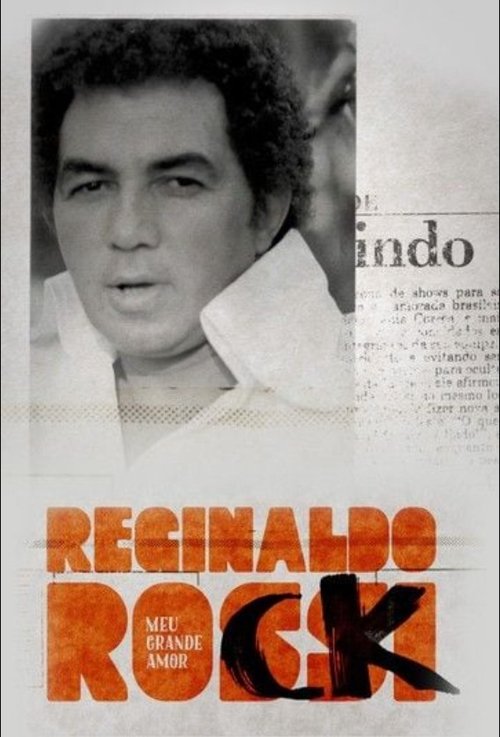
The film is not a conventional death-filled narrative at all, but a short documentary-homage that follows Reginaldo Rossi from his Recife origins through his rock years with The Silver Jets and into the legacy that surrounds his death in 2013. Since the released summaries do not provide a scene-by-scene cut, exact timestamps, or a hidden fictional twist structure, the most accurate spoiler is a linear retelling of the life story the documentary assembles from interviews, archive material, and staged reenactments.
The documentary opens by placing Reginaldo Rossi in the center of his own legend, not as the "King of Brega" first, but as a young Recife-born artist whose path could have gone in a very different direction. The early framing emphasizes that he comes from a family background, youth, and musical curiosity that do not yet look like the life of a national star. He is presented as someone who once considered engineering and teaching, only to drift toward music as if the pull of performance is stronger than any practical career. The tone is affectionate and reflective from the start, because the film is built around remembrance: friends, family, and musicians speak of him as a figure who already belongs to history.
From there, the story moves back into his beginnings, showing how he teaches himself and how music becomes the center of his identity. The documentary dwells on his guitar practice, his early confidence, and the idea that he absorbs the sounds around him until he can turn them into a style of his own. Recife is not just a birthplace here; it is the emotional ground of his life. The city's atmosphere, its clubs, and its popular musical culture shape him before fame arrives. The film repeatedly suggests that Rossi understands audience emotion very early. He is not portrayed as a distant virtuoso, but as someone who listens closely to ordinary feeling, which later becomes the core of his appeal.
The first major turn in the narrative is the revelation of how important his rock period really is. The film refuses to let the audience think of Reginaldo Rossi only as a sentimental brega singer. Instead, it rewinds to the era of The Silver Jets, when he stands inside the Jovem Guarda orbit and performs with a much more rock-oriented posture. This phase is repeatedly emphasized as an overlooked foundation of his career. In the documentary's logic, the later popular image of the crooner is built on top of this earlier, more rebellious musical identity. That is one of the film's central revelations: the man later known for emotional ballads and barroom lament was once a young rock performer with a very different public face.
As the film layers in interviews, the surrounding voices deepen that portrait. Family members and close associates speak of his upbringing and temperament, and the movie uses those testimonies to sketch a man who is at once warm, mischievous, disciplined, and highly aware of how to connect with an audience. Artists such as Eduardo Araújo, Falcão, Lúcio Maia, Marcelo D2, Otto, Xico Sá, Renato Barros, Sylvinha, Rosemary, and others appear in the web of remembrance, each reinforcing some part of the myth and history around him. Their stories are not presented as competing truths so much as fragments of a collective portrait. The documentary's main dramatic method is accumulation: one memory leads into another, and each testimony makes Rossi larger.
The film's emotional center shifts again when it begins to link his early rock ambitions to the path that later makes him a national icon. The documentary shows that Rossi does not simply abandon one style and adopt another; rather, he transforms. The rock singer gradually gives way to the artist who will be recognized for songs of heartbreak, everyday longing, and nightlife melancholy. His later identity as the "Rei do Brega" is not treated as a downgrade but as a reinvention, and the film repeatedly argues that he crosses genres without prejudice or embarrassment. This is one of its strongest biographical revelations: Rossi's artistry comes from refusing to respect the boundaries that critics might try to impose on him.
The documentary's interview structure gives special weight to the social world around him. There are reminiscences of nightclubs, bars, rehearsals, and performance spaces, all of which become symbolic stages for his artistic persona. The bar especially matters. It is not merely a setting for songs like "Garçom," but the emotional landscape of his fame: a place where heartbreak is shared, exaggerated, sung aloud, and turned into communal ritual. The film uses this environment to suggest that Rossi's greatness lies in recognizing the dramatic value of ordinary nightlife. He sings not for distant prestige, but for people sitting at tables with drinks, memories, and disappointments.
At this point the documentary moves toward the popular image that made him beloved. It recounts how his work reaches a broader audience and how his fame expands beyond Pernambuco into national recognition. The transition is presented as gradual rather than sudden. There is no single lightning-bolt breakthrough in the available summaries; instead, the film frames his rise as the result of persistence, adaptability, and a rare instinct for turning feeling into melody. The legendary status of songs such as "Garçom" functions as proof of that success, because those songs crystallize the voice the public learns to associate with him: intimate, dramatic, a little ironic, and deeply human. The documentary suggests that his art works because it sounds lived-in.
One of the most important structural choices in the film is to mix archival remembrance with fictionalized reenactments performed by his son, Roberto Rossi. That detail gives the documentary a family intimacy that shapes the entire experience. The son does not just represent the father physically; he helps restage a life that is at once public and private, famous and domestic. This creates a haunting effect, because the film's remembered figure is always both Reginaldo Rossi the celebrity and Reginaldo Rossi the father, friend, and son. The reenactments are not there to invent drama where none exists; they help bridge the gap between testimony and memory, turning biography into embodied recollection.
The documentary also highlights how Rossi's public personality is inseparable from his private one. He is recalled through jokes, stories, and affectionate anecdotes, including the kind of interview moments that reveal his sharp tongue and easy charisma. One recurring anecdotal texture in the surrounding coverage involves his social ease and his ability to turn conversation into performance, even in casual settings like airport encounters or backstage memories. These fragments reinforce the sense that Rossi is always "on," not in a superficial way, but as someone whose personality naturally spills into performance. The line between life and stage remains porous throughout the film.
As the narrative progresses, the film settles into a commemorative mode that is increasingly aware of mortality. The summaries make clear that the documentary ultimately runs through to 2013, the year of Rossi's death from lung cancer. That death is the only one clearly identified in the available material, and it is not presented as part of a murder, accident, or conspiracy plot; it is the factual endpoint of a life story. The film's emotional force comes from the contrast between the vibrant public persona and the finality of that loss. The final years are not described as a mystery to solve, but as a closing movement in a memorial portrait.
The death itself becomes the documentary's strongest unresolved feeling: not a twist, but an ending that reorients everything that came before it. Once the film reaches that point, the earlier scenes of youth, music, bars, and reinvention take on elegiac weight. The work seems to insist that his legacy survives precisely because the songs understood ordinary sadness so well. There are no reported deaths of other major characters in the available summaries, and no additional fatal confrontations are identified. The emotional conflict is instead between forgetting and remembering, between reducing Rossi to one phase of his career and recognizing the full arc of his life.
The closing movement is therefore communal rather than climactic in a fictional sense. Friends, musicians, family members, and artists who admired him collectively affirm that Reginaldo Rossi mattered far beyond a single label or era. The film ends by underlining how his career bridges rock, popular romance, and the working-class emotional life of Brazilian nightlife. Recife remains the spiritual anchor of the story, and the documentary's final effect is to place him back inside the city and culture that made him, even as the audience is left with the knowledge that he is gone.
The last impression is one of grateful mourning. Reginaldo Rossi is remembered not as a figure who is defeated, exposed, or overthrown, but as an artist whose reinventions finally converge into a lasting cultural identity. The film's final scene, as described in the published summaries, does not hinge on a final confrontation or a dramatic reveal. It closes in tribute, with the collective voice of memory confirming what the documentary has been building all along: that the man who began as a Recife boy with musical curiosity becomes, through a lifetime of reinvention, one of Brazilian popular music's most enduring presences.
More Movies Like This
Browse All Movies →

What is the ending?
In the ending of "Reginaldo Rossi: Meu Grande Amor," Reginaldo Rossi reflects on his life and career, surrounded by his loved ones. He faces his mortality with grace, cherishing the memories and the impact he has made through his music. The film concludes with a poignant celebration of his legacy, emphasizing the love and admiration he has garnered throughout his life.
As the final scenes unfold, we find Reginaldo Rossi in a hospital room, where he is grappling with his health issues. The atmosphere is heavy with emotion as family members and close friends gather around him. The camera captures the somber expressions on their faces, revealing the weight of the moment. Reginaldo, despite his frail condition, maintains a sense of humor and warmth, showcasing his resilient spirit. He shares heartfelt conversations with his family, reminiscing about the highs and lows of his career, the joy of performing, and the love he has for his fans.
In a particularly touching moment, Reginaldo's son expresses his admiration for his father's achievements, recounting how Reginaldo's music has influenced not only his life but also the lives of countless others. This exchange highlights the deep bond between father and son, filled with pride and love. Reginaldo, visibly moved, reflects on the importance of family and the legacy he wishes to leave behind.
As the film progresses, we see flashbacks of Reginaldo's most memorable performances, interspersed with scenes of him in the hospital. These flashbacks serve as a reminder of his vibrant life and the joy he brought to many through his music. The audience witnesses the evolution of his career, from humble beginnings to becoming a beloved figure in Brazilian music. Each performance is filled with energy, and the joy of the crowd is palpable, contrasting sharply with the quiet, intimate setting of the hospital.
In the final moments, Reginaldo gathers his strength to sing a few lines of one of his most famous songs, surrounded by his family. This act is both a farewell and a celebration of his life, encapsulating his passion for music and the love he has for those around him. The scene is filled with emotion, as family members join in, creating a harmonious moment that transcends the sadness of the situation.
As the film draws to a close, we see Reginaldo's family coming together, united in their love for him and the music he created. The screen fades to black, leaving the audience with a sense of closure and the enduring impact of Reginaldo Rossi's legacy. The final credits roll over a montage of his performances, reminding viewers of the joy and love he spread through his art.
In summary, the ending of "Reginaldo Rossi: Meu Grande Amor" encapsulates the themes of love, legacy, and the power of music, showcasing the profound connections between Reginaldo and his family, as well as his lasting influence on the world around him. Each character, particularly Reginaldo, finds a sense of peace and fulfillment as they reflect on their shared experiences and the love that binds them together.
Is there a post-credit scene?
In the movie "Reginaldo Rossi: Meu Grande Amor," there is no post-credit scene. The film concludes its narrative without any additional scenes or content after the credits roll. The focus remains on the life and legacy of Reginaldo Rossi, capturing his journey, struggles, and triumphs throughout the film. The ending emphasizes the emotional impact of his music and the love he shared with his fans, leaving the audience with a sense of closure regarding his story.
What is the significance of Reginaldo Rossi's relationship with his family in the film?
Reginaldo Rossi's relationship with his family is central to the narrative, showcasing the emotional struggles and support systems that shape his character. The film delves into his interactions with his mother, who represents his roots and the traditional values he grapples with as he pursues his music career. Their bond is tested by his ambition, but ultimately, it highlights the importance of familial love and understanding.
How does Reginaldo Rossi's passion for music influence his personal relationships?
Reginaldo's passion for music is a driving force in the film, often creating tension in his personal relationships. His dedication to his craft leads to conflicts with romantic partners who feel neglected. The film illustrates how his music serves as both an escape and a source of connection, revealing the sacrifices he makes for his art and the impact it has on those around him.
What challenges does Reginaldo Rossi face in his career throughout the film?
Throughout the film, Reginaldo faces numerous challenges in his career, including rejection from record labels, the struggle to find his unique sound, and the pressure to conform to commercial expectations. These obstacles test his resilience and determination, showcasing his journey from obscurity to fame while highlighting the emotional toll of pursuing a dream in the competitive music industry.
How does the film portray Reginaldo Rossi's rise to fame?
The film portrays Reginaldo Rossi's rise to fame through a series of pivotal moments, including his early performances in small venues, the support of loyal fans, and key collaborations with other artists. Each step is marked by both triumphs and setbacks, emphasizing the hard work and perseverance required to achieve success. The narrative captures the excitement and challenges of his ascent, culminating in significant performances that solidify his status as a beloved artist.
What role do Reginaldo Rossi's friendships play in the story?
Reginaldo Rossi's friendships play a crucial role in the story, providing him with emotional support and camaraderie as he navigates the ups and downs of his career. His friends often serve as a sounding board for his ideas and aspirations, and their loyalty is tested during moments of hardship. The film highlights how these relationships contribute to his personal growth and the sense of community that surrounds him in the music scene.
Is this family friendly?
"Reginaldo Rossi: Meu Grande Amor" is a biographical film that explores the life and career of the beloved Brazilian musician Reginaldo Rossi. While the film celebrates his music and personal journey, it does contain some elements that may not be suitable for all audiences, particularly children or sensitive viewers.
-
Themes of Loss and Grief: The film delves into the emotional struggles of Reginaldo, including the loss of loved ones, which may evoke sadness or discomfort.
-
Romantic Relationships: There are depictions of romantic relationships that may include mature themes, such as heartbreak and infidelity, which could be complex for younger viewers to understand.
-
Health Issues: The film addresses Reginaldo's battle with illness, including scenes that may portray his vulnerability and suffering, which could be upsetting for some.
-
Emotional Turmoil: Reginaldo experiences various emotional highs and lows throughout his life, including moments of despair and conflict, which may be intense for sensitive audiences.
-
Cultural Context: Some cultural references and social issues presented in the film may require a certain level of maturity to fully grasp their significance.
Overall, while the film is a tribute to Reginaldo Rossi's legacy, its emotional depth and mature themes may not be suitable for younger children or those who are particularly sensitive to such topics.







