























Popular
What challenges does Neïla face in her journey to succeed in her public speaking class?
How does the relationship between Neïla and Pierre Mazard evolve throughout the film?
What role does Neïla's family play in her development as a character?
What specific incident leads to Neïla's initial conflict with Pierre Mazard?
How does Neïla's experience in the public speaking competition reflect her personal growth?
Should I watch it?
Ask Your Own Question

What is the plot?
Sorry, we aren't able to watch and write up a full detailed plot yet. Check back in a few days.






What is the ending?
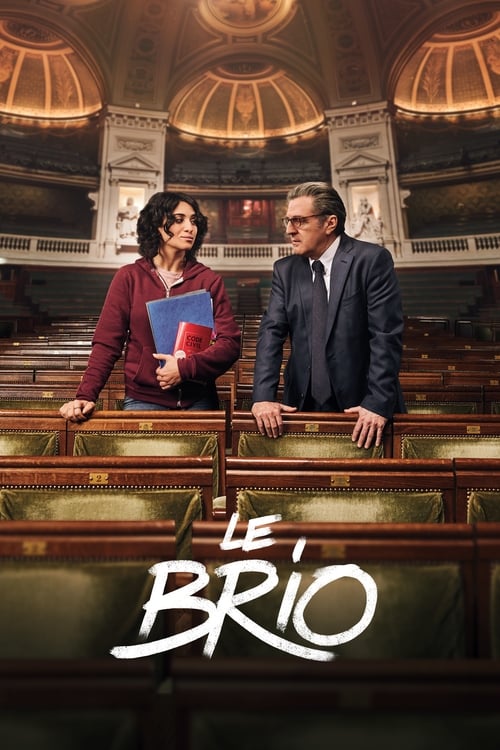
In the ending of "Le Brio," Neïla, after overcoming various challenges and prejudices, successfully defends her thesis in front of a panel, showcasing her growth and determination. Her relationship with her professor, Pierre Mazard, evolves into one of mutual respect and understanding. The film concludes with a sense of hope and empowerment for Neïla as she embraces her identity and future.
As the film approaches its climax, we find Neïla preparing for her final thesis defense. The atmosphere is tense, filled with anticipation and anxiety. Neïla, who has faced numerous obstacles throughout her journey, stands in front of the panel, her heart racing. She recalls the moments of doubt and the harsh criticisms she endured, particularly from her professor, Pierre Mazard, who initially challenged her abilities and pushed her to confront her own insecurities.
The scene shifts to the panel room, where Neïla is seated at a table, facing the stern expressions of the committee members. The room is filled with a palpable tension, the air thick with expectation. Neïla takes a deep breath, her hands trembling slightly as she begins her presentation. She speaks passionately about her research, her voice steadying as she gains confidence. The camera captures her determination, the way her eyes light up as she articulates her ideas, reflecting her growth from a hesitant student to a poised speaker.
As she presents, flashes of her journey play in the background--her struggles with her identity, the moments of doubt, and the support she received from unexpected places, including her evolving relationship with Mazard. The professor, who had once been a harsh critic, now watches with a mix of pride and concern, recognizing the transformation in Neïla. His own character arc is evident; he has grown from a cynical educator to someone who genuinely cares about his student's success.
The panel members begin to ask questions, some challenging, others supportive. Neïla responds with clarity and conviction, demonstrating her deep understanding of the subject matter. The tension in the room begins to dissipate as she navigates the questions with grace, showcasing her intelligence and resilience. The scene is interspersed with close-ups of the panelists, their expressions shifting from skepticism to admiration.
As the defense concludes, the panel members deliberate. Neïla stands anxiously, her fate hanging in the balance. The camera captures her internal struggle, the fear of failure juxtaposed with the hope of success. Finally, the panel announces their decision: Neïla has passed her thesis defense with flying colors. A wave of relief washes over her, and she allows herself a moment of joy, tears welling in her eyes as she realizes the significance of this achievement.
In the aftermath, we see Neïla and Mazard sharing a moment of mutual respect. He acknowledges her hard work and determination, and she expresses gratitude for his tough love that ultimately pushed her to excel. Their relationship has transformed from one of conflict to one of mentorship and understanding.
The film closes with Neïla walking out of the university, a sense of empowerment radiating from her. She is no longer just a student; she is a woman who has fought against the odds and emerged victorious. The final shot lingers on her face, a mixture of pride and hope for the future, symbolizing her journey and the possibilities that lie ahead.
In summary, the ending of "Le Brio" encapsulates Neïla's triumph over adversity, the evolution of her relationship with Mazard, and the broader themes of identity, resilience, and empowerment. Each character's fate reflects their growth, with Neïla stepping confidently into her future and Mazard embracing his role as a supportive mentor.
Is there a post-credit scene?
In the movie "Le Brio," there is no post-credit scene. The film concludes with a focus on the resolution of the main characters' arcs, particularly the relationship between Neïla, a young woman of North African descent, and Pierre Mazard, her professor. The ending emphasizes their growth and understanding of each other, leaving the audience with a sense of closure regarding their journey without any additional scenes after the credits. The film wraps up its themes of prejudice, personal development, and the power of education without extending into a post-credit sequence.
What challenges does Neïla face in her journey to succeed in her public speaking class?
Neïla, a young woman of North African descent, faces significant challenges in her journey to succeed in her public speaking class. Initially, she struggles with her confidence and the prejudices of her peers and the professor, Pierre Mazard. As a student from a marginalized background, she encounters skepticism and bias, particularly from Mazard, who is known for his controversial teaching methods. Neïla's determination to prove herself is tested as she navigates these obstacles, including her own self-doubt and the pressure to represent her community.
How does the relationship between Neïla and Pierre Mazard evolve throughout the film?
The relationship between Neïla and Pierre Mazard evolves from one of mutual disdain to a complex mentor-student dynamic. Initially, Mazard is dismissive and harsh towards Neïla, reflecting his own struggles and insecurities. However, as Neïla demonstrates her resilience and talent, Mazard begins to respect her. Their interactions are marked by tension, but as they confront their biases and personal issues, they develop a deeper understanding of each other, leading to a bond that transcends their initial conflicts.
What role does Neïla's family play in her development as a character?
Neïla's family plays a crucial role in her development as a character, providing both support and pressure. Her father, who is protective and traditional, embodies the expectations of their cultural background, which sometimes conflicts with Neïla's aspirations. This dynamic creates internal conflict for Neïla as she seeks to assert her independence while honoring her family's values. The support from her family, particularly during her moments of doubt, serves as a source of strength, motivating her to overcome challenges and pursue her dreams.
What specific incident leads to Neïla's initial conflict with Pierre Mazard?
The initial conflict between Neïla and Pierre Mazard arises during a public speaking class when Neïla, attempting to express herself, is met with Mazard's harsh criticism. He belittles her performance, making a derogatory comment about her background, which ignites her anger and frustration. This incident sets the tone for their tumultuous relationship, as Neïla feels marginalized and disrespected, while Mazard grapples with his own biases and the consequences of his teaching style.
How does Neïla's experience in the public speaking competition reflect her personal growth?
Neïla's experience in the public speaking competition is a pivotal moment that reflects her personal growth. As she prepares for the competition, she confronts her fears and insecurities, transforming from a hesitant speaker into a confident orator. The competition serves as a culmination of her hard work and determination, showcasing her ability to articulate her thoughts and stand up for herself. This moment not only highlights her growth as a speaker but also symbolizes her journey towards self-acceptance and empowerment, as she embraces her identity and challenges societal expectations.
Is this family friendly?
"Le Brio," produced in 2017, is a French film that explores themes of identity, prejudice, and personal growth. While it has comedic elements and a heartwarming narrative, there are aspects that may be considered objectionable or upsetting for children or sensitive viewers.
-
Racial and Cultural Tensions: The film addresses issues of racism and discrimination, which may be challenging for younger audiences to understand fully. Characters face prejudice based on their backgrounds, leading to uncomfortable situations.
-
Confrontational Dialogue: There are scenes featuring heated arguments and confrontations that may be intense or distressing, particularly for sensitive viewers. The language used can be blunt and confrontational.
-
Emotional Struggles: Characters experience significant emotional turmoil, including feelings of inadequacy, frustration, and anger. These moments may resonate deeply and could be upsetting for some viewers.
-
Mentorship Challenges: The relationship between the mentor and the student is fraught with tension, including moments of disappointment and conflict that may be difficult for younger viewers to process.
Overall, while "Le Brio" has positive messages about overcoming adversity and understanding, its exploration of serious social issues may not be suitable for all children or sensitive individuals.








