
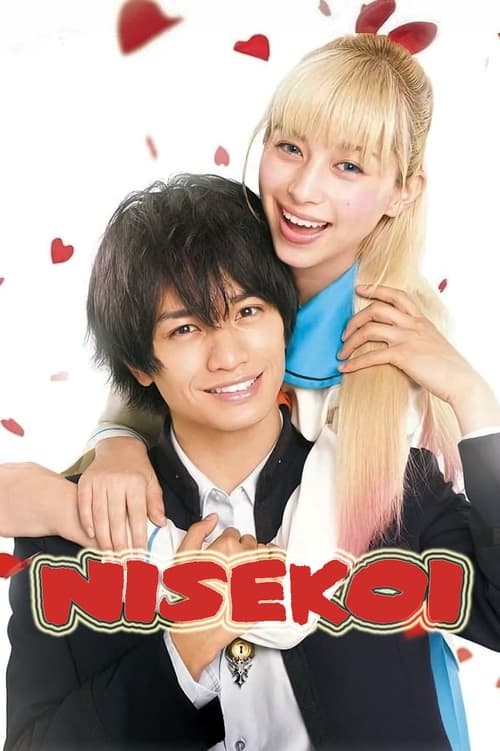














Popular
What are the main conflicts that arise from the love triangle between Raku, Chitoge, and Onodera?
What is the significance of the key and the lock in Nisekoi: False Love?
How does Raku's relationship with Chitoge evolve throughout the film?
What role does Onodera play in Raku's life and how does it affect the plot?
How does the film portray the theme of identity through Raku's character?
Should I watch it?
Ask Your Own Question

What is the plot?
Sorry, we aren't able to watch and write up a full detailed plot yet. Check back in a few days.
More Movies Like This
Browse All Movies →


What is the ending?
In the ending of "Nisekoi: False Love," Raku Ichijo finally confronts his feelings for Chitoge Kirisaki and acknowledges the bond they share. After a series of misunderstandings and emotional turmoil, Raku chooses to be with Chitoge, leading to a heartfelt confession. Meanwhile, other characters, such as Onodera, come to terms with their own feelings and the reality of the situation. The film concludes with a sense of resolution and the promise of new beginnings for the characters.
As the film approaches its climax, the tension between Raku Ichijo and Chitoge Kirisaki reaches a boiling point. The scene opens with Raku standing alone on a rooftop, the sun setting behind him, casting a warm glow that contrasts with the turmoil in his heart. He reflects on the journey he has taken with both Chitoge and Onodera, the two girls who hold pieces of his heart. The weight of his promise to find the girl he made a childhood vow with hangs heavily on him, but he realizes that his feelings for Chitoge have grown deeper than he initially understood.
In the next scene, we see Chitoge, her expression a mix of determination and vulnerability, as she prepares to confront Raku. She has been struggling with her own emotions, torn between her duty and her feelings. The camera captures her as she walks through the bustling streets, her heart racing with anticipation and fear of rejection. The vibrant colors of the city around her reflect her inner chaos, and the music swells, heightening the emotional stakes.
When they finally meet, the atmosphere is charged with unspoken words. Raku, his heart pounding, takes a deep breath and begins to speak. He tells Chitoge how much she means to him, how their time together has changed him, and how he can no longer deny his feelings. Chitoge, her eyes glistening with unshed tears, listens intently, her heart racing as she processes his confession. The moment is raw and filled with emotion, the world around them fading away as they focus solely on each other.
As Raku finishes his heartfelt declaration, Chitoge's expression shifts from uncertainty to clarity. She steps closer, her voice trembling as she admits that she feels the same way. The relief and joy that wash over Raku are palpable, and the two share a tender moment, their hands intertwining as they embrace the truth of their feelings. The camera captures this intimate moment, highlighting the warmth and connection between them, symbolizing the culmination of their journey together.
Meanwhile, Onodera, who has been a silent observer of their relationship, stands at a distance, her heart heavy with a mix of sadness and acceptance. She realizes that while her feelings for Raku are strong, she must respect his choice. The film briefly shifts to her perspective, showing her bittersweet smile as she acknowledges the happiness of her friends, even if it means letting go of her own dreams.
In the final scenes, the characters gather for a celebration, the atmosphere filled with laughter and joy. Raku and Chitoge, now a couple, share playful banter, their chemistry evident to everyone around them. The camera pans to their friends, who support them wholeheartedly, showcasing the bonds of friendship that have been strengthened through their trials.
As the credits begin to roll, the film leaves viewers with a sense of hope and new beginnings. Raku, Chitoge, and Onodera each stand at a crossroads, ready to embrace their futures. Raku and Chitoge, hand in hand, symbolize the power of love and the importance of being true to oneself, while Onodera's acceptance highlights the beauty of friendship and the strength to move forward, even in the face of unrequited love. The film closes on a note of optimism, suggesting that while love can be complicated, it ultimately leads to growth and understanding.
Is there a post-credit scene?
Yes, the movie "Nisekoi: False Love" features a post-credit scene that adds a light-hearted touch to the film's conclusion.
As the credits roll, the scene shifts to a sunny day at a school. Chitoge Kirisaki, one of the main characters, is seen walking through the schoolyard, her vibrant blonde hair catching the sunlight. She is in her school uniform, looking cheerful and slightly flustered as she clutches a small, wrapped gift in her hands.
The camera follows her as she approaches a familiar spot where she often meets Raku Ichijo, the male lead. Her heart races with anticipation, and there's a playful glint in her eyes, hinting at her feelings for him. As she reaches the designated meeting place, she finds Raku already there, leaning against a tree, looking relaxed yet curious about her arrival.
Chitoge, with a mix of shyness and determination, presents the gift to Raku. He looks surprised but pleased, his expression softening as he realizes the significance of the gesture. The moment is filled with a blend of tension and warmth, showcasing their evolving relationship.
As they exchange playful banter, the scene captures their chemistry, with laughter and teasing underscoring their bond. The post-credit scene ends on a light note, leaving viewers with a sense of hope and the promise of further adventures in their relationship, encapsulating the film's themes of love and connection.
What are the main conflicts that arise from the love triangle between Raku, Chitoge, and Onodera?
The love triangle creates significant emotional turmoil for Raku, who feels torn between his feelings for Chitoge and his long-standing affection for Onodera. This conflict is exacerbated by misunderstandings and the pressure of familial expectations, particularly as Raku's father insists on the importance of the promise he made. The tension escalates during pivotal moments, such as school events and personal revelations, forcing Raku to confront his true feelings and the implications of his choices.
What is the significance of the key and the lock in Nisekoi: False Love?
The key and the lock symbolize the promise made between Raku Ichijo and his childhood friend, which serves as a central plot device throughout the story. Raku carries the key, which he believes will unlock the heart of the girl he made a promise to, while the lock represents the mystery of who that girl is. This element drives Raku's interactions with Chitoge Kirisaki and other characters, as he navigates his feelings and the complexities of love.
How does Raku's relationship with Chitoge evolve throughout the film?
Raku's relationship with Chitoge begins with animosity, as they are forced into a false relationship to maintain peace between their families. However, as they spend more time together, their dynamic shifts from hostility to a deeper understanding and affection. Raku starts to see Chitoge's vulnerabilities and strengths, leading to moments of genuine connection, such as when they share personal stories and support each other during challenging times.
What role does Onodera play in Raku's life and how does it affect the plot?
Onodera is Raku's classmate and his first love, representing the idealized version of love for him. Her presence complicates Raku's feelings as he grapples with his promise to find his childhood friend while also developing feelings for Chitoge. Onodera's shy demeanor and her own feelings for Raku create tension, especially when she becomes aware of Raku's relationship with Chitoge, leading to emotional conflicts and moments of introspection for Raku.
How does the film portray the theme of identity through Raku's character?
Raku's character grapples with his identity as he navigates the expectations placed on him by his family and the conflicting emotions he feels for Chitoge and Onodera. His struggle to balance his role as the heir to a yakuza family with his desire for a normal high school life highlights his internal conflict. The film visually represents this through Raku's interactions, where he often appears torn between his responsibilities and his personal desires, culminating in moments of self-discovery and growth.
Is this family friendly?
"Nisekoi: False Love," produced in 2018, is generally considered a romantic comedy with themes of love and relationships. However, there are several aspects that may be potentially objectionable or upsetting for children or sensitive viewers:
-
Romantic Tension: The film features romantic relationships that include misunderstandings and jealousy, which may be confusing for younger audiences.
-
Mature Themes: There are discussions and situations involving love and attraction that may not be suitable for all children, as they touch on the complexities of relationships.
-
Physical Comedy: Some scenes include slapstick humor and physical interactions that could be perceived as inappropriate or uncomfortable, depending on the context.
-
Emotional Conflict: Characters experience emotional turmoil, including heartbreak and rivalry, which may be distressing for sensitive viewers.
-
Cultural References: Certain jokes or cultural nuances may not resonate with all audiences, potentially leading to misunderstandings.
Overall, while the film is light-hearted, these elements may warrant parental guidance for younger viewers.









