











Popular
What motivates the main character, Sarah, to investigate the mysterious events happening around her?
How does the antagonist, known as The Watcher, manipulate the characters throughout the film?
What role does Sarah's best friend, Lisa, play in the unfolding mystery?
What specific clues does Sarah uncover that lead her closer to the identity of The Watcher?
How does the relationship between Sarah and her partner, Mark, evolve as the tension escalates?
Should I watch it?
Ask Your Own Question

What is the plot?
Molly's nightmare begins with an ordinary inconvenience that turns out to be the opening through which someone slips into her life. When her laptop stops working, she takes it to a repair shop and, once it comes back in perfect working order, she does not suspect that anything has been altered inside it. The film then moves back to six weeks earlier, establishing that this is not a simple romance gone wrong but a stalking story built from the beginning around surveillance and manipulation. Molly is introduced as a warm, social chef who makes quick "20-minute meals" and posts about her life online, and the camera lingers on the intimacy of her routines as if those routines are already exposed to someone else. Her closest circle is small and affectionate: Ramona is her best friend, excited about the possibility that Molly may finally be dating again, while Angie keeps pushing her to move on from her ex. Dylan, Molly's ex, lives next door, and his constant presence makes the neighborhood feel uncomfortably close and emotionally unfinished.
The first true crack in Molly's life appears through the repaired laptop, though at this point she still thinks nothing is wrong. Soon after, she meets Jack Newsom at her favorite restaurant, and he feels almost impossibly perfect from the first conversation. He is charming and handsome, and their chemistry seems less like ordinary attraction than like a copy-and-paste fantasy: they like the same things, dislike the same things, share the same hobbies, and even start finishing each other's sentences. The relationship is presented with the dreamy smoothness of a wish fulfillment story, but the unease comes from how quickly Jack seems to know exactly how to meet Molly where she already is. The film makes that uncanny feeling visual as Jack appears in the same spaces Molly occupies, not merely nearby but unnervingly aligned with her schedule and preferences.
The illusion strengthens when Jack and Molly begin seeing each other more often. On one occasion, Molly is out jogging when Jack suddenly "randomly" runs into her, and the coincidence is framed less as fate than as a performance of fate. He talks film noir with her, another perfect detail that makes him feel tailored to her personality, and he keeps slipping into her life as if the world itself is arranging the romance. At home, Molly gets ready for a date in her underwear, a private moment that the story turns into a quiet warning because her laptop is already watching her. Ramona has given her the lingerie, thrilled by the prospect of this new relationship, and neither woman notices the flashing light on the laptop camera recording everything. The image is simple but devastating: Molly believes she is alone in the safety of her own room, while someone else is already present, invisible, and attentive.
Jack's behavior shifts from flattering to controlling with alarming speed. What begins as attention curdles into possessiveness, and Molly starts to feel the pressure of his constant need to be near her. He becomes clingy in a way that stops feeling romantic and starts feeling invasive, and his presence at social events grows increasingly inappropriate. He shows up uninvited at a formal event and later at a girls' luncheon, intruding where he has not been invited and making it clear that he does not respect boundaries. At one of these events, he forcefully kisses Molly, and the moment disturbs both her and her friends; the kiss is not passionate but territorial, a public claim disguised as intimacy. Even his physical contact has an aggressive edge, as if he is trying to pin down a relationship that Molly has not fully consented to. Her friends notice the problem before Molly fully articulates it, and the social atmosphere around her starts to darken. What looked like perfect compatibility now feels like surveillance wearing a handsome face.
Molly finally asks Jack for time apart. That choice triggers the story's sharp turn into outright digital abuse. Her bank accounts begin to drain, and half-naked photos of her appear online. The attacks are both financial and sexual, and they transform the situation from an emotionally manipulative romance into a coordinated campaign of humiliation and control. The implication is not subtle: the laptop repair was the access point, and the intimacy Jack seemed to share with her was built on stolen information. Molly's private life has been turned into material for punishment, and the cruelty is specifically calibrated to retaliate against rejection. She is not simply being stalked; she is being taught that refusing him comes with consequences.
From here, Molly's confusion hardens into suspicion, and suspicion becomes investigation. She, Ramona, and Angie start putting the pieces together, moving from emotional damage control into active search. The investigation leads them first to Jack's house and then to the computer store, where they discover the devastating truth: Jack is not Jack at all, but a man named Stewart. This revelation reorients the entire film. His polished romantic identity has been a mask, and the "perfect" man Molly thought she met was assembled from surveillance, imitation, and deception. They also learn that Stewart went to the same computer clinic recently, tying the repair job directly to his intrusion. At the store, the women uncover the real mechanism of the stalking: Stewart has a shrine to Molly and has copied her hard drive so that he has access to her entire life. The shrine is the film's most chilling image of obsession because it turns desire into worship and worship into ownership. Molly is no longer a person to him; she is an object arranged, preserved, and controlled in a hidden private altar.
The revelation overwhelms Molly. She rushes to the bathroom and splashes water on her face, trying to steady herself after confronting the scale of the violation. The scene works as a brief human pause inside the horror, a moment in which the body reacts before the mind can catch up. But Stewart does not give her time to recover. He attacks her and holds her at knifepoint, ending any illusion that the truth can be resolved through words alone. The threat becomes immediate and physical, and the story pivots from discovery to kidnapping. Stewart sedates Molly and takes her to his real house. The move from public exposure to private captivity is crucial: he has not merely been watching her life, he has been building a space to contain it.
Inside Stewart's real house, the fantasy fully collapses into terror. Molly discovers Dylan there, tied up and barely breathing. The sight recontextualizes everything that came before. Dylan, who had been positioned as a lingering ex living next door, is revealed to have become one more victim of Stewart's obsession, a person who has been removed from the world and kept as proof of Stewart's reach. Stewart kicks Dylan, and Molly begs him to stop. The violence is stark and humiliating because it shows how thoroughly Stewart has replaced romance with domination. His behavior is no longer coded as jealousy or overprotectiveness; it is direct sadism. The hidden house contains the literal evidence of what he has become, and Dylan's barely breathing body proves that the danger is now lethal even if the film's available summaries stop short of confirming an on-screen death.
At this point, Molly is forced into survival mode. One of the most twisted features of Stewart's control is that he demands emotional performance from her even while imprisoning her, and she responds by pretending to be in love with him. The deception is not romantic submission but tactical survival, a calculated attempt to buy time and reduce his aggression. He accepts the performance enough to stage a champagne toast, a grotesque parody of the relationship he has tried to manufacture. The toast is one of the film's cruelest moments because it reveals Stewart's need to turn coercion into ceremony. He still wants the appearance of a mutual bond, even while the reality is captivity and violence. Molly's forced politeness in that moment becomes an act of resistance disguised as surrender.
The psychological confrontation between Molly and Stewart deepens earlier in the story as well, especially in the car sequence described by reviewers, where he explains his worldview in chilling terms. During that exchange, he says that sometimes "we have to hurt the ones we love," a line that captures the film's central horror: Stewart genuinely believes his violence is a form of devotion. That philosophy explains everything that came before. The stalking, the invasion of privacy, the financial sabotage, the sexual humiliation, the kidnapping--they are all rationalized as expressions of love rather than betrayals of it. The film uses his words to show how abusers rewrite cruelty as care, then demand gratitude for the harm they cause. Molly's horror is not just that he is dangerous, but that he is dangerous while believing himself virtuous.
The ending, as documented in the available plot material, centers on this final convergence of revelation and captivity. Stewart has been exposed as Stewart, not Jack Newsom; his supposed romance is revealed as a surveillance operation powered by Molly's own repaired laptop and copied hard drive. Molly has discovered the shrine, the theft of her digital life, and the proof that he has turned her into the subject of an obsessive private mythology. She has also found Dylan tied up and barely breathing in the hidden house, confirming that Stewart's obsession has already moved into direct physical violence against people around her. What the summaries do not fully spell out is the precise beat-by-beat final rescue or legal aftermath, but they do make clear that the climax is built around Molly's forced confrontation with Stewart in his real home and the horrifying recognition of how far his control reaches.
By the time the story reaches its last stretch, the emotional logic is unmistakable. Molly begins as someone whose life is being watched through a repaired laptop, then becomes the target of a predatory romance, then the victim of financial theft and public humiliation, and finally the captive of a man who has built an alternate life around her image. Ramona and Angie function as the emotional counterweight to Stewart's isolation tactic, because they keep pushing Molly toward truth and action rather than letting her remain trapped in his version of reality. The film's major twist is not only that Jack is Stewart, but that every apparently spontaneous gesture of affection was engineered by surveillance from the start. His perfect compatibility with Molly is not destiny; it is data. His romance is not love; it is access. His tenderness is not intimacy; it is a trap.
The final horror of He Knows Your Every Move is therefore not a single attack but the revelation that Molly's entire relationship has been an invasion dressed as fate. The repaired laptop, the blinking camera light, the hacked accounts, the online humiliation, the fake identity, the hidden shrine, the sedative, the knife, the restrained body of Dylan--all of it belongs to the same escalating pattern of control. The film closes on the image of a man who has turned observation into possession and a woman who, after being manipulated into fear and isolation, finally sees the full shape of the nightmare surrounding her.





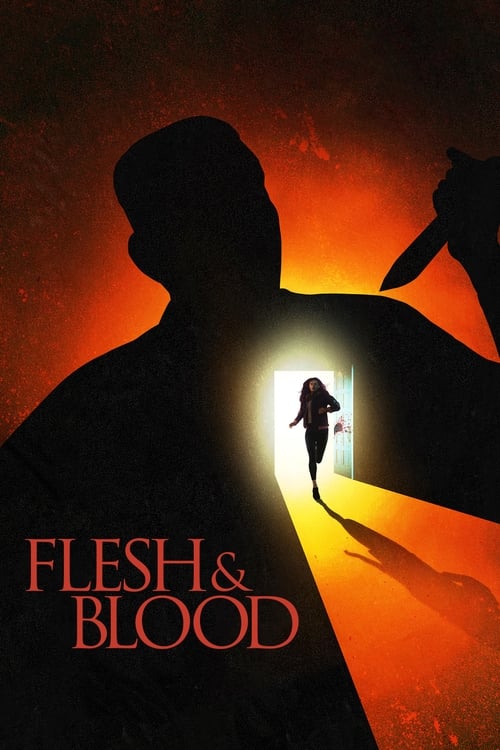
What is the ending?
In the ending of "He Knows Your Every Move," the protagonist, Sarah, confronts the antagonist, who has been stalking her throughout the film. In a tense showdown, she manages to outsmart him, leading to his capture. The film concludes with Sarah finding a sense of closure and empowerment, having reclaimed her life.
As the climax approaches, the atmosphere is thick with tension. Sarah, having pieced together the clues left by her stalker, prepares for a final confrontation. The scene opens in her dimly lit apartment, where she sits at her desk, surrounded by photographs and notes that detail her stalker's movements. Her heart races as she recalls the fear that has gripped her life for months. Determined to take control, she sets a trap, using herself as bait.
The camera shifts to the stalker, a shadowy figure lurking outside her window, his eyes glinting with a mix of obsession and malice. He believes he has the upper hand, confident in his ability to manipulate and control Sarah. As he enters her apartment, the tension escalates. Sarah, hiding in the shadows, watches him with a mix of fear and resolve. The room is silent except for the sound of her breathing, a stark contrast to the chaos that has defined her life.
In a sudden burst of courage, Sarah reveals herself, confronting him with a fierce determination. "You think you know me? You don't know anything!" she declares, her voice steady despite the adrenaline coursing through her veins. The stalker, taken aback, underestimates her resolve. He attempts to intimidate her, but Sarah stands her ground, her fear transforming into empowerment.
The confrontation escalates into a physical struggle. Sarah uses her surroundings to her advantage, grabbing a nearby lamp and swinging it at him. The fight is raw and desperate, showcasing her transformation from a victim to a fighter. As they grapple, the camera captures the intensity of their emotions--fear, anger, and a fierce will to survive.
In a pivotal moment, Sarah manages to gain the upper hand, knocking the stalker to the ground. She quickly retrieves her phone and calls the police, her hands shaking but her voice firm as she provides her location. The stalker, realizing he is losing control, attempts to escape, but Sarah blocks his path, her eyes blazing with defiance.
The police arrive just in time, apprehending the stalker as he tries to flee. The scene shifts to the aftermath, where Sarah stands outside her apartment, wrapped in a blanket, her expression a mix of relief and exhaustion. The officers assure her that she is safe now, and she watches as her tormentor is led away in handcuffs, a sense of closure washing over her.
In the final moments of the film, Sarah is seen sitting on her couch, the sunlight streaming through the window, illuminating her face. She takes a deep breath, reflecting on her journey. The camera zooms in on her face, capturing a newfound strength and resilience. The film closes with her looking out the window, a hint of a smile on her lips, symbolizing her reclaiming of life and the hope for a brighter future.
The fate of the main characters is clear: Sarah emerges victorious, having faced her fears and taken control of her life. The stalker, on the other hand, is captured and taken away, representing the consequences of his actions. The film ends on a note of empowerment, highlighting Sarah's transformation and the importance of resilience in the face of adversity.
Is there a post-credit scene?
In the movie "He Knows Your Every Move," there is no post-credit scene. The film concludes with a tense climax that wraps up the main storyline, leaving no additional scenes or teasers after the credits. The focus remains on the resolution of the characters' arcs and the final confrontation with the antagonist, providing a sense of closure without extending the narrative further.
What motivates the main character, Sarah, to investigate the mysterious events happening around her?
Sarah, portrayed as a determined and resourceful woman, is driven by a deep sense of responsibility and a desire to protect her loved ones. As strange occurrences escalate, she feels an overwhelming need to uncover the truth behind the unsettling events, which she believes are connected to her past. Her emotional state fluctuates between fear and determination, pushing her to confront her own vulnerabilities.
How does the antagonist, known as The Watcher, manipulate the characters throughout the film?
The Watcher, a shadowy figure with a keen understanding of human behavior, employs psychological tactics to instill fear and confusion among the characters. He uses technology to track their movements and predict their actions, creating a sense of paranoia. His manipulation is not just physical but deeply psychological, as he exploits their weaknesses and insecurities, making them question their own sanity.
What role does Sarah's best friend, Lisa, play in the unfolding mystery?
Lisa serves as both a confidante and a source of tension for Sarah. Initially supportive, she becomes increasingly skeptical of Sarah's theories about The Watcher. This skepticism creates a rift between them, highlighting Sarah's isolation as she delves deeper into the mystery. Lisa's character embodies the struggle between loyalty and doubt, ultimately forcing Sarah to confront her fears alone.
What specific clues does Sarah uncover that lead her closer to the identity of The Watcher?
Throughout her investigation, Sarah discovers a series of cryptic messages and surveillance footage that reveal The Watcher's patterns. She finds a hidden camera in her home, which leads her to realize that her every move is being monitored. Additionally, she uncovers connections between The Watcher and her past, including old photographs and documents that hint at a personal vendetta, driving her to piece together the puzzle.
How does the relationship between Sarah and her partner, Mark, evolve as the tension escalates?
As the tension escalates, Sarah and Mark's relationship becomes strained. Initially, Mark is supportive, but as Sarah becomes increasingly obsessed with the mystery, he grows frustrated and worried for her safety. Their conversations shift from loving and supportive to confrontational, revealing Mark's fear of losing Sarah to her obsession. This emotional turmoil adds depth to their relationship, showcasing the impact of external threats on personal connections.
Is this family friendly?
"He Knows Your Every Move" is a psychological thriller that contains several elements that may not be suitable for children or sensitive viewers. Here are some potentially objectionable or upsetting aspects:
-
Intense Psychological Themes: The film delves into themes of obsession and stalking, which may be distressing for younger audiences or those sensitive to such topics.
-
Violence and Threats: There are scenes that depict threatening behavior and violence, which could be unsettling.
-
Suspenseful and Tense Atmosphere: The film maintains a high level of tension throughout, which may be anxiety-inducing for some viewers.
-
Emotional Distress: Characters experience significant emotional turmoil, including fear and paranoia, which could resonate negatively with sensitive individuals.
-
Mature Language: The dialogue may include strong language that is not appropriate for younger viewers.
These elements contribute to the film's overall tone and may not be suitable for a family-friendly viewing experience.







