
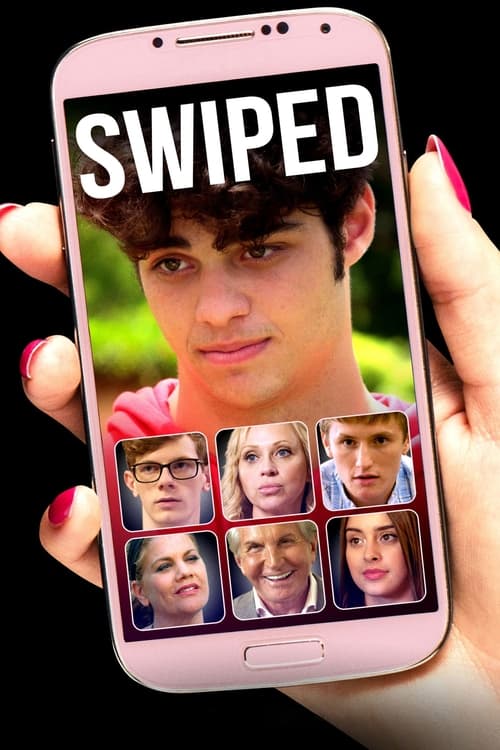



















Popular
What motivates the main character, Ben, to create the dating app?
How does Ben's relationship with his friends change throughout the film?
What challenges does Ben face while trying to launch the app?
How does Hannah's character influence Ben's decisions throughout the movie?
What role does the character of Ben's father play in his journey?
Should I watch it?
Ask Your Own Question

What is the plot?
James Singer starts as the kind of student who disappears in plain sight: a shy, brilliant community college freshman who cares far more about code than social rules, and the film immediately places him in sharp contrast to his new roommate, Lance Black, a rich, loud, sexually driven campus bro who treats every interaction like a transaction. James lives in the dorm room with Lance, and the room becomes the story's first battleground: one boy crammed with insecurity and technical talent, the other overflowing with confidence, privilege, and appetite. Lance's friends, including Dylan and Daniel, reinforce the social hierarchy by hazing and belittling James, making clear that in this world wit, charm, and money matter more than decency. James is also shown in his programming class as easily the smartest person in the room, and that quiet competence is exactly what Lance notices when he decides he needs help with an idea that sounds at once juvenile and dangerous: a hook-up app stripped of names, profiles, ages, and any of the emotional friction that makes dating human.
Lance's pitch is simple and shameless. He wants an app that reduces attraction to a picture, a swipe, a place, and a time, so he can get straight to sex without learning anything about the woman in front of him. He sells the fantasy with the casual entitlement of someone who has never had to question what he wants, and when James hesitates, Lance leans on two things: money and opportunity. The wealthy roommate bribes him with the promise of paying for a transfer to the Massachusetts Institute of Technology, dangling the elite future James can only imagine as the reward for doing the hard work now. James agrees, and the moment he begins building the app, the story shifts from awkward campus comedy into a darker satire about what happens when intelligence is put in service of appetite. As he sinks deeper into the project, the dynamic between the two roommates flips: James, once the bullied outsider, becomes the one who can boss Lance around because he controls the code, the timetable, and the architecture of the whole scheme. The app is launched under the name Jungle, and the campus starts to treat it like a novelty at first, a clever digital shortcut for people who want intimacy without vulnerability.
The film lets that success spread quickly, and the tone becomes increasingly uneasy as what looks like harmless hook-up convenience reveals itself as a machine for emotional disposability. Women on the app are not being invited into connection; they are being sorted, matched, and used in a system designed to erase identity. The thrill for Lance and his friends is exactly the problem, because the app's premise depends on reducing people to bodies and minimizing the consequences of treating them that way. The campus social world becomes the pressure cooker where this logic plays out, with coeds willingly posting photos and the app taking off fast enough that James initially mistakes popularity for validation. He is still a lonely kid inside all this success, and the film keeps reminding us that he is not a libertine like Lance but a socially stunted programmer trying to earn belonging through technical achievement. Yet the more Jungle grows, the more James is forced to see that he has helped build something that encourages humiliation instead of closeness.
The personal cost hits when James's former high school crush, Hannah, enters the picture. She also attends the same community college, turning the campus from a generic setting into an emotionally charged one, because the film ties James's present to a wound from the past: he had embarrassed Hannah at prom, and that humiliation hangs over their relationship like unfinished business. Every interaction between them carries the tension of someone who wants a second chance but has not yet earned it. As Jungle spreads, it threatens to poison that possibility, because James's involvement with the app makes him complicit in a culture that treats people like disposable options. The irony deepens when the technology meant to make him seem cool instead makes him less trustworthy to the person he most wants to impress. He is creating the very thing that could confirm Hannah's worst impression of him: that he is just another guy using people badly, only with better coding skills.
The largest twist lands when the app's reach stops being abstract and suddenly turns intimate. James discovers that his divorced mother is using Jungle. That revelation is the movie's moral knife turn, because it collapses the distance between the app's anonymous fantasy and a real human being he loves. The joke is gone in an instant. The app is no longer just a campus indulgence or a boys' experiment; it has entered the private, vulnerable life of his own family. His mother's presence on the app exposes what Jungle really does: it doesn't just facilitate hookups, it creates the conditions for loneliness, risk, and self-erasure. James is horrified because the technology he helped unleash now touches the one person who should have been outside its reach, and in that moment he sees himself not as a genius or an entrepreneur but as the author of something morally rotten.
That discovery changes everything. James can no longer pretend that the app is neutral, and the emotional recoil of seeing his own mother within Jungle's user base pushes him into action. He shuts the app down, ending its momentum just as it has become a sensation. The shutdown is not a quiet administrative choice; it is the film's decisive act of repentance, the point at which James stops serving Lance's fantasy and begins confronting the damage he has caused. Lance, whose entire identity is built around access without accountability, is furious, because the app was never just a tech project to him. It was a weaponized convenience that let him pursue women under conditions he controlled. When James pulls the plug, Lance loses the structure that made him powerful, and the partnership that began in domination ends in conflict. Their confrontation is the collision of two worldviews: Lance believes consequences are for other people, while James has finally understood that consequences are the whole story.
James's choice also reframes his relationship with Hannah. With Jungle gone, he is no longer actively deepening the harm he has already caused, but that does not automatically erase what he has done or repair the way he has treated her in the past. The romance thread depends on his willingness to become someone less shallow and more honest, and the film uses the fallout from the app as the crucible in which that change happens. Hannah is not just a reward at the end of a neat moral lesson; she represents the possibility that James might be capable of learning respect instead of merely performing apology. The app's destruction clears the path for him to face her as himself rather than as the architect of a digital hookup machine, and the story resolves with him winning her over despite everything that has happened. That outcome gives the film its romantic payoff, but it is framed by the recognition that trust is rebuilt only after harm is acknowledged.
What makes the ending land is that the movie does not treat the shutdown as a triumph of engineering but as a correction of character. James has used his intelligence to create a system that empties people out, and the sight of his mother on it makes the emptiness impossible to ignore. The final movement is therefore not about whether Jungle can be saved; it is about whether James can be saved from what Jungle has made him. He chooses to stop, and in doing so he rejects the version of himself that confused attention with meaning. Lance is left to deal with the collapse of his scheme, and the film's final emotional emphasis falls on James's restored sense of responsibility and the possibility of a healthier connection with Hannah. There are no deaths in the film, no physical fatalities to count, but the story is structured around the death of an idea: the fantasy that intimacy can be reduced to anonymity without hurting anyone. By the end, James understands that every swipe has a human cost, and the film closes on that lesson rather than on the app's success.
The result is a story that begins in dorm-room immaturity and ends in reluctant self-awareness. James Singer starts as the invisible genius who wants acceptance, Lance Black starts as the entitled player who wants conquest, and Jungle becomes the mirror that shows both of them what happens when desire is stripped of accountability. The app's launch, its explosive spread, and its collapse form the spine of the narrative, but the emotional core lies in James's reversal: first he is seduced by the promise of status, then he is sickened by the real-world reach of what he built, and finally he decides that shutting it down matters more than keeping the rewards. Hannah's presence gives the story a human center beyond the gimmick, and the discovery about James's mother turns the satire into an intimate reckoning. By the final scene, the film resolves not with victory in the usual tech-bro sense, but with the uneasy possibility that a damaged young man has finally seen the consequences of treating people like features in a product.
More Movies Like This
Browse All Movies →








What is the ending?
In the ending of "Swiped," the main character, Ben, confronts the consequences of his actions regarding the dating app he created. After a series of events that lead to personal revelations and conflicts, he ultimately decides to take responsibility for his mistakes. The film concludes with Ben and his love interest, a girl named Hannah, finding a way to connect on a deeper level, suggesting a hopeful future for their relationship.
As the film approaches its climax, we find Ben grappling with the fallout from the dating app he developed, which has caused chaos in the lives of many users. The app, designed to facilitate casual hookups, has spiraled out of control, leading to misunderstandings and emotional turmoil among its users. Ben's best friend, who initially encouraged the app's creation, begins to see the negative impact it has had on their social circle.
In a pivotal scene, Ben realizes that his intentions were misguided. He witnesses the pain and confusion that the app has caused, particularly in the lives of his friends and the women he has interacted with. This moment of clarity is marked by a confrontation with Hannah, who has been hurt by the app's implications. Their conversation is charged with emotion, as Ben expresses regret for his actions and the way he has treated relationships.
As the narrative unfolds, Ben decides to take action. He reaches out to those affected by the app, attempting to make amends and rectify the situation. This journey of redemption is not easy; he faces backlash and disappointment from those who feel betrayed. However, Ben's determination to change and his willingness to confront his mistakes begin to resonate with his friends.
In the final scenes, Ben and Hannah share a heartfelt moment where they discuss their feelings and the importance of genuine connections. This conversation serves as a turning point for both characters, as they acknowledge the superficiality that the app promoted and express a desire for something more meaningful. Their chemistry is palpable, and the audience can sense the shift from a casual relationship to a deeper emotional bond.
The film concludes with a sense of hope. Ben and Hannah are seen together, suggesting that they are ready to explore a real relationship built on honesty and understanding. The final shot captures them walking away together, symbolizing a new beginning and the potential for growth beyond the mistakes of the past.
In summary, the ending of "Swiped" encapsulates the journey of self-discovery for Ben, the importance of accountability, and the value of authentic relationships. Each character, particularly Ben and Hannah, emerges from the chaos with a clearer understanding of what they want and need from each other, setting the stage for a more meaningful connection moving forward.
Is there a post-credit scene?
In the movie "Swiped," produced in 2018, there is indeed a post-credit scene. After the main story concludes, the scene shifts to a humorous moment featuring the character of Sam. He is seen in a new setting, where he is attempting to navigate the world of dating apps once again. This time, however, he is using a different approach, showcasing his growth and newfound understanding of relationships. The scene is light-hearted and serves as a comedic reflection on the challenges of modern dating, leaving the audience with a sense of amusement and a hint of optimism about Sam's future romantic endeavors. The post-credit moment encapsulates the film's themes of personal growth and the complexities of love in the digital age.
What motivates the main character, Ben, to create the dating app?
Ben is motivated by a desire to impress his crush, a girl named Hannah, and to prove his worth to his friends. He believes that by creating a successful dating app, he can gain popularity and validation.
How does Ben's relationship with his friends change throughout the film?
Initially, Ben's friends support his app development, but as the app gains popularity, tensions rise. Ben becomes more focused on the app and less on his friendships, leading to conflicts and a sense of betrayal among his friends.
What challenges does Ben face while trying to launch the app?
Ben faces numerous challenges, including technical difficulties, competition from other dating apps, and the pressure of meeting the expectations of his friends and users. He also struggles with balancing his personal life and the demands of the app.
How does Hannah's character influence Ben's decisions throughout the movie?
Hannah serves as Ben's primary motivation for creating the app. Her interest in dating and relationships drives Ben to push the app's development, but her eventual disapproval of his methods forces him to reevaluate his priorities and the impact of his actions.
What role does the character of Ben's father play in his journey?
Ben's father represents a voice of reason and caution. He expresses concern about the implications of the app and the potential for it to harm relationships. His perspective challenges Ben to consider the ethical dimensions of his creation.
Is this family friendly?
"Swiped," produced in 2018, is a romantic comedy that centers around the world of dating apps and modern relationships. While it has comedic elements, it contains several aspects that may not be suitable for children or sensitive viewers.
-
Sexual Content: The film includes discussions and depictions of sexual situations, innuendos, and references to casual relationships that may be inappropriate for younger audiences.
-
Language: There are instances of strong language and crude humor that could be considered offensive or unsuitable for children.
-
Mature Themes: The narrative explores themes of dating, relationships, and the complexities of modern romance, which may include emotional situations that could be upsetting for some viewers.
-
Substance Use: There are scenes that depict drinking and partying, which may not be appropriate for younger viewers.
Overall, while "Swiped" aims for humor and light-heartedness, its content may not align with family-friendly standards.







