

Popular
What role does Gustavo Adolfo Bécquer play in the story?
How do the witches influence Bécquer's life and work?
What is the significance of the character of the witch named 'La Llorona'?
How does Bécquer's relationship with the female characters evolve throughout the film?
What are the key events that lead Bécquer to discover the truth about the witches?
Should I watch it?
Ask Your Own Question

What is the plot?
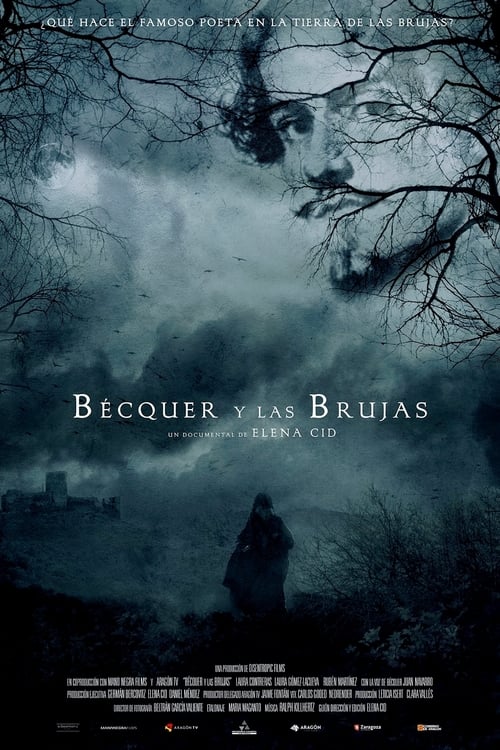
Bécquer and the Witches is not a conventional drama with deaths, murders, or a climactic confrontation; it is a historical documentary that turns Gustavo Adolfo Bécquer's 1864 retreat into a suspenseful journey through memory, landscape, and legend. Its narrative begins with Bécquer, weakened by health problems, arriving at the Monastery of Veruela in 1864, far from the noise and activity of Madrid, and immediately the film frames his isolation as both a physical necessity and the opening of a creative awakening.
The first images settle into the quiet severity of the monastery, where stone corridors, cold walls, and the surrounding slope of Mount Moncayo create a sense of distance from ordinary life. Bécquer, a poet already known for his romantic sensibility, is shown not as a figure of triumph but as a man forced inward by illness, taking refuge in stillness and contemplation. The documentary emphasizes that this retreat is the moment when he begins to write Letters from My Cell, especially the letters numbered VI, VII, and VIII, which become the central literary thread of the film. The screenplay-like structure of the documentary is built around that writing, so that the landscape itself seems to generate his observations, fears, and fascination with the supernatural.
From the monastery, the story moves outward toward the mysterious terrain around the Moncayo, and the atmosphere changes from quiet recovery to something charged and uncanny. The mountain is not just background; it is presented as a living presence, a place where mist, ruins, and local memory blur into legend. Bécquer's attention turns toward Trasmoz, the village beneath the mountain known as "the Village of the Witches," the only officially cursed village in Spain. That revelation gives the documentary its narrative engine: Bécquer is not merely resting at Veruela, he is being drawn into a region shaped by excommunication, folklore, and fear.
As he learns more about Trasmoz, the film broadens from literary inspiration into historical investigation. The documentary explains that the village remains marked by a centuries-old curse and excommunication, a fact that gives it an eerie permanence in Spanish cultural memory. The film treats this "damned" status not as a gimmick but as a sign of the long conflict between institutions, superstition, and local identity. Around this core, the documentary introduces the witchcraft legends associated with the village and the castle above it, letting oral tradition and historical commentary overlap until they feel inseparable.
One of the film's central revelations is that Bécquer's imagination is not simply romantic in the conventional sense; he emerges as an innovator who is deeply receptive to the supernatural, the marginal, and the folkloric. The documentary positions him as a writer who transforms what he encounters into literature, but also as a man transformed by what he sees. The legends of Trasmoz stop being quaint folklore and instead become material that shapes his poetic vision. In this sense, the story builds its tension not through danger to a character's life, but through the escalating pull of a world that seems older, darker, and more alive than the one he left behind.
The film then widens further into history, and the mood darkens again as it explores the origins of witch-hunt thinking, the medieval Inquisition, and the persecution of women accused of witchcraft. These sections function like an uncovering of buried truth: what local legend presents as witches, the documentary reframes as women whose knowledge of herbs and healing made them targets for suspicion and punishment. The tone becomes mournful and accusatory, revealing how fear turns knowledge into crime and how a community can rewrite care into sorcery. Instead of presenting witches as monsters, the film restores their humanity, showing them as healers and herbalists condemned for what they knew.
This historical expansion also gives the documentary its deepest emotional current. As Bécquer's writing absorbs the region's atmosphere, the film insists that the legends around him are not only about magic but about repression, ignorance, and the social need to label women as dangerous when they possess authority outside male control. The haunted quality of Trasmoz is therefore doubled: it is haunted by folklore and by injustice. The documentary's visual language matches this idea by moving between monastery stone, mountain shadow, and village ruin, as if the landscape itself preserves the memory of accusation.
The film's most concrete historical story comes through the account of Trasmoz's cursed status and the local witch tradition that surrounds it. The village's reputation is tied to its break with religious authority, and the documentary uses that background to explain why it became the natural home for witch legends. Rather than presenting a single dramatic event, the film layers history upon history until the audience understands that what Bécquer encounters is not a one-time mystery but a place where centuries of conflict have accumulated. The legends, then, are not random tales; they are the cultural residue of real social tension, real condemnation, and real fear.
The documentary also connects its ideas back to Letters from My Cell, presenting the text as the bridge between Bécquer's private illness and the public mythology of Trasmoz. The letters are not merely travel impressions but a literary transformation of place into vision. Through them, the film shows Bécquer looking at the world around him and discovering a darker creative register, one that blends Romantic emotion with supernatural suggestion. The documentary repeatedly returns to the notion that his illness isolates him enough to sharpen perception, and that isolation becomes the condition for artistic discovery.
Although the film does not contain deaths in the usual fictional sense, it does dramatize the historical violence attached to witch persecution, and one specific figure stands out in the wider lore around Trasmoz: the old woman known as the Tía Casca. In the local tradition referenced around the film, she is accused of witchcraft and ultimately dies after being thrown from a slope by villagers, a brutal example of how superstition can become literal murder. This episode is not staged as a present-tense confrontation in the documentary's main structure, but it hangs over the narrative as part of the terrible history the film is trying to expose. The result is that the story's emotional climax is not an action sequence but an ethical one: the viewer is led to see how fear, rumor, and communal hatred destroy the vulnerable.
By the final movement, the documentary has fully fused the personal and the historical. Bécquer's retreat to Veruela has become more than a recovery period; it has become the moment when he enters the imaginative territory that will shape his enduring work. Trasmoz remains what it has been throughout the film: a village carrying the weight of an excommunication that has never stopped defining it, a place where legend and history continue to overlap. The ending does not resolve a mystery or defeat a villain, because the film's true conclusion is thematic rather than dramatic. Instead, it leaves Bécquer standing at the intersection of poetry and folklore, transformed by what he has seen and heard, with the Moncayo, Veruela, and Trasmoz lingering as a single charged landscape of memory, superstition, and literary creation.
The final impression is one of haunting continuity. Bécquer does not "solve" the witches' mystery; he absorbs it, and the film closes by presenting that absorption as the source of his artistic power. The documentary's last feeling is that the poet has found in the cursed village and its legends not merely subject matter, but a new way to see the world--one in which beauty, fear, history, and injustice are inseparable.
What is the ending?
In the ending of "Bécquer and the Witches," the protagonist, Gustavo Adolfo Bécquer, confronts the witches who have been haunting him throughout the film. After a series of intense encounters, he ultimately manages to break their hold over him, reclaiming his life and creative spirit. The film concludes with Bécquer finding peace and inspiration, ready to embrace his future as a poet.
As the final act unfolds, the atmosphere is thick with tension. Bécquer, having delved deep into the world of the supernatural, stands in a dimly lit forest, the air heavy with an eerie silence. Shadows flicker around him, and the whispers of the witches echo in his mind, taunting him with visions of despair and doubt. He feels the weight of their influence, a suffocating presence that has plagued him throughout his journey.
In this climactic moment, Bécquer's internal struggle becomes palpable. He grapples with his fears and insecurities, the very emotions that the witches have exploited. As he stands firm, he recalls the love and support of his friends and family, particularly the memory of his beloved, who has been a guiding light in his darkest moments. This recollection ignites a spark of defiance within him.
With newfound resolve, Bécquer confronts the witches directly. The scene is charged with a surreal energy as he challenges their power, declaring that he will not be a pawn in their game any longer. The witches, initially taken aback by his boldness, begin to lose their grip on him. The forest around them transforms, the shadows receding as Bécquer's determination shines through.
In a final confrontation, Bécquer uses the very essence of his poetry as a weapon against the witches. He recites verses filled with hope and love, each word resonating with strength and clarity. The witches, unable to withstand the purity of his spirit, begin to dissolve into the mist, their power waning as Bécquer's voice rises in triumph.
As the last of the witches vanish, a sense of calm envelops the forest. Bécquer stands alone, breathing heavily but feeling liberated. The oppressive weight that had burdened him is lifted, and he realizes that he has reclaimed not only his life but also his creative spirit. The scene shifts to a brighter setting, symbolizing his renewed hope and inspiration.
In the final moments, Bécquer is seen sitting at a desk, quill in hand, as sunlight streams through the window. He begins to write, the words flowing effortlessly as he captures the beauty of life and love in his poetry. The film closes with a sense of optimism, leaving the audience with the impression that Bécquer has emerged stronger and more resolute, ready to face whatever challenges lie ahead.
The fates of the main characters are intertwined with this resolution. Bécquer, having faced his demons, is poised to embrace his future as a poet. The witches, once formidable adversaries, are vanquished, their influence extinguished. The beloved, who has been a source of strength for Bécquer, remains a symbol of hope and inspiration, suggesting that love can triumph over darkness. The film concludes on a note of renewal, emphasizing the power of creativity and the resilience of the human spirit.
Is there a post-credit scene?
In "Bécquer and the Witches," there is indeed a post-credit scene that adds an intriguing layer to the film's narrative. After the credits roll, the screen fades back in to a dimly lit forest, shrouded in mist. The atmosphere is thick with an eerie silence, broken only by the distant sound of rustling leaves.
The camera pans slowly, revealing a figure cloaked in shadows, standing at the edge of a clearing. As the figure steps into the light, it is revealed to be a woman, her features strikingly similar to the witch characters encountered throughout the film. Her eyes glint with a knowing intensity, suggesting a deep connection to the supernatural events that have unfolded.
She begins to chant softly, her voice weaving through the air like a spell. The ground beneath her feet starts to shimmer, and faint images of the main characters from the film flicker in and out of view, hinting at their unresolved fates. The scene evokes a sense of foreboding, as if the witch is summoning their spirits or perhaps even plotting a return.
As the chant reaches a crescendo, the camera zooms in on her face, capturing a mix of determination and malice. Just as the tension peaks, the screen abruptly cuts to black, leaving the audience with a lingering sense of mystery and anticipation for what might come next. This post-credit scene serves as a tantalizing tease, suggesting that the world of Bécquer and the witches is far from over, and that the supernatural forces at play may still have more stories to tell.
What role does Gustavo Adolfo Bécquer play in the story?
Gustavo Adolfo Bécquer is portrayed as a sensitive and introspective poet who becomes embroiled in a supernatural mystery involving witches. His character is driven by a quest for inspiration and truth, which leads him to confront the dark forces at play in the narrative.
How do the witches influence Bécquer's life and work?
The witches in the story serve as both muses and antagonists, influencing Bécquer's creative process. They embody the themes of love and despair, drawing him into their world and challenging his understanding of reality, ultimately shaping his poetry and personal journey.
What is the significance of the character of the witch named 'La Llorona'?
La Llorona is a pivotal character who represents the tragic consequences of love and loss. Her haunting presence serves as a catalyst for Bécquer's emotional turmoil, revealing his vulnerabilities and deepening his connection to the supernatural elements of the story.
How does Bécquer's relationship with the female characters evolve throughout the film?
Bécquer's relationships with the female characters, particularly the witches, evolve from fascination to fear and ultimately to a deeper understanding of love's complexities. These interactions reflect his internal struggles and the impact of the supernatural on his emotional state.
What are the key events that lead Bécquer to discover the truth about the witches?
Key events include Bécquer's encounters with the witches during his search for inspiration, the revelation of their tragic backstories, and the climactic moments where he must confront the reality of their existence. These experiences force him to reconcile his artistic ambitions with the dangers posed by the witches.
Is this family friendly?
"Bécquer and the Witches" is a film that intertwines elements of fantasy and horror, drawing from the works of the Spanish poet Gustavo Adolfo Bécquer. While it is visually captivating and rich in storytelling, there are several aspects that may not be suitable for children or sensitive viewers.
-
Supernatural Themes: The film delves into witchcraft and the supernatural, which may be unsettling for younger audiences. The portrayal of witches and their rituals can evoke fear or anxiety.
-
Dark Atmosphere: The overall tone of the film is dark and eerie, with scenes that may create a sense of dread. This atmosphere could be overwhelming for sensitive viewers.
-
Violence and Threats: There are moments of implied violence and threats that may be distressing. Characters face danger from supernatural forces, which could be frightening.
-
Emotional Turmoil: The characters experience significant emotional struggles, including fear, despair, and betrayal. These themes may resonate deeply and could be upsetting for some viewers.
-
Mature Themes: The film explores complex themes such as obsession, loss, and the consequences of one's actions, which may be difficult for younger audiences to fully grasp.
Overall, while "Bécquer and the Witches" offers a rich narrative experience, its darker elements and mature themes suggest that it may not be entirely family-friendly. Parents and guardians should consider these aspects when deciding if it is appropriate for children or sensitive viewers.





