









Popular
What is the significance of the victim's background in the story?
What role does the university setting play in the development of the plot?
Who is the main character in Asesinato en la Universidad and what drives their investigation?
How does Valeria's relationship with her friends evolve throughout the investigation?
What clues does Valeria uncover that lead her closer to the murderer?
Should I watch it?
Ask Your Own Question

What is the plot?
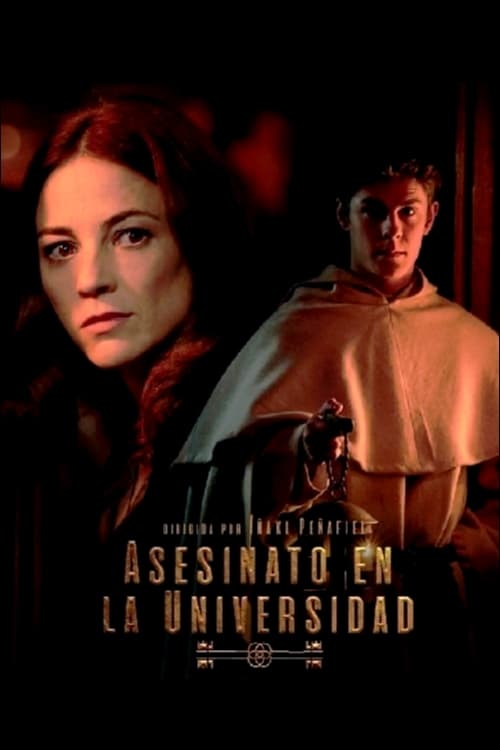
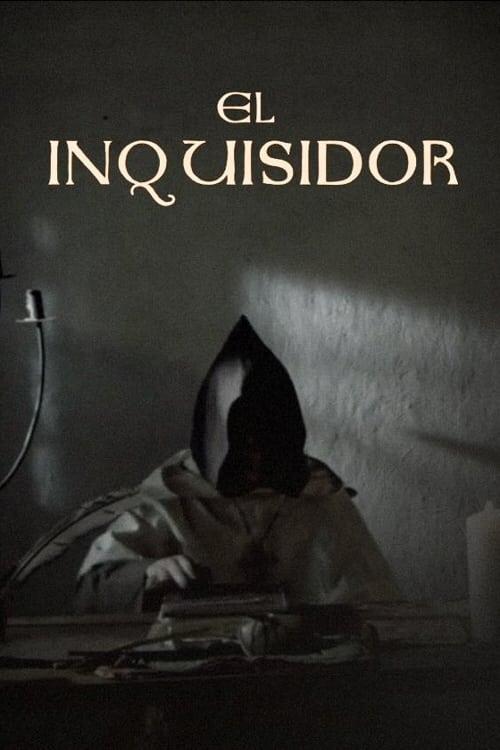
In 1543, at the University of Salamanca in Spain, a world of theological combat and intellectual hunger is already crackling beneath the stone arches, and that tension becomes the engine of the mystery that will echo through the centuries. Fray Antonio de Román, an Augustinian monk and university professor, teaches a small clandestine group of students hungry for forbidden knowledge, with Luis de León at their center, and his lessons push them toward humanist ideas that clash with the rigid orthodoxy of the age. The atmosphere is one of secrecy and danger: scholasticism stands against Renaissance thought, the Augustinians are entangled with the Dominicans in bitter rivalry, and the Inquisition looms over anyone suspected of straying from religious control.
Antonio de Román's death arrives as a mystery from the start, not as a clean historical fact but as a wound left open by suspicion. He dies in strange, unsettling circumstances after mentoring the students, and because the sources do not preserve a full scene-by-scene account, the film's central question is not merely that he dies, but whether he is murdered and by whom. The narrative frames his death as the starting point of a hidden chain of academic intrigue, doctrinal rivalry, and institutional fear, with the truth buried under five centuries of silence.
In the present day, historian and writer Lara Cabanes is brought in to untangle the case. A source identifies Father Galindo as the one who assigns her the investigation, which gives her mission a formal, almost ecclesiastical weight from the outset. Lara is not simply reading an old file; she is entering a living historical maze in which the past still resists exposure, and every clue she uncovers seems to lead deeper into the same unresolved tension that surrounded Antonio's death. The film's structure moves between the present and the sixteenth century through flashbacks, so each discovery Lara makes pulls her into the reenacted past, where the faces of the dead and the living begin to align with old papers, old motives, and old betrayals.
Her investigation is guided above all by the surviving letters written by Fray Luis de León, which become the principal thread connecting the modern historian to the sixteenth-century secret. Those letters are not just documents; they are intimate traces of a man positioned near the center of the old university circle, and they let Lara reconstruct the emotional and ideological climate around Antonio de Román. Through them, she begins to understand that the murder is inseparable from a broader struggle over knowledge itself: who may interpret scripture, who may teach, and what kinds of thought are considered dangerous enough to punish.
As Lara digs deeper, the film broadens from a single death into a portrait of Salamanca as an intellectual battlefield. The university is filled with argument, ambition, fear, and concealment, and the tension between Augustinians and Dominicans gives the case a political edge as well as a religious one. The Inquisition is never far away; even when it is not physically present, its pressure shapes every conversation and every silence, making every scholarly dispute feel like a step toward accusation. The more Lara learns, the more the old world appears less like a backdrop and more like a trap that is still snapping shut centuries later.
The historical material reveals Antonio de Román as a teacher who does not merely pass along doctrine but actively exposes his students to humanist ideas. That is exactly what makes him dangerous to the established order. He has a small, covert circle of four students, with Luis de León as the brightest and most prominent among them, and the group's secret discussions place them in direct conflict with the conservative structures surrounding the university. Their intellectual curiosity becomes a political liability, and the film makes clear that the murder cannot be separated from the fact that Antonio has given them access to ideas the age labels heretical.
The drama gains force as Lara uncovers how the boundaries between scholarship and orthodoxy have been weaponized. The sources explicitly place the story in a conflict between old scholastic knowledge and new Renaissance currents, as well as between Reformation and Counter-Reformation pressures. That tension gives every revelation an unstable quality: a text can be evidence, but it can also be danger; a conversation can be inquiry, but it can also be incrimination. The more Lara reads, the more she realizes that Antonio's death is the visible tip of a deeper struggle over what Spain is allowed to think.
The film's historical layer also enlarges into the larger legacy of Fray Luis de León himself. One source notes that the story connects to his later imprisonment in Valladolid and his famous return to teaching, when he says, "Como decíamos ayer"--"As we were saying yesterday." That phrase belongs to a later phase of his life than the 1543 murder mystery, but its presence in the film's historical imagination matters because it ties the investigation to the broader pattern of repression and survival that defines Luis's story. In other words, the mystery of Antonio de Román is not an isolated incident; it becomes one moment in the long persecution of humanist thought and the men who defend it.
Lara's progress is therefore not a simple detective's march from clue to clue. It is a descent into an atmosphere where the past seems to push back against being known. The documentary and dramatic layers of the film work together so that each new discovery in the present acquires a visual echo in the past: shadowed corridors, anxious faces, closed doors, and the sense that knowledge is always obtained at a cost. The historian's emotional trajectory follows that pressure. She begins as a researcher asked to clarify an old mystery, but as she learns how deeply the murder is tied to religious power and intellectual suppression, the case becomes morally urgent, almost personal.
What the available sources do not preserve, however, is a fully verifiable beat-by-beat record of the film's exact confrontations, the precise culprit behind Antonio de Román's death, or a complete list of every death shown on screen. The sources support the central premise that Antonio's demise is suspicious and that Lara works to determine whether he was murdered, but they do not provide enough detail to responsibly name a confirmed killer, to describe every sequence of violence, or to reconstruct the final scene in exact cinematic terms. Likewise, they do not give reliable timestamps, chapter markers, or a full chronology of all locations beyond the broad settings of the University of Salamanca, the present-day investigation, and the historical episodes embedded through flashback.
Even so, the narrative shape is clear: Lara follows the letters, confronts the rivalries between Augustinians and Dominicans, and exposes a world in which doctrine, ambition, and fear have fused into one deadly mechanism. The unresolved death of Antonio de Román remains the center of gravity, and the film's emotional payoff lies in the revelation that the murder is inseparable from the effort to suppress ideas that challenge authority. The final effect is less the solution of a puzzle than the recovery of a buried truth: that scholarship itself can become a battlefield, and that the desire to think freely may be treated as a crime.
By the end, the story leaves the sense that the past has finally been forced into the light, but not gently. Lara's investigation confirms that the death at Salamanca belongs to the same historical struggle that later shapes Luis de León's life and legend, and the film closes by binding the personal tragedy of Antonio de Román to the larger movement of persecution and intellectual resistance. The last image implied by the sources is not a neat victory but a hard-won clarity: a historian standing amid the ruins of old certainty, having uncovered enough to show that what was called an accident or a mystery was part of a much wider conflict over truth, power, and the right to teach.






What is the ending?
In the ending of "Asesinato en la Universidad," the main characters confront the truth behind the murder that has haunted the university. The investigation leads to a shocking revelation about the motives and relationships among the characters. Ultimately, justice is served, but not without emotional turmoil and consequences for those involved.
As the film approaches its climax, the tension escalates within the university setting. The protagonist, a determined investigator, pieces together the clues that have been scattered throughout the narrative. In a pivotal scene, they gather the key suspects in a dimly lit lecture hall, where the atmosphere is thick with anxiety and anticipation. Each character's face reflects a mix of fear, guilt, and defiance as the investigator lays out the evidence.
The investigator reveals that the murder was not a random act of violence but rather a calculated move driven by jealousy and ambition. The audience watches as the characters react to the unveiling of their secrets, with some breaking down in tears while others attempt to maintain their composure. The emotional weight of the moment is palpable, as friendships are tested and loyalties are questioned.
In a dramatic confrontation, one of the suspects, who had been a close ally to the victim, confesses to the crime. The confession is raw and filled with regret, showcasing the internal struggle of a character who was once driven by a desire for success but ultimately succumbed to darker impulses. The investigator listens intently, their expression a mix of relief and sorrow, understanding the complexity of human emotions that led to this tragic outcome.
As the police arrive to take the confessed murderer into custody, the remaining characters are left to grapple with the aftermath. The protagonist reflects on the fragility of trust and the consequences of ambition, feeling a deep sense of loss for the life that was taken and the lives that have been irrevocably changed. The film closes with a somber tone, emphasizing the impact of the events on the university community and the lingering questions about morality and justice.
In the final scenes, the investigator walks through the university campus, now eerily quiet, contemplating the lessons learned from the tragedy. The camera lingers on their face, capturing a mix of determination and sorrow, as they vow to continue seeking truth in a world where darkness can often overshadow light. The screen fades to black, leaving the audience with a haunting reminder of the complexities of human nature and the consequences of our choices.
Is there a post-credit scene?
In the movie "Asesinato en la Universidad," there is no post-credit scene. The film concludes its narrative without any additional scenes or content after the credits roll. The story wraps up with the resolution of the central mystery, leaving the audience with a sense of closure regarding the characters and the events that transpired throughout the film.
What is the significance of the victim's background in the story?
The victim's background is crucial as it reveals a history of academic rivalry and personal vendettas. Their past relationships with both students and faculty members provide a web of potential suspects, each with their own motives tied to jealousy, ambition, and betrayal.
What role does the university setting play in the development of the plot?
The university setting serves as a microcosm of academic life, filled with secrets, rivalries, and hidden agendas. It amplifies the tension as Valeria navigates through various departments, encountering faculty and students who may have motives related to the murder.
Who is the main character in Asesinato en la Universidad and what drives their investigation?
The main character is a determined and resourceful university student named Valeria. She is driven by a deep sense of justice and a personal connection to the victim, which fuels her relentless pursuit of the truth behind the murder.
How does Valeria's relationship with her friends evolve throughout the investigation?
Valeria's relationship with her friends becomes strained as the investigation progresses. Initially supportive, her friends grow increasingly concerned for her safety and the potential consequences of her digging into dangerous territory, leading to conflicts and moments of doubt.
What clues does Valeria uncover that lead her closer to the murderer?
Valeria uncovers a series of cryptic messages and hidden connections between the victim and several faculty members. Each clue reveals layers of deception, including a secret society within the university that complicates her understanding of the murder.
Is this family friendly?
"Asesinato en la Universidad," produced in 2018, is a thriller that revolves around a murder mystery set within a university environment. While the film is engaging and suspenseful, it does contain elements that may not be suitable for children or sensitive viewers.
Potentially objectionable or upsetting aspects include:
-
Violence: The film features scenes of murder and investigation that may be graphic or intense, which could be disturbing for younger audiences.
-
Murder Investigation: The themes of death and the emotional turmoil surrounding the investigation can evoke feelings of fear or anxiety.
-
Emotional Distress: Characters experience significant emotional pain, including grief and betrayal, which may be heavy for sensitive viewers.
-
Dark Themes: The narrative explores themes of crime, deception, and moral ambiguity, which may not be appropriate for all ages.
-
Tense Atmosphere: The overall tone of suspense and tension throughout the film may be unsettling for children.
These elements contribute to a mature viewing experience, making it less suitable for a family-friendly audience.






