
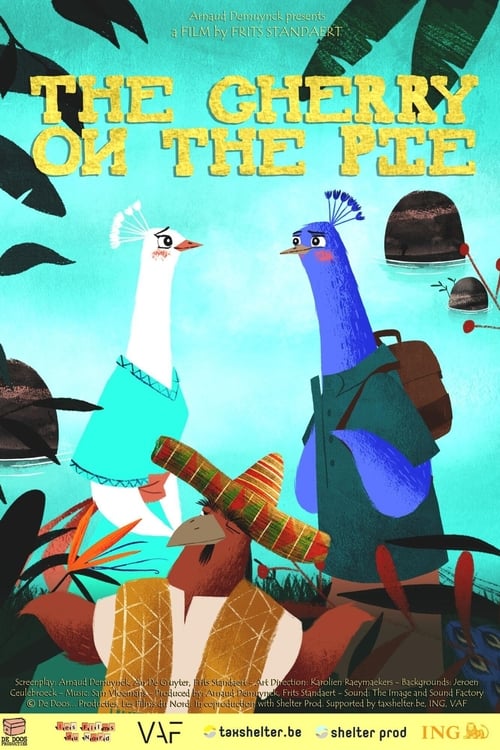






Popular
What motivates the main character, Mia, to pursue her passion for baking despite her family's disapproval?
How does the relationship between Mia and her best friend, Jake, evolve throughout the film?
What role does the local baking competition play in Mia's journey?
How does Mia's relationship with her family impact her baking journey?
What is the significance of the cherry pie in Mia's story?
Should I watch it?
Ask Your Own Question

What is the plot?
Sorry, we aren't able to watch and write up a full detailed plot yet. Check back in a few days.







What is the ending?
In the ending of "The Cherry on the Pie," the main character, Mia, confronts her past and makes a pivotal decision about her future. After a series of emotional revelations and confrontations with her family, she chooses to embrace her true self and pursue her passion for baking, leading to a heartfelt reconciliation with her estranged mother. The film concludes with Mia opening her own bakery, symbolizing her newfound independence and acceptance.
As the final act unfolds, the scene opens in Mia's childhood home, where tension hangs thick in the air. Mia stands in the kitchen, surrounded by the remnants of her family's traditional recipes, each one a reminder of the expectations placed upon her. Her mother, Claire, enters, and the two engage in a heated discussion about Mia's choices. Claire's face is a mixture of disappointment and concern, her voice trembling as she expresses her fears about Mia's future. Mia, feeling suffocated by her mother's expectations, finally finds the courage to voice her own dreams.
The camera captures the raw emotion in Mia's eyes as she declares her desire to open a bakery, a dream she has held close but never dared to share. Claire's expression shifts from anger to confusion, and for a moment, silence envelops them. The weight of unspoken words hangs in the air, and the audience can feel the tension crackling between them.
In a pivotal moment, Mia reveals a cherished family recipe for cherry pie, a symbol of her childhood and the love she has for baking. She explains how baking has always been her escape, her way of connecting with her late grandmother, who taught her the art of pie-making. Claire's demeanor softens as she listens, and the camera zooms in on her face, capturing the flicker of understanding that begins to dawn on her.
The scene transitions to a montage of Mia working tirelessly to prepare for the grand opening of her bakery. The visuals are vibrant, showcasing flour dust dancing in the sunlight, the rich colors of fresh fruits, and the warmth of the oven. Mia's determination is palpable; she is no longer the hesitant young woman but a confident baker, pouring her heart into each creation.
As the opening day arrives, the bakery is filled with the aroma of freshly baked goods. Friends and family gather, and Mia stands at the entrance, her heart racing with a mix of excitement and fear. Claire arrives, and the two share a tentative smile. The moment is charged with unspoken words, but there is a sense of hope in the air.
The final scene captures Mia serving her signature cherry pie to customers, her face glowing with joy. The camera pans to Claire, who takes a bite and closes her eyes, savoring the flavors. In that moment, the audience can see the reconciliation between mother and daughter, a bridge built through understanding and acceptance.
As the credits roll, the fate of each main character is clear: Mia has embraced her passion and found her voice, while Claire has begun to let go of her expectations, allowing her daughter to flourish. The film closes on a note of optimism, highlighting the importance of following one's dreams and the power of familial love.
Is there a post-credit scene?
In "The Cherry on the Pie," there is indeed a post-credit scene that adds a whimsical touch to the film's conclusion. After the credits roll, the screen fades back in to reveal a cozy kitchen setting, reminiscent of the film's earlier scenes. The camera pans slowly across the countertop, where a freshly baked cherry pie sits, glistening with a rich, red filling.
As the camera focuses on the pie, a hand enters the frame, playfully placing a cherry on top, symbolizing the film's title. The hand belongs to the main character, Mia, who is now smiling and wearing an apron, suggesting a newfound sense of peace and fulfillment after the tumultuous events of the film.
Mia looks directly at the camera, her eyes sparkling with mischief, and she says, "You know what they say, it's all about the cherry on top!" This line encapsulates her journey of self-discovery and the importance of embracing life's little joys, even after facing challenges.
The scene then cuts to a wide shot of Mia's friends entering the kitchen, laughing and chatting, as they gather around the pie. The warmth of their camaraderie fills the room, and the atmosphere is light and celebratory. The film ends on this note of friendship and joy, leaving the audience with a sense of hope and connection.
What motivates the main character, Mia, to pursue her passion for baking despite her family's disapproval?
Mia's motivation to pursue her passion for baking stems from her childhood memories of baking with her grandmother, who instilled in her a love for creating desserts. Despite her family's disapproval, which is rooted in their desire for her to follow a more traditional career path, Mia feels a deep emotional connection to baking as a form of self-expression and a way to honor her grandmother's legacy.
How does the relationship between Mia and her best friend, Jake, evolve throughout the film?
Initially, Mia and Jake share a platonic friendship, with Jake supporting Mia's baking endeavors. As the story progresses, their bond deepens, revealing Jake's romantic feelings for Mia. This evolution is marked by moments of vulnerability, such as when Mia confides in Jake about her fears of failure, and culminates in a pivotal scene where they share a heartfelt conversation about their dreams and aspirations, leading to a romantic turning point.
What role does the local baking competition play in Mia's journey?
The local baking competition serves as a catalyst for Mia's growth and self-discovery. It challenges her to push her creative boundaries and confront her insecurities. The competition also introduces her to rival bakers, which heightens the stakes and forces Mia to confront her fears of inadequacy. As she prepares for the competition, Mia learns valuable lessons about resilience, the importance of community support, and staying true to herself.
How does Mia's relationship with her family impact her baking journey?
Mia's relationship with her family is strained due to their lack of support for her baking aspirations. Her parents, particularly her mother, have traditional expectations for her future, which creates tension and feelings of isolation for Mia. This conflict drives her to prove herself, not only to her family but also to herself. As the story unfolds, Mia's determination to succeed in baking ultimately leads to moments of reconciliation and understanding with her family.
What is the significance of the cherry pie in Mia's story?
The cherry pie symbolizes Mia's journey of self-acceptance and her connection to her grandmother. It represents her desire to blend tradition with innovation in her baking. Throughout the film, the cherry pie becomes a recurring motif, reflecting Mia's growth as she learns to embrace her unique style while honoring her roots. The pie's final presentation at the competition serves as a culmination of her hard work and personal evolution.
Is this family friendly?
"The Cherry on the Pie," produced in 2019, is a film that explores themes of family dynamics, personal growth, and the complexities of relationships. While it is generally suitable for a family audience, there are a few elements that may be considered objectionable or upsetting for children or sensitive viewers.
-
Emotional Conflict: The film contains scenes of intense emotional conflict between family members, which may be distressing for younger viewers. These moments highlight misunderstandings and hurt feelings that can be quite raw.
-
Loss and Grief: There are references to loss and the impact it has on family members, which could evoke sadness or discomfort, especially for those who have experienced similar situations.
-
Mature Themes: The film touches on themes of betrayal and trust, which may be complex for younger audiences to fully grasp. These themes are explored through character interactions that may lead to emotional tension.
-
Parental Disputes: There are scenes depicting disagreements between parents that could be unsettling for children, as they may reflect real-life family issues.
-
Personal Struggles: Characters face personal challenges and insecurities that are portrayed in a way that may resonate deeply with sensitive viewers, potentially leading to feelings of empathy or discomfort.
Overall, while "The Cherry on the Pie" is not overtly graphic or inappropriate, its emotional depth and mature themes may require parental guidance for younger audiences.








