
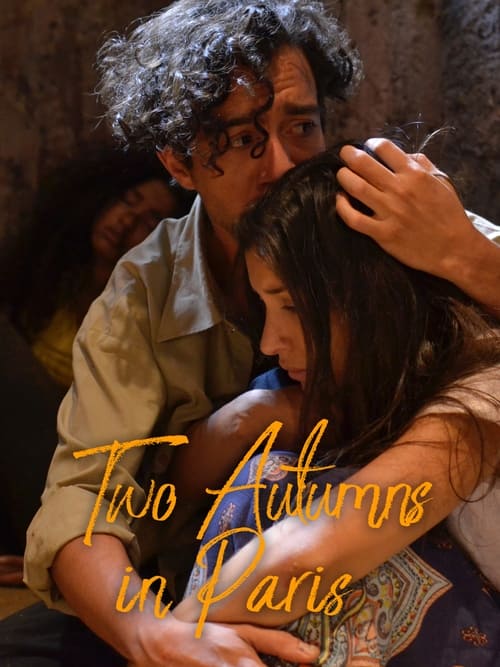













Popular
What motivates the main character, a young woman named Anna, to move to Paris?
How does Anna's relationship with her love interest, a man named Julien, develop throughout the film?
What role does the city of Paris play in the characters' journeys?
What challenges does Anna face as she adapts to life in Paris?
How do the supporting characters influence Anna's journey in Paris?
Should I watch it?
Ask Your Own Question

What is the plot?
The rain falls softly over Paris, a steady autumn drizzle that blurs the city's lights into streaks of gold and silver. Antonio Rodríguez, a Venezuelan-born law student, walks through the damp streets on his way to a human rights conference in 2019. The air is thick with memory, and as he passes the Seine, the past floods back--not as a distant echo, but as a living current that pulls him under. The story begins not in the present, but in the autumn of 1989, when Paris was still a city of dreams and revolutions, and when Antonio's life was about to be changed forever by a woman named María Teresa.
María Teresa is not just any student. She is a political refugee from Paraguay, a survivor of the brutal dictatorship of Alfredo Stroessner. She arrives in Paris with nothing but a suitcase, a forged passport, and the scars of imprisonment and torture. Her lover, a fellow activist, was executed by the regime; she barely escaped with her life. In Paris, she enrolls at the Sorbonne, hoping to disappear into the anonymity of the city. But María Teresa is not built for silence. She is fierce, passionate, and haunted by the ghosts of her homeland.
Antonio, meanwhile, is the opposite. He is the son of a wealthy Venezuelan family, raised in privilege, indifferent to politics, and focused solely on his law studies. He is charming, intelligent, and utterly unprepared for the storm that María Teresa brings into his life. Their first meeting is accidental--a collision in the library, books spilling to the floor, eyes locking in surprise. María Teresa is cold, guarded, but Antonio is persistent. He offers to help her find her books, and she reluctantly accepts.
"You're not from here," he says, noticing her accent.
"Neither are you," she replies, her voice sharp but not unkind.
Their conversations begin as polite exchanges, but soon deepen. Antonio is drawn to María Teresa's intensity, her fire, her refusal to be broken. She, in turn, is intrigued by his kindness, his lack of pretension, and the way he listens without judgment. Slowly, walls begin to crumble. One evening, as they walk along the Seine, Antonio asks her about her past. María Teresa hesitates, then tells him about the protests, the prison, the torture, the death of her lover. Antonio is stunned, horrified, but he does not turn away. Instead, he takes her hand.
"I'm here," he says. "You're not alone."
Their love blossoms in the autumn of 1989. They share small apartments, late-night conversations, stolen kisses in the shadow of Notre-Dame. María Teresa begins to heal, to laugh, to dream again. Antonio, once indifferent to politics, starts to see the world through her eyes. He reads about Latin American dictatorships, attends rallies, and even helps María Teresa organize a small protest in support of Paraguayan refugees. But María Teresa's heart is torn. She loves Antonio, but she cannot forget her homeland. The news from Paraguay is grim--Stroessner's regime is still in power, and the resistance is growing desperate.
One night, as they lie in bed, María Teresa whispers, "I have to go back."
Antonio sits up, alarmed. "Go back? To Paraguay? Are you mad? They'll kill you!"
"They already tried," she says, her voice steady. "But my people need me. I can't just hide here while they suffer."
Antonio pleads with her, begs her to stay, but María Teresa is resolute. "Love is not enough," she says. "Not when there's a country to save."
The tension between them grows. Antonio feels betrayed, abandoned. María Teresa feels guilty, but she cannot deny her duty. Their arguments become more frequent, more bitter. One night, after a particularly heated fight, Antonio shouts, "You're choosing a cause over me!"
María Teresa looks at him, tears in her eyes. "I'm choosing both," she says. "But if I have to choose, I'll always choose my people."
The climax comes in November 1989. María Teresa receives a message from a contact in Paraguay: the resistance is planning a major uprising. If they succeed, Stroessner could be overthrown. María Teresa knows she must be there. She packs her bags, writes Antonio a letter, and leaves Paris in the middle of the night.
Antonio wakes to find her gone. He reads her letter, his heart breaking. "I love you," she writes. "But I have to go. If I don't come back, know that I died fighting for something greater than myself."
The story jumps forward to 2019. Antonio is now a respected human rights lawyer, attending a conference in Paris. He is older, wiser, but still haunted by María Teresa. As he walks through the city, he sees her everywhere--in the faces of students, in the autumn leaves, in the sound of the rain. He gives a speech at the conference, speaking about the importance of standing up for justice, of never forgetting the past. Afterward, he is approached by an elderly woman, her face lined with age but her eyes still fierce.
It is María Teresa.
Antonio is stunned. "You're alive?"
She smiles, a sad, knowing smile. "I survived," she says. "But not without cost."
They sit together in a café, the years melting away. María Teresa tells him what happened after she left Paris. She returned to Paraguay, joined the resistance, and fought in the uprising that overthrew Stroessner. Many of her comrades died, including her best friend, who was executed by the regime. María Teresa herself was wounded in the final battle, but she lived. After the dictatorship fell, she stayed in Paraguay, helping to rebuild the country, to heal its wounds.
"I never stopped loving you," she says. "But I had to do what I did."
Antonio listens, his heart aching. "I never stopped loving you either," he says. "But I thought you were dead."
They talk for hours, sharing stories, regrets, dreams. María Teresa tells him about the people she lost, the battles she fought, the victories she won. Antonio tells her about his life, his work, his own struggles. They laugh, they cry, they remember.
As the sun sets over Paris, they walk along the Seine, just as they did in 1989. The city is different now, but the river is the same. María Teresa stops, turns to Antonio, and says, "I came back to see you. To say goodbye."
Antonio feels a pang of fear. "Goodbye? Are you leaving again?"
She shakes her head. "No. I'm staying. But I wanted to see you one last time, to tell you everything."
They embrace, holding each other tightly. The rain begins to fall, soft and gentle, washing away the years. María Teresa whispers, "Thank you for loving me."
Antonio whispers back, "Thank you for being you."
The film ends with Antonio walking alone through Paris, the city bathed in the golden light of autumn. He stops at a bridge, looks out over the Seine, and smiles. The past is not gone; it is part of him, part of his story. María Teresa's love, her courage, her sacrifice--they live on in him, in his work, in his heart. The rain continues to fall, but the sun breaks through the clouds, casting a rainbow over the city.
Antonio turns and walks away, his steps steady, his spirit renewed. The story of María Teresa and Antonio is not just a love story; it is a testament to the power of love, the cost of freedom, and the enduring strength of the human spirit.
Deaths: - María Teresa's lover is executed by the Paraguayan dictatorship before the film begins. - María Teresa's best friend is executed by the regime during the uprising in 1989. - Several unnamed comrades die in the uprising.
Major Revelations and Twists: - María Teresa's return to Paraguay and her role in the uprising. - The survival of María Teresa and her reunion with Antonio in 2019. - The impact of their love on Antonio's life and career.
Ending: - María Teresa and Antonio reunite in Paris in 2019. - María Teresa decides to stay in Paris, but their relationship remains bittersweet. - Antonio continues his work as a human rights lawyer, inspired by María Teresa's courage.
Character Secrets: - María Teresa's past as a political activist and refugee. - Antonio's transformation from a privileged student to a committed human rights lawyer.
Confrontations: - The argument between María Teresa and Antonio about her decision to return to Paraguay. - The emotional reunion between María Teresa and Antonio in 2019.
Resolution: - The story ends with Antonio walking through Paris, reflecting on his past and looking forward to the future, inspired by María Teresa's love and courage.







What is the ending?
In the ending of "Two Autumns in Paris," the main characters, Pierre and Émilie, confront their feelings for each other amidst the backdrop of their complicated lives. After a series of misunderstandings and emotional turmoil, they finally come to terms with their love, leading to a poignant resolution that leaves them hopeful for the future.
As the film draws to a close, Pierre, a man caught between his past and present, finds clarity in his feelings for Émilie. Meanwhile, Émilie, who has been navigating her own emotional struggles, realizes the depth of her connection with Pierre. The film ends on a hopeful note, suggesting that despite the challenges they faced, their love can flourish in the vibrant city of Paris.
Now, let's delve into the ending in a more detailed, chronological narrative.
The final act begins with Pierre standing alone on a bustling Parisian street, the autumn leaves swirling around him, mirroring the chaos in his heart. He reflects on the tumultuous journey he has taken, filled with moments of joy and pain. The camera captures his pensive expression, highlighting the weight of his decisions. He is torn between the comfort of his past and the uncertainty of his future with Émilie.
Meanwhile, Émilie is at a café, her fingers nervously tracing the rim of her coffee cup. She is deep in thought, replaying the moments they shared, the laughter, the arguments, and the undeniable chemistry. Her heart races as she contemplates reaching out to Pierre, knowing that their connection is something special, yet fearing the vulnerability that comes with it.
In a pivotal scene, Pierre receives a text from Émilie, inviting him to meet at their favorite park. The anticipation builds as he makes his way there, the camera capturing his hurried steps and the vibrant colors of the autumn leaves around him. He arrives, breathless and anxious, scanning the park for her familiar figure.
When they finally see each other, the atmosphere is charged with unspoken words. Émilie stands by a fountain, the sunlight glinting off the water, creating a magical backdrop. As Pierre approaches, their eyes lock, and the tension is palpable. They exchange tentative greetings, both aware of the emotional stakes at play.
In this moment, Émilie takes a deep breath, summoning her courage. She speaks first, expressing her feelings and the confusion that has plagued her. Pierre listens intently, his heart swelling with hope as she lays bare her vulnerabilities. He responds with honesty, sharing his own fears and the realization that he cannot imagine his life without her.
As they talk, the camera shifts to capture the surrounding beauty of the park--the laughter of children, the rustling leaves, and the distant sounds of the city. This vibrant setting contrasts with the emotional weight of their conversation, emphasizing the significance of their connection amidst the chaos of life.
The climax of their exchange comes when Pierre reaches for Émilie's hand, a simple yet profound gesture that signifies his commitment. They stand together, the world around them fading as they focus solely on each other. In this moment, they both understand that love requires courage and that they are willing to take that leap together.
The film concludes with a montage of Pierre and Émilie exploring Paris hand in hand, their laughter echoing through the streets. They visit iconic landmarks, share intimate moments, and embrace the beauty of their relationship. The final shot lingers on the two of them, silhouetted against the setting sun, symbolizing a new beginning filled with hope and possibility.
In the end, Pierre and Émilie emerge as individuals who have faced their fears and chosen love. Their journey reflects the complexities of relationships, the importance of communication, and the beauty of second chances. The film leaves the audience with a sense of optimism, suggesting that love can indeed thrive in the most unexpected circumstances.
Is there a post-credit scene?
In the movie "Two Autumns in Paris," there is no post-credit scene. The film concludes its narrative without any additional scenes or content after the credits roll. The story wraps up with the main characters reflecting on their experiences and the emotional journey they have undergone, leaving the audience with a sense of closure regarding their arcs and relationships.
What motivates the main character, a young woman named Anna, to move to Paris?
Anna, a young woman from a small town, is motivated to move to Paris in search of adventure and a fresh start after feeling trapped in her mundane life. She yearns for a deeper connection and a sense of belonging, which she believes she can find in the vibrant city.
How does Anna's relationship with her love interest, a man named Julien, develop throughout the film?
Anna's relationship with Julien begins with a chance encounter that sparks an instant connection. As they navigate the complexities of their lives, their bond deepens through shared experiences and emotional vulnerability, revealing their fears and desires. However, misunderstandings and external pressures challenge their relationship, forcing them to confront their feelings and the realities of love.
What role does the city of Paris play in the characters' journeys?
Paris serves as a backdrop that reflects the characters' emotional states and aspirations. The city's romantic ambiance and artistic culture inspire Anna and Julien, providing a canvas for their dreams and struggles. As they explore iconic locations, their experiences in the city shape their personal growth and the evolution of their relationship.
What challenges does Anna face as she adapts to life in Paris?
Anna faces several challenges as she adapts to life in Paris, including language barriers, cultural differences, and feelings of isolation. She grapples with homesickness and the pressure to fit into a new environment, which tests her resilience and determination to forge her own path.
How do the supporting characters influence Anna's journey in Paris?
The supporting characters, including Anna's new friends and colleagues, play crucial roles in her journey. They provide guidance, encouragement, and sometimes conflict, helping Anna to navigate her new life. Their diverse perspectives and experiences challenge her views and push her to grow, ultimately shaping her understanding of love and self-acceptance.
Is this family friendly?
"Two Autumns in Paris" is a romantic drama that explores themes of love, loss, and personal growth. While it is not overtly explicit, there are elements that may be considered objectionable or upsetting for children or sensitive viewers.
-
Emotional Turmoil: The film delves into complex emotional states, including heartbreak and existential crises, which may be intense for younger audiences to process.
-
Romantic Relationships: There are scenes depicting romantic relationships that may include discussions or implications of adult themes, such as infidelity and the challenges of love.
-
Loss and Grief: Characters experience loss, which is portrayed in a poignant manner. This could be distressing for viewers who are sensitive to themes of death or separation.
-
Conflict and Tension: There are moments of conflict between characters that may involve raised voices or emotional confrontations, which could be unsettling for some viewers.
Overall, while the film does not contain graphic content, its emotional depth and mature themes may not be suitable for all children or sensitive individuals.







