






Popular
What is the significance of the tournament in the story?
What challenges does Princess Sapphire face in her quest to prove herself as a knight?
How does the character of Prince Ferdinand evolve throughout the story?
What role does the magical amulet play in Princess Sapphire's journey?
How does the relationship between Princess Sapphire and her father develop throughout the film?
Should I watch it?
Ask Your Own Question

What is the plot?
Sorry, we aren't able to watch and write up a full detailed plot yet. Check back in a few days.







What is the ending?
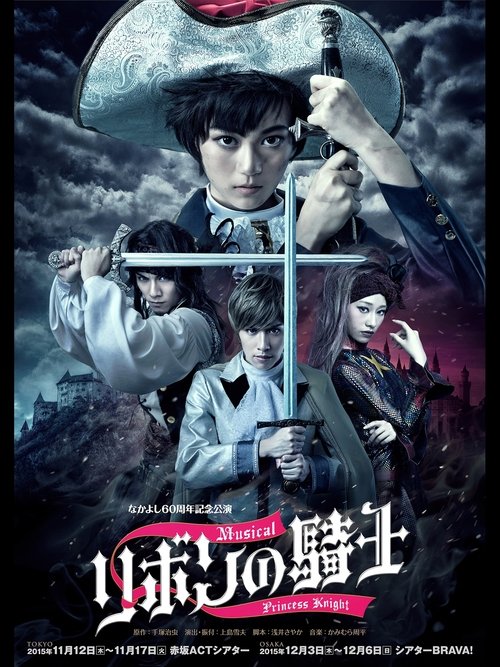
In the ending of "Princess Knight - The Musical," Princess Sapphire, having embraced her identity as both a princess and a knight, confronts the villainous Duke Duralumin. With the help of her friends, she ultimately defeats him, proving her worth and strength. The kingdom celebrates her bravery, and she finds acceptance in her dual identity, paving the way for a future where she can be both a leader and a warrior.
As the climax of "Princess Knight - The Musical" unfolds, the tension builds in the royal castle. Princess Sapphire, having faced numerous challenges throughout her journey, stands resolute in her determination to protect her kingdom from the nefarious Duke Duralumin. The scene is set with a grand backdrop of the castle, illuminated by the flickering torches that cast shadows on the stone walls, creating an atmosphere thick with anticipation.
Sapphire, dressed in her knight's armor, feels a surge of confidence as she prepares to confront Duralumin. Her heart races, not just from the impending battle, but from the weight of her dual identity. She has fought hard to prove that she can be both a princess and a knight, and this moment is the culmination of her struggles. Her loyal friends, including the charming Prince, stand by her side, their expressions a mix of admiration and concern.
As the confrontation begins, Duralumin enters the scene, cloaked in darkness, his presence commanding and menacing. He taunts Sapphire, underestimating her resolve. The tension escalates as they exchange words, revealing Duralumin's desire for power and control over the kingdom. Sapphire, fueled by her love for her people and her commitment to justice, stands firm, ready to defend her home.
The battle erupts with a flurry of action. Sapphire and Duralumin engage in a fierce duel, their swords clashing with a metallic ring that echoes through the castle halls. The choreography is dynamic, showcasing Sapphire's agility and skill as she dodges Duralumin's attacks. Her friends rally around her, providing support and encouragement, their voices rising in a chorus of belief in her abilities.
As the fight reaches its peak, Sapphire taps into her inner strength, recalling the lessons she has learned throughout her journey. With a final, powerful strike, she disarms Duralumin, sending his sword clattering to the ground. The moment is charged with emotion; Sapphire stands over him, not in triumph, but in a display of mercy. She offers him a chance to change, to seek redemption rather than revenge.
Duralumin, faced with defeat and the realization of his own flaws, is left speechless. The audience can feel the weight of his choices as he grapples with the consequences of his actions. In this pivotal moment, Sapphire's compassion shines through, highlighting her growth as a character. She embodies the qualities of a true leader, one who understands that strength is not just about power, but also about kindness and forgiveness.
The scene transitions to the kingdom celebrating Sapphire's victory. The castle is adorned with banners, and the townspeople gather in the courtyard, their faces alight with joy and relief. Sapphire, now fully embracing her identity, stands before her people, her heart swelling with pride. She addresses them, expressing her commitment to lead with courage and compassion, ensuring that everyone in the kingdom can be true to themselves, just as she has learned to be.
The Prince, who has been a steadfast ally throughout the journey, steps forward to support Sapphire. Their bond deepens as they share a moment of understanding, recognizing the strength they find in each other. The audience witnesses the blossoming of their relationship, built on mutual respect and admiration.
As the musical concludes, the characters come together for a final song, celebrating unity and acceptance. The stage is filled with vibrant colors and joyous energy, symbolizing a new beginning for the kingdom. Each character finds their place in this new world: Sapphire as a beloved leader, the Prince as her partner, and even Duralumin, who begins to take steps toward redemption, hinting at the possibility of change.
In the end, "Princess Knight - The Musical" leaves the audience with a sense of hope and empowerment, showcasing the importance of embracing one's true self and the strength found in compassion and understanding.
Is there a post-credit scene?
In "Princess Knight - The Musical," there is no post-credit scene. The film concludes with a satisfying resolution to the story, focusing on the themes of bravery, identity, and love. The narrative wraps up with the main characters reflecting on their adventures and the lessons learned, leaving the audience with a sense of closure and fulfillment. The absence of a post-credit scene allows the emotional weight of the story to resonate without any additional distractions.
What is the significance of the tournament in the story?
The tournament serves as a critical turning point in the story, representing both a physical challenge and a test of character for Princess Sapphire. It is a grand event that draws knights from across the kingdom, showcasing their skills and valor. For Sapphire, participating in the tournament is not only a chance to prove her worth as a knight but also a means to challenge the societal norms that restrict her. The tournament is filled with high-stakes competitions, where Sapphire must navigate both the physical challenges and the prejudices of the spectators. The outcome of the tournament ultimately becomes a catalyst for change, as it forces characters to confront their biases and redefine what it means to be a knight.
What challenges does Princess Sapphire face in her quest to prove herself as a knight?
Princess Sapphire faces numerous challenges throughout her quest to prove herself as a knight. Initially, she struggles with societal expectations that dictate that princesses should be delicate and demure, rather than brave and adventurous. She must navigate the complexities of disguising her identity as a girl while training to become a knight, which includes rigorous physical training and combat skills. Additionally, she confronts the antagonism of those who doubt her abilities, particularly from her rival, Prince Ferdinand, who embodies traditional notions of masculinity and knightly valor. Sapphire's internal conflict revolves around her desire to be true to herself while also seeking acceptance and recognition in a male-dominated world.
How does the character of Prince Ferdinand evolve throughout the story?
Prince Ferdinand begins as a somewhat arrogant character, confident in his abilities and status as a prince. He initially views Princess Sapphire as a rival and underestimates her capabilities. However, as the story progresses, Ferdinand witnesses Sapphire's determination and skill, which challenges his preconceived notions about gender roles and bravery. His evolution is marked by moments of introspection where he grapples with his own insecurities and the realization that true knighthood is not solely defined by physical prowess but also by courage and integrity. By the end of the story, Ferdinand becomes more supportive and respectful of Sapphire, acknowledging her as an equal.
What role does the magical amulet play in Princess Sapphire's journey?
The magical amulet is a pivotal element in Princess Sapphire's journey, symbolizing her connection to her true identity and her potential as a knight. The amulet grants her special abilities that aid her in her quests, such as enhanced strength and agility, which are crucial in her battles against various foes. However, the amulet also serves as a double-edged sword; it represents the temptation to rely on magic rather than her own skills and determination. Throughout the story, Sapphire learns to balance the power of the amulet with her own innate abilities, ultimately realizing that her true strength comes from within.
How does the relationship between Princess Sapphire and her father develop throughout the film?
The relationship between Princess Sapphire and her father, King Frederick, is initially strained due to his traditional views on gender roles. He believes that Sapphire should conform to the expectations of a princess, which creates tension as she yearns to be a knight. As the story unfolds, King Frederick witnesses Sapphire's bravery and determination, leading him to reassess his beliefs. Key moments of conflict arise when Sapphire defies his wishes, but these moments are crucial for their growth. By the climax, King Frederick comes to understand and support Sapphire's aspirations, leading to a heartfelt reconciliation that strengthens their bond.
Is this family friendly?
"Princess Knight - The Musical," produced in 2015, is generally considered family-friendly, designed to entertain and engage children and their families. However, there are a few elements that might be considered potentially objectionable or upsetting for some viewers, particularly sensitive children.
-
Conflict and Rivalry: The story features themes of rivalry and competition, which may lead to moments of tension. Characters may face challenges that could be intense for younger viewers.
-
Emotional Struggles: Characters experience feelings of inadequacy, fear of failure, and the pressure to conform to societal expectations, which could resonate with sensitive audiences.
-
Villainous Characters: There are antagonists in the story whose actions may be perceived as threatening or unkind, which could be unsettling for some children.
-
Disappointment and Rejection: Characters may face moments of disappointment or rejection, which could evoke feelings of sadness or empathy in young viewers.
-
Mild Peril: There are scenes that involve mild peril or danger, which could be alarming for very young children.
Overall, while the musical contains these elements, it is balanced with positive messages about courage, identity, and friendship, making it suitable for family viewing with some potential for discussion about the more intense themes.