






























Popular
What challenges do the owners of the Bread Factory face when a new arts center opens nearby?
How do Dorothea and Greta's personalities differ, and how does this affect their partnership?
What role does the character of the artist, who is involved with the new arts center, play in the story?
How does the community react to the opening of the new arts center compared to the Bread Factory?
What specific events lead to the climax of the conflict between the Bread Factory and the new arts center?
Should I watch it?
Ask Your Own Question

What is the plot?
Sorry, we aren't able to watch and write up a full detailed plot yet. Check back in a few days.





What is the ending?
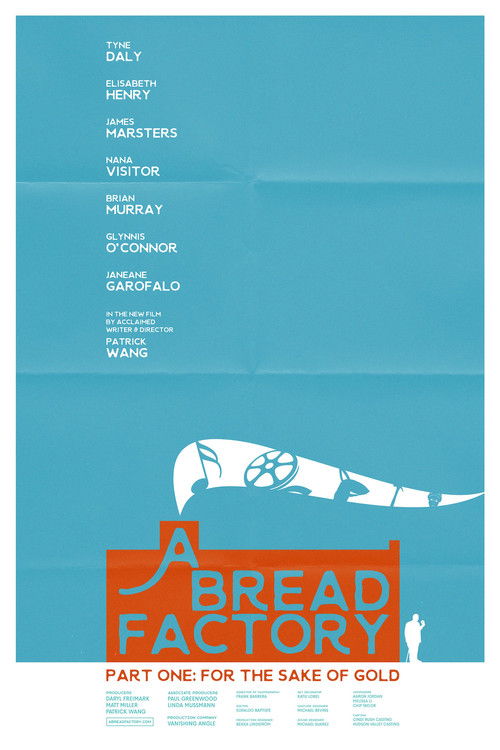
In the ending of "A Bread Factory, Part One: For the Sake of Gold," the community faces the impending closure of the Bread Factory, which has been a cultural hub. The characters grapple with their identities and the significance of art and community. The film concludes with a sense of uncertainty about the future, leaving the audience to ponder the fate of the characters and the Bread Factory itself.
As the film approaches its conclusion, the tension in the small town escalates. The Bread Factory, run by the passionate duo of Dorothea and Greta, is under threat from a new arts center that promises to overshadow their establishment. The community's support for the Bread Factory is palpable, yet the looming reality of change weighs heavily on everyone involved.
In a pivotal scene, Dorothea and Greta prepare for a performance that they hope will rally the community and showcase the importance of their work. The atmosphere is charged with anticipation and anxiety as they rehearse, their emotional stakes high. They are not just fighting for their business; they are fighting for their legacy and the very essence of their artistic expression.
As the performance unfolds, the audience witnesses the deep connection between the characters and their art. Dorothea, with her unwavering spirit, embodies the struggle of artists everywhere, while Greta's quiet strength complements her partner's fervor. The performance is a blend of vulnerability and defiance, a testament to their dedication to the Bread Factory and the community it serves.
However, despite their efforts, the reality of the situation becomes increasingly clear. The new arts center, with its modern appeal and financial backing, begins to draw attention away from the Bread Factory. The characters are faced with the harsh truth that their beloved establishment may not survive the competition. The emotional weight of this realization is felt deeply by both Dorothea and Greta, who must confront the possibility of losing not just their business, but a part of themselves.
In the final moments, the community gathers to support the Bread Factory, but the outcome remains uncertain. The film closes on a note of ambiguity, leaving viewers to reflect on the fragility of art, community, and the relentless march of change. Dorothea and Greta stand together, united in their passion but uncertain of what the future holds. The fate of the Bread Factory hangs in the balance, symbolizing the broader struggle of artists and small businesses in a world that often prioritizes profit over passion.
Ultimately, the ending of "A Bread Factory, Part One: For the Sake of Gold" encapsulates the themes of resilience, community, and the fight for artistic integrity, leaving the audience with lingering questions about the characters' futures and the survival of their cherished space.
Is there a post-credit scene?
A Bread Factory, Part One: For the Sake of Gold does not have a post-credit scene. The film concludes its narrative without any additional scenes after the credits roll. The story wraps up its exploration of art, community, and the challenges faced by the characters in a small town, leaving the audience to reflect on the themes presented throughout the film.
What challenges do the owners of the Bread Factory face when a new arts center opens nearby?
The owners, Dorothea and Greta, face significant challenges when a new arts center, the 'Fabrica,' opens nearby. This new establishment threatens their business as it attracts the attention of the community and artists, drawing away potential customers from the Bread Factory. The competition forces Dorothea and Greta to confront their own insecurities and the changing landscape of the arts in their town.
How do Dorothea and Greta's personalities differ, and how does this affect their partnership?
Dorothea is more idealistic and passionate about the arts, often dreaming big and wanting to push boundaries, while Greta is pragmatic and grounded, focusing on the day-to-day operations of the Bread Factory. This difference creates tension in their partnership, as Dorothea's ambitious ideas sometimes clash with Greta's more cautious approach, leading to emotional conflicts and moments of vulnerability.
What role does the character of the artist, who is involved with the new arts center, play in the story?
The artist, who becomes a central figure at the new arts center, represents a new wave of creativity and ambition that contrasts with the established ways of Dorothea and Greta. His presence challenges the status quo and forces the women to reevaluate their own artistic contributions and relevance in the community. His interactions with them highlight their fears of obsolescence and the struggle to maintain their identity in a rapidly changing environment.
How does the community react to the opening of the new arts center compared to the Bread Factory?
The community's reaction is mixed; while many are excited about the new arts center and the opportunities it presents for cultural engagement, others feel a sense of nostalgia and loyalty towards the Bread Factory. This division creates a palpable tension in the town, as some residents rally behind the new establishment, viewing it as a beacon of modernity, while others defend the Bread Factory as a cherished local institution that has long supported the arts.
What specific events lead to the climax of the conflict between the Bread Factory and the new arts center?
The climax of the conflict is reached during a pivotal community event where both the Bread Factory and the new arts center showcase their offerings. Tensions escalate as Dorothea and Greta attempt to prove their relevance and artistic merit, leading to a confrontation that exposes their vulnerabilities and the community's divided loyalties. This event serves as a turning point, forcing both sides to confront their motivations and the future of their artistic endeavors.
Is this family friendly?
"A Bread Factory, Part One: For the Sake of Gold" is a film that explores themes of art, community, and the challenges of maintaining a creative space in the face of commercial pressures. While it is not overtly graphic or violent, there are elements that may be considered objectionable or upsetting for children or sensitive viewers.
-
Themes of Betrayal and Conflict: The film delves into interpersonal conflicts and betrayals among characters, which may be emotionally intense for younger viewers.
-
Depictions of Disappointment: Characters experience significant disappointment and frustration regarding their artistic endeavors and community support, which could resonate negatively with sensitive audiences.
-
Existential Themes: The film touches on deeper existential questions about purpose and the value of art, which may be complex for younger viewers to fully grasp.
-
Mature Conversations: There are discussions that involve adult themes and relationships, which may not be suitable for children.
-
Emotional Turmoil: Characters display a range of emotions, including sadness, anger, and anxiety, which could be distressing for some viewers.
Overall, while the film is not explicitly inappropriate, its emotional depth and thematic content may require parental discretion for younger audiences.








