
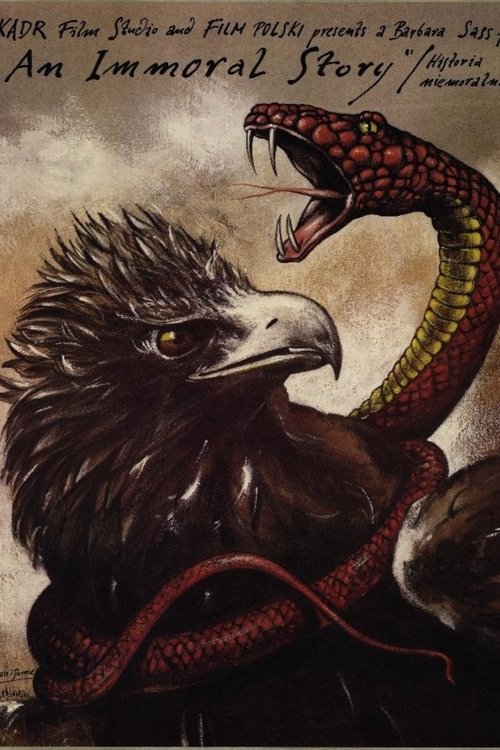

























Popular
What motivates the main character, a writer, to pursue the story that leads to his moral dilemmas?
How does the relationship between the writer and the female protagonist evolve throughout the film?
What role does the antagonist play in the writer's journey, and how does their conflict escalate?
What specific events lead to the writer's ultimate moral crisis?
How does the setting influence the characters' decisions and the unfolding of the plot?
Should I watch it?
Ask Your Own Question

What is the plot?
Sorry, we aren't able to watch and write up a full detailed plot yet. Check back in a few days.


What is the ending?
In the ending of "An Immoral Story," the protagonist, a struggling writer, faces the consequences of his actions as he grapples with the moral implications of his work. The film concludes with a sense of unresolved tension, leaving the characters in a state of emotional turmoil.
As the final scenes unfold, the writer, having completed his controversial manuscript, is confronted by the people around him. His relationships deteriorate, and he is left isolated, reflecting on the choices he made. The film closes with a haunting image of the writer alone, symbolizing the cost of his ambition and the moral dilemmas he faced.
The ending of "An Immoral Story" begins with the protagonist, a writer named David, sitting in his dimly lit apartment, surrounded by crumpled papers and empty coffee cups. The weight of his recent decisions hangs heavily in the air. He has just finished his manuscript, a provocative piece that delves into the darker aspects of human nature and relationships. As he types the final words, a mix of triumph and dread washes over him. He knows that this work will not only define his career but also challenge the moral boundaries of those who read it.
In the next scene, David attends a small gathering with his friends and fellow writers. The atmosphere is charged with excitement and apprehension as he shares snippets of his manuscript. Some friends are intrigued, while others express discomfort, sensing the controversial nature of his work. David, fueled by their reactions, becomes increasingly defensive, insisting that art must push boundaries. This moment reveals his internal struggle; he is torn between his desire for success and the ethical implications of his storytelling.
As the night progresses, tensions rise. One of his closest friends, Sarah, confronts him about the potential harm his writing could cause. She argues that his portrayal of relationships is irresponsible and could lead to real-world consequences. David, feeling cornered, lashes out, accusing her of stifling his creativity. This confrontation marks a turning point in their relationship, showcasing the rift that has formed between them due to his obsession with his work.
The following day, David receives feedback from a publisher who is interested in his manuscript but warns him about its controversial themes. The publisher suggests revisions to make it more palatable for a wider audience. David, however, is adamant about maintaining his original vision, believing that authenticity is more important than commercial success. This decision further alienates him from his friends and family, who worry about the repercussions of his choices.
In the climax of the film, David attends a public reading of his work. The audience is a mix of supporters and critics, and the atmosphere is electric with anticipation. As he reads, the reactions are polarized; some listeners are captivated, while others are visibly disturbed. The emotional intensity of the moment is palpable, and David feels both exhilarated and terrified. He realizes that he has crossed a line, and the weight of his words begins to sink in.
After the reading, David is approached by a journalist who wants to interview him about the moral implications of his work. During the interview, David struggles to articulate his motivations, revealing his internal conflict. He grapples with the idea that his art may have unintended consequences, and the journalist's probing questions force him to confront the darker aspects of his own psyche.
The film concludes with David returning to his apartment, where he finds Sarah waiting for him. Their conversation is tense, filled with unspoken words and unresolved feelings. Sarah expresses her disappointment in him, and David, feeling the weight of his choices, breaks down. He acknowledges the pain he has caused and the isolation he now faces. The emotional climax of their interaction highlights the personal cost of his ambition.
As the screen fades to black, the final image is of David sitting alone at his desk, surrounded by the remnants of his work. The haunting silence emphasizes the emptiness he feels, a stark reminder of the moral dilemmas he has navigated throughout the film. The ending leaves viewers with a lingering sense of unease, reflecting on the complexities of creativity, ambition, and the human condition. Each character's fate is intertwined with David's choices, illustrating the profound impact of his story on their lives.
Is there a post-credit scene?
The movie "An Immoral Story," produced in 1990, does not feature a post-credit scene. The film concludes its narrative without any additional scenes or content after the credits roll. The story wraps up its themes and character arcs within the main film, leaving no further revelations or moments for the audience to reflect on after the credits.
What motivates the main character, a writer, to pursue the story that leads to his moral dilemmas?
The main character, a struggling writer, is driven by a desperate need for success and recognition in the literary world. His ambition blinds him to the ethical implications of his actions as he becomes increasingly consumed by the desire to create a sensational story that will captivate readers and elevate his status.
How does the relationship between the writer and the female protagonist evolve throughout the film?
Initially, the writer views the female protagonist as a mere muse for his story, but as they spend more time together, he becomes emotionally invested in her life and struggles. This evolution complicates his motivations, as he grapples with the conflict between his artistic ambitions and his growing feelings for her.
What role does the antagonist play in the writer's journey, and how does their conflict escalate?
The antagonist, a rival writer, embodies the moral and ethical challenges that the main character faces. Their conflict escalates as the rival exposes the darker aspects of the writer's methods, forcing the protagonist to confront the consequences of his actions and the impact on those around him.
What specific events lead to the writer's ultimate moral crisis?
The writer's moral crisis is triggered by a series of events, including the exploitation of the female protagonist's personal struggles for his story, the betrayal of trust with those close to him, and the realization that his pursuit of fame has caused real harm to others. These moments culminate in a confrontation that forces him to reevaluate his choices.
How does the setting influence the characters' decisions and the unfolding of the plot?
The setting, a vibrant yet gritty urban landscape, serves as a backdrop that reflects the chaotic and morally ambiguous world the characters inhabit. The contrasting environments, from the writer's cluttered apartment to the glamorous literary events, highlight the disparity between the characters' aspirations and the harsh realities they face, influencing their decisions and interactions.
Is this family friendly?
"An Immoral Story," produced in 1990, is not considered family-friendly. The film contains several potentially objectionable or upsetting scenes that may be inappropriate for children or sensitive viewers.
-
Sexual Content: The film features explicit sexual situations and themes that are central to the narrative, which may be uncomfortable for younger audiences.
-
Nudity: There are scenes that include nudity, which may not be suitable for children.
-
Mature Themes: The story explores complex and often dark themes related to morality, infidelity, and the consequences of personal choices, which may be difficult for younger viewers to understand.
-
Emotional Turmoil: Characters experience intense emotional struggles, including betrayal and guilt, which could be distressing for sensitive individuals.
-
Violence: There are moments of conflict that may include emotional or psychological violence, contributing to a tense atmosphere.
These elements combine to create a film that is more appropriate for mature audiences.








