












Popular
How does the film portray the theme of corruption within the police force?
What motivates the main character, Inspector Ranjit Singh, throughout the film?
How does the relationship between Inspector Ranjit Singh and his partner evolve during the film?
What role does the antagonist, crime lord Karan, play in the development of the plot?
What key event triggers the climax of the film?
Should I watch it?
Ask Your Own Question

What is the plot?
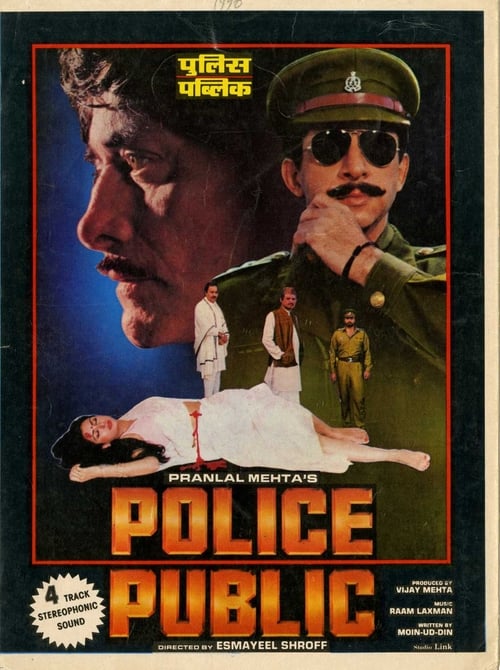
The film opens with the mysterious death of Karuna Arun Sharma, the young wife of Arun Sharma and daughter-in-law of the powerful Sharma family, and that single death immediately turns the story into a battle between truth and influence. Karuna is found dead in circumstances that seem, at first glance, like suicide, but the first person to sense that something is wrong is the honest Senior Police Inspector Shah Nawaz Khan, whose instincts tell him that the story being sold to everyone does not fit the physical evidence or the emotional reality around the case. From the beginning, the mood is heavy with suspicion: Karuna is gone, the family is shattered, and yet the people with the most to lose move almost too quickly to label the matter closed.
Shah Nawaz Khan begins the investigation with serious intent, looking past the easy explanation and into the social and domestic pressures surrounding Karuna's life. He comes to see that this is not just an isolated death but a death rooted in a brutal web of family power, money, and silence. Karuna had married into a wealthy house, but the marriage has not given her security or happiness; instead, it has trapped her inside a life of control and humiliation. Her husband Arun Sharma is shown as a man who lives extravagantly and licentiously, more interested in indulgence than in care, and Karuna's misery has been building long before she dies. The Sharma household itself feels like a sealed chamber of privilege, where outward respectability hides rot underneath.
As Shah Nawaz digs deeper, he runs into obstruction almost immediately. Kishan Sharma, the patriarch of the family, is not merely a grieving father-in-law; he is a powerful man with political reach, and his influence begins to press against the investigation like a hand over a mouth. One of the story's most important revelations emerges here: Kishan Sharma had not originally paid a dowry to Ram Swarup, Karuna's father, yet later, through cunning and exploitation, he usurps land worth millions from him. That theft of property is more than a side detail; it explains the social humiliation beneath the surface and reveals how the family's wealth is tied to deceit and abuse. Karuna is not simply a sad young woman in a bad marriage. She is the latest victim of a family that has already consumed her father's trust and her own future.
The more Shah Nawaz investigates, the clearer it becomes that Karuna did not simply commit suicide by jumping from a height. There are clues all around the death scene that suggest murder, and the apparent suicide begins to look like a staged cover-up. The film keeps the exact details of the forensic trail restrained in summary form, but the emotional logic is unmistakable: Karuna's death does not sit naturally with the evidence, and Shah Nawaz refuses to accept the official version. His persistence makes him dangerous to the people around the Sharma family, because a real investigation would expose not just a killer but a whole structure of corruption.
That is when the first major institutional betrayal lands. Kishan Sharma uses his influence and his friend Tiwari, a petty politician, to have Shah Nawaz transferred off the case. The transfer is a cold, bureaucratic act, but dramatically it lands like a blow to justice itself. Shah Nawaz is removed not because he is mistaken, but because he is right. His honesty has become an inconvenience. Once he is pushed aside, Mahar Singh Grewal takes over the matter, and the tone changes immediately. Where Shah Nawaz questions, Mahar Singh accepts. Where Shah Nawaz probes, Mahar Singh closes. The case, which should have opened into truth, is pushed shut by a man who chooses convenience over conscience.
Mahar Singh Grewal's handling of the case reveals the machinery of corruption in its most blunt form. He quickly accepts the suicide explanation, reports that Karuna committed suicide, and closes the file. The summaries make clear that he is not acting independently or ethically: he takes a bribe from the Sharma side and then threatens Ram Swarup when the victim's family resists the official story. This scene matters because it shows how justice is not only delayed but actively weaponized. The police system that should protect the weak instead becomes an arm of the powerful. Ram Swarup, already wounded by the loss of his daughter, now faces a state-backed erasure of her truth.
The emotional center of this part of the film is the grief and fury of Karuna's birth family. Ram Swarup is devastated, but he is not passive. He knows something is wrong, and he understands that the official channels are failing him. His daughter Usha and her beau Shyam also become crucial in this phase, taking on the burden of doing what the police and politicians refuse to do. The story shifts from one investigator's struggle to a family's desperate campaign for justice. Their grief hardens into determination, and the film frames that determination as a moral counterforce to the power of the Sharma household.
The appeal to authority becomes the next major turning point. Unable to get justice through local police or the home minister, Ram Swarup's side takes the extraordinary step of writing letters to the chief justice of India, the prime minister of India, and the president of India. This is one of the story's most important narrative reversals: private mourning becomes public accusation. The letters are not merely petitions; they are acts of defiance against a system that has colluded in silence. The chief justice treats the letter as a writ, and that decision transforms the entire case. What was buried under police closure is resurrected at the highest level. A CBI inquiry is ordered.
The arrival of the CBI changes the emotional temperature of the film. The story now moves from local intimidation to national scrutiny, and with that comes the entrance of Jagmohan Azaad, the honest CBI officer assigned to the case. His name itself suggests resolve and moral freedom, and he enters as the one man willing to carry the investigation to its end without bowing to pressure. If Shah Nawaz Khan is the honest policeman defeated by local corruption, Jagmohan Azaad is the state's last attempt to make honesty effective. He inherits the ruins of the case: a dead woman, a falsified suicide report, a bribed officer, a politically connected family, and a motherless household still demanding the truth.
Jagmohan begins where Shah Nawaz left off, but with greater institutional authority and, apparently, a deeper reserve of patience and force. He examines the same trail of clues and finds the same underlying truth: Karuna's death was murder disguised as suicide. The film's tension now builds around the question of how he will prove it, who actually killed her, and whether he can overcome the network of interference around the Sharma family. The summaries do not spell out every procedural step, but they do make the arc clear: Jagmohan persists where others were stopped, and his integrity is the engine that drives the story toward resolution.
Along the way, the film fully sharpens its portrait of Karuna's misery. She is trapped not only by her husband's neglect and extravagance but also by the mercenary power of the family around him. The marriage that should have joined two households instead becomes a transaction that enabled exploitation. Karuna's death, then, is not presented as the result of a momentary despair but as the endpoint of sustained oppression. That context deepens the suspicion around the Sharma household: if Karuna is dead and the family is moving so aggressively to label it suicide, then the motive for murder is bound up with control, reputation, and the protection of wealth.
The investigation's central revelation is therefore not just who died, but what kind of system made her death possible. Kishan Sharma's earlier usurpation of Ram Swarup's land is a crucial twist because it reframes the family as habitual predators. Their wealth is built on manipulation, and their respectability is a façade. The police cover-up mirrors the family's own ethics: both operate through pressure, bribery, and intimidation. The film keeps returning to this pattern. Shah Nawaz is transferred. Mahar Singh is bribed. Ram Swarup is threatened. The home minister refuses to help. The case is nearly suffocated by power at every level.
Jagmohan's final confrontation is with that suffocation. He cuts through the lies and reaches the bottom of the case, exposing the hidden murderer and ensuring justice for Karuna's family. The summaries do not provide a minute-by-minute account of the final reveal, but they are clear about the result: the murderer is unmasked, the truth is brought into the open, and the victim's family finally receives justice. The emotional shape of the climax is one of release after prolonged pressure. All the earlier closures are undone. The suicide story collapses. The corruption is exposed. The false certainty of the police file gives way to the actual truth of what happened to Karuna Sharma.
What makes the ending satisfying is not just that a culprit is identified, but that the justice comes through persistence in the face of a system that repeatedly fails. Shah Nawaz's honesty is vindicated in retrospect, even though he is removed before he can finish. Ram Swarup, Usha, and Shyam's desperate letters prove decisive, showing that ordinary citizens sometimes have to push the state into doing its own job. Jagmohan Azaad becomes the instrument of that correction, the one who takes the buried case and forces it into daylight. By the end, the film resolves around moral clarity: Karuna was murdered, not suicidal; the cover-up was deliberate; the family's power was corrupt; and the truth, once pursued with enough courage, finally prevails.
The final feeling is not triumph in a simple sense, because Karuna remains dead and the pain that created the story cannot be undone. But the ending does restore dignity to her memory. The official lie is destroyed. The family that tried to bury the case is exposed. The institutions that failed are shown up. And the narrative closes on the hard-won victory of truth over power, with Jagmohan Azaad standing as the last and decisive force who brings the murder into the open and gives Karuna Sharma's family the justice that had been denied to them from the start.









What is the ending?
In the ending of "Police Public," the protagonist, Inspector Shankar, confronts the main antagonist, a powerful crime lord. After a tense showdown, Shankar manages to defeat the crime lord, restoring order and justice. The film concludes with Shankar receiving recognition for his bravery, and he reflects on the sacrifices made along the way, particularly the loss of his partner. The story ends on a hopeful note, emphasizing the importance of duty and the fight against corruption.
As the climax of "Police Public" unfolds, the scene shifts to a dimly lit warehouse, where Inspector Shankar has tracked down the crime lord, who has been terrorizing the city. The atmosphere is thick with tension, the air heavy with the scent of oil and rust. Shankar, clad in his police uniform, stands resolute, his jaw clenched, eyes narrowed with determination. He knows that this confrontation is not just about bringing a criminal to justice; it is about avenging his fallen partner, who was brutally murdered in the line of duty.
The crime lord, a menacing figure with a cold smile, taunts Shankar, reminding him of the chaos he has caused and the lives he has ruined. Shankar's heart races, fueled by a mix of anger and sorrow. He recalls the moments shared with his partner, the laughter, the camaraderie, and the unyielding commitment to uphold the law. This memory strengthens his resolve as he steps forward, ready to face the man who has caused so much pain.
A fierce battle ensues, with Shankar using his training and instincts to outmaneuver the crime lord's henchmen. The fight is brutal, showcasing Shankar's physical prowess and unwavering spirit. Each punch thrown and each kick landed is a testament to his dedication to justice. The camera captures the sweat glistening on his brow, the determination etched on his face, and the desperation in his movements as he fights not just for himself, but for all the victims of the crime lord's reign.
As the fight reaches its peak, Shankar finally confronts the crime lord one-on-one. The tension is palpable, the stakes higher than ever. In a moment of sheer willpower, Shankar manages to disarm the crime lord, pinning him to the ground. The crime lord's facade of confidence crumbles as he realizes he is at the mercy of the very law he sought to undermine. Shankar, breathing heavily, looks down at him, a mix of triumph and grief washing over him. He knows that while he has won this battle, the scars of loss will remain.
With the crime lord apprehended, the scene transitions to the police station, where Shankar is being honored for his bravery. The atmosphere is filled with applause and admiration from his colleagues. Yet, amidst the celebration, Shankar's expression is somber. He stands apart, reflecting on the cost of his victory. The camera zooms in on his face, capturing the conflict within him--pride in his achievement, but sorrow for the price paid.
In the final moments of the film, Shankar visits the memorial of his partner, laying a bouquet of flowers at the base of the plaque. Tears well in his eyes as he whispers a promise to continue fighting for justice, to ensure that his partner's sacrifice was not in vain. The screen fades to black, leaving the audience with a sense of hope intertwined with the harsh realities of a life dedicated to law enforcement.
As the credits roll, the fates of the main characters are clear: Shankar emerges as a hero, forever changed by his experiences, while the crime lord faces justice behind bars. The film closes with a poignant reminder of the ongoing battle against crime and corruption, and the personal sacrifices made by those who choose to protect and serve.
Is there a post-credit scene?
The movie "Police Public," produced in 1990, does not feature a post-credit scene. The film concludes with a climactic resolution to the main storyline, focusing on the characters' emotional arcs and the consequences of their actions throughout the narrative. After the final credits roll, there is no additional content or scene that follows. The film wraps up its themes of justice, duty, and personal sacrifice, leaving the audience with a sense of closure regarding the characters' journeys.
How does the film portray the theme of corruption within the police force?
Corruption is depicted through the character of a senior officer who colludes with Karan, creating internal conflict for Inspector Ranjit Singh. This betrayal not only complicates Ranjit's mission but also highlights the challenges of maintaining integrity within a flawed system.
What motivates the main character, Inspector Ranjit Singh, throughout the film?
Inspector Ranjit Singh is driven by a deep sense of justice and a personal vendetta against crime, stemming from a traumatic event in his past where he lost a loved one to criminal violence. His determination to clean up the streets and protect the innocent fuels his relentless pursuit of the antagonist.
How does the relationship between Inspector Ranjit Singh and his partner evolve during the film?
Initially, Inspector Ranjit Singh's partner, Sub-Inspector Shalini, is portrayed as a rookie who struggles to gain Ranjit's respect. As the story progresses, their relationship deepens through shared experiences in the field, leading to mutual respect and a strong bond as they face danger together.
What role does the antagonist, crime lord Karan, play in the development of the plot?
Karan serves as the primary antagonist whose ruthless criminal empire poses a significant threat to the community. His cunning and manipulative nature create obstacles for Inspector Ranjit Singh, leading to intense confrontations that drive the narrative forward.
What key event triggers the climax of the film?
The climax is triggered when Karan orchestrates a violent attack on a police station, resulting in casualties and escalating the conflict between him and Inspector Ranjit Singh. This act of aggression forces Ranjit to confront Karan directly, culminating in a high-stakes showdown.
Is this family friendly?
"Police Public," produced in 1990, is a film that contains several elements that may not be suitable for children or sensitive viewers. Here are some potentially objectionable or upsetting aspects:
-
Violence: The film includes scenes of police confrontations and criminal activities that may depict violence, which could be distressing for younger audiences.
-
Crime Themes: The narrative revolves around crime and law enforcement, which may include discussions or portrayals of illegal activities that could be unsettling.
-
Emotional Turmoil: Characters experience significant emotional struggles, including fear, betrayal, and loss, which may resonate deeply and evoke strong feelings.
-
Intense Situations: There are moments of high tension and suspense that could be frightening for children, particularly scenes involving danger or threats to characters.
-
Mature Themes: The film addresses themes of justice, morality, and the complexities of law enforcement, which may be difficult for younger viewers to fully understand.
Overall, while the film may have engaging elements, its content could be challenging for a family-friendly viewing experience.