





Popular
Should I watch it?
Ask Your Own Question

What is the plot?
Sorry, we aren't able to watch and write up a full detailed plot yet. Check back in a few days.
More Movies Like This
Browse All Movies →
What is the ending?
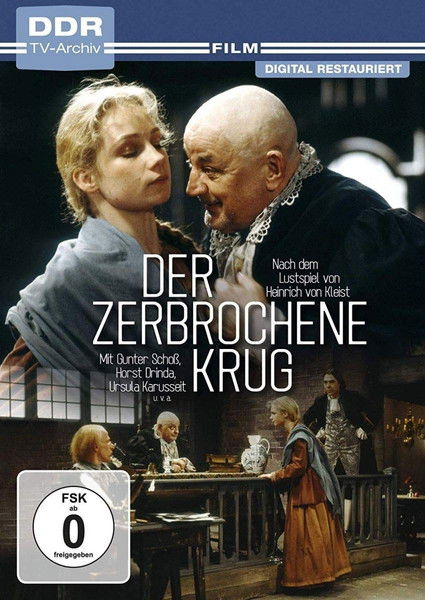
In the ending of "Der zerbrochne Krug," the truth about the broken jug is revealed, leading to a resolution of the conflict. The village judge, Adam, is exposed for his hypocrisy and deceit. The young woman, Eve, and her suitor, the farmer, find closure as the truth comes to light. The story concludes with a sense of justice served, as the judge's authority is undermined, and the villagers regain their trust in one another.
As the film approaches its climax, the tension in the courtroom escalates. The scene is set in the dimly lit village court, where the atmosphere is thick with anticipation. The villagers gather, their faces a mix of curiosity and judgment, as they await the proceedings. The judge, Adam, sits at the front, his demeanor confident yet increasingly anxious as the trial unfolds.
Eve, the young woman at the center of the conflict, stands before the judge, her expression a blend of defiance and vulnerability. She recounts the events leading to the broken jug, her voice steady but laced with emotion. The audience listens intently, their eyes darting between her and the judge, who shifts uncomfortably in his seat. The tension is palpable as Eve's narrative reveals the truth of the incident, implicating Adam in a web of lies.
As the trial progresses, the farmer, who is Eve's suitor, takes the stand. His testimony is earnest, filled with a sense of betrayal as he describes how Adam had manipulated the situation for his own gain. The villagers murmur among themselves, their trust in the judge beginning to wane. Adam's facade of authority starts to crack, and his desperation becomes evident. He attempts to maintain control, but the weight of the evidence against him is overwhelming.
In a pivotal moment, a witness emerges, providing crucial information that further incriminates Adam. The courtroom erupts in chaos as the villagers confront the judge, their anger and disappointment boiling over. Adam, once a figure of power, is now cornered, his lies unraveling before the very people he sought to deceive. The villagers' faith in justice is restored as they rally behind Eve and the farmer, united against the corruption that had tainted their community.
As the dust settles, Adam's fate is sealed. The villagers demand accountability, and he is stripped of his position, a symbol of the consequences of his actions. Eve and the farmer share a moment of relief and understanding, their bond strengthened by the ordeal. The final scene captures the villagers coming together, their spirits lifted as they reclaim their sense of justice and community.
The film concludes with a poignant reminder of the importance of truth and integrity, as the characters reflect on the lessons learned. Eve and the farmer look towards a hopeful future, while Adam, now a fallen judge, is left to grapple with the consequences of his deceit. The story closes on a note of resolution, emphasizing the triumph of honesty over hypocrisy.
Is there a post-credit scene?
The movie "Der zerbrochne Krug," produced in 1990, does not contain a post-credit scene. The film concludes its narrative without any additional scenes or content after the credits roll. The story wraps up with the resolution of the central conflict, focusing on themes of justice, truth, and the absurdities of human nature, leaving the audience to reflect on the events that have transpired.
Who is the main character in Der zerbrochne Krug and what is his role?
The main character in Der zerbrochne Krug is Adam, a village judge who is tasked with resolving a case involving a broken jug. His role is central to the plot as he tries to maintain his authority and reputation while concealing his own involvement in the incident.
What incident leads to the trial in the story?
The trial is triggered by the breaking of a jug belonging to a peasant woman named Eve. The jug is broken during a confrontation that reveals deeper issues of power, deception, and the complexities of human relationships in the village.
How does Adam attempt to manipulate the trial proceedings?
Adam attempts to manipulate the trial proceedings by using his position as judge to influence the testimonies and steer the outcome in his favor. He is desperate to hide his own culpability in the jug's destruction, which adds layers of tension and irony to the courtroom drama.
What role does the character of Eve play in the story?
Eve is a pivotal character in the story, as the owner of the broken jug. Her testimony and the circumstances surrounding the jug's destruction reveal the complexities of her relationship with Adam, as well as the societal dynamics at play in the village.
What is the significance of the broken jug in the narrative?
The broken jug serves as a symbol of the fragility of truth and justice in the story. It represents not only the physical evidence of the crime but also the underlying themes of deception, authority, and the consequences of one's actions, particularly for Adam as he navigates the trial.
Is this family friendly?
"Der zerbrochne Krug," produced in 1990, is an adaptation of Heinrich von Kleist's play "The Broken Jug." While the film is a classic piece of literature brought to life, it does contain themes and scenes that may not be entirely suitable for children or sensitive viewers.
-
Themes of Deception and Betrayal: The central plot revolves around a judge who is involved in a web of lies and deceit, which may be complex for younger audiences to grasp.
-
Conflict and Tension: There are moments of heightened conflict, particularly in the courtroom scenes, where accusations and confrontations can create a tense atmosphere.
-
Moral Ambiguity: The characters often display morally questionable behavior, which may provoke discussions about ethics and justice that could be unsettling for some viewers.
-
Emotional Manipulation: Characters experience emotional turmoil, including shame and guilt, which may resonate deeply and evoke strong feelings.
-
Physical Comedy with Potential for Misinterpretation: Some scenes involve physical comedy that could be misinterpreted or seen as inappropriate, depending on the viewer's perspective.
Overall, while the film is a significant work of art, its themes and emotional depth may not be suitable for all children or sensitive individuals.









