











Popular
Who is the main antagonist in The First Power and what are his abilities?
What motivates Detective Russell Logan to pursue Patrick Channing?
How does the character of Lisa Heller contribute to the story?
What is the significance of the 'First Power' in the context of the film?
How does the final confrontation between Logan and Channing unfold?
Should I watch it?
Ask Your Own Question

What is the plot?
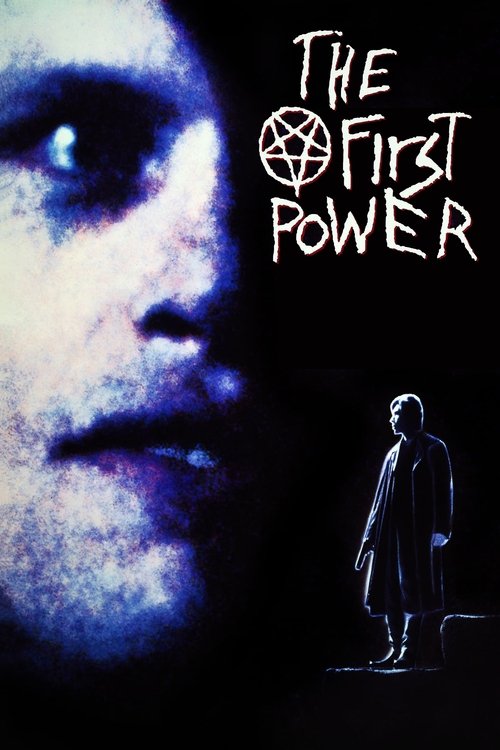
The film opens in Los Angeles with Detective Russell Logan already deep into a manhunt that has become his specialty: serial killers who think they can hide in patterns, symbols, and fear. Patrick Channing, the man the city knows as the Pentagram Killer, is leaving ritual marks on his victims, carving pentagrams into them before killing them, and Logan is tracking the crimes as if he is reading a dark map of the city itself. The murders are scattered across Los Angeles in a geometric pattern that points to Channing's obsession with Satanic symbolism, and the closer Logan gets to understanding the pattern, the more the case begins to feel less like a standard homicide investigation and more like a battle against something rotten at the root.
Before Logan ever sees Channing face to face, the killer has already become a presence in the city's shadows. Logan has supposedly solved two serial-killer cases before this one, which makes him something of a celebrity among the LAPD, but it also means he is used to being the man who finishes what others cannot. That confidence is what drives him as he pursues Channing through grim city streets and into one dangerous confrontation after another. At one point, an anonymous caller gives Logan the clue he needs to catch the killer, but the caller insists on one condition: Logan must not seek the death penalty for Patrick Channing. Logan agrees just long enough to get the lead he needs, then breaks his promise once the killer is in custody, sending Channing toward execution anyway.
Channing's real name is Patrick Channing, and the film later reveals that he is not just an ordinary sadist but a man warped from the start by an incestuous origin and a deeply traumatic childhood that leaves him emotionally and psychologically damaged before he fully gives himself to evil. That backstory does not excuse what he becomes, but it gives the movie's villain a terrible intimacy, as if the evil has been growing in him all his life before finally finding a theological language in Satanism. He kills with horrifying ferocity, and his crimes are so extreme that the LAPD makes him a top-priority target. When Logan and his team finally close in, the confrontation is brutal and exhausting, but Logan manages to apprehend him, and Channing is sent to the gas chamber.
For a moment, the case seems finished. Channing is executed in the gas chamber at San Quentin, and the officers and officials who witness it believe they have just watched the last breath leave a monster's body. Logan himself allows relief to wash over him. One account describes him waking from a feverish nightmare in which Channing breaks free and stabs him, and Logan is shaken but reassured when he realizes it was only a dream. That false sense of closure is exactly what the film exploits. The execution is not an ending but a doorway, and once the killer dies, the story reveals its true shape: Channing has made a demonic pact and returned with "the first power," a supernatural force that lets him rise from death and continue his murders from beyond the grave.
The film's shift into the supernatural comes with an eerie, mounting sense that Logan's certainty is about to be stripped away. The anonymous caller who warned him before the arrest returns in a new form: Tess Seaton, a psychic woman whose disturbing visions had helped him catch Channing in the first place. Tess is the one who can feel Channing's presence when he is otherwise invisible, and she confirms that the pentagrams Logan sees appearing again, along with the voice he hears out of thin air, belong to Channing's spirit. She is not merely guessing; she is describing a return from death that she has already sensed as inevitable. Her role is crucial because she explains why Logan's old methods fail here. Channing is not simply alive again. He is something more invasive, a killer with a supernatural advantage that makes identity itself unstable.
As Channing begins killing again, the murders are no longer random acts of violence but a deliberate campaign of terror aimed directly at Logan. The killer starts targeting people close to the detective, turning the case personal in a way that strips away Logan's professional distance. Channing's new ability is possession: he can inhabit other bodies and move from person to person, making it nearly impossible to know what face he will wear next. This is where the film's horror becomes especially unnerving, because Channing can appear "in anybody, anywhere, at any time," as one summary puts it. The city itself becomes unsafe not because he is physically everywhere, but because he can be everywhere through other people.
Logan, a hardened skeptic and atheist in several descriptions, is forced into a world that refuses to obey his logic. He tries to confront the situation as if it were still a criminal investigation, but Channing keeps slipping through every conventional explanation. Logan seeks answers from a priest, asking, "Can the spirits of the dead return? How can they be stopped?" The question is not rhetorical; it is the expression of a man whose entire worldview is beginning to crack. The priest's office becomes one of the film's first spiritual waystations, a place where the procedural language of police work gives way to the language of faith, damnation, and soul.
Tess and Logan join forces because each of them has access to a different kind of truth. Logan has the facts, the crime scenes, the physical evidence, and the determination to keep moving forward. Tess has the visions, the psychic sensitivity, and the terrifying knowledge that Channing's death did not end the threat. Their partnership builds the emotional core of the film as they investigate together, follow leads through dark alleys and abandoned buildings, and slowly uncover Channing's twisted background. As they work, they also fall for each other, and that growing connection gives the story a fragile human center amid the violence. The emotional contrast matters: every time the pair move closer, the film places them against another manifestation of Channing's evil, as though tenderness itself is being tested by the presence of something that wants only corruption.
The investigation eventually leads them to Sister Marguerite, a nun with special knowledge about the supernatural laws surrounding Channing. She initially refuses to speak openly, constrained by the Church's limits, but her reluctance only deepens the mystery. Then she reveals the hidden theological structure behind what is happening: God and Satan each possess three powers that they can bestow. The first power is resurrection, the force that brings a soul back from death. The second is psychic sight, the ability to perceive things beyond ordinary human awareness. The third is the power to take over a body. Channing, she explains, possesses all three. She calls him "the only soul in history to possess all three," and that statement transforms him from a mere serial killer into a singular vessel of evil.
That revelation reframes everything that has happened so far. Channing is not just murdering people after escaping death; he is an entity whose very survival depends on violating the boundaries between life and death, flesh and spirit, self and host. He seeks out weak-willed bodies, especially people with fragile mental states like alcoholics, junkies, or a bag lady, because they are easier for him to overtake. His possession is not random. It is predatory and strategic, the actions of a killer who understands that his true power lies not in strength but in access. The body-hopping also makes his violence feel more intimate and more paranoid, because anyone could become Channing's next shell.
The film's middle section builds tension through repeated confrontations and near escapes. Logan and Tess pursue Channing through the city, always arriving too late or one step behind, while Channing uses his shifting identities to taunt them and deepen Logan's helplessness. Each new murder feels like a message. Each new face Channing wears reminds Logan that the enemy is no longer confined to a body he can handcuff or a face he can photograph. The case is no longer about catching a man. It is about stopping a force that has learned how to cheat death. The emotional strain on Logan intensifies because Channing is not just attacking strangers anymore; he is moving toward the people Logan loves, turning the detective's private world into another crime scene.
As the story pushes toward its climax, the film continues to reveal more of Channing's spiritual and psychological corruption. His backstory is presented as a mixture of abuse, trauma, and surrender to Satanic influence, suggesting that his evil is both chosen and cultivated. This does not lessen the horror; it deepens it, because the film makes Channing's soul feel like a battleground on which something demonic has won. The horror of the first half of the film--pentagrams, ritual murders, a serial killer who seems to be enjoying his own mythology--gives way to a broader metaphysical terror in which death itself has been weaponized.
The final movement of the film takes place in a fiery underground sewer setting, an environment that looks like the underworld made physical. There, Channing attempts to possess Sister Marguerite, and the confrontation becomes both spiritual and visceral. Marguerite fights him inwardly as Logan confronts him outwardly, and the battle is charged with the desperate knowledge that if Channing takes her body, he may gain even more access to the power that has sustained him. The scene is not simply a chase; it is a struggle over the fate of a soul and over the last line of defense between Logan and an evil that keeps mutating. The flames, damp concrete, and suffocating underground space make the confrontation feel like a descent into the place where all the film's earlier symbols have been leading.
In the middle of that chaos, Logan does the one thing he has not been able to do up to that point: he forces Channing to confront the buried truth of his own childhood. Those "secrets from his childhood" become part of the weapon against him, because Logan understands that Channing's identity is rooted in the emotional ruin that helped shape his descent into evil. This moment gives the climax its psychological edge. Logan is not merely stabbing at a supernatural body; he is naming the darkness that created the man. Channing's power depends on control and concealment, and Logan uses truth itself as a form of attack.
The decisive act comes when Logan plunges a crucifix-dagger into the possessed body of Channing and Marguerite, apparently destroying him. The image is iconic in its blunt religious force: the crucifix becomes a blade, faith becomes a weapon, and the monster is pinned by the symbol he has spent the entire film defiling. Yet even in victory, the ending refuses complete comfort. One account explicitly says the film ends in a sequel setup, leaving room to wonder whether Channing is truly gone or whether the evil has simply found another way to linger. That ambiguity is the final sting of the movie. Logan has won the immediate battle, and the apparent death of Channing closes the last direct confrontation, but the atmosphere does not fully relax. The film leaves behind the feeling that resurrection has consequences, and that a force capable of returning once may not be so easily extinguished forever.
By the time the last scene is over, the story has moved from a grounded LAPD manhunt to a supernatural war over souls, bodies, and the hidden powers of life after death. Patrick Channing's execution at San Quentin fails to end the case because death itself is revealed to be only one stage in his curse. Tess Seaton's psychic warnings, Sister Marguerite's hidden Church knowledge, and Russell Logan's stubborn determination all converge to stop him, but the film makes clear that the battle is waged on several planes at once: physical, psychological, and spiritual. The movie closes with Logan surviving the confrontation, Channing seemingly destroyed, and the suggestion that the nightmare may not be fully over, even if the immediate terror has been pushed back into the darkness.





What is the ending?
In the ending of "The First Power," police officer Russell Logan confronts the resurrected serial killer, Patrick Channing, in a final showdown. After a fierce battle, Logan manages to defeat Channing by using a crucifix to trap him in a state of limbo. The film concludes with Logan coming to terms with his own trauma and the loss of his partner, while Channing is left powerless.
Now, let's delve into the ending in a more detailed narrative fashion:
As the climax of the film approaches, Russell Logan, portrayed by Lou Diamond Phillips, finds himself in a dimly lit, abandoned church, the atmosphere thick with tension and the remnants of a violent past. The air is heavy with the scent of decay, and shadows dance ominously across the walls, reflecting the internal struggle Logan faces. He is haunted by the memories of his partner, who was brutally murdered by the serial killer Patrick Channing, played by Jeff Kober. Logan's determination to stop Channing once and for all fuels his every move.
In a pivotal moment, Logan confronts Channing, who has returned from the dead, embodying a malevolent force that seems almost invincible. The two engage in a fierce battle, with Channing taunting Logan, reminding him of his failures and the pain of his partner's death. Logan's emotional state is a tumultuous mix of anger, grief, and a desperate need for closure. He fights not just for his own life, but to avenge his partner and put an end to Channing's reign of terror.
As the fight escalates, Logan realizes that physical strength alone will not be enough to defeat Channing. In a moment of clarity, he recalls the significance of the crucifix, a symbol of faith and protection. With renewed resolve, Logan seizes the crucifix and uses it against Channing, who is momentarily stunned by its power. The church, once a place of worship, becomes a battleground for good versus evil, and the stakes have never been higher.
In a climactic showdown, Logan manages to trap Channing in a state of limbo, using the crucifix to bind him. The atmosphere shifts as Channing's malevolent energy begins to dissipate, and he realizes that he is losing his grip on the physical world. The look of rage and disbelief on Channing's face is palpable as he struggles against the forces that bind him. Logan stands firm, embodying the strength of his convictions and the love for his fallen partner.
As Channing is finally defeated, the church falls silent, the echoes of their battle fading into the stillness. Logan, though victorious, is left to grapple with the emotional aftermath. He kneels in the church, the weight of his loss heavy on his heart. The camera captures the raw vulnerability in his expression, a man who has faced darkness and emerged, but not without scars.
In the final moments, Logan steps out of the church, the dawn breaking on the horizon. The light symbolizes hope and a new beginning, but it also serves as a reminder of the pain he has endured. He has avenged his partner's death, but the journey has changed him irrevocably. The film closes with Logan walking away, a solitary figure against the backdrop of a new day, embodying the resilience of the human spirit in the face of unimaginable horror.
In summary, Russell Logan emerges as a survivor, having confronted his demons and the embodiment of evil in Patrick Channing, who is left powerless and trapped. The film concludes with a sense of closure for Logan, but also an acknowledgment of the emotional toll that such a battle exacts on a person.
Is there a post-credit scene?
The movie "The First Power," produced in 1990, does not have a post-credit scene. The film concludes with a climactic showdown between the protagonist, Detective Russell Logan, and the antagonist, a resurrected serial killer named Patrick Channing. After a tense battle, Logan ultimately defeats Channing, leading to a resolution that wraps up the main narrative without any additional scenes or hints at future developments during or after the credits. The film ends on a note of closure, focusing on Logan's relief and the emotional weight of his experiences throughout the story.
Who is the main antagonist in The First Power and what are his abilities?
The main antagonist in The First Power is a serial killer named Patrick Channing, portrayed by Lou Diamond Phillips. Channing possesses the ability to return from the dead, which he uses to continue his killing spree. His resurrection power is central to the plot, as he seeks to eliminate those who stand in his way, particularly the detective trying to stop him.
What motivates Detective Russell Logan to pursue Patrick Channing?
Detective Russell Logan, played by Jeff Speakman, is deeply motivated by a sense of justice and personal responsibility. After Channing's initial capture and subsequent escape, Logan feels a strong obligation to protect the community and prevent further murders. His emotional state is further complicated by the trauma of losing a partner during the investigation, which fuels his determination to stop Channing at all costs.
How does the character of Lisa Heller contribute to the story?
Lisa Heller, portrayed by Tracy Griffith, is a psychic who becomes involved in the investigation of Patrick Channing. Her character adds depth to the narrative as she provides Logan with insights into Channing's supernatural abilities. Lisa's own fears and vulnerabilities are highlighted as she grapples with her psychic powers, which she initially struggles to accept, but ultimately uses to help Logan confront Channing.
What is the significance of the 'First Power' in the context of the film?
The 'First Power' refers to Channing's ability to resurrect himself after death, which is a key plot element that sets the stakes for the characters. This power allows him to evade capture and continue his reign of terror, creating a sense of urgency for Logan and Lisa as they race against time to stop him. The concept of the First Power also raises questions about the nature of evil and the supernatural.
How does the final confrontation between Logan and Channing unfold?
The final confrontation occurs in a dramatic showdown where Logan faces Channing in a church. The atmosphere is tense, filled with a sense of impending doom as Channing taunts Logan, showcasing his supernatural abilities. Logan, fueled by desperation and determination, ultimately confronts Channing in a battle that tests his physical and mental limits. The emotional stakes are high as Logan fights not only for his own life but also to protect those he cares about from Channing's malevolence.
Is this family friendly?
"The First Power," produced in 1990, is not considered family-friendly due to its intense themes and graphic content. Here are some potentially objectionable or upsetting aspects that may affect children or sensitive viewers:
-
Violence and Gore: The film contains several scenes of violence, including murders and supernatural killings, which are depicted graphically.
-
Supernatural Elements: The presence of a demonic antagonist and themes of possession may be frightening for younger audiences.
-
Murder and Crime: The storyline revolves around a serial killer, which includes disturbing depictions of crime scenes and the psychological impact on victims and law enforcement.
-
Dark Themes: The film explores themes of death, the afterlife, and the struggle between good and evil, which may be too intense for younger viewers.
-
Emotional Distress: Characters experience significant trauma and fear, which could be unsettling for sensitive individuals.
Overall, the film's mature content and dark atmosphere make it more suitable for adult audiences.








