






Popular
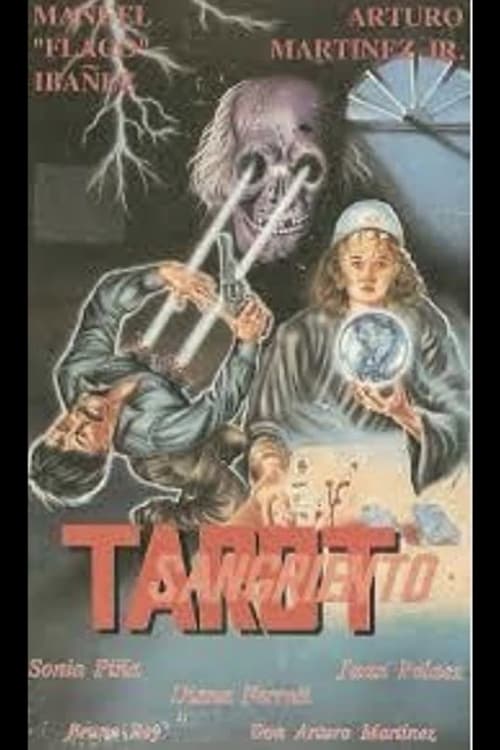
What role does the tarot deck play in the story of Bloody Tarot?
How does the protagonist's relationship with the tarot reader evolve throughout the film?
What is the significance of the character who becomes a victim of the tarot's predictions?
How do the secondary characters influence the main character's journey in Bloody Tarot?
What are the key moments that lead to the protagonist's realization about the tarot's true power?
Should I watch it?
Ask Your Own Question

What is the plot?
Sorry, we aren't able to watch and write up a full detailed plot yet. Check back in a few days.


What is the ending?
In the ending of "Bloody Tarot," the protagonist, a young woman named Lisa, confronts the malevolent force that has been unleashed through the tarot cards. After a series of harrowing encounters, she ultimately faces the dark entity in a climactic showdown. The film concludes with Lisa managing to destroy the entity, but at a great personal cost. The surviving characters are left to grapple with the aftermath of the events, and Lisa's fate remains ambiguous as she is seen walking away, forever changed by her experiences.
As the final act of "Bloody Tarot" unfolds, the tension escalates dramatically.
Scene 1: The Confrontation Lisa, now fully aware of the dark power that the tarot cards hold, gathers her courage to confront the malevolent force that has been terrorizing her and her friends. The atmosphere is thick with dread as she enters the dimly lit room where the final confrontation is set to take place. Shadows flicker on the walls, and the air is charged with an ominous energy. Lisa's heart races, her determination battling against the fear that grips her.
Scene 2: The Dark Entity As she steps further into the room, the dark entity materializes, a swirling mass of shadows and whispers. It taunts Lisa, revealing her deepest fears and insecurities. The entity's voice echoes around her, chilling her to the bone. Lisa's internal struggle is palpable; she feels the weight of her friends' fates resting on her shoulders. The entity attempts to manipulate her emotions, but Lisa fights back, recalling the strength she has found throughout her journey.
Scene 3: The Battle The confrontation escalates into a fierce battle of wills. Lisa uses the knowledge she has gained from the tarot cards, channeling their power to combat the darkness. The room is filled with flashes of light and dark as the two forces clash. Lisa's determination shines through as she recalls the love and support of her friends, which fuels her resolve. The struggle is intense, and the stakes are high; she knows that failure could mean the end for her and her loved ones.
Scene 4: The Climax In a moment of clarity, Lisa realizes that the only way to defeat the entity is to confront her own fears head-on. She stands firm, declaring her refusal to be a victim any longer. With a surge of energy, she unleashes a powerful spell, drawing on the strength of the tarot cards. The entity shrieks in rage as it begins to disintegrate, the shadows dissipating into the air. Lisa's face reflects a mix of triumph and sorrow as she watches the darkness fade away.
Scene 5: The Aftermath As the dust settles, Lisa stands alone in the now-empty room, the remnants of the battle lingering in the air. She is visibly shaken, her body trembling from the exertion and the emotional toll of the confrontation. The camera pans to the faces of her friends, who have survived the ordeal but are left traumatized by the events. Each character processes the aftermath in their own way; some are relieved, while others are haunted by the memories of what transpired.
Scene 6: Lisa's Departure In the final moments, Lisa walks away from the scene, her silhouette framed against the fading light. There is a sense of ambiguity in her expression; she has triumphed over the darkness, but the victory has come at a cost. The weight of her experiences hangs heavy on her shoulders, and as she steps into the unknown, it is clear that she is forever changed. The film closes with a lingering sense of uncertainty, leaving the audience to ponder the true nature of her journey and the scars it has left behind.
In summary, the fates of the main characters are intertwined with the themes of courage, sacrifice, and the lasting impact of trauma. Lisa emerges as a survivor, but the emotional scars of her battle with the dark entity will shape her future. The film leaves viewers with a haunting reminder of the power of fear and the strength found in confronting it.
Is there a post-credit scene?
"Bloody Tarot," produced in 1990, does not feature a post-credit scene. The film concludes its narrative without any additional scenes or content after the credits roll. The story wraps up with a final confrontation and resolution that leaves the audience with a sense of closure regarding the characters and their fates. The absence of a post-credit scene aligns with the film's overall tone and style, focusing on the horror and psychological elements that have unfolded throughout the movie.
What role does the tarot deck play in the story of Bloody Tarot?
In Bloody Tarot, the tarot deck serves as a central plot device that connects the characters to their fates. Each card drawn reveals not only the future but also the hidden truths and dark secrets of the characters, leading to a series of tragic and violent events. The protagonist, who is initially skeptical, becomes increasingly entangled in the supernatural implications of the cards, which heightens the tension and drives the narrative forward.
How does the protagonist's relationship with the tarot reader evolve throughout the film?
The protagonist begins with a dismissive attitude towards the tarot reader, viewing her as a mere charlatan. However, as the story unfolds and the predictions start to manifest in disturbing ways, their relationship shifts from skepticism to a desperate reliance on her insights. This evolution is marked by moments of fear and vulnerability, as the protagonist grapples with the reality of the tarot's power and the consequences of their choices.
What is the significance of the character who becomes a victim of the tarot's predictions?
The character who falls victim to the tarot's predictions embodies the theme of inevitability and fate. Their demise is foreshadowed through the cards, which depict their tragic end in vivid imagery. This character's journey reflects the emotional turmoil of realizing that their life is being manipulated by forces beyond their control, creating a sense of dread and urgency that permeates the film.
How do the secondary characters influence the main character's journey in Bloody Tarot?
The secondary characters serve as both foils and catalysts for the protagonist's development. Each character, whether a friend, skeptic, or antagonist, presents different perspectives on fate and free will, challenging the protagonist's beliefs. Their interactions often lead to pivotal moments that force the protagonist to confront their own fears and the reality of the tarot's influence, ultimately shaping their path and decisions.
What are the key moments that lead to the protagonist's realization about the tarot's true power?
Key moments include the protagonist witnessing a series of events that align eerily with the tarot readings, such as a friend's sudden misfortune that mirrors a drawn card. Another significant moment occurs when the protagonist confronts the tarot reader about the accuracy of her predictions, leading to a chilling revelation about the interconnectedness of their fates. These experiences culminate in a profound internal struggle, as the protagonist grapples with the implications of the tarot's power and their own agency.
Is this family friendly?
"Bloody Tarot," produced in 1990, is not considered family-friendly. The film contains several potentially objectionable or upsetting scenes and aspects that may be distressing for children or sensitive viewers.
-
Graphic Violence: The film features scenes of intense violence, including bloodshed and gore, which may be disturbing to younger audiences.
-
Supernatural Themes: The use of tarot cards and occult practices may be unsettling for some viewers, particularly those sensitive to themes involving witchcraft or the supernatural.
-
Psychological Horror: The film delves into psychological terror, with characters experiencing fear, paranoia, and distress, which could be emotionally taxing.
-
Mature Themes: There are elements of betrayal, manipulation, and dark human emotions that may not be suitable for children.
-
Disturbing Imagery: The visual presentation includes unsettling imagery that could provoke fear or anxiety.
Overall, the film's content is geared towards an adult audience and may not be appropriate for children or those who are sensitive to horror and violence.









