


























Popular
What motivates the main character, Lars, throughout the film?
How does Lars's relationship with his wife, Anna, evolve during the film?
What role does the setting play in Lars's psychological state?
How do the secondary characters influence Lars's behavior?
What specific events trigger Lars's descent into paranoia?
Should I watch it?
Ask Your Own Question

What is the plot?
Sorry, we aren't able to watch and write up a full detailed plot yet. Check back in a few days.
More Movies Like This
Browse All Movies →




What is the ending?
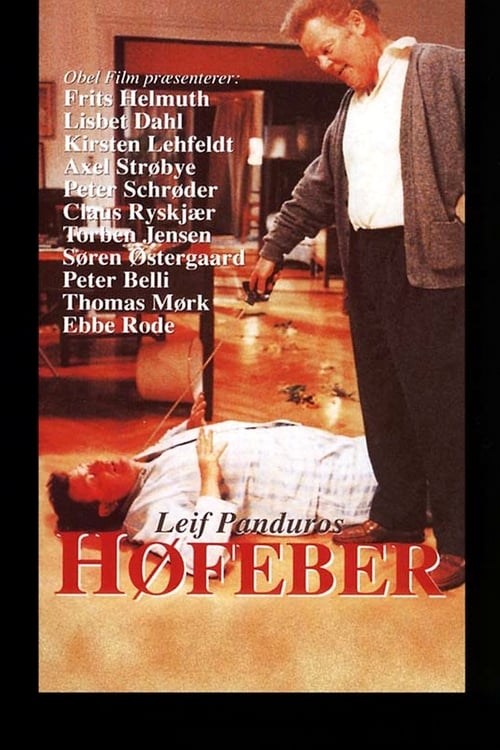
In the ending of "Høfeber," the main character, a young boy named Lars, confronts the reality of his family's struggles and the impact of his father's illness. The film culminates in a poignant moment where Lars must come to terms with loss and the fragility of life, ultimately leading to a bittersweet resolution for the family.
As the film approaches its conclusion, we find Lars grappling with the weight of his father's deteriorating health. The atmosphere is heavy with tension and unspoken fears. The scenes are filled with a sense of urgency as Lars witnesses the emotional toll that his father's illness takes on his mother and himself.
In the first scene of the ending, we see Lars sitting alone in his room, surrounded by toys that now feel distant and unimportant. His face is a mixture of confusion and sadness, reflecting the internal conflict he faces as a child trying to understand the adult world around him. The camera lingers on his expression, capturing the innocence that is slowly being stripped away by the harsh realities of life.
Next, the film shifts to a scene in the hospital where Lars's father lies in a bed, frail and weak. The sterile environment contrasts sharply with the warmth of the family home, emphasizing the emotional distance that has grown between them. Lars stands at the foot of the bed, his small frame dwarfed by the medical equipment surrounding his father. The silence is palpable, filled with unspoken words and fears. Lars's father, despite his condition, tries to reassure him with a weak smile, but the effort only deepens Lars's sense of helplessness.
In the following scene, we see Lars's mother in the waiting area, her face etched with worry and fatigue. She is on the phone, trying to manage the logistics of their situation while also holding back tears. The camera captures her trembling hands as she speaks, revealing the strain of balancing hope and despair. This moment highlights the emotional burden she carries, not just for herself but for her son as well.
As the climax unfolds, Lars decides to confront his father directly. He approaches the bedside, his heart racing, and asks the question that has been haunting him: "Will you get better?" The question hangs in the air, heavy with the weight of uncertainty. His father, with a pained expression, responds with a gentle but honest acknowledgment of the situation. This moment is raw and emotional, showcasing the bond between father and son, even in the face of impending loss.
The final scenes depict the family's struggle to find closure. Lars's father passes away, and the film captures the aftermath of this loss. We see Lars at the funeral, standing beside his mother, both of them enveloped in grief. The camera focuses on Lars's face, capturing the tears that stream down his cheeks, a visual representation of his shattered innocence.
In the closing moments, the film shifts to a scene of Lars and his mother at home, surrounded by the remnants of their life together. They sit in silence, the weight of their shared loss palpable in the air. Yet, amidst the sorrow, there is a flicker of hope as they begin to talk about the memories of his father, sharing stories that bring a sense of warmth to their grief. This moment signifies the beginning of their healing process, suggesting that while loss is profound, the love shared remains a guiding light.
The film concludes with a lingering shot of Lars looking out the window, a mixture of longing and acceptance in his gaze. The screen fades to black, leaving the audience with a sense of bittersweet resolution, encapsulating the themes of love, loss, and the resilience of the human spirit in the face of adversity.
Is there a post-credit scene?
The movie "Høfeber," produced in 1991, does not feature a post-credit scene. The film concludes its narrative without any additional scenes or content after the credits roll. The story wraps up with a focus on the emotional and psychological journey of the characters, leaving the audience to reflect on the themes presented throughout the film.
What motivates the main character, Lars, throughout the film?
Lars is driven by a deep-seated fear of losing his family and the stability of his life. His internal struggle is exacerbated by his obsessive thoughts about the dangers that lurk in the world around him, leading him to take increasingly irrational actions to protect his loved ones.
How does Lars's relationship with his wife, Anna, evolve during the film?
Initially, Lars and Anna share a loving relationship, but as Lars's paranoia intensifies, it creates a rift between them. Anna becomes frustrated with Lars's irrational fears, leading to tension and conflict. Their relationship is tested as Anna tries to support Lars while also seeking to maintain her own sanity.
What role does the setting play in Lars's psychological state?
The film is set in a rural, isolated environment that amplifies Lars's feelings of vulnerability and fear. The vast, empty landscapes serve as a constant reminder of his perceived threats, while the claustrophobic interiors of their home reflect his growing paranoia and sense of entrapment.
How do the secondary characters influence Lars's behavior?
Secondary characters, such as Lars's friends and neighbors, serve as both a support system and a source of frustration for him. Their attempts to reassure him often fall flat, leading Lars to feel increasingly isolated. Their skepticism about his fears exacerbates his paranoia, pushing him further into his obsessive thoughts.
What specific events trigger Lars's descent into paranoia?
Several key events trigger Lars's descent, including a series of accidents in the community that he interprets as signs of impending danger. Additionally, a traumatic incident from his past resurfaces, causing him to spiral deeper into his fears, leading to a breakdown in his mental state.
Is this family friendly?
"Høfeber," produced in 1991, is a Norwegian film that explores themes of family dynamics, personal struggles, and emotional conflicts. While it is not explicitly designed as a children's film, it does contain elements that may be suitable for older children and teenagers, depending on their maturity level.
However, there are several potentially objectionable or upsetting aspects that could affect children or sensitive viewers:
-
Emotional Turmoil: The film delves into complex emotional states, including anxiety, depression, and familial conflict, which may be difficult for younger viewers to process.
-
Family Struggles: Scenes depicting strained relationships within the family can be intense, showcasing arguments and misunderstandings that may resonate with viewers who have experienced similar situations.
-
Themes of Loss: The film touches on themes of loss and longing, which could evoke sadness or discomfort in sensitive viewers.
-
Intense Moments: There are moments of heightened tension that may be unsettling, as characters confront their fears and insecurities.
-
Realistic Portrayal of Life's Challenges: The film presents a realistic view of life's challenges, which may include scenes that reflect hardship or emotional distress.
Overall, while "Høfeber" can be insightful and thought-provoking, it may not be entirely family-friendly for younger audiences or those who are particularly sensitive to emotional or familial issues.









