






Popular
What role does the setting play in the development of the plot?
What is the significance of the character Dr. X in the story?
How does Nikki's emotional state evolve throughout the performance?
How do the musical performances contribute to the storytelling?
What is the relationship between Nikki and the other characters in the story?
Should I watch it?
Ask Your Own Question

What is the plot?
Nikki opens in a hospital bed, nearly catatonic, with only fragments of a shattered past left in his mind. The room is cold and dim, the kind of place where time seems to hang motionless, and the first thing that happens is not action but recollection: the words and images of "I Remember Now" begin flooding back, turning his blank present into a feverish flashback. As his memory reassembles itself, the story stops being about a single moment and becomes the full tragedy of how he is broken, used, and destroyed.
Before he becomes the wreck in the hospital, Nikki is a young heroin addict in a city poisoned by corruption, hypocrisy, and anger. He is restless, bitter, and desperate for meaning, the kind of man who wants to believe his rage can be turned into purpose. That hunger makes him vulnerable when he crosses paths with Dr. X, a smooth, mysterious political-religious mastermind who offers him exactly what he thinks he wants: a place in a revolution. Dr. X speaks like a prophet and behaves like a puppet master, promising change while planning murder. He does not recruit Nikki with honesty, but with control. He feeds on Nikki's addiction and instability, using heroin, psychological manipulation, and the coded trigger word "mindcrime" to turn him into an obedient assassin. Each time Dr. X says the word, Nikki slips into a conditioned state, stripped of will and reduced to a weapon. The transformation is chilling because it is not presented as possession or madness alone, but as a deliberate system of exploitation.
Nikki is then drawn deeper into Dr. X's underground conspiracy, where the language of revolution hides a machinery of coercion and violence. He is sent to carry out killings under the banner of ideology, but the movement is hollow; its ideals are a disguise for power, corruption, and control. As he moves through this world, he becomes increasingly fragmented, performing acts he barely understands, with each new step tightening the net around him. The story's tension builds through this contradiction: Nikki thinks he is taking part in a righteous struggle, but he is really being shaped into someone else's instrument. The more he submits, the less of himself remains.
The emotional center of the story arrives when Nikki meets Sister Mary, a former prostitute who has become a nun. She is introduced as someone who has already survived the brutal underside of society and chosen a new path, which makes her both vulnerable and luminous in Nikki's eyes. Their meeting changes everything. For the first time, Nikki experiences something that is not rage, command, or chemical haze. He falls in love with her, and that love begins to crack the conditioning Dr. X has built around him. Mary becomes his moral awakening, the living proof that the world contains something other than manipulation and brutality. Their scenes together carry an aching tenderness because they feel like a last chance at redemption. Nikki's voice and body seem to soften around her, and the story briefly opens into a human possibility that had seemed impossible only moments earlier.
That possibility is precisely what Dr. X notices and fears. Once he sees that Mary is pulling Nikki away from his control, he moves quickly and ruthlessly. He orders Nikki to kill both Mary and Father William, the corrupt priest connected to the organization and to Mary's refuge. The order is one of the story's most important confrontations because it forces Nikki into direct collision with the two forces tearing at him: the programmed obedience Dr. X has implanted in him, and the genuine love and conscience Mary awakens. Father William is not simply a side character; he embodies the moral rot hiding inside religious authority, and his role in the conspiracy shows that the corruption reaches into every institution the story touches. Dr. X's command exposes how disposable people are to him. Mary and Father William are not individuals in his eyes, only obstacles.
Nikki goes to fulfill the order, and the atmosphere darkens into dread. The church setting, with its solemn space and spiritual symbolism, becomes the site of violence and betrayal. He kills Father William, carrying out the command at least in part, but when it comes time to murder Mary, something in him breaks. He cannot do it. The love he feels for her is stronger than the conditioning, and for a moment he resists the machine that has been driving him. In many retellings of the story, this is the point where he tries to choose Mary over Dr. X, and the narrative's emotional stakes become unbearable: Nikki is finally trying to act like himself, but he is still trapped in a system built to destroy that selfhood.
Then comes the cruelest twist. When Nikki reaches Mary, she is already dead. The story never allows him the relief of making a clean choice or the comfort of saving her. The exact circumstances remain murky in the way tragedies often do, but the outcome is devastatingly clear: Mary dies, with Dr. X's threats and manipulation standing behind the death as the decisive evil. In the version most often repeated, she kills herself after Dr. X threatens Nikki, making her death the result of coercion rather than a simple murder. Whether read as suicide under pressure or as another consequence of Dr. X's indirect violence, her death lands like a personal apocalypse. Nikki is left staring into the aftermath, unable to tell whether he failed to save her, whether he killed her in ways his mind cannot remember, or whether the world has simply been arranged so that every path leads to ruin. The ambiguity is part of the horror. He is not just bereaved; he is trapped inside uncertainty, and that uncertainty destroys him more completely than certainty would.
Mary's death shatters Nikki's fragile grip on reality. He collapses into a spiral of panic and grief, running through the streets in a state of mental collapse, calling out for her as the city closes around him. The movement of the story becomes frantic here, all momentum and no direction. He is no longer the controlled assassin, no longer even a man capable of coherent resistance. He is a soul in free fall. The public spaces around him mirror his inner ruin: streets become corridors of madness, and the city feels indifferent, polluted, and cold. He has reached the point where the full cost of Dr. X's manipulation becomes visible, and the realization hits not as a revelation but as an emotional catastrophe.
The deeper truth surfaces as the story's major twist: the "revolution" was never a liberation movement at all, but a machine for domination, murder, and psychological slavery. Dr. X is not a savior or rebel leader but a demagogue who weaponizes ideology and addiction to create obedient killers. Nikki's identity as an "assassin" is itself a lie built out of chemical dependence and implanted commands. The word "mindcrime" stands as the symbol of that lie--a code that collapses his will and turns him into someone else's instrument. Every apparent victory in the underground movement is poisoned by the fact that Nikki is never free while he is inside it. The tragedy is not only that he has done terrible things, but that he has been denied even the dignity of fully knowing why.
From there, the story snaps back to the hospital framing device, and the meaning of the opening becomes fully clear. Nikki is not simply waking from illness; he is being forced to remember. His amnesia was the last fragile defense his mind had against what happened, but once the floodgates open, the entire sequence returns in terrible clarity. He is ultimately apprehended and placed in custody in a mental hospital, where the memories keep rushing back. The ending does not resolve the conspiracy, punish Dr. X in a neat final confrontation, or restore Mary to life. Instead, it ends on psychic collapse. Nikki survives in body but not in any meaningful sense of self. The last scene leaves him trapped in the ruins of his own mind, haunted by what he has done, what was done to him, and what he can never undo.
The final emotional note is devastating because it completes a circle rather than a victory. Nikki begins in a hospital with a broken mind, relives the events that destroyed him, and ends back in that same broken state, now with the truth fully present and impossible to escape. Dr. X's corruption remains exposed, Mary remains dead, Father William remains a casualty of the machine, and Nikki is left with memory as both punishment and curse. The story closes not with redemption, but with the unbearable realization that the past cannot be changed and that the man who wanted a revolution has become only a witness to his own ruin.
More Movies Like This
Browse All Movies →





What is the ending?
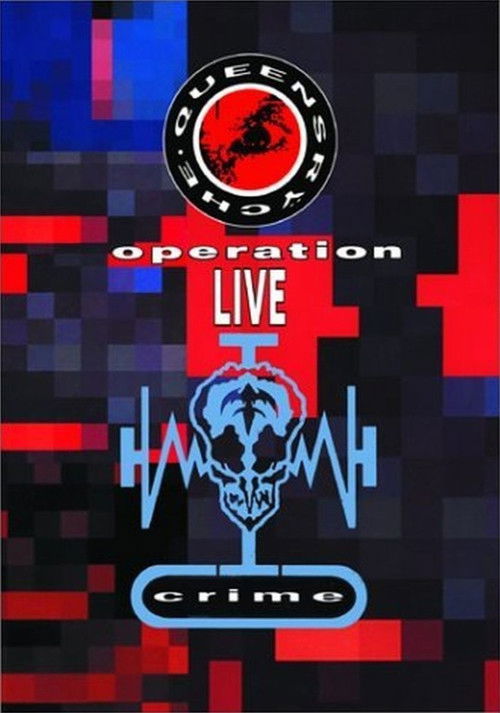
In the ending of "Queensrÿche: Operation Livecrime," the protagonist, a man named "The Voice," confronts his inner demons and the consequences of his actions. The narrative culminates in a dramatic climax where he faces the reality of his choices, leading to a tragic resolution that leaves him grappling with guilt and despair.
As the story unfolds towards its conclusion, the stage is set with a dark, moody atmosphere, enhanced by the haunting melodies of Queensrÿche's music. The Voice, portrayed by the lead singer Geoff Tate, is seen in a state of turmoil, reflecting on his past decisions and the impact they have had on his life and the lives of those around him. The visuals are striking, with intense lighting and shadow play that emphasizes his emotional struggle.
In the final scenes, The Voice is confronted by the consequences of his actions, represented by the characters surrounding him. The imagery is powerful, with the band performing in the background, their music echoing the themes of loss and regret. The audience can feel the weight of his guilt as he grapples with the realization that his choices have led to irreversible outcomes.
As the climax reaches its peak, The Voice is faced with a choice: to continue down a path of self-destruction or to seek redemption. The tension is palpable, and the music swells, underscoring the gravity of the moment. Ultimately, he chooses to confront his demons, but the resolution is bittersweet. The stage lights dim, and the performance comes to an end, leaving The Voice in a state of reflection, symbolizing the ongoing struggle between hope and despair.
In the aftermath, the fate of the main characters is left somewhat ambiguous. The Voice is left to ponder his future, burdened by the weight of his past. The other characters, who represent various facets of his life and choices, fade into the background, leaving him alone with his thoughts. The emotional resonance of the ending lingers, highlighting the themes of consequence, redemption, and the complexity of the human experience.
The film concludes with a sense of unresolved tension, emphasizing that while The Voice has faced his inner turmoil, the journey towards redemption is ongoing, and the scars of his past will continue to shape his future. The audience is left with a haunting sense of reflection, mirroring the emotional depth of the music that has accompanied the narrative throughout.
Is there a post-credit scene?
"Queensrÿche: Operation Livecrime," produced in 1991, does not contain a post-credit scene. The film primarily focuses on a live performance of the band's concept album "Operation: Mindcrime," interspersed with narrative elements that explore the story of the album's protagonist, Nikki. The film concludes with the final performance and does not include any additional scenes or content after the credits roll.
What role does the setting play in the development of the plot?
The setting, primarily within a dystopian environment, enhances the narrative's tension and urgency. The stark, industrial backdrop reflects the bleakness of Nikki's situation and the oppressive nature of Dr. X's control. This environment serves as a catalyst for Nikki's internal struggles and the overall conflict of the story.
What is the significance of the character Dr. X in the story?
Dr. X serves as the antagonist in the narrative, representing the oppressive forces of society that manipulate and control individuals. His character is pivotal as he embodies the themes of power and corruption, driving the protagonist, a character named Nikki, into a state of despair and conflict.
How does Nikki's emotional state evolve throughout the performance?
Nikki's emotional journey is central to the narrative. Initially, he is portrayed as a hopeful and passionate individual, but as the story unfolds, he becomes increasingly tormented by his circumstances and the manipulations of Dr. X. This evolution is marked by moments of despair, anger, and ultimately a sense of resignation as he grapples with his fate.
How do the musical performances contribute to the storytelling?
The musical performances are integral to the storytelling, as they not only showcase Queensrÿche's music but also serve as a narrative device that conveys the characters' emotions and conflicts. Each song is carefully woven into the plot, reflecting Nikki's inner turmoil and the overarching themes of the story, enhancing the audience's emotional connection to the characters.
What is the relationship between Nikki and the other characters in the story?
Nikki's relationships with other characters, particularly with the women in his life, are complex and fraught with tension. These interactions highlight his struggles with love, loss, and betrayal, further complicating his emotional state. The dynamics between Nikki and these characters serve to deepen the narrative, illustrating his isolation and the impact of Dr. X's manipulations.
Is this family friendly?
"Queensrÿche: Operation Livecrime" is a concert film that features a live performance by the progressive metal band Queensrÿche, accompanied by a narrative that unfolds throughout the show. While the film primarily focuses on the music and theatrical elements of the performance, there are some aspects that may be considered objectionable or upsetting for children or sensitive viewers.
-
Thematic Content: The narrative explores darker themes such as crime, betrayal, and existential struggles, which may not be suitable for younger audiences.
-
Visual Imagery: The performance includes dramatic staging, lighting effects, and visual elements that may be intense or overwhelming for some viewers, particularly children.
-
Emotional Intensity: The emotional weight of the songs and the accompanying storyline can evoke feelings of sadness, tension, or anxiety, which might be unsettling for sensitive individuals.
-
Language: While the film does not heavily feature explicit language, some lyrics and dialogue may contain mature themes that could be inappropriate for younger viewers.
-
Violent Imagery: There are scenes that depict violence or suggestive content related to crime, which may be disturbing for children or those who are sensitive to such themes.
Overall, while the film is primarily a concert experience, the combination of its thematic elements and visual presentation may not be considered family-friendly for all audiences.








