

Popular
What are the main motivations of Hong Gil-Dong throughout the film?
How does the character of the villain, Lord Heo, impact the story?
What role do the supporting characters play in Hong Gil-Dong's journey?
How does the film depict the relationship between Hong Gil-Dong and his father?
What are some key moments that showcase Hong Gil-Dong's transformation throughout the film?
Should I watch it?
Ask Your Own Question

What is the plot?
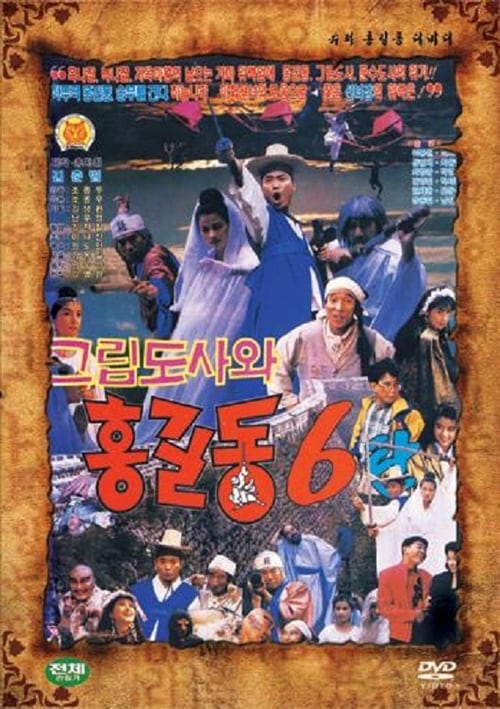
The film opens with the Demon Queen of hell trying to seize the hell mirror, the magical object that can open the demon world and turn the earth into a realm of evil, while the heavenly maiden Lee Hwa is discovered in exile in the human world and becomes the next target of the demonic plot. Hong Gil-dong quickly realizes what is happening and steps in to protect her, absorbing the evil energy that has been surrounding her so that she is no longer the immediate conduit for the Demon Queen's plan.
That act of rescue is also a curse. The demonic energy does not simply vanish; it passes into Hong Gil-dong himself, staining his body and spirit with the same corruption he has just saved Lee Hwa from. Horrified by what he now carries, he tries to end his own life to purge the evil from himself, but the attempt does not succeed. At the moment of despair, Bu-yong, a fairy from the heavenly side, suddenly appears and saves him. Her arrival changes the direction of the story completely: she does not merely preserve Hong Gil-dong's life, but gives him one of the two divine fairy swords meant to defeat the Demon Queen. With that blade in hand, Hong Gil-dong learns that he must find the remaining sword if he is to have any chance of stopping the coming disaster.
From there, the story shifts between the human world, the demonic realm, and the dangerous borderland called the valley of demons. The Demon Queen continues trying to complete her plan, using the hell mirror as the core instrument of corruption, while Lee Hwa remains under demonic pressure. It is revealed that she is not acting freely for much of the story: she is trapped under hypnosis, manipulated by the Demon Queen's influence so that she can be used as part of the larger scheme. That twist redefines her role, turning her from a seemingly endangered heavenly maiden into a victim of magical coercion. Hong Gil-dong's task becomes more urgent, because now he is not only fighting an external enemy but also trying to save someone whose mind has been partially seized.
Hong Gil-dong eventually makes his way to the valley of demons, where the conflict tightens around the hell mirror itself. There, Lee Hwa is shown in the grip of the Demon Queen's hypnosis, and the evil forces attempt to use her connection to the heavenly world to strengthen their hold on the earth. Hong Gil-dong arrives in time to intervene, breaking through the control that has been placed on Lee Hwa and helping her awaken from the spell. The scene is both a rescue and a revelation: Lee Hwa's earlier actions are no longer mysterious or morally ambiguous, because the truth is that she has been bewitched and used as an unwilling instrument. Once freed, she and Hong Gil-dong join forces openly against the Demon Queen and the evil army surrounding her.
The final confrontation is built around the same supernatural objects and powers that have driven the entire narrative. The hell mirror remains the central threat, the symbol and mechanism of the Demon Queen's ambition to contaminate the human world. Hong Gil-dong, now carrying demonic energy in his own body yet armed with divine help, stands as the bridge between the human and heavenly sides of the conflict. Bu-yong's gift of the sword proves that the heavens have not abandoned him, and the search for the second sword underscores the scale of the battle still ahead. The available plot material does not preserve a full scene-by-scene ending, but the resolution is clear in broad strokes: Hong Gil-dong and Lee Hwa stand together after her release from hypnosis, resisting the Demon Queen's invasion of the human world and preparing to confront the evil forces head-on.
No specific death is explicitly recorded in the surviving plot information, and no confirmed killing is described in the available summaries. The most important "death-like" moment is Hong Gil-dong's suicide attempt, which is aborted when Bu-yong intervenes and saves him. The film therefore ends not with a confirmed casualty count but with a renewed alliance between Hong Gil-dong, Lee Hwa, and the heavenly power represented by Bu-yong, as they commit themselves to preventing the earth from becoming a devil's domain.
What is the ending?
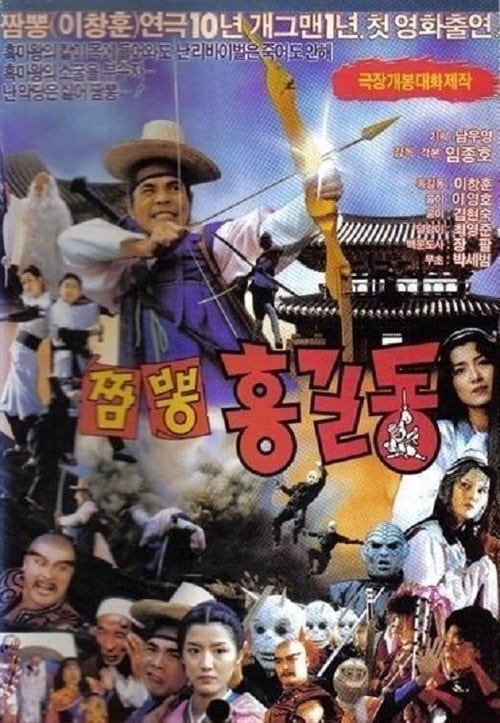
In the ending of "Super Hong Gil-Dong 6," Hong Gil-Dong confronts the main antagonist, ultimately defeating him and restoring peace. The film concludes with Gil-Dong and his allies celebrating their victory, while the antagonist faces the consequences of his actions.
As the climax approaches, the scene opens with a tense atmosphere. Hong Gil-Dong, having gathered his loyal friends and allies, prepares for the final confrontation against the villain who has caused chaos throughout the land. The setting is dark and foreboding, with storm clouds gathering overhead, symbolizing the impending battle.
The first scene of the climax unfolds in a grand, dilapidated castle where the antagonist resides. Gil-Dong, filled with determination and a sense of justice, strides forward, his heart pounding with both fear and resolve. He knows that this battle is not just for himself but for the people who have suffered under the antagonist's tyranny. His friends, including the brave and loyal companions who have stood by him throughout the journey, flank him, their expressions a mix of anxiety and courage.
As they enter the castle, the atmosphere thickens with tension. The villain, a figure cloaked in darkness, stands at the center of the grand hall, surrounded by his minions. He smirks, confident in his power, but Gil-Dong's unwavering spirit ignites a flicker of hope among his allies. The confrontation begins with a fierce exchange of words, where Gil-Dong declares his intent to end the villain's reign of terror. The villain laughs mockingly, underestimating Gil-Dong's resolve.
The battle erupts, and the scene is filled with dynamic action. Gil-Dong showcases his incredible agility and combat skills, dodging attacks and countering with precision. His friends join the fray, each displaying their unique abilities, creating a chaotic yet exhilarating atmosphere. The camera captures the intensity of the fight, with close-ups of determined faces and wide shots of the sprawling battle.
As the fight progresses, Gil-Dong finds himself face-to-face with the antagonist. The tension peaks as they engage in a one-on-one duel, each blow resonating with the weight of their conflicting ideals. Gil-Dong's motivation is clear; he fights not just for himself but for the freedom of the oppressed. The villain, on the other hand, is driven by a desire for power and control, his desperation growing as he realizes that Gil-Dong's spirit cannot be broken.
In a climactic moment, Gil-Dong taps into his inner strength, recalling the struggles of those he fights for. With a final, powerful strike, he defeats the antagonist, who falls to the ground, defeated and powerless. The camera lingers on Gil-Dong's face, a mixture of relief and sorrow, as he realizes the cost of victory.
As the dust settles, the remaining minions flee, and the castle begins to crumble, symbolizing the end of the villain's reign. Gil-Dong and his friends emerge from the chaos, battered but victorious. They share a moment of camaraderie, their bonds strengthened by the trials they have faced together. The scene shifts to a brighter setting, where the people of the land gather to celebrate their newfound freedom.
In the final moments, Gil-Dong stands before the crowd, a humble hero. He acknowledges the sacrifices made and the importance of unity in overcoming adversity. The film closes with a sense of hope and renewal, as the characters look toward a brighter future, free from tyranny.
The fates of the main characters are as follows: Hong Gil-Dong emerges as a celebrated hero, his journey complete but his responsibilities ongoing. His friends, who fought valiantly alongside him, find their own paths to healing and rebuilding their lives. The antagonist, now defeated, faces the consequences of his actions, a stark reminder of the price of tyranny. The film ends on a note of optimism, emphasizing the power of courage, friendship, and the enduring fight for justice.
Is there a post-credit scene?
In the movie "Super Hong Gil-Dong 6," produced in 1991, there is no post-credit scene. The film concludes its narrative without any additional scenes or content after the credits roll. The story wraps up with the resolution of the main plot, focusing on the adventures and challenges faced by the protagonist, Hong Gil-Dong, and his journey towards justice and heroism. The ending emphasizes the themes of camaraderie and the fight against corruption, leaving the audience with a sense of closure regarding the characters' arcs.
What are the main motivations of Hong Gil-Dong throughout the film?
Hong Gil-Dong, the protagonist, is driven by a deep sense of justice and a desire to protect the oppressed. His motivations stem from his own experiences of being marginalized due to his illegitimate birth. He seeks to fight against corruption and tyranny, often putting himself in danger to help those who cannot help themselves.
How does the character of the villain, Lord Heo, impact the story?
Lord Heo serves as the primary antagonist, embodying the oppressive forces that Hong Gil-Dong fights against. His ruthless tactics and manipulation of power create significant obstacles for Gil-Dong and his allies. The tension between them escalates throughout the film, culminating in confrontations that highlight the stark contrast between their moral compasses.
What role do the supporting characters play in Hong Gil-Dong's journey?
The supporting characters, including Gil-Dong's loyal friends and allies, provide both comic relief and emotional depth to the story. Characters like the clever and resourceful Choi and the brave yet naive Jin help to illustrate different facets of loyalty and friendship, while also contributing to the development of Gil-Dong's character as he learns to trust and rely on others.
How does the film depict the relationship between Hong Gil-Dong and his father?
The relationship between Hong Gil-Dong and his father is complex and fraught with tension. Initially, Gil-Dong feels rejected and unacknowledged due to his illegitimate status. As the story progresses, their relationship evolves, revealing themes of reconciliation and understanding, particularly as Gil-Dong seeks his father's approval while also grappling with his own identity.
What are some key moments that showcase Hong Gil-Dong's transformation throughout the film?
Key moments that showcase Hong Gil-Dong's transformation include his initial acts of rebellion against the injustices he witnesses, his decision to embrace his role as a leader of the oppressed, and his ultimate confrontation with Lord Heo. Each of these moments reflects his growth from a disillusioned outcast to a confident hero who inspires others to stand up against tyranny.
Is this family friendly?
"Super Hong Gil-Dong 6," produced in 1991, is a comedic take on the classic Korean folk hero Hong Gil-Dong. While the film is primarily aimed at entertaining a broad audience, there are several aspects that may be considered objectionable or upsetting for children or sensitive viewers.
-
Violence and Action Sequences: The film features various action scenes that include slapstick violence, which may be exaggerated but could still be startling for younger viewers. Characters engage in fights and confrontations that, while comedic, may depict physical harm.
-
Mature Themes: There are underlying themes of social injustice and rebellion against authority, which may be complex for younger audiences to fully grasp. The portrayal of these themes might evoke feelings of discomfort or confusion.
-
Character Misbehavior: Some characters display morally questionable behavior, such as theft or deception, which could send mixed messages about right and wrong.
-
Emotional Turmoil: Certain scenes may depict characters experiencing betrayal, loss, or sadness, which could be emotionally intense for sensitive viewers.
-
Stereotypical Representations: The film may include caricatures or stereotypes that could be viewed as outdated or offensive, potentially leading to discomfort among modern audiences.
Overall, while "Super Hong Gil-Dong 6" is designed to be a lighthearted adventure, these elements may warrant caution for children and sensitive individuals.









