

Popular
What is the significance of the character Sinbad in the film?
How does the brain damage affect Sinbad's behavior throughout the film?
What role do the supporting characters play in Sinbad's journey?
What are some key scenes that illustrate Sinbad's mental state?
How does the film depict the consequences of Sinbad's actions on others?
Should I watch it?
Ask Your Own Question

What is the plot?
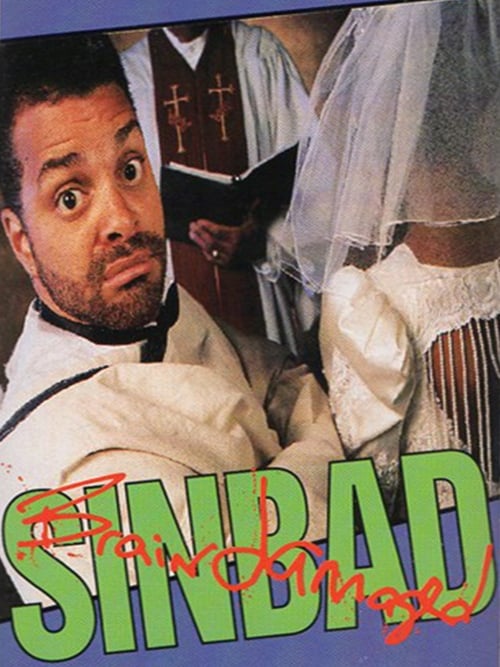
The stage at Morehouse College in Atlanta, Georgia, is bathed in warm, golden light, the air thick with anticipation. It is January 12, 1991, and the auditorium is packed with students, faculty, and fans, all waiting for the man they know simply as Sinbad. The crowd buzzes with excitement, the hum of conversation rising and falling like waves. Suddenly, the lights dim, the chatter quiets, and a spotlight cuts through the darkness, illuminating the center of the stage. Sinbad strides out, his presence commanding yet relaxed, a wide grin spreading across his face as he waves to the audience. He is dressed casually, in a comfortable shirt and jeans, his energy infectious. The crowd erupts into applause, and Sinbad raises his hands, soaking in the moment.
"Hey, y'all!" he calls out, his voice rich and warm, instantly putting everyone at ease. "It's good to be here at Morehouse, the home of the mighty Maroon and Gold!" He pauses, letting the laughter ripple through the room. "Now, I know what you're thinking. 'Sinbad, why'd you call this special 'Brain Damaged'?' Well, let me tell you, it's not because I'm crazy. It's because I'm honest. I'm just telling it like it is, and sometimes, that makes people think I'm a little off." He winks, and the audience laughs again, the tension melting away as Sinbad settles into his rhythm.
Sinbad begins with a series of jokes about everyday life, his delivery sharp and his timing impeccable. He talks about the quirks of growing up, the absurdities of family, and the challenges of relationships. "You know, my momma always said, 'Sinbad, you're gonna be the death of me.' And I said, 'Momma, I'm not gonna be the death of you. I'm gonna be the life of the party!'" He mimes his mother's exasperated expression, and the crowd roars with laughter. Sinbad's humor is clean, but it's also deeply relatable, drawing on his own experiences and observations.
As the special progresses, Sinbad delves into more personal anecdotes. He shares stories about his wife, his friends, and his interactions with people from all walks of life. "I was at the grocery store the other day, and this lady was giving me the stink eye. I said, 'Ma'am, what's wrong?' And she said, 'You're in my way.' I said, 'Lady, I'm not in your way. I'm just standing here, minding my own business.' And she said, 'Well, you're blocking my view.' I said, 'Ma'am, if you want a better view, you should've brought binoculars!'" The audience is in stitches, the laughter building with each punchline.
Sinbad's comedy is not just about jokes; it's about connection. He engages with the audience, responding to their reactions, teasing them gently, and drawing them into his world. "You all are too quiet," he says, feigning disappointment. "I can't work with this energy. I need you to wake up! Come on, Morehouse, let's hear you!" The crowd responds with cheers and applause, and Sinbad grins, clearly enjoying the interaction.
As the special reaches its midpoint, Sinbad shifts gears, focusing on more introspective material. He talks about the challenges of growing up, the importance of family, and the lessons he's learned along the way. "You know, life is like a roller coaster. Sometimes you're up, sometimes you're down, but you gotta keep riding. And if you fall off, you gotta get back on, because that's the only way you're gonna make it to the end." His words are heartfelt, and the audience listens intently, the laughter giving way to moments of reflection.
Sinbad's humor is also marked by his use of physical comedy and gestures. He mimes various scenarios, his movements exaggerated and expressive. "I was at the airport the other day, and this guy was trying to get through security. He had this big suitcase, and he was struggling to get it on the conveyor belt. I said, 'Sir, you need some help?' And he said, 'No, I got it.' And then he dropped it, and it exploded, and all these clothes went flying everywhere. I said, 'Sir, you might want to pack a little lighter next time!'" The audience is in hysterics, the visual humor adding another layer to Sinbad's performance.
As the special nears its climax, Sinbad builds up to his most memorable material. He tells a series of jokes about marriage, relationships, and the absurdities of modern life. "You know, my wife and I have been married for years, and she still surprises me. The other day, she said, 'Sinbad, I'm going to the store.' I said, 'Okay, honey, have a good time.' And she said, 'I'm not going to the store. I'm going to the mall.' I said, 'Honey, the mall is a store.' She said, 'No, it's not. It's a mall.' I said, 'Honey, it's the same thing.' She said, 'No, it's not. A store is a store, and a mall is a mall.' I said, 'Honey, you're splitting hairs.' She said, 'No, I'm splitting malls.'" The audience is laughing so hard they can barely breathe, the tension and momentum building with each joke.
Sinbad's final set of jokes is a tour de force, a series of punchlines that leave the audience in stitches. He talks about the challenges of parenting, the absurdities of technology, and the quirks of human behavior. "You know, my kids are always asking me questions. The other day, my son said, 'Dad, why is the sky blue?' I said, 'Because it's not green.' He said, 'But why isn't it green?' I said, 'Because if it were green, it would be the grass.' He said, 'But why isn't the grass blue?' I said, 'Because if it were blue, it would be the sky.' He said, 'But why isn't the sky green?' I said, 'Because if it were green, it would be the grass.' He said, 'But why isn't the grass blue?' I said, 'Because if it were blue, it would be the sky.' And then he said, 'Dad, you're not making any sense.' I said, 'Son, neither is the sky.'" The audience is in hysterics, the laughter building to a crescendo.
As the special reaches its conclusion, Sinbad takes a moment to thank the audience. "You all have been amazing," he says, his voice warm and sincere. "I couldn't have done this without you. You've made this night unforgettable." He takes a bow, acknowledging the audience's applause, and exits the stage, leaving behind a night of laughter and entertainment.
The credits roll, and the special ends, but the impact of Sinbad's performance lingers. There are no deaths, no confrontations, no major revelations. The only location is the stage at Morehouse College, and the only character is Sinbad himself. The special is a collection of comedic segments, each one showcasing Sinbad's unique style and humor. The ending is simple and straightforward: Sinbad thanks the audience and leaves the stage, concluding a night of laughter and entertainment.
In the final scenes, Sinbad is seen taking a bow, acknowledging the audience's applause, and exiting the stage. The special concludes with the credits rolling, and there are no additional scenes or epilogues. The story of Sinbad: Brain Damaged (1991) is not one of drama or tragedy, but of comedy and connection. It is a testament to Sinbad's talent as a comedian and his ability to bring people together through laughter. The special ends on a high note, with the audience still buzzing from the experience, and Sinbad's legacy as a master of clean comedy secure.
More Movies Like This
Browse All Movies →


What is the ending?
In the ending of "Sinbad: Brain Damaged," the protagonist, Sinbad, confronts the antagonist, a brain-damaged man named "The Brain," in a final showdown. The conflict culminates in a chaotic battle that leads to Sinbad's ultimate victory, but not without significant consequences. The film concludes with Sinbad reflecting on the events that transpired, leaving viewers with a sense of ambiguity regarding his future.
Now, let's delve into the ending in a more detailed, chronological narrative.
As the climax approaches, Sinbad finds himself in a dimly lit warehouse, the air thick with tension. The atmosphere is charged with the remnants of chaos that have unfolded throughout the film. Sinbad, weary yet determined, steels himself for the confrontation with The Brain, who has been a relentless force throughout his journey. The warehouse is cluttered with debris, remnants of previous battles, and the flickering lights cast eerie shadows that dance across the walls.
Sinbad's heart races as he recalls the harrowing experiences that led him here. The Brain, a grotesque figure marked by his mental impairment and violent tendencies, emerges from the shadows, his eyes wild and unpredictable. Sinbad's internal struggle is palpable; he grapples with the fear of what The Brain is capable of, yet he knows he must face him to end the cycle of violence that has plagued his life.
The confrontation begins with a flurry of movement. Sinbad dodges The Brain's erratic attacks, each swing of his opponent's arms fueled by desperation and rage. Sinbad's motivation is clear: he fights not just for his own survival but for the hope of reclaiming his life from the chaos that The Brain represents. The physicality of their struggle is intense, with each blow exchanged echoing the emotional turmoil within Sinbad.
As the battle rages on, Sinbad manages to gain the upper hand. He recalls the lessons learned throughout his journey, drawing on his resilience and the support of those who believed in him. With a final surge of strength, he overpowers The Brain, pinning him to the ground. The moment is bittersweet; Sinbad's victory is overshadowed by the realization of the damage inflicted on both himself and The Brain.
In the aftermath, Sinbad stands over The Brain, who lies defeated and vulnerable. The warehouse is silent now, the chaos subsiding into an eerie calm. Sinbad's expression is a mix of relief and sorrow; he understands that while he has triumphed, the victory comes at a cost. The Brain, once a formidable adversary, is now a broken figure, a reflection of the struggles that have plagued both men.
As Sinbad walks away from the scene, he is left to ponder the implications of his actions. The film closes with him stepping into the light, a symbol of hope and renewal, yet the uncertainty of what lies ahead lingers in the air. The fate of Sinbad is left open-ended; he has defeated The Brain, but the scars of their conflict remain, suggesting that the journey toward healing and redemption is far from over.
In this final scene, the film encapsulates the themes of struggle, resilience, and the complex nature of victory. Sinbad's fate is one of survival, but it is clear that the battle has changed him irrevocably. The Brain, in his defeat, serves as a reminder of the fragility of the human condition, leaving viewers to reflect on the deeper implications of their confrontation.
Is there a post-credit scene?
"Sinbad: Brain Damaged," produced in 1991, does not feature a post-credit scene. The film concludes without any additional content or scenes after the credits roll. The narrative wraps up with the final events of the story, leaving no further developments or surprises for the audience to discover once the credits begin. The focus remains on the main plot and character arcs throughout the film, culminating in a definitive ending without the inclusion of a post-credit sequence.
What is the significance of the character Sinbad in the film?
Sinbad is portrayed as a troubled and disoriented character who struggles with his identity and the consequences of his actions. His journey reflects a descent into madness, influenced by the brain damage he suffers, which leads to a series of bizarre and violent encounters.
How does the brain damage affect Sinbad's behavior throughout the film?
The brain damage manifests in Sinbad's erratic behavior, causing him to oscillate between moments of clarity and violent outbursts. This duality creates tension as he grapples with his impulses and the reality of his situation, often leading to chaotic interactions with other characters.
What role do the supporting characters play in Sinbad's journey?
The supporting characters, including friends and foes, serve as reflections of Sinbad's internal struggles. They often exacerbate his confusion and contribute to his sense of isolation, while also providing moments of connection that highlight his longing for normalcy.
What are some key scenes that illustrate Sinbad's mental state?
Key scenes include Sinbad's confrontations with authority figures, where his paranoia and aggression surface, and moments of introspection where he questions his reality. These scenes are visually striking, often using disorienting camera angles and lighting to convey his fractured psyche.
How does the film depict the consequences of Sinbad's actions on others?
The film illustrates the ripple effects of Sinbad's violent actions on those around him, showcasing the fear and chaos he instigates. Characters who interact with him often face their own crises, highlighting the destructive nature of his brain damage and the impact of his choices on their lives.
Is this family friendly?
"Sinbad: Brain Damaged" is not a family-friendly film and contains several potentially objectionable or upsetting elements. Here are some aspects that may be concerning for children or sensitive viewers:
-
Graphic Violence: The film features scenes of intense violence, including physical confrontations and bloodshed that may be disturbing.
-
Dark Humor: The use of dark and absurd humor throughout the film may not be suitable for younger audiences, as it often touches on morbid themes.
-
Adult Themes: There are references to adult situations and themes that may be inappropriate for children, including substance use and mental health issues.
-
Disturbing Imagery: The film includes surreal and unsettling visuals that could be frightening or confusing for younger viewers.
-
Language: There is the use of strong language that may not be suitable for a younger audience.
Overall, the film's tone and content are geared towards a mature audience, making it unsuitable for children or those sensitive to such themes.









