

No Image
Popular
What role does the setting play in the development of the story?
How do the supporting characters influence the main character's journey?
How does the relationship between the main characters evolve throughout the film?
What challenges does the protagonist face in their personal life?
What is the significance of the oak tree in the story?
Should I watch it?
Ask Your Own Question

What is the plot?
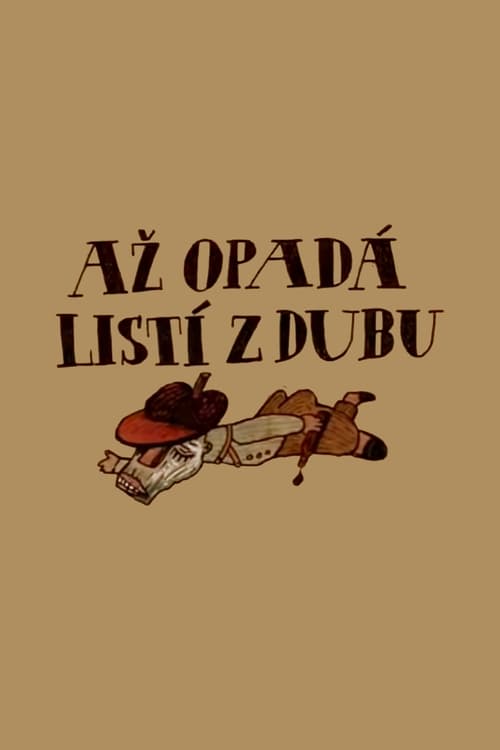
Čupera begins as a wreck of a man, already half lost to drink before the story properly starts. In the village inn, an innkeeper pours him rum, and every swallow seems to deepen the rot in his life: his farm sags, his debts mount, and the household that should shelter him instead feels like a place collapsing under the weight of his addiction. Julinka, his long-suffering wife, has already begged him more than once to choose between her and drinking, and that plea hangs over the opening like a verdict. He chooses the bottle every time, and the film makes that choice feel both tragic and absurd, because Čupera is not portrayed as a monster so much as a weak, foolish man who has let a habit hollow him out.
That weakness is what first opens the door to the supernatural. Out in a neglected field, where the land itself seems to mirror the disorder of his life, Čupera is visited by a Devil who is nothing like the snarling beast of a nightmare. This Devil is polite, almost courtly, and the comedy comes partly from how businesslike he is. He offers Čupera a bargain with the calm precision of a salesman: in exchange for "something he has at home and does not know about," he will grant him four times more harvest. Čupera, desperate and half-thinking with his haze-soaked head, agrees. It is only when he returns home that the trap closes. A midwife appears at the doorstep and tells him that Julinka has given birth to a newborn son, Jeník, who is inside with his mother. The thing Čupera "did not know about" is not some trinket or livestock, but his own child. The revelation lands with cruel irony: the Devil has effectively acquired the unborn child through the contract, and Čupera has sold his future without understanding what was at stake.
The miracle of the enlarged harvest does not save him. Instead, it only sharpens the disaster. Čupera sinks even deeper, and in despair he goes to the cemetery to hang himself. The scene is darkly comic and grim at once: he finds a branch, tries to end it, and the branch breaks. His death is denied by accident, and the failure becomes the opening for confession. There he meets the beggar Pompadůrka, who functions like a wry witness to his ruin, someone outside the system of family, labor, and devilish paperwork. Čupera tells him everything. That confession matters because it turns his private humiliation into something spoken aloud, but it also matters for the strange logic of the story: by arriving at his own collapse "in a more original way" than the Devil did, Čupera gains leverage. The bureaucratic Devil, bound by his own rulebook, ultimately returns the contract to him. The episode is played as a comic defeat for hell itself, but the emotional point is clearer than the supernatural one: Čupera survives, but he has not yet changed.
And he does not change immediately. He starts drinking again. The cycle resumes, and the farm remains at the mercy of his weakness. At last, when he can no longer bear the hold alcohol has on him, he calls the Devil once more--not to gain harvest this time, but to be cured of the drinking that is destroying him. This second bargain is the heart of the film. In exchange for being freed from drink, he promises his soul "when the leaves fall from the oak." The line is simple, but it becomes the whole architecture of the story: a contract worded in a way that seems precise and impossible to escape, yet contains the seed of its own undoing. Čupera undergoes a medical examination first, as if hell itself is trying to diagnose his condition with grim professionalism, and then he is sent through a punishment-rehabilitation sequence in hell that plays like a grotesque parody of treatment. He passes through a cabaret and then a prison, where he has to turn the handle of a paternoster-like mechanism, a repetitive labor that suggests both penance and absurd bureaucracy. The experience is harsh, humiliating, and transformative. It strips him down to the point where the comedy and suffering merge completely.
When Čupera emerges from that infernal cure, he is changed. He begins living decently. He works, he stops drinking, and the household no longer feels like a place in free fall. The film marks this shift not with a grand speech but with practical signs of renewal: the farm steadies, his behavior steadies, and a future becomes imaginable again. Julinka, who has endured his collapse from the beginning, now sees the possibility of a different life. The couple even begins planning a second child, which gives the story a warm, human counterpoint to the devilish contract that still hangs over them. A daughter is later born, and when there is an occasion to celebrate, Čupera refuses the drink that would have once been automatic. He says he will drink "when the leaves fall from the oak," turning the line that was once a contractual trap into a joke, then into a shield, then into a declaration of self-control. His recovery is not merely private; it is linguistic. He learns to live inside the phrase without letting it govern him.
That phrase becomes the film's final battlefield. In autumn, the Devil comes to collect Čupera's soul, expecting the debt to be due. The scene is loaded with anticipation because the audience already knows the wording has become a loophole, but the Devil does not accept that so easily. Čupera answers him with a visual trick that is both earthy and clever: he shows him an oak branch whose dry leaves do not fall in autumn at all, but only in spring, when fresh leaves appear. The contract, by its own wording, has not yet matured. Time itself has been turned against the Devil. The comedy sharpens into fury when the Devil realizes he has been outmaneuvered. In anger, he tears the leaves from the oak, trying to force the condition to be fulfilled by brute will. But the gesture only exposes his defeat. He is not the master of nature, nor even the master of language; he is trapped by the logic of the bargain he made. Čupera stands his ground, and the Devil's bureaucratic certainty collapses into frustrated rage.
The ending lands not in punishment or death, but in a hard-won ordinary happiness. Čupera remains alive. He has beaten the devil of drink and outwitted the real devil who tried to own his soul, and he does so not through heroism in the usual sense but through stubbornness, timing, and an almost peasant genius for exploiting the exact wording of a promise. Julinka survives the ordeal with him, their daughter is born, and the family's future is no longer defined by debt and ruin. The final note is quietly triumphant: Čupera refuses to drink, and the line "when the leaves fall from the oak" becomes the emblem of a man who has stopped surrendering to his worst habits. The Devil leaves furious and empty-handed, having been undone not by force but by a farmer who finally understands that the smallest verbal loophole can be stronger than infernal paperwork.
More Movies Like This
Browse All Movies →

What is the ending?
In the ending of "When the Oak Leaves Fall," the main characters face the consequences of their choices and the passage of time. The film concludes with a poignant reflection on love, loss, and the inevitability of change.
As the story unfolds towards its conclusion, we find ourselves in a serene yet somber setting, where the oak trees stand tall, their leaves beginning to fall, symbolizing the transition of life. The protagonist, a young man named Jan, grapples with the emotional weight of his past decisions. He stands alone beneath the oak trees, contemplating the love he lost and the dreams that slipped away.
In a series of flashbacks, we see Jan's memories of his childhood and the deep bond he shared with his childhood sweetheart, a girl named Anna. Their innocent love was filled with laughter and dreams of a future together. However, as they grew older, the realities of life and societal expectations began to pull them apart. Jan's internal struggle is palpable as he reflects on the moments that led to their separation.
The film shifts to Anna, who is now a woman shaped by her experiences. She is seen in her own quiet moment, surrounded by the remnants of her past. The weight of her choices and the love she still holds for Jan are evident in her expression. She walks through the autumn landscape, the falling leaves mirroring her own sense of loss and longing.
As the final scenes unfold, Jan and Anna find themselves at a crossroads. They meet again under the oak trees, where their journey began. The air is thick with unspoken words and unresolved feelings. They share a moment of silence, each grappling with the emotions that have lingered over the years. The tension is palpable as they confront the reality of their lives and the paths they have taken.
In a bittersweet exchange, they acknowledge the love that still exists between them, but also the inevitability of their separate lives. Jan expresses his regret for the choices he made, while Anna reveals her own struggles and the sacrifices she has endured. Their conversation is filled with a mix of nostalgia and sorrow, as they realize that while their love remains, the time for them to be together has passed.
The film concludes with Jan walking away from the oak trees, the leaves falling around him like memories drifting away. Anna watches him go, a single tear rolling down her cheek, symbolizing the love that will forever remain in her heart, even as they part ways. The camera lingers on the oak trees, their leaves falling gently to the ground, a powerful metaphor for the passage of time and the enduring nature of love, even in the face of loss.
In the end, Jan and Anna are left to carry the weight of their choices, forever changed by their experiences, yet bound by the love they once shared. The film closes on a note of reflection, leaving the audience to ponder the complexities of love, loss, and the inevitability of change.
Is there a post-credit scene?
The movie "When the Oak Leaves Fall," produced in 1991, does not contain a post-credit scene. The film concludes its narrative without any additional scenes or content after the credits roll. The story wraps up with a poignant resolution, focusing on the emotional journeys of the characters and the themes of loss, memory, and the passage of time, leaving the audience with a sense of closure.
What role does the setting play in the development of the story?
The setting, which includes the picturesque landscape surrounding the oak tree and the changing seasons, mirrors the emotional states of the characters. The environment enhances the narrative by reflecting themes of change, nostalgia, and the cyclical nature of life.
How do the supporting characters influence the main character's journey?
Supporting characters play crucial roles in shaping the protagonist's journey. They provide guidance, serve as foils, and sometimes create obstacles that force the protagonist to confront their fears and desires, ultimately leading to personal growth.
How does the relationship between the main characters evolve throughout the film?
The relationship between the main characters, particularly the protagonist and their love interest, evolves from initial friendship to a deep emotional connection. As they face various challenges, their bond is tested, revealing vulnerabilities and ultimately leading to a profound understanding of each other.
What challenges does the protagonist face in their personal life?
The protagonist grapples with familial expectations, personal loss, and the struggle to find their own identity. These challenges are depicted through poignant scenes that showcase their internal conflict and desire for acceptance and love.
What is the significance of the oak tree in the story?
The oak tree serves as a central symbol throughout the film, representing strength, endurance, and the passage of time. It is a place where key moments in the characters' lives unfold, reflecting their growth and the changes they experience.
Is this family friendly?
"When the Oak Leaves Fall," produced in 1991, is a poignant drama that explores themes of family, loss, and the passage of time. While the film is rich in emotional depth and offers valuable life lessons, it does contain some scenes that may be considered objectionable or upsetting for children or sensitive viewers.
-
Themes of Loss and Grief: The film delves into the emotional turmoil surrounding the loss of loved ones, which may be difficult for younger audiences to process.
-
Family Conflict: There are moments of tension and conflict within the family, showcasing arguments and emotional distress that could be unsettling.
-
Depictions of Illness: The film may include scenes that portray illness or suffering, which could be distressing for sensitive viewers.
-
Emotional Struggles: Characters experience deep emotional struggles, including sadness and despair, which may resonate strongly and evoke feelings of discomfort.
-
Mature Conversations: Some dialogues may touch on mature themes related to life, death, and relationships that might not be suitable for younger audiences.
Overall, while the film carries a meaningful narrative, its exploration of heavy emotional themes may require parental guidance for younger viewers.