
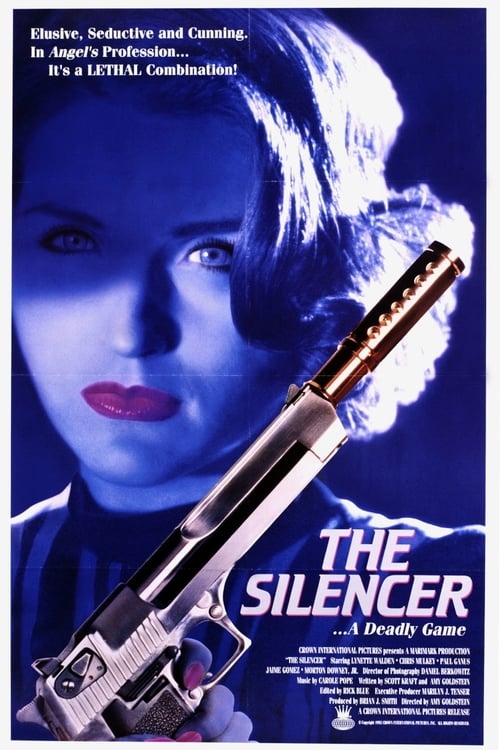














Popular
What motivates the main character, a hitman, to take on the job in The Silencer?
How does the relationship between John and his target evolve throughout the film?
What role does the character of the mentor play in John's journey in The Silencer?
What are the key turning points in the plot that challenge John's resolve as a hitman?
How does the climax of The Silencer reflect John's internal struggle between his profession and his conscience?
Should I watch it?
Ask Your Own Question

What is the plot?
Sorry, we aren't able to watch and write up a full detailed plot yet. Check back in a few days.




What is the ending?
In the ending of "The Silencer," the protagonist, a former hitman named Jack, confronts his past and the consequences of his violent lifestyle. After a series of intense confrontations, he ultimately sacrifices himself to save his loved ones, ensuring their safety from the criminal underworld he once belonged to.
As the climax unfolds, Jack finds himself cornered by his former associates, who are intent on eliminating him for betraying their trust. In a tense showdown, he fights fiercely, showcasing his skills and determination to protect those he cares about. However, the odds are stacked against him, and he realizes that the only way to truly sever ties with his past is to make the ultimate sacrifice. In a final act of bravery, he takes down his enemies but is mortally wounded in the process. The film concludes with a poignant scene where Jack's loved ones mourn his loss, reflecting on the cost of his choices and the hope for a better future free from violence.
Now, let's delve into the ending in a more detailed, chronological narrative.
As the sun sets, casting a dim light over the abandoned warehouse where the final confrontation is set to take place, Jack stands alone, his heart pounding in his chest. The air is thick with tension, and the shadows seem to whisper the ghosts of his past. He knows that this is the moment he has been dreading yet anticipating--a chance to confront the demons that have haunted him since he left the life of a hitman.
The scene shifts to the entrance of the warehouse, where Jack's former associates, led by the ruthless Victor, enter with a menacing swagger. They are armed and ready, their faces hardened by years of betrayal and violence. Jack's resolve hardens as he prepares for the inevitable clash. He recalls the faces of his loved ones--his partner and child--fueling his determination to protect them at all costs.
The confrontation begins with a tense standoff. Jack, armed only with his skills and a few weapons, faces off against Victor and his crew. The dialogue is sharp, filled with accusations and threats, revealing the deep-seated betrayal that has led to this moment. Jack's internal struggle is palpable; he grapples with the weight of his past actions and the desire to redeem himself.
As the fight erupts, the warehouse becomes a chaotic battleground. Jack moves with precision, his training evident as he takes down one opponent after another. Each blow he lands is not just a physical act but a cathartic release of years of pent-up guilt and anger. The camera captures the intensity of his emotions--fear, regret, and a flicker of hope that he can finally break free from the chains of his past.
However, the tide quickly turns as Victor, realizing Jack's determination, orders his men to surround him. Jack fights valiantly, but the numbers are against him. In a heart-stopping moment, he manages to take down Victor's right-hand man, but not without sustaining a serious injury himself. Blood seeps from a wound in his side, and he feels the weight of his body growing heavier.
In the climax of the battle, Jack faces Victor one-on-one. The two engage in a brutal fight, each blow echoing the years of betrayal and violence that have defined their relationship. Jack's desperation to protect his family drives him forward, but Victor's ruthlessness is overwhelming. In a final, desperate move, Jack uses all his remaining strength to disarm Victor, delivering a fatal blow that ends the threat once and for all.
As Victor falls, Jack collapses to the ground, his body succumbing to the injuries he has sustained. The warehouse, once a place of darkness, now feels eerily quiet. Jack's breathing is labored, and he knows that his time is running out. In his final moments, he envisions his loved ones, their faces filled with love and hope, a stark contrast to the violence that has surrounded him.
The scene shifts to Jack's partner and child, who are anxiously waiting for him. They sense something is wrong, and as the police arrive at the warehouse, they are met with the grim reality of Jack's sacrifice. The camera captures their shock and grief as they learn of his fate. The emotional weight of the moment is palpable, underscoring the cost of Jack's choices and the impact of his violent past on those he loves.
In the closing scenes, the film lingers on the aftermath of Jack's sacrifice. His loved ones stand together, united in their grief but also in their resolve to move forward. The final shot is a poignant reminder of the hope for a future free from the shadows of violence, as they walk away from the warehouse, leaving behind the remnants of a life that Jack fought to escape.
The film concludes with a sense of bittersweet resolution, highlighting the themes of sacrifice, redemption, and the enduring impact of one's choices on loved ones. Jack's fate serves as a powerful reminder of the consequences of a life steeped in violence, and the hope that can emerge from even the darkest of circumstances.
Is there a post-credit scene?
The movie "The Silencer," produced in 1992, does not have a post-credit scene. The film concludes its narrative without any additional scenes or content after the credits roll. The story wraps up with the resolution of the main plot, focusing on the protagonist's journey and the challenges faced throughout the film. The absence of a post-credit scene aligns with the film's straightforward storytelling approach, leaving the audience with the finality of the characters' arcs as the credits begin to roll.
What motivates the main character, a hitman, to take on the job in The Silencer?
The main character, a hitman named John, is motivated by a mix of personal and financial reasons. He is drawn into the job due to the promise of a substantial payout that he desperately needs to settle his debts and secure a better future. However, as the story unfolds, his internal conflict grows as he grapples with the moral implications of his work and the impact it has on his life and those around him.
How does the relationship between John and his target evolve throughout the film?
Initially, John views his target as just another job, a faceless assignment that he must complete. However, as he learns more about the target's life and circumstances, he begins to empathize with them. This emotional connection complicates his mission, leading to moments of hesitation and doubt about his chosen path, ultimately forcing him to confront his own values and the consequences of his actions.
What role does the character of the mentor play in John's journey in The Silencer?
John's mentor serves as a guiding figure who embodies the darker aspects of the hitman lifestyle. He provides John with the skills and knowledge necessary to succeed in his profession but also represents the moral decay that comes with it. As John progresses through the film, he begins to see the mentor's influence as a double-edged sword, leading him to question whether he wants to follow in his footsteps or forge a different path.
What are the key turning points in the plot that challenge John's resolve as a hitman?
Several key turning points challenge John's resolve, including moments where he witnesses the collateral damage of his actions, such as innocent bystanders getting hurt. Additionally, a pivotal scene occurs when he has a chance encounter with the target's family, which forces him to confront the human cost of his profession. These moments of clarity push him to reconsider his life choices and the path he is on.
How does the climax of The Silencer reflect John's internal struggle between his profession and his conscience?
The climax of The Silencer is a tense confrontation where John must decide whether to go through with the assassination or to protect the target. This moment encapsulates his internal struggle, as he weighs the financial benefits of completing the job against the moral implications of taking a life. The emotional stakes are high, and John's decision ultimately reflects his growth as a character, showcasing his desire to break free from the cycle of violence that has defined his life.
Is this family friendly?
"The Silencer," produced in 1992, is not considered family-friendly due to its content. The film contains several potentially objectionable or upsetting aspects, including:
-
Violence: The movie features scenes of gunfights and physical confrontations that may be intense and graphic, showcasing the harsh realities of crime and retribution.
-
Mature Themes: The narrative delves into themes of betrayal, revenge, and the moral complexities of a life intertwined with crime, which may be difficult for younger audiences to grasp.
-
Language: There is the use of strong language throughout the film, which may not be suitable for children.
-
Emotional Turmoil: Characters experience significant emotional distress, including loss and conflict, which could be upsetting for sensitive viewers.
-
Adult Situations: The film includes elements of adult relationships and situations that may not be appropriate for younger audiences.
Overall, the film's tone and content are geared towards an adult audience, making it unsuitable for children or those who are sensitive to violence and mature themes.









