



Popular
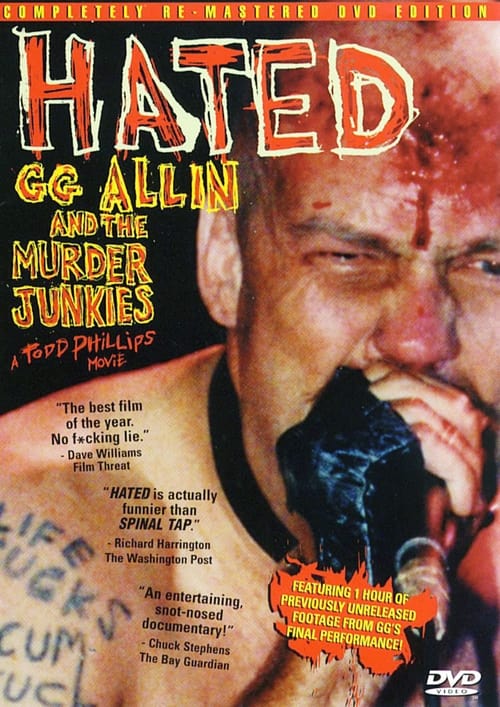
What are some of GG Allin's most shocking performances depicted in the film?
How does GG Allin's relationship with his band, The Murder Junkies, evolve throughout the film?
What role does GG Allin's childhood and upbringing play in shaping his character as depicted in the documentary?
How does the film portray GG Allin's interactions with his fans and the public?
What specific incidents of violence or chaos are highlighted during the concerts shown in the film?
Should I watch it?
Ask Your Own Question

What is the plot?
Sorry, we aren't able to watch and write up a full detailed plot yet. Check back in a few days.
More Movies Like This
Browse All Movies →

What is the ending?
In the ending of "Hated: GG Allin and The Murder Junkies," GG Allin's chaotic lifestyle culminates in his death from a heroin overdose. The film captures the aftermath of his passing, showcasing the reactions of his bandmates and fans, as well as the impact of his life and art on those around him.
As the film draws to a close, we see GG Allin's final moments leading up to his death. He is depicted in a state of disarray, surrounded by the remnants of his self-destructive lifestyle. The camera captures the rawness of his existence, filled with violence, substance abuse, and a relentless pursuit of notoriety. His band, The Murder Junkies, is shown grappling with the reality of his demise, reflecting on their tumultuous experiences with him.
In the aftermath of GG's death, the film shifts to a somber tone. His funeral is depicted, where a small group of fans and friends gather to pay their respects. The scene is marked by a sense of loss and confusion, as those who knew him struggle to reconcile the man they loved with the chaotic persona he projected. The film ends with a haunting sense of finality, leaving viewers to ponder the legacy of GG Allin and the impact of his life on the punk rock scene.
Expanding on the ending in a chronological and narrative fashion:
As the film progresses towards its conclusion, we find GG Allin in a state of increasing turmoil. The scenes depict him in various locations, often in the company of his bandmates, The Murder Junkies. The atmosphere is charged with tension, as GG's erratic behavior escalates. He is shown engaging in reckless acts, pushing the boundaries of performance art and personal safety. His desire for notoriety drives him to extremes, and the audience witnesses the toll it takes on him physically and emotionally.
In the days leading up to his death, GG is seen in a haze of drug use, often surrounded by friends who are equally caught up in the chaos. The camera captures the stark reality of his addiction, showcasing the physical deterioration that accompanies his lifestyle. His bandmates express concern, but GG remains defiant, insisting that his path is one of authenticity and rebellion. This internal conflict is palpable, as he grapples with the duality of his identity as both an artist and a self-destructive figure.
The climax of the film arrives when GG succumbs to a heroin overdose. The scene is raw and unflinching, depicting the grim reality of his addiction. The camera lingers on his lifeless body, emphasizing the tragic outcome of his relentless pursuit of fame and the consequences of his choices. His bandmates, visibly shaken, are left to confront the reality of their friend's death. They express a mix of grief and anger, struggling to understand how someone so vibrant could be lost so abruptly.
Following GG's death, the film transitions to his funeral. The atmosphere is heavy with sorrow as a small group of fans and friends gather to pay their respects. The camera captures the somber expressions of those in attendance, highlighting the impact GG had on their lives. Some attendees share stories of their experiences with him, revealing the complexity of his character. The juxtaposition of his chaotic performances with the quiet mourning at his funeral underscores the duality of his existence.
As the film concludes, the final scenes reflect on GG Allin's legacy. The camera pans over the mourners, capturing their mixed emotions of loss, admiration, and confusion. The film leaves viewers with a haunting sense of finality, as it poses questions about the nature of art, fame, and the cost of living on the edge. The fate of GG Allin is sealed, but the impact of his life and the memories of those who knew him linger, creating a poignant reflection on the complexities of his character and the world he inhabited.
Is there a post-credit scene?
The movie "Hated: GG Allin and The Murder Junkies" does not contain a post-credit scene. The film concludes with a raw and unfiltered portrayal of GG Allin's chaotic life and performances, leaving the audience with a stark impression of his controversial persona and the impact he had on punk rock culture. The film ends without any additional scenes or content after the credits, focusing instead on the intense and often disturbing moments that define Allin's legacy.
What are some of GG Allin's most shocking performances depicted in the film?
The film showcases several of GG Allin's notorious performances, including his infamous concert at the Gas Station in New York City, where he engages in self-mutilation, defecation on stage, and violent interactions with the audience. These moments are captured in raw, unfiltered detail, highlighting his chaotic energy and the visceral reactions of the crowd.
How does GG Allin's relationship with his band, The Murder Junkies, evolve throughout the film?
The film illustrates the tumultuous dynamics within The Murder Junkies, showcasing both camaraderie and conflict. As GG's erratic behavior escalates, the band members express a mix of loyalty and frustration, grappling with the consequences of his extreme lifestyle and the impact it has on their performances and personal lives.
What role does GG Allin's childhood and upbringing play in shaping his character as depicted in the documentary?
The documentary delves into GG Allin's troubled childhood, including his experiences of abuse and neglect, which are presented through interviews and archival footage. These elements provide insight into his rebellious nature and the psychological motivations behind his self-destructive behavior, framing his performances as a form of catharsis and rebellion against societal norms.
How does the film portray GG Allin's interactions with his fans and the public?
The film captures a range of interactions between GG Allin and his fans, from adoration to hostility. It highlights moments where fans are drawn to his anarchic persona, often participating in the chaos, while also depicting instances of shock and disgust from those who are unprepared for his extreme antics, illustrating the polarizing effect he has on audiences.
What specific incidents of violence or chaos are highlighted during the concerts shown in the film?
The documentary features several incidents of violence during GG Allin's concerts, including a notorious performance where he incites a riot, leading to physical altercations between audience members and security. These scenes are intense and chaotic, emphasizing the unpredictable nature of his shows and the extreme lengths he goes to provoke a reaction.
Is this family friendly?
"Hated: GG Allin and The Murder Junkies" is not family-friendly and contains numerous potentially objectionable or upsetting scenes and aspects. Here are some of them:
-
Graphic Violence: The film features scenes of physical violence, both on stage during performances and in personal interactions, which can be disturbing.
-
Self-Harm: There are instances where GG Allin engages in self-destructive behavior, including cutting and other forms of self-harm, which may be triggering for some viewers.
-
Nudity and Sexual Content: The documentary includes explicit nudity and sexual acts, often presented in a raw and unfiltered manner.
-
Substance Abuse: There are depictions of drug and alcohol use, showcasing the chaotic lifestyle of GG Allin and his band.
-
Profanity and Offensive Language: The film contains frequent use of strong language and derogatory terms, reflecting the provocative nature of GG Allin's persona.
-
Disturbing Themes: The overall themes of nihilism, rebellion, and anti-establishment sentiments may be unsettling for sensitive viewers.
-
Audience Reactions: The film captures the reactions of audiences during performances, which can include shock, disgust, and aggression, contributing to an overall uncomfortable viewing experience.
These elements make the film unsuitable for children and potentially distressing for sensitive individuals.








