









Popular
What internal conflicts does the protagonist face throughout the film?
What is the significance of the character Tenzin in the story?
How does the protagonist's journey to India impact his understanding of Buddhism?
What role does the setting of the Himalayan mountains play in the film?
How does the character of the monk influence the protagonist's beliefs?
Should I watch it?
Ask Your Own Question

What is the plot?
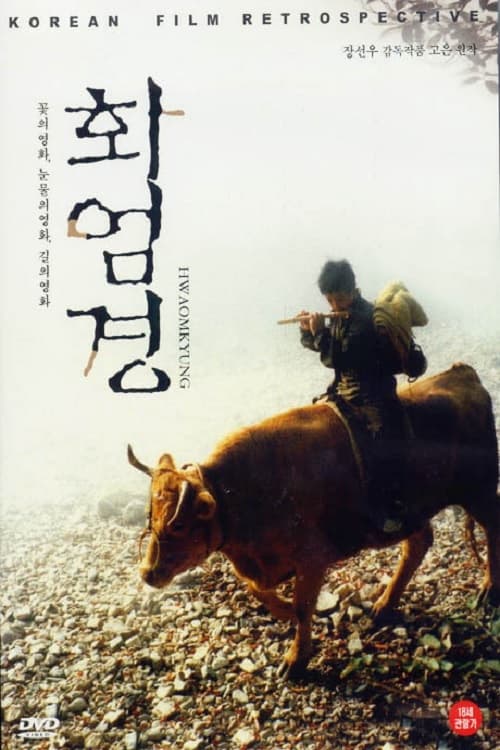
The film opens in a crematorium, where Son-jae's father's body is reduced to ashes, and that image immediately defines the story as one of loss rather than ordinary adventure. Son-jae, still a boy and still raw with grief, clutches the swaddling cloth he was wrapped in as an infant, because it is the only proof he has that might make his mother recognize him if he ever finds her. He has no true memory of her, only the wound of abandonment, and once his father is gone, that wound becomes the force that sends him out into the world to search for the woman who left him as a baby.
At first, the journey feels almost practical: a child walking through the dirty, forlorn streets, workshops, and markets of 1990s Korea, asking after his mother and hoping someone will point him in the right direction. But the film quickly tilts away from a simple search and into a spiritual pilgrimage, because every person Son-jae meets speaks to him less like a stranger and more like a teacher. The people around him keep redirecting him with Buddhist precepts, as if the road itself is arranging lessons for him one by one. The search for a missing parent becomes a search for truth, and the boy is forced to move through poverty, labor, desire, confinement, and grief as though each encounter is a gate he has to pass through before he can understand anything at all.
One of the first figures to interrupt his wandering is an eccentric, drunken monk, who does not give Son-jae the neat answer he wants. Instead of solving the problem, the monk turns the problem inside out, speaking in the language of doctrine and implication, pushing the boy toward the idea that truth is not found by clinging to a single objective but by enduring the road itself. Son-jae, too young to fully understand what is being said, keeps moving, carrying both his grief and his cloth, and the film lets the tension build through that mismatch between a child's immediate need and a spiritual world that refuses to speak plainly.
As he continues, he meets a girl who initially mocks him. The scene is important because it is one of the first moments where the journey turns from abstract teaching into human intimacy, embarrassment, and longing. She is not merely a comic interruption; she is one of the embodiments of the world Son-jae is entering, a world in which affection can turn into cruelty and back again, and where desire appears before understanding. Later, that same girl grows into a young woman and seduces him, turning their relationship into one of the film's major sensual and emotional turns. The film does not present this as a conventional romance so much as another stage of awakening, one that carries both tenderness and confusion, because Son-jae is still trying to locate his mother while being pulled into adult feeling.
The road leads him onward to a prisoner locked away for forty years, a figure who embodies time itself as punishment. In the prison, the boy confronts the reality that some forms of suffering are so prolonged that they become a way of life, and the long-term inmate's existence becomes another lesson in the meaning of confinement, patience, and spiritual endurance. Son-jae is not there to solve the prisoner's fate, and the prisoner cannot solve his; instead, the encounter broadens the boy's sense of the world, making his own loss feel like part of a much larger human condition. The prison scene also reinforces one of the film's central ideas: that the people Son-jae meets are not random interruptions but stations on a path, each one marking a different attachment, suffering, or revelation.
From there, the journey continues toward the seaside world associated with a foul-mouthed doctor, sometimes described as a fishing-village doctor. This doctor is abrasive, earthy, and blunt, the opposite of serene spiritual authority, yet he still functions as a guide. He is another person who refuses to translate the world into a simple clue hunt and instead pushes Son-jae toward a broader truth, one that includes the body, illness, mortality, and the roughness of ordinary life. One source notes that a monk suggests the seaside doctor may help him attain his goal, and that the road becomes more philosophical and spiritual after that meeting, as though Son-jae is being gradually taught that the answer to his mother's absence will not be a single location but a changed way of seeing.
A further fragment of the journey comes through the young son of a hard-drinking astronomer. This encounter introduces another family shaped by imbalance and longing, and it widens the film's emotional field again: there are fathers who drink, children who wait, and lives governed by habits that are both comic and tragic. The sources also identify a cluster of named figures that give the journey more texture: Beob-woon, who gives Son-jae a flute; Ji-ho; Hae-woon, the doctor; Ina, a blind singer; Manee, the vamp; Hye-kyung, the long-term prisoner; and Ee-ryun, who later confesses her love. These names matter because they show the film's structure as a sequence of encounters, each one distinct in tone but all bound together by the same spiritual logic.
The flute from Beob-woon becomes one of the story's important objects. Like the swaddling cloth, it is both practical and symbolic: a gift, a token of passage, and a sign that Son-jae is being handed along by the world rather than simply walking through it alone. The cloth remains the most intimate object in the story, because it is tied to his body, his infancy, and the possibility of recognition. He carries it with him as evidence of who he is and as a silent plea to the mother who abandoned him. The film keeps returning to the idea that identity is not something Son-jae can announce for himself; it must be recognized, remembered, or spiritually discovered.
As the journey deepens, the Buddhist framework becomes impossible to miss. The people Son-jae meets keep speaking as if they are guiding him toward a larger understanding rather than toward a literal destination. One source explicitly links the film to the Avatamsaka Sutra, which helps explain why the story feels cyclical, symbolic, and revelation-based instead of conventionally linear. Another source describes the film as a "modern unfolding" of that sutra, and that description fits the way each episode seems to echo the next, building a pattern of suffering, desire, detachment, and insight. The search for the mother remains the surface plot, but beneath it the movie is steadily revealing that Son-jae is being trained to see life and death, attachment and release, as inseparable.
A major emotional turn arrives when Son-jae is reunited with Ee-ryun, who confesses that she has loved him for a long time. This is one of the clearest revelations in the story because it transforms a previously indirect relationship into an explicit declaration of feeling. Son-jae is not simply being followed by strangers or instructed by teachers anymore; he is now being openly claimed by another person's affection. Their connection culminates in a night together during a rainstorm, a scene that carries both physical closeness and the melancholy of impermanence. The rain gives the moment a hushed, suspended quality, as though the world itself is briefly washing away the distance between them. Ee-ryun then becomes pregnant, a concrete and irreversible consequence that grounds the film's spiritual wanderings in bodily reality. The pregnancy matters because it proves that the journey is not only about symbolic lessons; it leaves behind life, responsibility, and continuation.
The film's most important revelation, however, is that Son-jae's mother is not merely an absent figure somewhere out in the world but the source of the story's deepest wound. He has been abandoned since infancy, and the quest is driven by the ache of that original severance. The film does not treat this as a mystery to be solved in a detective sense. Instead, it keeps circling the emotional fact of abandonment, asking what it means for a child to build a self around a missing parent and what it means to keep searching when the answer may be less healing than hoped. That is why the teachings matter so much: every encounter pushes Son-jae toward the realization that his mother is not just a person he wants to find, but the emblem of a loss that shapes his entire consciousness.
There are no reported conventional murders or action-style deaths among the supporting characters in the available plot material. The only clearly established death is Son-jae's father, whose death opens the film and whose body is cremated. One source adds an important nuance: the father is so poor and unknown that he is not even identified, which intensifies the sense of erasure and dispossession surrounding Son-jae's starting point. That death is not caused by a villain or a visible act of violence in the plot information provided; it simply stands as the unavoidable first rupture that makes the entire journey possible. Beyond that, the sources emphasize death more as a condition or lesson than as an event, because the film is concerned with how the living carry loss, not with stacking up bodies.
As Son-jae goes on, the world around him keeps insisting on movement. Streets, workshops, markets, the prison, the fishing-village spaces, and the houses of the people he meets all become temporary classrooms where he learns versions of the same lesson in different keys. Sometimes the lesson comes through mockery, sometimes through seduction, sometimes through blunt speech, and sometimes through silence. The repetition creates momentum even when the plot seems episodic, because every new figure seems to echo the others: the monk's detachment, the doctor's rough wisdom, the prisoner's endurance, the astronomer's household instability, the lovers' longing, the blind singer's inner vision, the vamp's worldly allure. The film's tension grows not from suspense over whether Son-jae will find his mother quickly, but from the accumulating pressure of asking whether the search itself has become the answer.
By the time the story reaches its later phase, the road has transformed Son-jae as much as he has traversed it. He has encountered love, sorrow, equality, wealth, sexual desire, confinement, and philosophical instruction, and each encounter chips away at the naive expectation that one reunion will make everything whole. The sources do not provide a scene-by-scene final resolution, but they do indicate that the film's end is spiritual rather than tidy: Son-jae comes closer to the essence of Buddhism through the people he meets, and the quest is framed as a passage into understanding rather than a simple family reunion. The repeated teaching is that the world itself is the passage, and that the truth he seeks is not outside the road but inside the experience of walking it.
The ending also carries forward the consequences of Ee-ryun's confession and pregnancy, which leave Son-jae with the reality that his life now extends beyond his original orphaned identity. Even without a detailed final-image account in the source material, that outcome gives the conclusion emotional weight, because it means the journey has produced not just insight but new life. The film's spiritual logic suggests that Son-jae does not simply "find" his mother in a literal sense and finish the story; rather, he is changed by a chain of encounters that teach him how desire and loss, death and birth, are intertwined. The road has carried him from the crematorium's ash and silence into human connection, and the final feeling is that he has been led, step by step, toward a broader truth that cannot be reduced to one answer.
In the final movement of the story, the mother quest is therefore less a solved mystery than a completed initiation. Son-jae's father is dead, his mother remains the driving absence, and the people along the road have become his real inheritance: the monk's teachings, the girl's transformation into a woman, the prisoner's endurance, the doctor's rough guidance, the astronomer's son, Beob-woon's flute, and Ee-ryun's love and pregnancy. The film closes in the spirit of Buddhist revelation rather than plot mechanics, leaving the sense that Son-jae's true passage has been from confusion into partial understanding, from personal grief into a larger awareness of suffering and interdependence.
More Movies Like This
Browse All Movies →


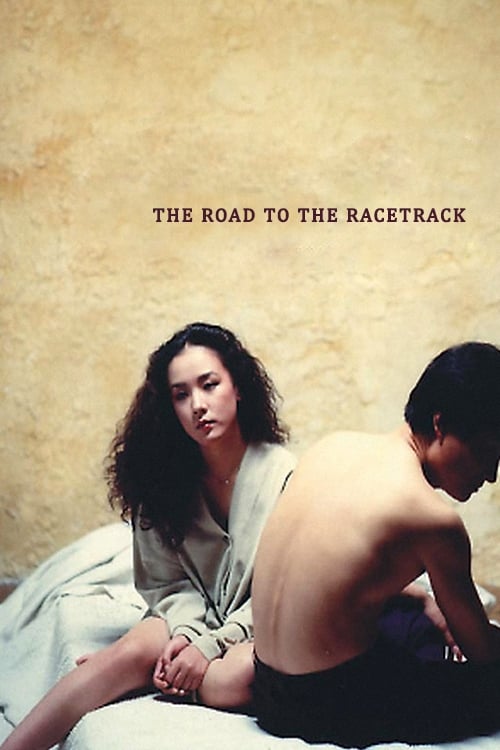

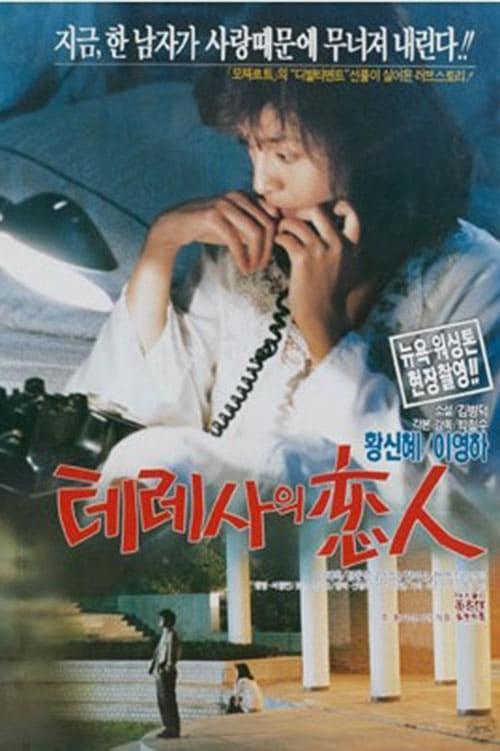
What is the ending?
In the ending of "Passage to Buddha," the main characters reach a pivotal moment of realization and transformation. The journey they embarked on culminates in a profound understanding of themselves and their beliefs, leading to a resolution of their internal conflicts.
As the film progresses towards its conclusion, the characters find themselves at a serene location, symbolizing a place of enlightenment. They confront their fears and doubts, ultimately embracing the teachings of Buddhism. The film closes with a sense of peace and acceptance, as each character reflects on their journey and the changes they have undergone.
Now, let's delve into the ending in a more detailed narrative fashion.
As the sun begins to set, casting a warm golden hue over the landscape, the main characters--each weary from their arduous journey--gather at a tranquil monastery nestled in the mountains. The air is thick with the scent of incense, and the distant sound of chanting fills the atmosphere, creating a serene backdrop for their final moments of reflection.
The first character, a young man named David, stands at the edge of a cliff, gazing out at the vast expanse before him. His face is etched with a mixture of exhaustion and newfound clarity. He recalls the struggles he faced throughout the journey, the moments of doubt that nearly consumed him. As he watches the sun dip below the horizon, he feels a sense of release, as if the weight of his past has been lifted. David takes a deep breath, allowing the cool mountain air to fill his lungs, symbolizing his acceptance of the present moment.
Meanwhile, Sarah, a woman who has grappled with her own insecurities, sits cross-legged on the ground, her eyes closed in meditation. The camera zooms in on her face, revealing a serene expression. She reflects on the teachings she has absorbed, the lessons of compassion and mindfulness that have begun to reshape her understanding of herself and her relationships. In this moment of stillness, she feels a profound connection to the world around her, a sense of belonging that she had long sought.
As the characters gather together, they share their experiences, each voice contributing to a tapestry of growth and understanding. They discuss the challenges they faced, the fears they overcame, and the bonds they formed along the way. The dialogue is filled with emotion, as they express gratitude for the journey and for one another. It is a moment of unity, where their individual struggles have woven them into a collective narrative of resilience.
In the final scene, the group stands together, silhouetted against the vibrant colors of the sunset. They join hands, forming a circle that symbolizes their shared journey and the connections they have forged. As they bow their heads in a moment of silence, the camera pans out, capturing the breathtaking beauty of the landscape around them. The sound of the wind rustling through the trees and the distant chanting creates a harmonious blend, echoing the themes of peace and enlightenment that permeate the film.
As the credits begin to roll, viewers are left with a sense of hope and inspiration, reflecting on the transformative power of the journey each character undertook. David, Sarah, and their companions have not only found a deeper understanding of themselves but have also embraced the teachings of Buddhism, marking the end of their physical journey and the beginning of a new spiritual path. Each character's fate is intertwined with the lessons learned, leaving them forever changed by their experiences.
Is there a post-credit scene?
"Passage to Buddha," produced in 1993, does not feature a post-credit scene. The film concludes its narrative without any additional scenes or content after the credits roll. The story wraps up with the main characters reflecting on their journey and the lessons learned, leaving the audience with a sense of closure regarding their spiritual and personal growth.
What internal conflicts does the protagonist face throughout the film?
The protagonist grapples with feelings of doubt, fear, and a sense of disconnection from his true self. His internal conflicts are highlighted through flashbacks and moments of introspection, as he struggles to reconcile his past with his desire for spiritual growth and understanding.
What is the significance of the character Tenzin in the story?
Tenzin serves as a spiritual guide and mentor to the protagonist, helping him navigate his inner struggles and understand the teachings of Buddhism. His character embodies wisdom and compassion, often providing crucial insights that lead to the protagonist's transformation.
How does the protagonist's journey to India impact his understanding of Buddhism?
The protagonist's journey to India is pivotal as it exposes him to the rich cultural and spiritual heritage of Buddhism. Through encounters with various monks and practitioners, he begins to grasp the deeper meanings of suffering, enlightenment, and the path to inner peace.
What role does the setting of the Himalayan mountains play in the film?
The Himalayan mountains serve as a breathtaking backdrop that symbolizes both the physical and spiritual journey of the protagonist. The majestic landscapes reflect the challenges he faces, while the serene environment offers moments of reflection and clarity as he seeks enlightenment.
How does the character of the monk influence the protagonist's beliefs?
The monk acts as a catalyst for the protagonist's transformation, challenging his preconceived notions about life and spirituality. Through their conversations and the monk's teachings, the protagonist begins to question his materialistic values and opens himself to the possibility of a more profound spiritual existence.
Is this family friendly?
"Passage to Buddha," produced in 1993, is generally considered suitable for family viewing, but it does contain some elements that may be sensitive for children or more sensitive viewers. Here are a few aspects to consider:
-
Spiritual Themes: The film delves into deep spiritual and philosophical concepts, which may be complex for younger audiences to fully grasp.
-
Cultural Depictions: There are scenes that portray the struggles and challenges faced by characters in their spiritual journeys, which may include moments of conflict or emotional distress.
-
Emotional Struggles: Characters experience moments of doubt, fear, and existential questioning, which could be intense for some viewers.
-
Visual Imagery: The film includes visual representations of spiritual practices and rituals that may be unfamiliar or unsettling to some.
-
Mature Themes: While not graphic, the film touches on themes of suffering, loss, and the search for meaning, which may resonate differently with children compared to adults.
Overall, while the film promotes positive messages about spirituality and personal growth, parents may want to preview it to determine its appropriateness for their children based on individual sensitivities.









