







Popular
What motivates Rosendo Juárez to become involved in the political struggles depicted in the film?
How does Rosendo's relationship with his family evolve throughout the film?
What role do the other characters play in shaping Rosendo's journey?
What specific events lead to Rosendo's transformation throughout the film?
How does the film depict the consequences of Rosendo's activism on his personal life?
Should I watch it?
Ask Your Own Question

What is the plot?
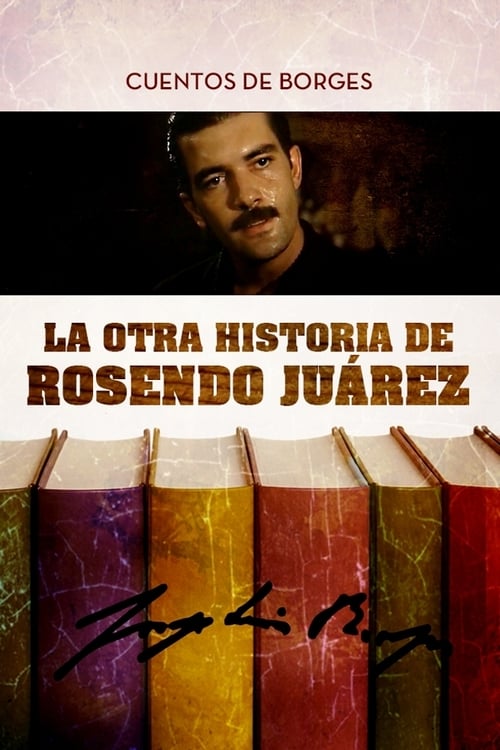
Rosendo Juárez begins as a poor, hard-edged man in 1930s Spain, a world already fractured by the tensions between the right and the left, and the film frames him from the start as someone almost fated to become a hired brute rather than a man with a future of his own. The story does not open with a precise date or clock time, but with a social atmosphere: dust, political unease, masculine pride, and the constant threat of violence hanging over ordinary life. Rosendo, played by Antonio Banderas, is presented as a humble man whose life is drifting toward the status of a matón a sueldo, a paid tough who survives by intimidation and force.
At first, that fate seems less like a choice than a current pulling him along. The version of the story summarized by the available sources makes clear that Rosendo's life changes when, one day, he enters El Corral de la Parda, a shabby and disreputable place with the air of a trap and a confession booth at once. The local is not merely a setting but a threshold: before he crosses it, Rosendo is still only a rough young man on the margins; after he crosses it, his life takes a decisive turn. Inside, he meets doña Encarna, the woman who runs the place and who becomes the key figure capable of pulling him away from the violent path that seems to have been prepared for him. She is played by María Asquerino, and the available descriptions agree that she is the person who helps him "take another route" in life.
The film's core action, however, is not simply this meeting but the violence that precedes and shadows it. The story is adapted from Borges's universe and is summarized in the sources as the tale of a man of humble origin who kills the town bully in a just fight. That duel is the pivotal act that turns Rosendo into a figure of fear and legend. The confrontation is not described in the available material scene by scene, but its moral logic is explicit: this is a "just" fight, a face-to-face reckoning rather than an ambush, and Rosendo wins by killing the local bully. That death is the one death the documentation supports with confidence, and Rosendo is the killer. From that moment on, his life is no longer ordinary. He is marked by what he has done, and the murder draws him into a spiral of violence and suspicion.
The film's tension comes from the contradiction at the heart of Rosendo's identity. He is both the man who can survive violence and the man who may be saved from it. The sources describe his life as taking "a sudden turn" after the killing, entangling him in a web of aggression, mistrust, and social pressure. The political backdrop of 1930s Spain deepens that pressure, because the right-left conflict makes every personal conflict feel like part of a larger social fracture. Rosendo's reputation, then, is not just the result of a single duel; it becomes the identity that others project onto him, the kind of identity that traps a man in the role of violence even when he may want something else.
Doña Encarna's role becomes crucial precisely because she interrupts that trajectory. When Rosendo enters El Corral de la Parda, he finds not just a disreputable establishment but a woman who sees beyond the mask of brute force. The sources do not preserve long dialogue exchanges, but the dramatic function is clear enough to reconstruct: she recognizes the difference between the man Rosendo is becoming and the man he might still be allowed to be. The film's premise hinges on that recognition. Rosendo, who appears destined for hired violence, is instead given the possibility of another path by a woman who understands the costs of that world.
The narrative then moves through Rosendo's transformation under the shadow of his violent reputation. After the duel, his life is no longer controlled by simple survival; it is controlled by what that death means to everyone around him. He has proven himself in combat, but proof in that world is a curse as much as a triumph. The bully's death is the climax of public action, but the real drama lies in what follows: the suspicion that clings to him, the expectations that harden around him, and the pull of a society that sees usefulness in brutality. This is why the film's title speaks of "the other story" of Rosendo Juárez: it is not merely the story of a fight, but the story of how a man resists being reduced to the violence that first defines him.
There are no documented additional deaths in the available material, and no evidence of multiple killings or secondary victims in the summaries provided. The film's stakes, therefore, are concentrated in that one fatal duel and in the aftermath that spreads outward from it like a stain. Rosendo does not simply walk away from the scene and resume his old life. He cannot. A man who kills the town bully in a just fight becomes a man whose every move is watched, interpreted, and loaded with meaning. That is the source of the "spiral of violence and suspicion" described in the adaptation summaries.
As the story advances, the emotional center shifts away from the duel itself and toward the human possibility offered by doña Encarna. Her presence at El Corral de la Parda gives the film its counterweight: where the men of the story speak in threat and reputation, she offers the chance of different values, even if the world around her makes those values fragile. The available sources do not provide a line-by-line transcript of their conversations, so no exact quotations can be confirmed. Still, the dramatic meaning is unmistakable. Rosendo is not saved by force, but by a moment of recognition inside a morally compromised place. That tension gives the film its emotional force: the same setting that seems to belong to vice and violence becomes the site of a possible redemption.
The climax, as supported by the sources, is less a second battle than the culmination of the consequences set in motion by the first one. Rosendo's reputation, the political climate, and the pull of hired violence all converge. The film does not appear in the available descriptions as a crowded mystery with multiple murders or elaborate twists; instead, its central revelation is structural: Rosendo's destiny is not fixed by his origin, even though everyone around him behaves as if it is. That is the twist at the heart of the story. He begins as a man "condemned by destiny" to be a thug, but the narrative refuses to leave him there. The duel confirms what others think he is, yet doña Encarna's influence proves there is still another possible version of him.
The ending, based on the available material, resolves in the direction of that second possibility rather than in a final massacre or a tragic collapse. The sources do not describe a final shootout, a courtroom reckoning, or a deathbed confession, and they do not provide the last spoken line or a precise final image. What they do establish is that Rosendo's life is changed by the entrance into El Corral de la Parda and by the woman who runs it, so the ending must be understood as the outcome of that moral interruption. By the end, he is no longer only the man the world was trying to make of him. He has been diverted from the path of the hired killer, even if the violence he has already committed can never be erased.
That unresolved but altered ending fits the story's Borges-like ambiguity. Rosendo remains a man haunted by what he has done, but the film's emphasis is on how a life can be redirected by an encounter that feels small at the time and immense in retrospect. The town bully is dead, Rosendo is the one who kills him, and that single death triggers the entire moral arc of the film. Yet the final emotional note is not simply that violence wins. It is that violence does not fully define the future. Doña Encarna's intervention leaves Rosendo with another road, and the film closes on that hard-earned possibility rather than on a tidy triumph or a complete ruin.




What is the ending?
In the ending of "La otra historia de Rosendo Juárez," Rosendo faces the consequences of his actions as he grapples with the impact of his past decisions. The film concludes with a sense of unresolved tension, highlighting the struggles of the characters and the societal issues they represent.
As the final scenes unfold, Rosendo is confronted by the realities of his life choices. He stands at a crossroads, reflecting on his journey and the people affected by his decisions. The emotional weight of his past actions bears down on him, leading to a poignant moment of introspection. The film closes with a lingering sense of uncertainty about the future, leaving viewers to ponder the implications of Rosendo's story.
Now, let's delve into the ending in a more detailed, chronological narrative.
The climax of the film arrives as Rosendo Juárez, having navigated a tumultuous path filled with conflict and moral dilemmas, finds himself in a dimly lit room, the air thick with tension. He is surrounded by the remnants of his past--photographs, letters, and memories that haunt him. The weight of his decisions presses heavily on his shoulders, and he feels the isolation that comes from his choices.
In this moment of reflection, Rosendo recalls the faces of those he has hurt: his family, friends, and the community that once embraced him. Each memory is a sharp reminder of the pain he has caused, and he grapples with feelings of guilt and regret. The camera lingers on his face, capturing the turmoil within him as he battles with the desire for redemption against the reality of his situation.
As he steps outside, the world around him is stark and unforgiving. The streets are filled with people, yet he feels utterly alone. The vibrant colors of the city contrast with his internal struggle, emphasizing his sense of alienation. He walks through the crowd, each passerby a reminder of the life he once had and the relationships he has fractured.
In a pivotal scene, Rosendo encounters a former friend who confronts him about his past actions. The dialogue is charged with emotion, revealing the deep scars left by Rosendo's choices. His friend expresses disappointment and anger, and Rosendo's response is one of sorrow and acceptance. He acknowledges the pain he has caused, and for the first time, he allows himself to feel the full weight of his remorse.
The film then shifts to a quieter moment where Rosendo visits his family. The atmosphere is tense, filled with unspoken words and unresolved feelings. His family members are wary, their expressions a mix of hope and skepticism. Rosendo attempts to reach out, to mend the broken bonds, but the road to forgiveness is fraught with challenges. The scene captures the complexity of familial relationships, showcasing the struggle between love and hurt.
As the narrative progresses, Rosendo's fate becomes increasingly uncertain. He stands at a metaphorical crossroads, contemplating whether to continue down a path of self-destruction or to seek a way to rebuild his life. The film does not provide a clear resolution; instead, it leaves viewers with a sense of ambiguity. Rosendo's journey is a reflection of the broader societal issues at play, and his fate remains intertwined with the lives of those around him.
In the final moments, the camera pulls back, revealing Rosendo standing alone in the bustling city. The sounds of life continue around him, but he remains a solitary figure, embodying the struggle for redemption in a world that often feels unforgiving. The screen fades to black, leaving the audience to ponder the complexities of his character and the implications of his story.
In summary, the ending of "La otra historia de Rosendo Juárez" encapsulates the themes of regret, redemption, and the enduring impact of one's choices. Each character's fate is left open-ended, reflecting the ongoing struggle for understanding and reconciliation in the face of past mistakes.
Is there a post-credit scene?
La otra historia de Rosendo Juárez, produced in 1993, does not feature a post-credit scene. The film concludes its narrative without any additional scenes or content after the credits roll. The story wraps up with a focus on the main themes of justice, personal struggle, and the impact of societal issues on individual lives, leaving the audience to reflect on the journey of the protagonist, Rosendo Juárez.
What motivates Rosendo Juárez to become involved in the political struggles depicted in the film?
Rosendo Juárez is driven by a deep sense of injustice and a desire to protect his community. His experiences with oppression and witnessing the suffering of his fellow citizens fuel his determination to fight against the corrupt political system.
How does Rosendo's relationship with his family evolve throughout the film?
Initially, Rosendo's commitment to his political cause creates tension with his family, particularly with his wife, who fears for their safety. As the story progresses, they come to understand his motivations, leading to a complex dynamic of support and concern.
What role do the other characters play in shaping Rosendo's journey?
Characters such as his mentor and fellow activists provide guidance and camaraderie, while antagonists represent the oppressive forces he must confront. Each character influences Rosendo's decisions and emotional state, highlighting the interconnectedness of personal and political struggles.
What specific events lead to Rosendo's transformation throughout the film?
Key events, such as witnessing violence against his community and personal losses, catalyze Rosendo's transformation from a passive observer to an active participant in the resistance. These moments are pivotal in shaping his resolve and commitment to the cause.
How does the film depict the consequences of Rosendo's activism on his personal life?
The film illustrates the heavy toll of Rosendo's activism, showcasing the strain on his relationships, the constant threat to his safety, and the emotional burden of his choices. These consequences serve to highlight the sacrifices made in the pursuit of justice.
Is this family friendly?
"La otra historia de Rosendo Juárez" is a film that deals with complex themes and contains elements that may not be suitable for younger audiences or sensitive viewers. Here are some potentially objectionable or upsetting aspects:
-
Violence and Conflict: The film portrays scenes of violence and conflict, reflecting the harsh realities of the characters' lives, which may be distressing for children.
-
Social Injustice: The narrative explores themes of social injustice and oppression, which can be heavy and thought-provoking, potentially leading to discomfort for younger viewers.
-
Emotional Turmoil: Characters experience significant emotional struggles, including feelings of despair, betrayal, and loss, which may be intense for sensitive audiences.
-
Mature Themes: The film addresses adult themes such as poverty, crime, and moral dilemmas, which may not be appropriate for children.
-
Tragic Outcomes: The story includes tragic elements that could be upsetting, as it reflects the harsh realities faced by the characters.
Overall, while the film offers a poignant narrative, its themes and content may be more suitable for mature audiences.









