









Loading additional questions...
Popular
What are the key moments that lead to the climax of the film?
How does the setting influence the characters' actions and decisions in the film?
What motivates the main character, Sarah, to betray her husband?
How does the relationship between Sarah and her lover develop throughout the film?
What role does Sarah's husband, Tom, play in the story, and how does he react to the betrayal?
Should I watch it?
Ask Your Own Question

What is the plot?
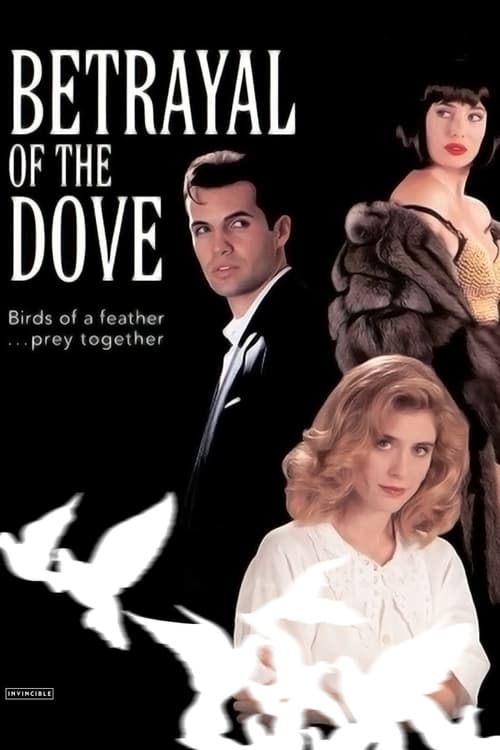
Ellie West is already living on the edge when the story opens: newly separated from her ex-husband Jack West, she is trying to piece together a quieter life for herself and her daughter, Autumn West, in a world that still feels contaminated by betrayal. The first image lingers on Autumn's innocent account of a mother dove nesting outside her bedroom window, guarding a fragile chick from the threat of crows, and that little story hangs over the entire film like a warning. It is not just a child's bedtime observation; it is the movie's map of danger, protection, and the way a nest can become a target.
Ellie is a divorced single mother with little emotional room to spare, and the people around her keep trying to move her forward before she is ready. Her boss, Sid, is cheerful and meddlesome in the way only a friend can be, and her close friend Una pushes with equal force, encouraging her to go out, meet someone, and stop living as if the divorce has frozen her in place. Their advice seems harmless enough at first, almost affectionate, but the film quietly lets every act of guidance feel a little too managing, a little too eager. Ellie is not simply being helped; she is being guided into a web she cannot yet see.
At the medical consultation for an upcoming outpatient procedure, Ellie meets Dr. Jesse Peter, a handsome surgeon whose calm confidence immediately gives the scene a charge of romantic possibility. He is attentive and direct, and the connection between them is almost immediate. The movie makes the attraction feel like an answer to loneliness, a brief light breaking through the fatigue of Ellie's life. But because this is a thriller, the warmth of that meeting is already shadowed by unease. Jesse is both a savior and a suspect from the moment he enters her orbit.
Encouraged by Una and Sid, Ellie goes through with the surgery, expecting nothing more dramatic than a routine medical event. Instead, the operating room becomes the first true nightmare of the film. As the anesthesia takes hold, Ellie has a terrifying and abnormal reaction. The procedure spirals into crisis, and she nearly dies on the table. The room fills with panic, alarms, and hurried voices, while the lead anesthesiologist, Gabe, is left visibly shaken and implicated. The film never lets the moment feel accidental. The danger is too concentrated, too personal, too loaded with the sense that someone has already arranged for Ellie to be vulnerable at precisely the wrong time.
Dr. Jesse Peter helps save Ellie's life, and that act cements him as a major emotional force in the story. He is the one who pulls her back from the edge, and his intervention makes the romance feel more intimate, more fateful. Yet even while Ellie begins to trust him, the air around her grows colder. She survives, but survival is not safety. When she returns home, strange signs begin appearing everywhere, small disturbances that suggest someone is watching her and Autumn. The movie shifts from medical thriller to domestic paranoia, and Ellie's house, which should be a refuge, starts to feel like a nest under siege.
Autumn remains at the emotional center of everything. Her innocence sharpens the threat because Ellie understands that whatever is coming for her may also come for her daughter. The image from the opening--the mother dove, the chick, the crows--returns in the viewer's mind as the menace grows. Ellie begins to notice that the danger is not random. Her fear hardens into certainty that she is being targeted, though she cannot yet identify by whom or why. The film keeps her in a state of suspense where every glance, every phone call, every unexplained detail becomes potentially lethal.
Meanwhile, Norman emerges as one of the strangest and most deceptively important figures in the story. He is timid, awkward, and outwardly harmless, the kind of man who seems almost too meek to matter. Yet his nervous attention to Ellie turns out to be crucial. He is not simply a comic oddball or a minor admirer; he is the one who begins connecting the fragments of the conspiracy. Norman watches, follows, and investigates. He notices things the others do not. He is the film's secret witness, the man everyone underestimates because he seems too soft to be dangerous. In a thriller built on appearances, that makes him invaluable.
As Ellie tries to make sense of the threats around her, Norman reveals one of the film's first major hidden truths: Jack West has been hiding money and financial information. The divorce was never as clean as it appeared, and Jack's sudden ability to pay off debts that had existed before the separation suggests a secret source of funds. That discovery does more than expose Jack's dishonesty. It gives Ellie a new lens through which to view her ex-husband and the whole poisoned landscape of their past. The financial trail implies motive, planning, and access--exactly the things a woman in Ellie's position most needs to fear.
Norman does not arrive at this conclusion by magic. He has been quietly collecting details, even having someone check Ellie's credit-card spending patterns so he can learn what she likes. The gesture is invasive under the guise of kindness, which fits the movie's broader obsession with trust becoming manipulation. He learns enough about her interests to seem thoughtful, but in doing so he also proves that privacy is already compromised. Everyone seems to know a little too much. Everyone is either watching, withholding, or performing.
The story grows darker as Ellie's suspicions become impossible to ignore. The strange signs around her are no longer just oddities; they are warnings. Someone is trying to frighten her. Someone may be trying to kill her. The anxiety becomes physical, and the movie begins stacking one threat on top of another so that each new scene feels like the tightening of a trap. Ellie's fear for Autumn now matches her fear for herself, and the question changes from "what is happening?" to "who is doing this, and how close are they?"
The answer comes through betrayal so intimate it almost collapses the movie's moral world. Ellie's best friend Una, the person who has been encouraging her, standing beside her, nudging her toward happiness, is part of the conspiracy. The revelation lands with special force because Una has been embedded in Ellie's life as a source of support, advice, and social connection. She is the friend who arranges, reassures, and normalizes. Her betrayal is not loud; it is domestic, smiling, and close enough to touch. Along with Jack West, she is revealed as one of the people behind the attack on Ellie. The film's title finally clicks into place: the dove is not betrayed by strangers in the street, but by the very hands that should have protected her nest.
The conspiracy's logic becomes clearer after the operating-room crisis. The anesthesia incident was not a random medical complication. It was one step in a pattern. Dr. Gabe, the anesthesiologist, is caught in the immediate professional fallout, and Dr. Jesse Peter is furious enough to threaten him with serious consequences. The tension in that aftermath matters because it shows how deeply the medical catastrophe has shaken the people involved. Yet the film keeps the larger mastermind hidden just long enough to allow suspicion to spread across the wrong targets. For a while, Jesse, Gabe, and even Norman all orbit the mystery in different ways, each one potentially guilty from Ellie's perspective.
The film then escalates into open violence. Ellie's car is destroyed in an explosive attack, a clear and deliberate attempt to kill her outside the supposed safety of the hospital and home. The blast is a hard pivot from dread to outright action, making the threat impossible to dismiss. It also demonstrates that the conspiracy is not just stalking Ellie psychologically; it is willing to use any means necessary to erase her. At this point, the story stops pretending there may be a benign explanation. Someone is hunting her with real intent.
That attack also pushes Ellie closer to the truth. The people around her are no longer simply suspicious; they are part of an organized deception. The film's tension depends on the fact that each revelation narrows the circle of trust until almost no one remains innocent. Norman's observations, especially his efforts to document what is happening, help pull the loose threads together. He notices Jack and Una meeting in secrecy and uncovers connections that point directly toward the hidden core of the plot. His timid exterior gives way to moral clarity. He is not the threat. He is the one trying to expose it.
The final revelations are devastating. Ellie's supposed best friend Una and her ex-husband Jack West have been working together all along. Their relationship is not casual, not accidental, and not harmless. They are linked by far more than the surface friendships they present to Ellie, and the movie finally exposes them as the central betrayers. A further layer of the conspiracy also reaches into Ellie's romantic hope: Jesse, who seemed like the one trustworthy man in the story, is implicated in the scheme as well in some versions of the film's explanation, deepening the sense that Ellie has been trapped inside a circle of deception where even rescue may have been staged. The effect is brutal. Every apparent source of comfort becomes contaminated.
The motive is financial. Ellie owns shares in a company whose value is expected to rise sharply, and the conspirators have discovered that her stake is worth far more than anyone first assumed. This changes everything. The medical emergency, the social manipulation, the friendship, the romance, the hidden meetings--they are all connected to a simple and ugly greed. Ellie is not being tormented because she is difficult or because of some irrational grudge. She is being positioned as an obstacle to profit. The emotional betrayal and the criminal motive fuse into one poisonous whole.
This revelation gives the film its final moral shape. The opening dove imagery now feels tragic in hindsight: the mother bird tends her vulnerable young while predators circle the nest. Ellie and Autumn are that nest. The crows are not abstract fears; they are Jack, Una, and the people colluding with them. The visual metaphor becomes a blunt emotional truth. Ellie has been surrounded by those who should have guarded her, and instead they have turned predatory.
The climax gathers the threads of medical peril, domestic terror, and financial conspiracy into one final confrontation. Ellie, now fully aware that her life and her daughter's life are in danger, has to face the fact that the danger has always come from inside her circle. The movie does not soften the shock of that realization. It is one thing to fear a nameless attacker; it is another to understand that the smiles, invitations, and reassurances were all part of the plan. The final confrontation exposes the conspiracy, with Jack and Una no longer able to hide behind friendship or marriage, and the truth spills into the open at last.
By the end, Ellie survives. Autumn survives. The film closes on the hard-won recognition that the attack on her life was never random and that the people she trusted most were the ones most determined to exploit her. The conspiracy is broken open, the lies are stripped away, and the nest is finally no longer under immediate siege. But the ending is not comforting. It leaves behind the wound of betrayal, the knowledge that intimacy can be weaponized, and the lingering image of the dove and chick as a warning about how easily safety can be destroyed when the wrong people are allowed too close.
The final feeling is one of exhausted survival. Ellie has been nearly killed by her surgery, targeted by an explosion, manipulated through her relationships, and cornered by a network of deceit built around her own life. Yet she emerges alive with the truth in hand. The last emotional note is not romance, not triumph, but hard clarity: the danger was never a stranger in the dark. It was the betrayal of the people closest to her, and now she sees them plainly.




What is the ending?
Is there a post-credit scene?
What are the key moments that lead to the climax of the film?
Key moments leading to the climax include Sarah's increasing emotional distance from Tom, her secret meetings with Mark, and a pivotal scene where Tom finds a love letter intended for Sarah. These moments build tension and ultimately lead to the explosive confrontation between the characters.
How does the setting influence the characters' actions and decisions in the film?
The film's setting, which includes intimate locations like a secluded cabin and bustling city streets, serves to heighten the emotional stakes. The contrast between the warmth of the cabin, where Sarah feels free to express her desires, and the coldness of her home with Tom underscores her internal conflict and the choices she makes.
What motivates the main character, Sarah, to betray her husband?
Sarah's betrayal is driven by a complex mix of emotional dissatisfaction and a longing for connection. Throughout the film, she feels increasingly isolated in her marriage, leading her to seek solace in an affair that promises the intimacy and passion she craves.
How does the relationship between Sarah and her lover develop throughout the film?
Sarah's relationship with her lover, Mark, evolves from a chance encounter into a passionate affair. Initially, it is filled with excitement and a sense of freedom, but as the story progresses, the weight of guilt and the consequences of their actions begin to strain their connection.
What role does Sarah's husband, Tom, play in the story, and how does he react to the betrayal?
Tom is portrayed as a hardworking and devoted husband who is oblivious to Sarah's emotional turmoil. When he eventually discovers the affair, he experiences a profound sense of betrayal and heartbreak, leading to a confrontation that reveals the depth of their relationship's fractures.








