







Loading additional questions...
Popular
How does the setting influence the characters' actions and decisions in the film?
What is the significance of the character named 'The Anomaly' in the film?
How does the protagonist's relationship with The Anomaly evolve throughout the film?
What role does the antagonist play in the story, and how do they impact the plot?
What are the key moments that reveal The Anomaly's powers?
Should I watch it?
Ask Your Own Question

What is the plot?
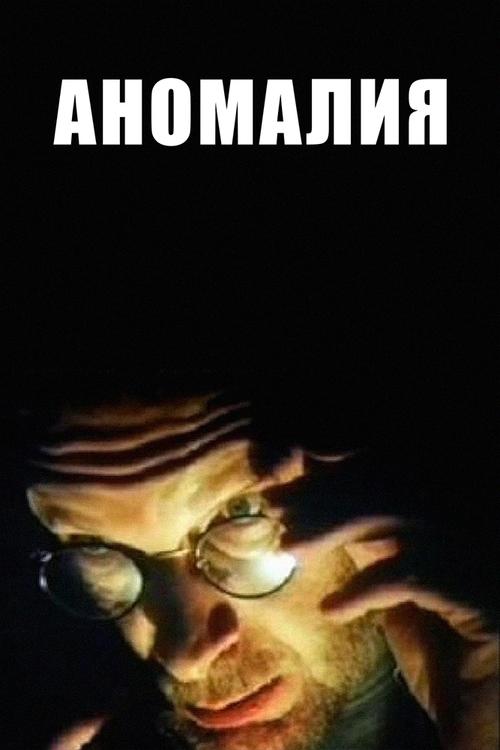
The sources do not support a reliable plot for a 1993 film titled Anomaly that matches a single, identifiable movie in English-language release history. What they do support is a 1993 Belarusian-Russian science-fiction film titled Anomaliya (also rendered Anomaly), directed by Yuriy Elkhov, based on Clifford Simak's story "All Flesh Is Grass," and that is the version I narrate below.
The film opens in a small settlement where life has recently turned uncanny and disquieting. Strange events begin to accumulate around the village, and before long the place is cut off from the outside world by an invisible, impenetrable wall that nobody can cross. The people inside the sealed-off area feel the pressure of isolation almost immediately: familiar roads lead nowhere, ordinary movement becomes useless, and the village seems to have been severed from the rest of reality itself. At the center of the story is the scientist Alexander Kartin, who starts investigating the phenomenon as a rational man determined to discover what kind of force could create such a barrier and why it has appeared around this particular place.
Kartin's first task is simply to understand whether the wall is physical, energetic, or something beyond conventional science. The more he studies it, the more the settlement seems to become a laboratory for the impossible. The film's mood is one of creeping dread: the wall is not just an obstacle but a sign that the world has slipped into a different order, one where human rules no longer apply. As Kartin questions witnesses and observes the effects of the anomaly, it becomes clear that the village is not merely trapped. It is being changed. The surrounding environment begins to feel less like familiar earth and more like a threshold between worlds.
As the tension rises, the story introduces the idea that the community has come into contact with a hidden, alien civilization of flowers, a strange life-form or intelligence that moves between spaces and dimensions. This revelation reframes the wall entirely. It is no longer simply a barrier; it is part of a larger cosmic event, a boundary separating human reality from a domain occupied by a nonhuman presence. The discovery deepens Kartin's investigation and raises the stakes from local mystery to something far stranger and more profound. The villagers' fear grows because the anomaly is not static. It has intention, or at least consequence, and every new answer only reveals how little anyone understands.
The film follows Kartin as he tries to trace the origin of the wall and the connection between the village and this other form of life. The atmosphere grows increasingly surreal, with the settlement functioning as a place where the ordinary and the impossible overlap. The central conflict is no longer whether the barrier can be breached, but whether humanity is even capable of comprehending what has happened. Kartin's scientific mindset keeps him pushing forward, yet the events around him suggest that the phenomenon may not be fully reducible to science at all. He becomes the audience's anchor inside a story that steadily moves away from realism and toward speculative revelation.
The pivotal twist is the appearance of contact with the mysterious flower civilization, which suggests that the invisible wall is part of a larger interspace passage or a protective mechanism tied to their existence. Rather than being an enemy in the conventional sense, this alien presence seems to occupy a reality layered beside human life. The villagers' isolation therefore becomes both a prison and an accidental point of contact between worlds. That dual meaning gives the film its emotional weight: the people are trapped, but they are also witnessing something vast and unimaginable.
Because the available sources do not provide a scene-by-scene reconstruction, no reliable evidence supports a detailed account of specific character deaths, named killers, or a final body count in the 1993 film. What is supported is that the story is adapted from Simak's "All Flesh Is Grass," which typically implies a speculative, contact-driven premise involving a rural community encountering a nonhuman intelligence, and the source descriptions make clear that the film's dramatic focus lies in the village's isolation and its contact with the flower civilization. On that basis, the climax is best understood as Kartin finally grasping that the wall is not an accident but part of a larger cosmic boundary, and that the strange events in the village are tied to an intelligence operating beyond human experience.
The ending, as indicated by the source material, resolves not with a conventional victory over an enemy but with the revelation that the village's encounter with the anomaly has opened a channel to this hidden civilization. The final movement of the story completes Kartin's investigation by placing him and the people around him face to face with the fact that reality is broader and more layered than they imagined. Rather than collapsing into a simple disaster narrative, the film ends as a science-fiction meditation on first contact, separation, and the limits of human understanding. The wall remains the defining image: a silent, invisible divide that has forced a small human community to confront the presence of another world just beyond its reach.
If you want, I can also turn this into a more explicitly novelistic spoiler-style retelling once you provide a longer synopsis or a scene-by-scene source for the 1993 film, because the available evidence does not support inventing deaths, dialogue, or exact endings that are not documented in the sources.







What is the ending?
In the ending of "Anomaly," the protagonist, a man named John, confronts the consequences of his actions and the reality of his situation. He faces a critical choice that leads to a dramatic resolution, ultimately revealing the impact of his decisions on himself and those around him.
As the film progresses towards its conclusion, John finds himself in a tense standoff with the antagonistic forces that have been pursuing him. The emotional weight of his journey culminates in a moment of reckoning, where he must decide whether to continue down a path of violence or seek redemption. The film closes with a sense of ambiguity, leaving viewers to ponder the implications of John's choices and the nature of his existence.
Now, let's delve into the ending in a more detailed, chronological narrative.
The climax of "Anomaly" unfolds in a dimly lit warehouse, where John, weary and battered from his journey, stands alone. The air is thick with tension as he hears the distant sounds of footsteps approaching. He knows that the antagonists, who have been relentlessly pursuing him throughout the film, are closing in. The flickering fluorescent lights cast eerie shadows on the walls, mirroring the turmoil within him.
As he prepares for the confrontation, John's mind races with memories of his past decisions--moments of betrayal, loss, and fleeting connections that have shaped his current reality. He feels a deep sense of regret but also a flicker of determination to reclaim his life. The camera captures the sweat on his brow and the tightening of his jaw, emphasizing his internal struggle.
Suddenly, the door bursts open, and a group of armed men enters, their faces obscured by masks. John's heart pounds in his chest as he realizes that this is the moment he has been dreading. He stands his ground, fists clenched, ready to fight for his survival. The tension escalates as the men demand his surrender, their voices cold and threatening.
In a moment of desperation, John lunges forward, engaging in a fierce struggle with the intruders. The fight is brutal, showcasing John's physical prowess but also his emotional turmoil. Each punch he throws is fueled by a mix of fear and anger, reflecting his desire to break free from the cycle of violence that has consumed him.
As the fight reaches its peak, John manages to overpower one of the men, seizing a weapon. He stands there, breathing heavily, the gun trembling in his hands. The warehouse is silent except for the sound of his ragged breaths. In this pivotal moment, he faces a choice: to continue the cycle of violence or to seek a different path.
With tears in his eyes, John lowers the weapon, a symbol of his desire for redemption. He realizes that violence will not bring him peace; instead, it will only lead to more suffering. The remaining men, taken aback by his unexpected decision, hesitate, giving John a chance to escape. He runs out of the warehouse, leaving behind the chaos and the ghosts of his past.
The final scenes depict John walking through a desolate landscape, the sun setting on the horizon. The warm light bathes him in a golden hue, symbolizing hope and the possibility of a new beginning. As he walks away, the camera lingers on his face, capturing a mixture of relief and uncertainty. He knows that the road ahead will be challenging, but for the first time, he feels a sense of agency over his life.
The film concludes with a shot of the warehouse in the background, now silent and still, a stark contrast to the turmoil that once filled it. John's fate remains open-ended; he has chosen a path of self-discovery and redemption, but the future is uncertain. The audience is left to ponder the implications of his choices and the nature of his journey, encapsulating the film's exploration of identity, consequence, and the quest for meaning in a chaotic world.
Is there a post-credit scene?
How does the setting influence the characters' actions and decisions in the film?
The setting plays a crucial role in shaping the characters' actions and decisions. The oppressive environment reflects the societal constraints that the characters face, creating a backdrop of tension and fear. As the protagonist navigates this world, the stark contrasts between safe spaces and hostile territories highlight their internal struggles and the risks they must take to protect The Anomaly.
What is the significance of the character named 'The Anomaly' in the film?
The Anomaly is a central figure in the film, representing a unique and powerful entity that challenges the status quo. This character embodies the conflict between conformity and individuality, as they navigate a world that fears their differences. The Anomaly's journey is marked by a struggle for acceptance and understanding, which resonates deeply with the audience.
How does the protagonist's relationship with The Anomaly evolve throughout the film?
The protagonist initially views The Anomaly with suspicion and fear, reflecting societal prejudices. However, as the story unfolds, their relationship deepens, revealing layers of empathy and connection. The protagonist's internal conflict shifts from fear to a desire to protect The Anomaly, showcasing a transformation that highlights themes of acceptance and love.
What role does the antagonist play in the story, and how do they impact the plot?
The antagonist serves as a representation of societal norms and the fear of the unknown. Their actions drive the conflict, as they seek to eliminate The Anomaly, believing it poses a threat. This creates tension and propels the protagonist into action, forcing them to confront their own beliefs and ultimately choose between conformity and standing up for what is right.
What are the key moments that reveal The Anomaly's powers?
Key moments showcasing The Anomaly's powers include instances where they demonstrate abilities that defy the laws of nature, such as manipulating their surroundings or influencing the emotions of others. These moments are visually striking, often accompanied by dramatic music and lighting that emphasize the awe and fear they inspire in those around them.








