









Popular
What is the significance of Thad Beaumont's pseudonym, George Stark, in the story?
How does Thad Beaumont's life change after the murder of his pseudonym?
What role does the character of Sheriff Alan Pangborn play in the story?
What is the relationship between Thad Beaumont and his wife, Liz?
How does Thad Beaumont confront the manifestation of George Stark?
Should I watch it?
Ask Your Own Question

What is the plot?
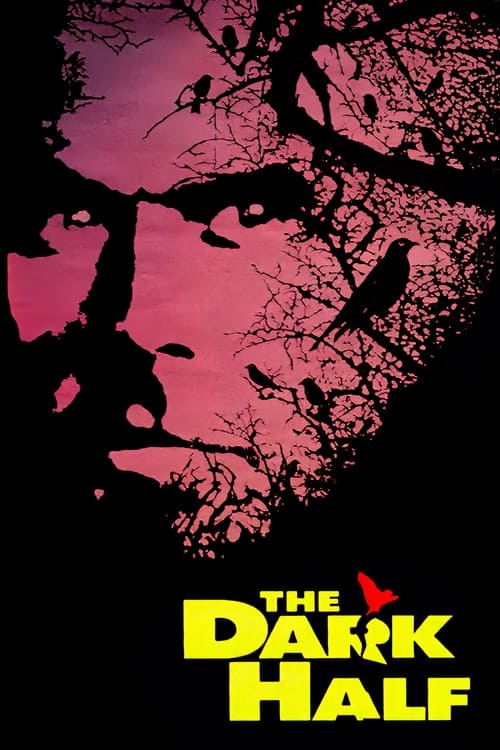
In 1960, the story opens in a hospital operating room with a young Thad Beaumont writhing under the force of violent headaches and seizures, his dream of becoming a writer already shadowed by something monstrous inside him. Doctors initially fear a brain tumor, but when they open his skull they discover the truth: Thad is carrying the remnants of a parasitic twin, a malformed hidden sibling with an eye, teeth, and other grotesque partial features left behind after one embryo absorbed the other. The surgeons remove the tissue, and for a moment the horror seems contained, but the image of that eye opening from within the child's brain hangs over everything that follows, as if part of Thad has been cut out rather than destroyed. In the film's logic, the surgery does not simply save him; it plants the seed of the dark division that will one day come back to life.
Twenty-three years later, Thad Beaumont is a respected creative writing professor in Maine and a serious literary novelist with a calm, academic reputation. At the same time, he is secretly and much more lucratively the author of a string of violent pulp thrillers published under the name George Stark. The split is not just professional but psychological: Thad's public work is dignified and restrained, while Stark's books are brutal, sensational, and commercially successful. Thad has built his life around keeping those selves separate, and his wife, Elizabeth "Liz" Beaumont, knows enough of the strain to understand how fragile that arrangement is. She is supportive, practical, and protective, but she also sees the cost of letting the darker persona continue to exist. Thad's double life is threatened when Fred Clawson, a blackmailer who has discovered that Thad Beaumont is George Stark, demands payment in exchange for silence. Clawson's threat forces Thad to make a choice: keep feeding the lie or destroy it publicly.
Thad chooses destruction. Rather than pay Clawson, he decides to go public and symbolically bury George Stark once and for all. Liz helps him plan the act, and the couple turns the killing of the pseudonym into a staged media event. The press is called in, and a mock funeral is arranged at the Beaumont family plot in the cemetery. The grave is carefully prepared as a theatrical statement, a physical manifestation of Thad's decision to sever himself from the violent fiction that has made him famous. The scene has the air of a publicity stunt, but it is also deeply personal, as though Thad is trying to bury a piece of his own soul. The camera lingers on the family grave, and the ritual acquires a dreadful irony: what is meant as a symbolic death becomes the point where something buried begins to move again.
The announcement does not end the problem; it detonates it. Soon after the mock burial, the grave is found desecrated and dug up, as if something inside has rejected the act of symbolic death. That disturbance is the first physical sign that the separation Thad has attempted is not holding. The story then tips from literary scandal into murder mystery and supernatural horror. Fred Clawson is killed first. He has been the man applying pressure, the one who thinks he can extort a novelist by exposing the secret behind a pen name, and his death is the first unmistakable retaliation. The movie makes it clear that George Stark is responsible, though the exact mechanics of his arrival remain uncanny and hard to pin down at first. Clawson's murder is not just a warning; it is proof that the persona Thad tried to bury has become a real, independent force.
As the killings begin, the pressure on Thad intensifies. Bodies start dropping in the wake of the burial story, and each murder seems to circle back toward Thad's hidden identity. The trail of violence stretches from Maine to New York, pulling in the people and institutions connected to Stark's existence. In this sequence, the film emphasizes that Stark is not merely killing randomly; he is retaliating against everyone involved in "his" death. The blackmailer, the people who helped publicize the burial, and the associates tied to the Stark books all become targets. The murders are designed both to punish and to frame. Each scene of bloodshed reinforces the impression that someone who looks exactly like Thad Beaumont is moving through the world with murderous intent, leaving the police with the same face they are supposed to trust.
One of the most important murder scenes involves Homer Gamache, the local photographer. Stark kills him and steals his truck, showing that he is now operating in the physical world with practical cunning as well as rage. The theft becomes a key detail in the investigation, because it proves Stark is not an abstraction or a hallucination but a body moving through space, taking what he needs and discarding witnesses. The truck, like the grave, becomes an emblem of Stark's invasive return: he is borrowing the ordinary machinery of real life to continue a fantasy of revenge. As the death toll rises, the tension around Thad's home grows unbearable. His house with Liz, once a place of domestic order and emotional refuge, becomes another vulnerable site in a world being torn open by the consequences of his double life. The family space now feels exposed to the same violence that once lived only on the page.
At the same time, the police investigation tightens around Thad. Sheriff Alan Pangborn enters the story as the local lawman who begins by treating the murders as a practical mystery but gradually confronts a situation that defies ordinary explanation. Pangborn is observant, methodical, and skeptical, but the evidence keeps circling back to Thad. Thad's fingerprints are found at murder scenes, and his resemblance to the killer makes him the obvious suspect. The detective work turns cruelly circular: the man who is being hunted is also the man the evidence appears to condemn. Pangborn does not simply dismiss Thad's claims, but he also cannot accept the supernatural truth at first. That tension gives the film much of its momentum, because every attempt to explain the murders in rational terms only makes Thad look guiltier. The law closes in, while Stark keeps widening the body count.
Meanwhile, Stark himself is pushing toward direct contact. The film makes clear that he wants more than revenge; he wants to continue writing. In the most chilling expression of his identity, he demands that Thad create a new book, as if authorship itself were his means of survival. Writing in this story is not just a profession but a form of possession. Stark originally exists as Thad's commercial alter ego, the name attached to violent stories the respectable novelist prefers not to claim in public. Now that separation has collapsed, and Stark uses the same creative force that once made him profitable to force Thad into renewed contact. He is not content to die quietly. He wants to exist, to speak, and to write through Thad, even if the only way to do so is by murdering everyone who helped "kill" him.
The revelation that makes the whole story click is the connection back to the opening surgery. Thad realizes, and the film increasingly confirms, that George Stark is not simply a pseudonym brought to life by the supernatural in the abstract. Stark is linked to the parasitic twin removed from Thad's skull in childhood, the hidden flesh that was never fully eliminated. The grotesque medical opening is therefore not a prologue for shock value; it is the origin of the dark half itself. The body horror of the surgery and the literary horror of the pseudonym converge. Thad's split identity is not metaphorical alone. It has a physical basis, and that basis has returned in the form of a man who looks like him, thinks like him, and hates him with intimate knowledge. The film's central twist is that the person Thad tried to bury was never only a name. Stark is the embodied residue of the part of Thad that should have remained dead, but did not.
As Thad and Liz try to stay ahead of the violence, the story becomes more frantic and more intimate. Stark's killings are not distant crimes anymore; they are an invasion of the Beaumonts' emotional life. Liz is not merely the wife who knows the secret. She becomes one of the few people who can still anchor Thad to reality as the world around him slips into paranoia. Their relationship is strained by fear, but also strengthened by the fact that she believes him when the explanation stops making ordinary sense. That loyalty matters because everyone else has reason to doubt him. The police see a suspect. The public sees a scandal. Stark sees a battlefield.
The murders continue to escalate, and the final confrontation becomes inevitable. Stark's presence grows more menacing as his body begins to deteriorate. The film suggests that his borrowed flesh is temporary, unstable, and rotting even as his rage intensifies. That decay adds urgency to his actions: he does not have forever, so he is desperate to settle the struggle before the borrowed body fails him. This time pressure creates a nearly inescapable trap around Thad, because both versions of him are running out of room. Pangborn is closing in from the law side, and Stark is closing in from the psychological and supernatural side. Thad is caught between the real-world consequences of his secret and the murderous embodiment of that secret itself.
The climax arrives when Thad must face George Stark directly. By now, the truth is inescapable: Stark is not some external impostor or random killer using Thad's identity. He is Thad's dark half, the part that was split off and then allowed to survive as a separate murderous being. The confrontation is both physical and spiritual, a battle over whether the violent, manipulative, creative force within Thad gets to live on as an independent self. Thad understands that he cannot reason Stark away or hide from him any longer. The only way out is to confront what he has tried to deny since childhood. In this final struggle, the two halves of the same origin collide with brutal force, and the movie stages the encounter as a confrontation with the self as much as a fight against a killer.
The outcome is destruction. Stark is ultimately destroyed rather than allowed to continue existing, and the horror that has stalked Thad through the film is ended in the most direct way possible. The precise mechanics of his end are less important than the fact of it: the dark persona cannot survive the final showdown. Thad is forced to recognize that the split was never clean, never complete, and never safe. The same creative impulse that made him a novelist also produced the persona that became Stark, and that hidden violence can no longer be isolated, denied, or buried in the family plot. When Stark is defeated, the film closes the loop that began in the hospital operating room. The removed twin, the buried grave, the published pseudonym, the murders, and the final confrontation all resolve into a single truth: Thad has spent his life trying to live as if his darkness were separate from him, but it has always been part of him.
The final scenes return to the emotional wreckage left behind by the violence. Thad survives, but only after being dragged through the terrifying recognition of who and what George Stark is. Liz remains the crucial human presence at his side, the one who sees the cost and the truth most clearly. Sheriff Pangborn's role resolves the police side of the conflict, but the supernatural explanation remains the dominant one: the murders came from the dark half Thad tried to bury, and the burial failed because the thing being buried was never merely a fiction. The ending does not restore innocence. It exposes the illusion that Thad's respectable literary self and his violent bestseller self could be kept apart forever. Stark is gone, but the film leaves behind the unsettling sense that the line between artistry, ambition, and buried violence was always thinner than Thad wanted to admit.
More Movies Like This
Browse All Movies →

What is the ending?
In the ending of "The Dark Half," Thad Beaumont confronts the dark alter ego, George Stark, who has been committing murders. In a climactic showdown, Thad manages to defeat Stark, but not without significant emotional and physical turmoil. The film concludes with Thad believing he has rid himself of Stark, only to find that the darkness may still linger within him.
Now, let's delve into the ending in a more detailed narrative fashion.
As the film approaches its climax, Thad Beaumont, a successful author, finds himself in a desperate struggle against his malevolent alter ego, George Stark. The tension escalates as Thad realizes that Stark, who has been responsible for a series of brutal murders, is not just a figment of his imagination but a tangible force that threatens his life and the lives of those around him.
In a pivotal scene, Thad is drawn to an abandoned farmhouse, a place that holds significance for both him and Stark. The atmosphere is thick with dread as Thad enters, the air heavy with the scent of decay and the remnants of Stark's violent past. Shadows dance ominously on the walls, reflecting Thad's internal conflict. He is terrified yet resolute, driven by the need to confront the darkness that has taken over his life.
As Thad navigates the dimly lit rooms, he is haunted by memories of Stark's violent acts. The walls seem to close in on him, echoing the chaos that Stark has unleashed. Thad's heart races, a mix of fear and determination coursing through him. He knows that to end Stark's reign of terror, he must face him head-on.
In a dramatic confrontation, Thad finally comes face to face with Stark. The two engage in a fierce struggle, a physical manifestation of Thad's internal battle. Stark, embodying all of Thad's suppressed rage and darkness, taunts him, revealing the depths of Thad's fears and insecurities. The fight is brutal, with Thad grappling not only with Stark's physical presence but also with the emotional weight of his own identity.
As the struggle reaches its peak, Thad manages to gain the upper hand. In a moment of sheer desperation, he uses a gun to shoot Stark, believing that this act will finally sever the connection between them. Stark's body crumples to the ground, and for a fleeting moment, Thad feels a sense of relief wash over him. He believes he has vanquished the darkness that has plagued him.
However, the victory is short-lived. In the aftermath of the confrontation, Thad is left shaken, grappling with the realization that the darkness may not be so easily extinguished. He returns to his home, where he attempts to reclaim his life and identity. Yet, the film leaves viewers with an unsettling sense of ambiguity. In the final moments, Thad experiences a chilling encounter that suggests Stark's influence may still linger within him. The camera lingers on Thad's face, capturing the flicker of doubt and fear in his eyes, hinting that the battle between light and dark is far from over.
As the credits roll, the fates of the main characters are revealed. Thad Beaumont, though he has physically defeated Stark, is left to confront the psychological scars of his ordeal. His wife, Liz, stands by him, but the strain of the events has taken a toll on their relationship. The police, who have been investigating the murders, are left with unanswered questions, and the community remains shaken by the violence that has unfolded. The film closes on a haunting note, suggesting that the struggle against one's inner demons is a continuous journey, one that Thad must now navigate alone.
Is there a post-credit scene?
The movie "The Dark Half," produced in 1993, does not have a post-credit scene. The film concludes with a definitive ending that wraps up the story of Thad Beaumont and his alter ego, George Stark. After the climactic confrontation and resolution of the central conflict, the film ends without any additional scenes or hints at further developments. The focus remains on the psychological and supernatural elements that have been explored throughout the narrative, leaving the audience with a sense of closure regarding Thad's struggle with his dark side.
What is the significance of Thad Beaumont's pseudonym, George Stark, in the story?
Thad Beaumont's pseudonym, George Stark, represents his darker, more violent side as a writer. Stark's character embodies the repressed anger and aggression that Thad feels but cannot express in his everyday life. The creation of Stark allows Thad to explore themes of violence and horror in his writing, but it also leads to dire consequences when Stark comes to life as a malevolent force.
How does Thad Beaumont's life change after the murder of his pseudonym?
After the murder of George Stark, Thad Beaumont's life spirals into chaos. He becomes the target of a series of violent events as Stark's spirit seeks revenge. Thad's emotional state deteriorates as he grapples with the reality that his creation is not just a figment of his imagination but a real entity that threatens his life and the lives of those around him.
What role does the character of Sheriff Alan Pangborn play in the story?
Sheriff Alan Pangborn serves as a crucial figure in the investigation of the murders linked to George Stark. He is both a friend and a skeptic of Thad Beaumont, trying to understand the bizarre events unfolding in their small town. Pangborn's determination to uncover the truth leads him to confront Thad, ultimately revealing the connection between Thad and Stark, and he becomes a key ally in the fight against Stark's malevolence.
What is the relationship between Thad Beaumont and his wife, Liz?
Thad Beaumont's relationship with his wife, Liz, is strained as the events surrounding George Stark unfold. Initially supportive, Liz becomes increasingly worried about Thad's mental state and the danger posed by Stark. Their bond is tested as Thad's obsession with his alter ego grows, leading to tension and fear in their marriage. Liz's emotional turmoil reflects her struggle to protect her family while dealing with the supernatural chaos that Stark brings.
How does Thad Beaumont confront the manifestation of George Stark?
Thad Beaumont confronts the manifestation of George Stark in a climactic showdown that takes place in a graveyard. This confrontation is both physical and psychological, as Thad must face the embodiment of his darkest impulses. The battle symbolizes Thad's struggle for control over his own identity and the acceptance of his darker side. The intense emotional stakes are heightened as Thad fights not only for his life but also for his sanity and the safety of his loved ones.
Is this family friendly?
The Dark Half, produced in 1993, is not considered family-friendly due to its mature themes and graphic content. Here are some potentially objectionable or upsetting aspects that may affect children or sensitive viewers:
-
Violence and Gore: The film contains several scenes of graphic violence, including murders that are depicted in a visceral manner. The imagery can be quite disturbing.
-
Psychological Horror: The film explores themes of identity and duality, which may be unsettling for younger audiences. The protagonist's struggle with his darker alter ego can evoke feelings of fear and confusion.
-
Mature Themes: The narrative delves into complex issues such as mental illness, the nature of evil, and the consequences of one's actions, which may be difficult for children to understand.
-
Language: There are instances of strong language throughout the film that may not be suitable for younger viewers.
-
Tense Atmosphere: The overall tone of the film is dark and suspenseful, which can create a sense of anxiety and fear.
These elements contribute to the film's classification as suitable for mature audiences rather than children.