


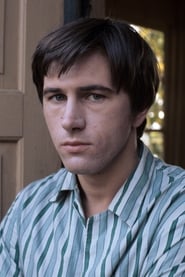


























Popular
What motivates George to pursue his dreams despite the obstacles he faces?
How does George's relationship with his family influence his decisions throughout the film?
What role do George's friends play in his journey, and how do they impact his character development?
What specific challenges does George face in his career, and how does he respond to them?
How does the setting of the film reflect George's internal struggles and aspirations?
Should I watch it?
Ask Your Own Question

What is the plot?
What can be reconstructed from the available sources is only a partial spoiler, not a truly complete one, because the search results mainly describe the film's premise and a few key plot beats rather than a full scene-by-scene synopsis. The clearest version of the story is that George Mecklin, an unhappy English teacher who has recently moved with his wife Emma to the country near New York, becomes obsessed with helping a troubled teenager named Ernest, and that this decision pulls his life apart.
The film opens in a mood of quiet dissatisfaction. George is already trapped in a life he experiences as tedious and emotionally empty: he teaches at a private Manhattan school, but his work leaves him restless, and the move out to the countryside has not brought peace so much as a new kind of drift. Emma, his wife, is also adrift. She works part-time as a librarian, and the couple's marriage has settled into a tense, unfulfilled rhythm, with Emma wanting more from life and George increasingly alienated from her and from the people around him. The country house, instead of becoming a refuge, feels like a place where boredom and frustration can echo louder.
George's dissatisfaction is the engine of the story. He is portrayed as an idealist who is deeply aware that he is not happy, yet he does not know how to fix anything about his life. He feels estranged at work, where he is surrounded by the ordinary humiliations of teaching and the petty noise of professional life, and he feels equally cut off at home, where Emma's resentment and his own emotional vacancy keep widening the gap between them. The sources describe him as a man in "a living hell" and suggest that he tries to flee ordinary reality by imagining a better, more meaningful world for himself. In that sense, his decision to intervene in Ernest's life is not just charity; it is also an attempt to rescue himself.
The turning point comes when George comes home and discovers Ernest, a local teenager, inside the house. In some versions of the available material, George initially thinks the boy is simply a thief or intruder. That first encounter matters because it establishes the strange, unstable bond that will define the rest of the film: George does not hand Ernest over to the police, even though Emma clearly expects him to do so. Instead, he decides to "help" the boy, tutoring him and taking him under his wing. Ernest is portrayed as a neglected outsider, an adolescent who is failing at school and floating at the edges of the adult world. George convinces himself that the boy is appealing to him for salvation, and he starts to imagine that he can provide the guidance Ernest needs.
Emma resists this immediately. She is the voice of practical sense, the one who recognizes that bringing a strange teenage boy into the house is a terrible idea, and she wants George to turn Ernest over to the authorities. George refuses, and that refusal becomes one of the central acts of betrayal in the story, because it is not only a rejection of Emma's judgment but also a sign that George is choosing an intoxicating fantasy over the reality of his marriage. Ernest begins visiting the Mecklins' home, and George sets down rules for him, but Ernest repeatedly breaks them. Each broken rule adds tension. Each tutoring session is meant to prove that George can shape the boy's future, but instead it reveals how little control George actually has.
The relationship between George and Ernest grows increasingly loaded and destructive. The sources do not provide a full line-by-line chronology, but they do make clear that the arrangement "implodes" George's life. George is drawn to Ernest not just as a student but as a kind of project, a figure onto whom he can project his longing for purpose and moral significance. He wants to believe he is saving someone. He wants to imagine that by helping Ernest he is redeeming his own stalled existence. But the more he tries to shape the boy, the more his life unravels at home. Emma's resentment deepens because George has effectively chosen Ernest over her, and the marriage becomes another battlefield in which George's need to feel necessary destroys the fragile domestic balance the couple still had.
The emotional texture of the film is one of increasing claustrophobia. The country house, which should feel open and pastoral, becomes a pressure chamber where every conversation carries disappointment and every silence feels charged. George's optimism about Ernest is not grounded in reality; it is a desperate act of self-deception. He sees the boy's disorder and thinks he can convert it into meaning, but the available sources make clear that this is exactly the kind of misguided idealism that ruins him. The "help" he offers Ernest is not just ineffective; it is the mechanism of his collapse.
As the story advances, the conflict is no longer simply about whether Ernest can be educated. It is about whether George is capable of recognizing his own delusions before they destroy everything. The title itself, in the film's framing from the Beverly Hills Film Festival description, points to George living in "two worlds": one a dream world, one a mundane real life, and the tragedy lies in his attempt to force reality to conform to fantasy. That idea fits the available plot information even where the sources differ in emphasis. George cannot bear the ordinary disappointments of his actual life, so he reaches for an imagined purity, an imagined usefulness, an imagined person he can save. Ernest becomes the object of that longing.
The sources do not identify every intermediate event, but they do make clear that the experiment ends badly for George. The story does not turn into a triumph of mentorship; it turns into a moral and emotional failure. George's attempts to impose order on Ernest are undermined by Ernest's own instability and by George's refusal to acknowledge the danger in what he is doing. Emma's warnings, which initially sound like domestic irritation, turn out to be the only sane response in the house. She sees more clearly than George does that he is not rescuing Ernest so much as using him to escape his own dissatisfaction.
The final movement of the film, according to the available sources, is not described in detail, but it is clear that George is "chastened" by the experience and left to face the consequences of his choices. In narrative terms, that means the relationship with Ernest collapses, George's idealized sense of himself as a morally serious teacher is shattered, and the marriage with Emma is further damaged, perhaps beyond repair. The film's central tension lies in George's inability to see that his need to help is inseparable from his need to feel important. When that delusion falls apart, so does the structure he has built around it.
The exact ending cannot be reconstructed from the available sources, and the results do not support any reliable account of deaths, murders, or a final climactic confrontation with lethal consequences. What they do support is a bleak ending in which George's attempt at salvation rebounds catastrophically on him. The emotional final state is clear even if the scene details are not: the boy he tried to redeem does not become the answer to his life, and George is left with the wreckage of his own misplaced faith in himself.
If you want the most accurate complete spoiler possible, I can do one of two things next: I can give a tighter reconstruction of the 1993 film based only on the available plot traces, or I can help determine whether the source material you want is actually the Paula Fox novel rather than the film, since the evidence available here is mixed and incomplete.







What is the ending?
In the ending of "Poor George," George faces the consequences of his choices, leading to a moment of self-realization. He ultimately decides to take responsibility for his actions, which brings a sense of closure to his tumultuous journey. The film concludes with George embracing a new path, leaving behind his past mistakes.
As the final act unfolds, we find George in a dimly lit bar, nursing a drink, reflecting on the chaos that has surrounded him. The atmosphere is heavy with tension, and the clinking of glasses punctuates the silence. George's face is etched with worry and regret, a stark contrast to the carefree demeanor he once exhibited. He is surrounded by familiar faces, but they seem distant, as if he is trapped in a bubble of his own making.
Scene by scene, the narrative progresses. George's friend, Mike, enters the bar, his expression a mix of concern and frustration. He approaches George, urging him to reconsider his reckless behavior. Mike's voice is firm, yet there is an underlying tone of compassion. He reminds George of the dreams they once shared, the aspirations that have now faded into the background of George's self-destructive choices. George listens, his eyes downcast, grappling with the weight of Mike's words.
As the conversation deepens, George's internal conflict becomes palpable. He recalls moments from his past--his ambitions, the love he lost, and the friendships that have frayed. Each memory is a flash of color against the gray backdrop of his current life. The camera captures the flicker of hope in George's eyes as he contemplates a different future, one where he can reclaim his identity and purpose.
In a pivotal moment, George stands up, the decision crystallizing within him. He thanks Mike for his unwavering support and acknowledges the need for change. The bar's atmosphere shifts as George steps outside, the cool night air invigorating him. He takes a deep breath, feeling the weight of his past begin to lift.
The final scenes depict George embarking on a new journey. He visits his estranged family, seeking forgiveness and reconciliation. The emotional reunion is fraught with tension, but George's sincerity shines through. He expresses his remorse, and the family members, initially hesitant, begin to soften. Tears are shed, and the warmth of forgiveness envelops them, symbolizing a fresh start.
As the film draws to a close, George is seen walking down a sunlit street, a sense of determination in his stride. The camera pans out, capturing the vibrant life around him--a stark contrast to the isolation he once felt. The final shot lingers on George's face, a mixture of hope and resolve, as he steps into a future filled with possibilities.
In this ending, George's fate is one of redemption. He learns to confront his past and take responsibility for his actions, paving the way for personal growth. Mike, having supported George throughout, finds solace in his friend's transformation. The film leaves viewers with a sense of optimism, highlighting the power of change and the importance of facing one's demons.
Is there a post-credit scene?
The movie "Poor George," produced in 1993, does not feature a post-credit scene. The film concludes its narrative without any additional scenes or content after the credits roll. The story wraps up with a focus on the main character, George, and his journey, leaving the audience with a sense of closure regarding his struggles and growth throughout the film.
What motivates George to pursue his dreams despite the obstacles he faces?
George is driven by a deep desire to escape his mundane life and prove to himself and others that he is capable of achieving greatness. His internal struggle is marked by moments of self-doubt, but he finds motivation in the support of his friends and the hope of a better future.
How does George's relationship with his family influence his decisions throughout the film?
George's relationship with his family is strained, particularly with his father, who disapproves of his aspirations. This familial pressure weighs heavily on George, causing him to question his choices and ultimately pushing him to seek validation outside of his family unit.
What role do George's friends play in his journey, and how do they impact his character development?
George's friends serve as both a support system and a source of conflict. They encourage him to take risks and pursue his dreams, but they also challenge him to confront his fears and insecurities. Their differing perspectives force George to reflect on his own values and ambitions.
What specific challenges does George face in his career, and how does he respond to them?
George encounters numerous challenges in his career, including financial struggles, professional setbacks, and competition from more established individuals. He responds with resilience, often reevaluating his strategies and seeking creative solutions, which ultimately leads to personal growth.
How does the setting of the film reflect George's internal struggles and aspirations?
The setting of Poor George, often depicted as a stark contrast between the bustling city and George's cramped living conditions, symbolizes his internal struggles. The vibrant city represents the opportunities he yearns for, while his surroundings reflect the limitations he feels trapped by, enhancing his emotional journey.
Is this family friendly?
"Poor George," produced in 1993, is a film that explores themes of family dynamics, personal struggles, and the pursuit of happiness. While it has moments of humor and heart, there are several aspects that may be considered objectionable or upsetting for children or sensitive viewers.
-
Family Conflict: The film features scenes of intense family arguments and emotional confrontations that may be distressing for younger audiences.
-
Depression and Despair: The protagonist, George, grapples with feelings of inadequacy and depression, which are depicted in a raw and emotional manner. This portrayal may resonate deeply with sensitive viewers.
-
Financial Struggles: The film addresses themes of poverty and financial instability, showcasing the stress and anxiety that come with such situations, which could be unsettling for some.
-
Loss and Grief: There are moments that touch on loss and the impact it has on family members, which may evoke strong emotions.
-
Mature Themes: The film includes discussions about adult relationships and personal failures that may not be suitable for younger viewers.
Overall, while "Poor George" has valuable lessons about resilience and family, its emotional depth and some heavier themes may not be appropriate for all children or sensitive individuals.







