
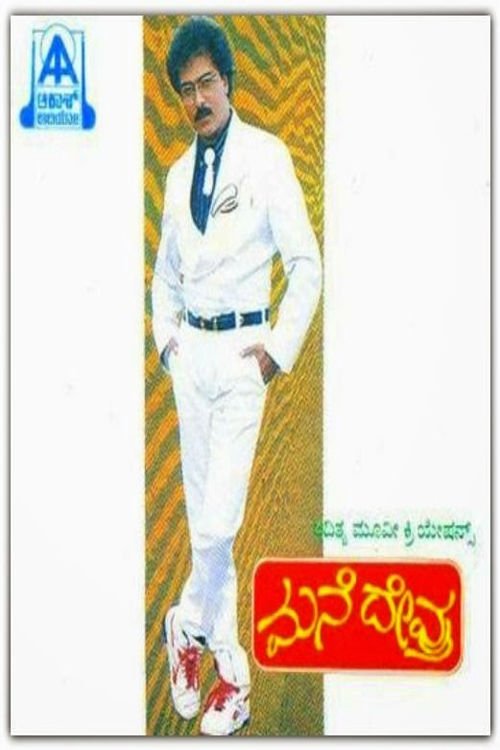








Popular
What role does the antagonist play in the protagonist's journey?
How does the relationship between the protagonist and his love interest develop throughout the film?
How does the film portray the theme of family loyalty through its characters?
What motivates the main character in Mane Devru to seek revenge?
What significant turning point occurs in the film that changes the protagonist's perspective?
Should I watch it?
Ask Your Own Question

What is the plot?
Sorry, we aren't able to watch and write up a full detailed plot yet. Check back in a few days.







What is the ending?
In the ending of "Mane Devru," the protagonist, a man named Shankar, confronts the antagonist, a corrupt politician named Keshav. After a series of intense confrontations, Shankar ultimately triumphs over Keshav, leading to a resolution of the conflict. The film concludes with Shankar reuniting with his family, symbolizing hope and justice.
As the climax of "Mane Devru" unfolds, the tension escalates dramatically. Shankar, having faced numerous challenges and losses throughout the film, stands resolute in his determination to confront Keshav. The scene is set in a dimly lit warehouse, where Shankar has gathered evidence of Keshav's corrupt dealings. The air is thick with anticipation as Shankar prepares to expose Keshav's true nature to the public.
In the next scene, Keshav, confident and arrogant, arrives at the warehouse, flanked by his henchmen. The atmosphere is charged with hostility as Shankar and Keshav exchange heated words. Shankar's voice trembles with a mix of anger and resolve, while Keshav's demeanor is dismissive, underestimating Shankar's resolve. The audience can feel the weight of Shankar's internal struggle; he is not just fighting for himself but for his family and the community that has suffered under Keshav's rule.
As the confrontation escalates, a physical altercation breaks out. Shankar, fueled by a sense of justice and the memories of his loved ones who have suffered due to Keshav's actions, fights fiercely. The choreography of the fight is intense, with Shankar using both his physical strength and clever tactics to outmaneuver Keshav and his men. Each punch thrown is a testament to Shankar's desperation and determination to reclaim his family's honor.
In a pivotal moment, Shankar manages to overpower Keshav, pinning him down. With Keshav at his mercy, Shankar delivers a powerful monologue, recounting the pain and suffering that Keshav has inflicted on innocent lives. The emotional weight of Shankar's words resonates deeply, showcasing his transformation from a victim to a warrior for justice. Keshav, now vulnerable, realizes the gravity of his actions, and for a fleeting moment, fear flickers in his eyes.
The scene shifts as Shankar decides to take the moral high ground. Instead of exacting revenge, he chooses to expose Keshav's corruption to the authorities. This decision marks a significant turning point in Shankar's character arc, highlighting his growth and commitment to justice over vengeance. The audience witnesses Keshav's downfall as he is arrested, his power stripped away, and his influence dismantled.
The film concludes with a poignant scene of Shankar returning home to his family. The atmosphere is filled with warmth and relief as he embraces his loved ones. The camera captures the tears of joy in his family's eyes, symbolizing the restoration of hope and the triumph of good over evil. Shankar's journey has not only liberated his family but has also inspired the community to stand against corruption.
In the final moments, the screen fades to black, leaving the audience with a sense of closure and the message that justice, though hard-fought, can prevail. Each character's fate is sealed: Shankar emerges as a hero, Keshav faces the consequences of his actions, and the community begins to heal, united in their newfound strength.
Is there a post-credit scene?
The movie "Mane Devru," produced in 1993, does not feature a post-credit scene. The film concludes its narrative without any additional scenes or content after the credits roll. The story wraps up with the resolution of the main plot, focusing on the characters' journeys and emotional arcs, leaving the audience with a sense of closure.
What role does the antagonist play in the protagonist's journey?
The antagonist serves as a formidable obstacle in the protagonist's quest for revenge. Their encounters are marked by intense confrontations that reveal the antagonist's ruthless nature and the protagonist's determination. This dynamic not only propels the plot forward but also forces the protagonist to confront his own values and the consequences of his quest.
How does the relationship between the protagonist and his love interest develop throughout the film?
The relationship between the protagonist and his love interest evolves from a playful and innocent connection to a deeper bond forged through shared hardships. As the protagonist faces challenges and dangers, the love interest becomes a source of strength and support, highlighting the emotional stakes of their relationship.
How does the film portray the theme of family loyalty through its characters?
Family loyalty is a central theme in Mane Devru, illustrated through the protagonist's unwavering commitment to protect his loved ones. Key scenes depict the sacrifices made by family members, showcasing their bonds and the lengths they will go to support each other, which ultimately shapes the protagonist's decisions and actions.
What motivates the main character in Mane Devru to seek revenge?
The main character, played by the protagonist, is driven by a deep sense of betrayal and loss after a tragic event that affects his family. This emotional turmoil fuels his desire for revenge against those who wronged him, showcasing his internal struggle between seeking justice and the moral implications of his actions.
What significant turning point occurs in the film that changes the protagonist's perspective?
A significant turning point occurs when the protagonist faces a moral dilemma that challenges his quest for revenge. This moment forces him to reevaluate his motivations and the impact of his actions on those he loves, leading to a profound transformation in his character as he grapples with the consequences of his choices.
Is this family friendly?
"Mane Devru," produced in 1993, is a Kannada film that revolves around themes of family, love, and societal issues. While the film has a strong narrative and emotional depth, it does contain some elements that may be considered objectionable or upsetting for children or sensitive viewers.
-
Family Conflict: The film portrays intense family dynamics, including arguments and emotional confrontations that may be distressing for younger audiences.
-
Societal Issues: There are scenes that address social injustices and struggles, which may be heavy for children to understand fully.
-
Emotional Turmoil: Characters experience significant emotional pain, including betrayal and loss, which could be upsetting for sensitive viewers.
-
Violence: There are moments of physical altercations that, while not excessively graphic, may still be alarming for younger viewers.
-
Tragic Elements: The film includes themes of sacrifice and tragedy that could evoke strong emotional responses.
Overall, while "Mane Devru" has valuable lessons and a compelling story, it may not be entirely suitable for very young children or those who are particularly sensitive to emotional or dramatic content.








