



Popular
Who are the main characters in Karakum - Ein Abenteuer in der Wüste?
What challenges do Kadir and his father face during their journey?
What is the significance of the desert setting in the story?
How does Kadir's relationship with his father evolve throughout the film?
What role do the desert tribes play in the story?
Should I watch it?
Ask Your Own Question

What is the plot?
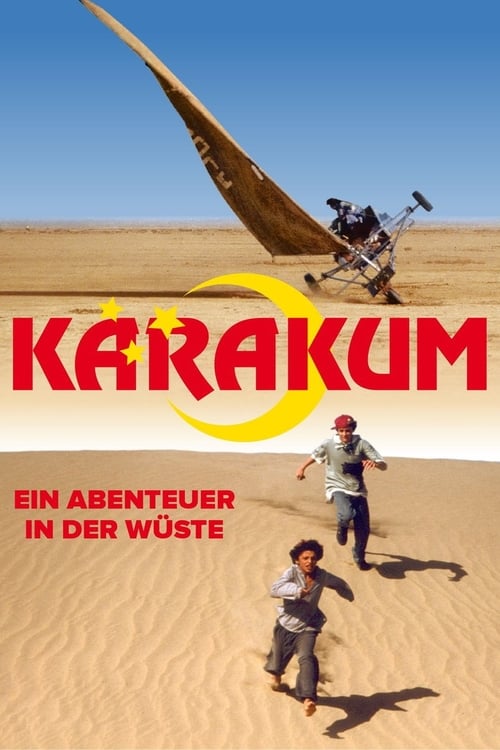
Robert, a 13-year-old boy from Hamburg, lands in Turkmenistan expecting a family reunion with his father, an engineer working on an Erdgas project in the Karakum Desert, but the trip immediately takes on the tone of a test of endurance rather than a holiday. His father cannot meet him personally, so he sends the driver Pjotr to collect him from the airport, and the moment Robert is placed into the truck, the film begins to widen from a simple father-and-son visit into a desert adventure shaped by distance, mistrust, and danger. Robert is still trying to understand where he is and how long the journey will take when Pjotr's nephew Murad is added to the group; Murad is roughly Robert's age and is also traveling to see his own father at a distant oasis, so the truck becomes a cramped little world of two boys who do not share a language and one adult who already seems to have his own agenda. Robert speaks German, Murad speaks Turkmen, and at first they can barely exchange anything beyond looks, gestures, and cautious curiosity, while Pjotr steers them away from the normal route and deeper into the desert.
Pjotr does not simply take them along the proper road to the camp. He turns off onto a dangerous side route through the dunes, and the reason soon becomes clear: he is not only a driver but also a courier with criminal side dealings, making a delivery for drug traffickers at a remote ruin. The desert begins to swallow the truck almost at once. The sand is loose, the heat relentless, and the truck eventually bogs down, stranded in the Karakum with the horizon empty in every direction. At first the adults still seem capable of solving the problem. Pjotr goes off on foot to get water for the radiator and, as the boys wait, the film stretches the silence into something almost unbearable: shimmering heat, dry wind, the truck groaning in place, and two children who still cannot properly speak to each other but gradually begin to realize that they are now dependent on each other. Time passes. Pjotr does not come back when promised. The water and supplies shrink. The sun becomes a physical enemy, pressing down on them from a white sky. The truck, once a vehicle of movement, has become a prison.
What follows is the film's first major emotional turn: Robert and Murad stop waiting to be rescued by adults and begin to improvise a way out together. Their communication is built almost entirely from gestures, broken understanding, and urgent practical action. Robert, who is fond of sailing, notices that the desert wind can be used the way a sailor uses water and gets the idea of building a sand sailer from the truck's cargo. The truck contains the very materials that make escape possible: staves, wheels, a tarpaulin or sail-like sheet, and other assembly parts. The boys work fast, driven by thirst and fear, and the scene becomes one of the film's most memorable images: two children crouched in the sand around a half-broken machine, turning freight into freedom. Their creation is not just a vehicle. It is the first real proof that they can understand one another without language, because survival forces cooperation more effectively than words ever could.
Pjotr's disappearance hangs over everything like a dark omission. He has gone for water and never returns in time, and the film treats that absence as a warning that the adult world has failed them. Later information makes the danger even clearer: Pjotr has been making illicit courier trips for criminals, and his desert detour is tied directly to that side work. This means that the boys were never simply stranded by accident; they are caught in a chain of adult deceit that they barely understand. Meanwhile, Robert's father, who has been waiting at the engineering camp or work site, realizes that something is wrong and launches a search by helicopter. The search becomes another source of tension: somewhere above the endless sand, a rescue aircraft is circling, but the boys are too small in the enormous landscape to be found easily. The helicopter search is a reminder that help exists, but not close enough, and not quickly enough.
Once the sand sailer is finished, Robert and Murad set off across the dunes. This is the film's great release of motion, and it has a burst of childlike wonder even while the danger remains severe. The vehicle skims over the sand when the wind catches it, and for a moment the desert becomes a place of possibility rather than death. The boys are no longer merely waiting for survival; they are actively forcing their way through the Karakum. The journey also changes their relationship. Murad, who is not only a companion but also a boy with his own destination and hopes, is no longer just Pjotr's nephew riding along. His own reason for traveling--to reach his father--gives the trip emotional weight beyond Robert's family reunion. In a sense, both boys are trying to recover fathers who are physically distant and emotionally inaccessible, and that shared longing helps turn them into allies. Their bond deepens through effort, not speech.
The desert, however, does not let them go easily. During the sand-sailing journey they are intercepted by drug gangsters, the criminal group linked to Pjotr's courier work. This confrontation is one of the story's major adult conflicts, and it confirms the film's hidden structure: the boys have not merely been lost in nature, they have been moved through a crime network that has treated the desert as a corridor for illicit business. The gangster encounter raises the stakes sharply, because now Robert and Murad are not only fighting thirst and exhaustion but also the consequences of Pjotr's betrayal. The stop is tense and threatening, but the boys' resourcefulness and the continuing momentum of their improvised escape prevent the criminals from permanently trapping them. The scene reinforces a central twist of the film: the same dangerous route that was supposed to carry cargo through the desert becomes the escape route that carries the children away from those who misuse it.
As the hours wear on, the desert closes in emotionally as well as physically. The boys are running on dwindling water, exposed to the blazing daylight, and increasingly aware that they are no longer waiting in the place where the adults last saw them. The helicopter search continues somewhere out in the broader rescue zone, but the boys keep moving, and the film builds toward its climax by making each forward shift feel earned. Robert's knowledge of sailing becomes the crucial revelation that turns fantasy into survival: he does not just dream of the sea, he repurposes that dream into a practical desert solution. The sand sailer, absurd at first glance, proves to be the key that opens the story's second half. It is the child's answer to adult incompetence, and the movie treats it as both a technical invention and a symbol of trust.
The final stretch of the story keeps pressing the same emotional oppositions into sharper relief. Adult authority has failed: Pjotr has lied and disappeared, the criminals have exploited the route, and even the helicopter cannot immediately locate the boys. Children, by contrast, have succeeded by adapting to reality rather than demanding that reality behave properly. The desert, which first appears as a dead, hostile expanse, becomes the stage for their ingenuity. The boys push onward toward civilization, toward water, and toward the possibility of reunion. The film's climax comes when their movement finally intersects with the adult search effort. The rescue aircraft at last finds them. The visual of the helicopter discovering the tiny figures in the vast desert gives the story its emotional release, because the isolation that has dominated so much of the film suddenly breaks open.
The ending resolves the film's central promises in one final gathering of family and safety. Robert is finally able to fall into his father's arms, completing the journey that began in Hamburg and was nearly destroyed in the Karakum. The father-son reunion is the emotional endpoint the whole story has been moving toward, and it lands not as a tidy victory but as a hard-won rescue after fear, dehydration, and deception. Murad's arc is also completed by this survival, since his journey was never just an accidental detour; he too is trying to reach family, and the adventure leaves him transformed from a passive passenger into a capable partner who has proven himself under extreme pressure. Pjotr's criminal involvement is exposed in the process, and his role as the adult who abandoned the boys is left as one of the film's central moral failures. No deaths are confirmed in the available plot information, and the story's suspense comes not from confirmed loss but from the constant threat that someone will die of thirst, exposure, or betrayal before help arrives.
The last scene completes the film's larger idea: the desert does not simply swallow the children, it tests them and, through their cooperation, releases them. Robert begins the story as a foreign boy arriving from Hamburg to meet a father he barely has time to reach. He ends it as a survivor who has crossed a hostile world by improvisation, trust, and courage. Murad begins as the quiet nephew in the truck and ends as a full participant in the escape, someone who learns to communicate across a language barrier through action rather than speech. The sand sailer, built from the truck's own load, becomes the vessel that transforms captivity into motion, and the final reunion in the desert's edge confirms the film's warm but hard-earned resolution: the boys endure, the father is found, and the Karakum, for all its danger, cannot prevent the human connection at the heart of the journey.
More Movies Like This
Browse All Movies →





What is the ending?
In the ending of "Karakum - Ein Abenteuer in der Wüste," the main characters successfully navigate the challenges of the desert, ultimately finding their way back to safety. They confront their fears and grow closer as a team, solidifying their bonds through shared experiences. The film concludes with a sense of triumph and camaraderie, as they reflect on their adventure and the lessons learned.
As the sun begins to set over the vast expanse of the Karakum Desert, the atmosphere is thick with a mix of relief and exhaustion. The main characters, a group of adventurers led by the determined and resourceful protagonist, have just overcome a series of harrowing challenges. They stand together, their faces illuminated by the warm glow of the fading sunlight, each one reflecting a different emotional state--relief, joy, and a hint of disbelief at their survival.
Scene 1: The Final Confrontation The group has just escaped a treacherous sandstorm that threatened to engulf them. As they gather their bearings, they realize they are not far from their destination. The leader, filled with a renewed sense of purpose, encourages the others to push forward. The camera captures the determination in their eyes, showcasing their growth from the beginning of the journey. They are no longer just individuals; they have become a cohesive unit, united by their shared experiences.
Scene 2: The Discovery As they trek through the last stretch of the desert, they stumble upon an ancient ruin, a remnant of a long-lost civilization. The characters are awestruck, their fatigue momentarily forgotten as they explore the site. Each character reacts differently--some are fascinated by the history, while others are more concerned about their immediate survival. This moment serves as a reflection of their individual motivations and growth throughout the film.
Scene 3: The Decision While exploring the ruins, they find artifacts that could change their lives. However, they face a moral dilemma: should they take these treasures back with them, or leave them undisturbed? The leader advocates for leaving the artifacts, emphasizing the importance of respecting history. This decision highlights the character's development, showcasing their transformation from self-serving adventurers to responsible stewards of the past.
Scene 4: The Journey Home With their decision made, the group begins their journey back. The camaraderie among them is palpable; they share stories and laughter, their bonds strengthened by the trials they faced. The camera captures moments of connection--hands clasped in solidarity, smiles exchanged, and the sound of their laughter echoing against the vast desert landscape. Each character reflects on their personal growth, realizing that the adventure has changed them for the better.
Scene 5: The Conclusion As they finally reach the edge of the desert, the sun dips below the horizon, casting a golden hue over the landscape. They stand together, looking back at the vastness they have conquered. The leader expresses gratitude for the journey and the friendships formed, while the others nod in agreement, their faces glowing with a sense of accomplishment. The film closes with a wide shot of the group walking away from the desert, their silhouettes framed against the vibrant sky, symbolizing hope and new beginnings.
In the end, each character has found a sense of purpose and belonging. The leader has emerged as a true guide, the others have discovered their strengths, and together they have forged a lasting bond. The adventure in the Karakum Desert has not only tested their limits but has also taught them invaluable lessons about friendship, respect, and the importance of preserving history.
Is there a post-credit scene?
The movie "Karakum - Ein Abenteuer in der Wüste" does not feature a post-credit scene. The film concludes its narrative without any additional scenes or content after the credits roll. The story wraps up with the main characters reflecting on their adventure and the lessons learned during their journey through the desert, leaving the audience with a sense of closure.
Who are the main characters in Karakum - Ein Abenteuer in der Wüste?
The main characters in 'Karakum - Ein Abenteuer in der Wüste' include a young boy named Kadir, who is adventurous and curious, and his father, who is a scientist. They embark on a journey through the desert, encountering various challenges and characters along the way.
What challenges do Kadir and his father face during their journey?
Kadir and his father face numerous challenges during their journey through the desert, including harsh weather conditions, treacherous terrain, and encounters with hostile tribes. They must also navigate their own fears and insecurities as they strive to reach their destination.
What is the significance of the desert setting in the story?
The desert setting in 'Karakum - Ein Abenteuer in der Wüste' serves as both a physical and metaphorical landscape for the characters' journey. It represents the vastness of the unknown and the challenges of survival, while also reflecting Kadir's internal growth and discovery as he learns about courage and resilience.
How does Kadir's relationship with his father evolve throughout the film?
Kadir's relationship with his father evolves from one of dependence to mutual respect and understanding. Initially, Kadir looks up to his father as a figure of authority, but as they face challenges together, they learn to communicate better and appreciate each other's strengths, leading to a deeper bond.
What role do the desert tribes play in the story?
The desert tribes play a crucial role in 'Karakum - Ein Abenteuer in der Wüste' as they represent both the dangers and the richness of the desert culture. Kadir and his father encounter various tribes, some of whom are hostile, while others offer assistance and wisdom, highlighting the complexity of human relationships in the face of adversity.
Is this family friendly?
"Karakum - Ein Abenteuer in der Wüste" is generally considered a family-friendly film, but it does contain some scenes that may be unsettling for younger viewers or sensitive individuals.
-
Desert Perils: The characters face various dangers in the desert, including harsh weather conditions and the threat of wild animals, which may evoke feelings of fear or anxiety.
-
Conflict and Tension: There are moments of conflict between characters, including misunderstandings and confrontations that could be intense for children.
-
Survival Situations: The film depicts survival scenarios that involve struggle and desperation, which might be distressing for some viewers.
-
Emotional Moments: Characters experience fear, loss, and moments of despair, which could resonate deeply and evoke strong emotions.
-
Cultural Differences: Some scenes may portray cultural misunderstandings or conflicts that could be confusing or upsetting without proper context.
Overall, while the film is designed for a family audience, these elements may require parental guidance for younger viewers.









