
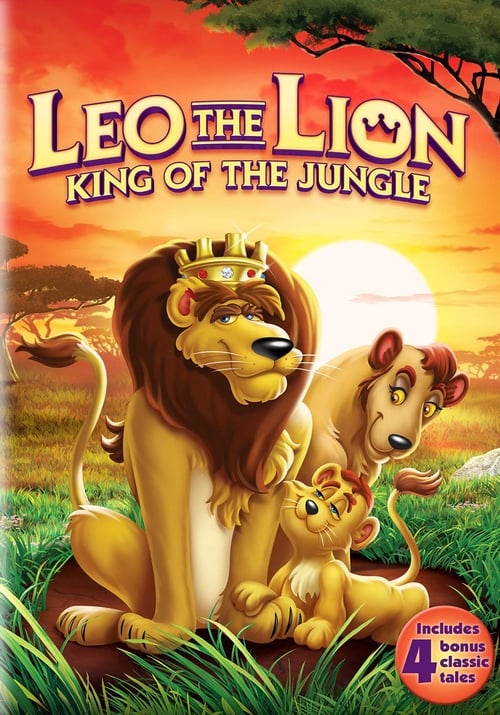










Popular
What challenges does Leo face in his journey to become king?
How does Leo's relationship with his father influence his character development?
What role do Leo's friends play in his journey?
How does Leo confront the antagonist in the story?
What lessons does Leo learn about leadership throughout the film?
Should I watch it?
Ask Your Own Question

What is the plot?
Sorry, we aren't able to watch and write up a full detailed plot yet. Check back in a few days.
More Movies Like This
Browse All Movies →
What is the ending?
In the ending of "Leo the Lion: King of the Jungle," Leo confronts the villainous poacher, who has been capturing animals for profit. With the help of his friends, Leo manages to thwart the poacher's plans, freeing the captured animals. The film concludes with Leo being celebrated as a hero among the jungle animals, solidifying his role as a leader and protector of the jungle.
Now, let's delve into the ending in a more detailed narrative fashion:
As the sun begins to set over the lush, vibrant jungle, casting a golden hue across the treetops, Leo stands at the edge of a clearing, his heart pounding with determination. He knows that the poacher, a menacing figure with a dark past, is lurking nearby, having set traps to capture the innocent creatures of the jungle. Leo's friends, a diverse group of animals including a wise old elephant and a clever monkey, gather around him, their expressions a mix of fear and hope. They trust Leo, their brave leader, to protect them.
In a tense scene, Leo and his friends devise a plan to confront the poacher. The camera captures the flicker of resolve in Leo's eyes as he reassures his companions, reminding them of the strength they possess when united. The animals scatter into the underbrush, each taking their positions, ready to spring into action.
As the poacher arrives, the atmosphere thickens with suspense. He is seen checking his traps, a smug smile on his face, believing he will soon have a bounty of captured animals. Suddenly, Leo leaps from the shadows, roaring fiercely. The poacher, startled, stumbles back, his confidence shaken. The jungle seems to hold its breath as Leo stands tall, embodying the spirit of the wild.
The confrontation escalates as Leo charges at the poacher, who fumbles with his equipment, trying to regain control. The other animals join in, creating a cacophony of roars, trumpets, and screeches that echo through the trees. The poacher, overwhelmed by the united front of the jungle's inhabitants, realizes he is outmatched. In a desperate attempt to escape, he tries to flee, but Leo and his friends work together, using their unique skills to block his path.
In a climactic moment, Leo corners the poacher against a large rock formation. The poacher, now frightened, pleads for mercy, but Leo, embodying the strength and justice of the jungle, stands firm. With a final, powerful roar, Leo sends the poacher running, never to return. The animals cheer, their voices rising in a triumphant chorus, celebrating their victory and the safety of their home.
As the dust settles, Leo turns to his friends, who gather around him, their faces glowing with admiration and gratitude. The wise old elephant trumpets a call of celebration, and the jungle comes alive with festivities. Leo is lifted onto the shoulders of his fellow animals, a hero in their eyes. The camera pans out, capturing the joyous scene of animals dancing and playing, a testament to their unity and resilience.
In the final moments, Leo gazes out over the jungle, a sense of peace washing over him. He understands that his role as a protector is not just about strength but also about the bonds of friendship and community. The screen fades to black, leaving the audience with a sense of hope and the enduring spirit of the jungle.
In summary, Leo emerges as a true leader, having faced his fears and protected his friends. The poacher is driven away, ensuring the safety of the jungle, while Leo's friends celebrate their newfound freedom and unity. Each character finds their place in the community, reinforcing the film's message about courage, friendship, and the importance of standing together against adversity.
Is there a post-credit scene?
The movie "Leo the Lion: King of the Jungle," produced in 1994, does not feature a post-credit scene. The film concludes its narrative without any additional scenes or content after the credits roll. The story wraps up with Leo's journey and the resolution of his adventures in the jungle, focusing on themes of friendship, bravery, and the importance of family. The ending emphasizes Leo's growth and the bonds he has formed, leaving the audience with a sense of closure.
What challenges does Leo face in his journey to become king?
Throughout his journey, Leo faces numerous challenges that test his courage and leadership. He encounters rival animals who question his strength and ability to lead, particularly from the cunning hyena, who seeks to undermine him. Leo also grapples with self-doubt and the pressure of living up to his father's legacy, which adds emotional weight to his quest.
How does Leo's relationship with his father influence his character development?
Leo's relationship with his father is pivotal to his character development. His father's expectations weigh heavily on him, creating a sense of pressure to prove himself worthy of the title 'King of the Jungle.' This dynamic fuels Leo's internal conflict, as he strives to balance his desire for approval with his own identity and values.
What role do Leo's friends play in his journey?
Leo's friends, including a wise old tortoise and a playful monkey, provide crucial support and guidance throughout his journey. They offer comic relief and wisdom, helping Leo navigate the complexities of leadership and friendship. Their loyalty and encouragement help Leo regain his confidence during moments of doubt.
How does Leo confront the antagonist in the story?
Leo confronts the antagonist, the hyena, in a climactic showdown that tests his bravery and resolve. The confrontation is intense, filled with tension as Leo must outsmart the hyena, who uses trickery and deceit. This battle not only showcases Leo's growth as a leader but also symbolizes his acceptance of his role as king.
What lessons does Leo learn about leadership throughout the film?
Throughout the film, Leo learns that true leadership is not just about strength but also about compassion, understanding, and the ability to listen to others. He discovers that being a good king means making sacrifices for the greater good and valuing the contributions of his friends and allies, which ultimately shapes his approach to ruling the jungle.
Is this family friendly?
"Leo the Lion: King of the Jungle," produced in 1994, is generally considered a family-friendly film. However, there are a few scenes and aspects that might be potentially objectionable or upsetting for children or sensitive viewers:
-
Conflict and Danger: The film features scenes of conflict between animals, including moments of aggression and threats that may be intense for younger viewers.
-
Separation and Loss: There are emotional moments involving separation from family and friends, which could evoke feelings of sadness or anxiety.
-
Chase Scenes: Some sequences involve characters being chased or in perilous situations, which might be frightening for sensitive children.
-
Villainous Characters: The presence of antagonistic characters may create tension and fear, as they pose threats to the protagonists.
-
Emotional Struggles: Characters experience fear, loneliness, and the struggle for survival, which may resonate deeply with sensitive audiences.
While these elements are not excessively graphic, they may still elicit strong emotional responses in some viewers.







