





Popular
What are the three different personas that the protagonist embodies in the film?
How does K's relationship with her mother influence her character development?
What role does the setting play in K's exploration of her identities?
How does K's interaction with other characters shape her understanding of herself?
What significance does the title 'Three Examples of Myself as Queen' hold in relation to K's journey?
Should I watch it?
Ask Your Own Question

What is the plot?
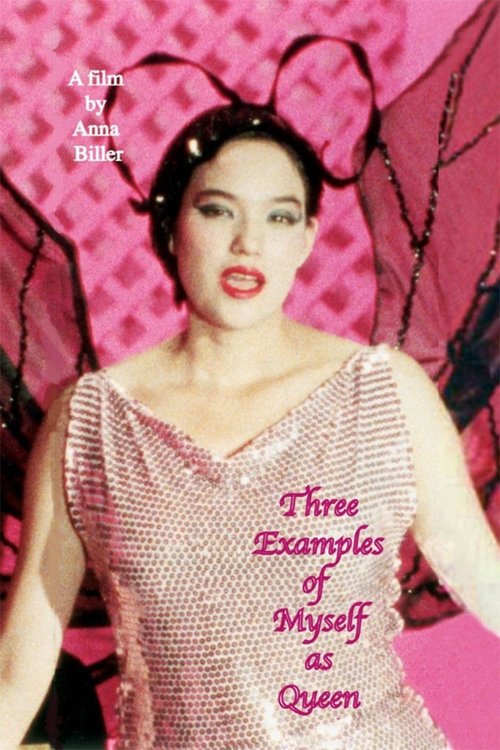
Three Examples of Myself as Queen opens in a lush, theatrical Arabian palace where a lonely queen sits amid luxury that has stopped meaning anything to her. She is surrounded by attendants and harem girls who try to brighten her mood, but the gold, silk, and elaborate courtly ritual only make her isolation feel sharper. The palace seems to glitter with the false perfection of a storybook world, yet the queen herself is sunk in melancholy, staring out from her rich surroundings as if she is already trapped inside them. When a rajah visits, he asks the obvious question: how can she be sad when she has everything she could possibly want? The queen answers with a quiet, painful honesty. Her life is repetitive. Every day folds into the next with no escape, no mystery, no possibility. She is a ruler, but she is also confined, hemmed in by the very role that is supposed to define her. She admits that she longs for other experiences, other lives, other ways of being. The rajah's response is not compassion but irritation. He scolds her for asking such difficult questions, as if curiosity itself is an offense. Her existence, he implies, should be enough. The queen's loneliness deepens as the conversation ends not in revelation but in dismissal. Seeking comfort, she turns to her consorts, and they respond with a bright, old-fashioned musical number, "Let Us Dance," a performance meant to soothe her with spectacle and motion. The scene carries a strange ache beneath its cheer: the dance does not solve her sadness, it merely wraps it in prettier colors.
The film then shifts into its second miniature world, and the mood changes from melancholy confinement to industrious exhaustion. A Queen Bee presides over her colony, but she is not a triumphant monarch in any conventional sense. She is tired, overworked, and in search of a new place to build a hive for her people. The bees around her treat the task with matter-of-fact urgency, describing one potential location after another. Each site is considered and rejected. None has the right shelter, none has the right promise, none feels like home. The search becomes a small drama of survival and judgment, with the queen carrying the burden of decision even as she is visibly worn down by the effort. At last, the final returning swarm member arrives with news of a place that sounds different from the others: a spot surrounded by flowers. That detail changes everything. The hive is no longer merely a structure; it becomes a place of beauty, abundance, and belonging. The colony settles there, and the mood lifts into communal praise. The bees sing to their queen as "the loveliest of bees," turning labor and migration into a hymn of collective devotion. Yet even this sweetness has an edge of strain in it. The queen is adored, but the adoration is tied to duty, order, and the endless work of making a home that can hold everyone together. Her reign is not glamorous so much as necessary, and the pleasure of the new hive comes only after fatigue, uncertainty, and a long search through unacceptable possibilities.
The final segment snaps into a different era entirely: a 1960s go-go party pulsing with music, color, and sexual unease. Poinsettia, a teenage girl in a vivid mod world, arrives with her friend Buttercup. The atmosphere is lively and artificial, all dancing bodies, loud performance, and the promise of fun that quickly curdles into danger. A live band plays, and the song's lyrics suggest pressure, coercion, and the insistence of men who will not take no for an answer. Poinsettia is absorbed in the music, caught in the flow of the scene, while Buttercup slips away without her. That tiny social disappearance becomes catastrophic almost at once. When Poinsettia looks up, she realizes she is effectively alone among men. The party's energy changes. The flirtation becomes predation. The men begin to crowd in on her, and the space that once felt festive turns hostile, enclosed, and ugly. She senses the threat and runs from the house, but the men follow her, pressing after her into the outside world. The scene tightens with each beat, transforming the bright party into a chase.
At the moment when the threat seems most imminent, a blandly attractive prince arrives as a rescuing figure, saving Poinsettia from what is described in the available summaries as an attempted gang rape or gang-bang. The rescue is abrupt and fairy-tale-like, but the film does not simply restore an ordinary romantic order. Instead, Poinsettia undergoes a supernatural transformation. She becomes a white-dressed immortal princess, an image of purity and power that is deliberately stylized rather than innocent. Her beauty is no longer passive decoration; it is joined to force. She gains the ability to turn men into dogs, a punishment that flips the threat of male predation into comic, humiliating defeat. The ending is striking precisely because it refuses the usual fairy-tale closure. The prince's intervention does not return Poinsettia to a vulnerable state. Instead, it opens into her own empowerment, and the final impression is of a woman who has crossed from endangered girlhood into mythic authority. The story does not end with a wedding or a simple rescue-into-marriage resolution. It ends on the uncanny emergence of a female ruler whose power is both magical and retaliatory, a queen who can reassert control over the men who tried to overwhelm her. The film's final beat is nontraditional and stylized, leaving behind the danger of the party and replacing it with an image of transformed sovereignty.
Across all three episodes, the film builds the same idea in different keys: queenship is never just about crowns or beauty. In the palace, it is loneliness and confinement. In the hive, it is labor and responsibility. In the party, it becomes survival and revenge. The Arabian queen is trapped by luxury, the Queen Bee is exhausted by duty, and Poinsettia is forced into power through threat and metamorphosis. No confirmed death is shown in the available material. The film's most severe violence is threatened sexual assault in the final segment, but the narrative answer is not death; it is magical reversal. By the end, the image of the queen has expanded from sadness to service to ferocious autonomy, and the last transformation suggests that the true fantasy of the film is not perfection, but female rule that cannot be cornered, shamed, or overrun.
More Movies Like This
Browse All Movies →








What is the ending?
In the ending of "Three Examples of Myself as Queen," the protagonist, a young woman named Kiki, confronts her identity and the expectations placed upon her. She ultimately embraces her individuality and asserts her independence, leading to a sense of empowerment. The film concludes with Kiki finding her own path, symbolizing a break from societal constraints.
As the final act unfolds, we see Kiki standing at a crossroads in her life. The scene opens with her in a dimly lit room, surrounded by mirrors that reflect her fragmented self-image. She gazes into one of the mirrors, her expression a mix of determination and uncertainty. The weight of her past choices hangs heavily on her shoulders, and the internal struggle is palpable. Kiki's journey has been one of self-discovery, and now she must decide who she truly wants to be.
In the next scene, Kiki steps out into the vibrant streets of the city, the sunlight illuminating her path. The bustling environment contrasts sharply with her earlier isolation. As she walks, she encounters various characters from her past--friends, family, and acquaintances--each representing different aspects of her life and the expectations they have imposed on her. Their faces reflect a range of emotions: disappointment, confusion, and sometimes admiration. Kiki's interactions with them are charged with tension, as she grapples with their perceptions of her.
One pivotal moment occurs when Kiki confronts her mother, who has always held traditional views about femininity and success. In a heated exchange, Kiki expresses her desire to forge her own identity, free from her mother's expectations. The emotional intensity of this confrontation is underscored by close-up shots of their faces, capturing the pain and love intertwined in their relationship. Kiki's mother, initially resistant, begins to soften as she sees the resolve in her daughter's eyes.
As Kiki continues her journey, she finds herself at a community gathering, where she witnesses a performance that resonates deeply with her. The performers, embodying various forms of self-expression, inspire Kiki to embrace her own voice. The scene is filled with vibrant colors and dynamic movements, symbolizing the freedom of artistic expression. Kiki's face lights up with realization; she understands that her identity is not defined by others but by her own choices and passions.
In the climax of the film, Kiki takes the stage, her heart racing as she prepares to share her story. The audience is a mix of familiar faces and strangers, all eyes on her. With a deep breath, she begins to speak, her voice steady and clear. She recounts her struggles, her fears, and ultimately her triumphs. The emotional weight of her words resonates with the audience, and we see tears and smiles as they connect with her journey.
The film concludes with Kiki stepping off the stage, a sense of relief washing over her. She has finally embraced her identity, and the applause from the audience signifies their acceptance of her truth. As she walks away, the camera captures her silhouette against the setting sun, symbolizing a new beginning. Kiki's journey has led her to a place of empowerment, and she is ready to face whatever comes next.
In the final moments, we see glimpses of the other main characters--Kiki's mother, her friends, and the community--each reflecting on their own paths. The film leaves us with a sense of hope and the understanding that self-acceptance is a journey, not a destination. Kiki's fate is one of liberation, as she steps into her future with confidence and authenticity.
Is there a post-credit scene?
The movie "Three Examples of Myself as Queen," produced in 1994, does not contain a post-credit scene. The film concludes its narrative without any additional scenes after the credits roll. The story wraps up with a poignant reflection on the themes of identity and self-perception, leaving the audience to ponder the journey of the protagonist without any further visual or narrative additions.
What are the three different personas that the protagonist embodies in the film?
In 'Three Examples of Myself as Queen', the protagonist, a young woman named K, explores three distinct personas that reflect her inner struggles and desires. The first persona is a confident and assertive queen who embraces her power and sexuality, showcasing her ability to command attention and respect. The second persona is a vulnerable and introspective version of herself, grappling with feelings of inadequacy and the societal pressures placed upon her. The third persona is a rebellious and defiant character who challenges traditional norms and expectations, representing her desire for freedom and self-expression.
How does K's relationship with her mother influence her character development?
K's relationship with her mother is fraught with tension and complexity, significantly impacting her character development throughout the film. Her mother embodies traditional values and expectations, often criticizing K for her choices and lifestyle. This dynamic creates a deep-seated conflict within K, as she seeks to assert her independence while simultaneously yearning for her mother's approval. The emotional weight of their interactions drives K to explore her identities more deeply, as she grapples with the desire to break free from her mother's influence while also seeking validation.
What role does the setting play in K's exploration of her identities?
The setting of 'Three Examples of Myself as Queen' plays a crucial role in K's exploration of her identities. The film juxtaposes urban environments with intimate, personal spaces, reflecting K's internal struggles. The bustling city represents the external pressures and societal expectations she faces, while her private moments in her apartment allow for introspection and self-discovery. Each location serves as a backdrop for her transformations, highlighting the contrast between her public persona and her private self.
How does K's interaction with other characters shape her understanding of herself?
K's interactions with various characters throughout the film are pivotal in shaping her understanding of herself. Each character represents different aspects of society and femininity, challenging K to confront her beliefs and insecurities. For instance, her friendship with a bold and unapologetic artist inspires K to embrace her own creativity and assertiveness. Conversely, encounters with judgmental figures force K to confront her fears of rejection and inadequacy, ultimately leading her to a deeper understanding of her multifaceted identity.
What significance does the title 'Three Examples of Myself as Queen' hold in relation to K's journey?
The title 'Three Examples of Myself as Queen' encapsulates K's journey of self-discovery and empowerment. Each 'example' represents a different facet of her identity, illustrating her struggle to reconcile the various roles she plays in her life. The term 'queen' signifies not only her aspiration for power and autonomy but also the societal expectations placed upon women. As K navigates her experiences, the title reflects her quest for self-acceptance and the realization that she can embody multiple identities without losing her sense of self.
Is this family friendly?
"Three Examples of Myself as Queen," produced in 1994, is a film that explores complex themes through the lens of its protagonist, a young woman navigating her identity and societal expectations. While the film is rich in emotional depth and artistic expression, it does contain elements that may not be suitable for all audiences, particularly children or sensitive viewers.
-
Themes of Identity and Self-Exploration: The film delves into the protagonist's struggles with her identity, which may include moments of confusion, frustration, and emotional turmoil that could be challenging for younger viewers to process.
-
Depictions of Relationships: There are scenes that explore romantic and interpersonal relationships, including moments of tension, conflict, and emotional distress, which may be unsettling for some.
-
Societal Pressures: The film addresses societal expectations and pressures, which can manifest in scenes that depict bullying or judgment from peers, potentially resonating as distressing for sensitive individuals.
-
Emotional Vulnerability: The protagonist experiences significant emotional highs and lows, including feelings of isolation and despair, which may evoke strong reactions from viewers who are sensitive to such themes.
-
Visual and Symbolic Imagery: The film employs artistic and sometimes abstract imagery that may be confusing or unsettling for younger audiences, as it often reflects the protagonist's internal struggles.
Overall, while "Three Examples of Myself as Queen" offers a profound narrative, its exploration of complex emotional and social themes may not be suitable for all viewers, particularly children or those who are sensitive to such content.








