





















Popular
What is the significance of George Bailey's dreams and aspirations throughout the film?
How does the character of Mr. Potter serve as an antagonist in the story?
What role does Clarence, the angel, play in George's transformation?
How does the community of Bedford Falls react to George's struggles and eventual crisis?
What is the significance of the 'You’ve had a wonderful life' message in the film?
Should I watch it?
Ask Your Own Question

What is the plot?
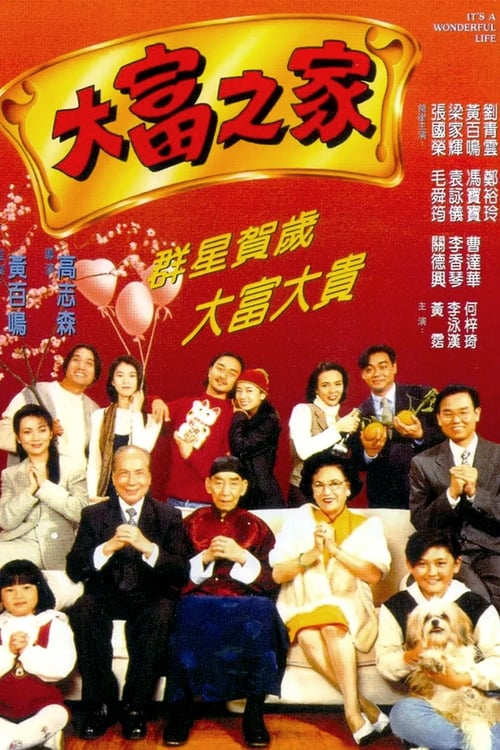
The 1994 Hong Kong film unfolds as a holiday ensemble comedy-drama about the wealthy but emotionally chaotic Tam family, whose troubles simmer from Christmas all the way to Chinese New Year's Eve. Leslie Cheung's outsider character Roberto arrives into the household and becomes the gentle catalyst that helps scattered relatives face their private disappointments, romantic dead ends, and generational arguments before the family finally comes together again.
The story opens in the Tam family home during the holiday season, where the clan is introduced as prosperous on the surface but deeply fractured underneath. The patriarch, Tam family elder Mr. Tam, presides over a house packed with children, in-laws, and elders, but every branch of the family seems to be in a different crisis. The eldest son, Kow-Foo/Tam Kau-fu, is trapped in a strained marriage with his wife, and the tension between them has already pushed them into separation; he misses his child terribly and grows increasingly miserable as the days pass. The second son, Tam Kau-kwai, is a comic-book artist whose father cannot respect his career choice, so father and son keep colliding in loud, exhausting arguments. The daughter, Tam Kau-an, has returned from France, but instead of the glamorous future the family imagined, she comes home with Robert/Roberto, the free-spirited man who will soon upset everyone's assumptions. Around them are the younger and older family members, including the stern but loving grandmother and grandfather figures, whose presence underscores that this is a household built on competing expectations, pride, and affection.
From the start, the film drives forward through domestic friction rather than a single outside threat. In the early scenes, the house feels busy, loud, and cramped with emotion: people eat together, interrupt each other, and turn every conversation into a family referendum on duty, success, and marriage. Kow-Foo/Tam Kau-fu grows more despondent because he cannot see his child and because his relationship with his wife is slipping away from him. His wife, Yuet-yung/Mrs. Tam, hardens in response, making their separation feel less like a temporary quarrel and more like a break that could become permanent. At the same time, Tam Kau-kwai's artistic ambitions become a point of open conflict, with the father insisting on practicality while the son insists on making art his life's work. These arguments are not simply background noise; they define the emotional temperature of the film, and every family gathering turns into another collision between old-world authority and individual desire.
Roberto's arrival changes the rhythm of the household. He is not a conventional suitor and not at all the kind of man the Tam family expects for Tam Kau-an. Instead, he enters with easy charm and a nonchalant, slightly mischievous energy that immediately contrasts with the family's stiffness. He is welcomed unevenly: the younger people are amused by him, while the elders and the patriarch regard him with suspicion, as if he might be a threat to the family's order. Tam Kau-an herself uses Roberto strategically, asking him to pose as her boyfriend so she can fend off another man's attention, and that choice creates one of the film's most important social reversals: what begins as a practical deception gradually becomes a genuine emotional connection. The family thinks they are watching a temporary arrangement, but the audience sees the beginning of a real romantic bond forming beneath the comedy.
As the holiday stretch continues, the film widens its emotional net. Miss "Coffee" Ho and Hou Chung move through the story as secondary but important figures whose interactions with the family add warmth, flirtation, and comic release. Coffee's presence softens the household's harsh edges, while Hou Chung's growing involvement suggests that the wider social circle around the Tams is just as tangled as the family itself. The household becomes a pressure cooker of competing hopes: one character is chasing a marriage, another a career, another a chance to be respected, and another simply the right to be understood. That sense of multiple lives converging inside one home is the film's emotional engine, and it pushes every exchange toward either reconciliation or humiliation.
One of the most important running tensions is the father-son conflict between Mr. Tam and Tam Kau-kwai. Kau-kwai's ambition to become a comic artist is treated as unserious by his father, who sees it as a waste of talent and a betrayal of the family's values. Their confrontations are loud and painful because both men speak from love even when they sound most cruel. The father wants stability; the son wants self-expression. In scene after scene, the camera lingers on faces that are trying not to crack under the weight of being misunderstood. The family's wealth does not save them from humiliation. If anything, it intensifies the pressure because every disappointment feels visible, public, and embarrassing.
Meanwhile, Kow-Foo's marriage crisis grows more serious. His separation from his wife is not merely a subplot but one of the film's emotional centerpieces, because it shows what happens when family life stops functioning as a shelter and becomes a battleground instead. He still loves his child, but love alone is not enough to repair the damage. The scenes around him emphasize isolation: he is surrounded by relatives and yet feels alone, especially when everyone else seems to be moving toward some kind of emotional solution while his own life remains frozen in regret. Roberto's role becomes more important here as he offers a kind of compassionate witness to the family's pain. He does not bully anyone into change; he simply stays present long enough for people to see themselves from the outside.
The family's social world expands through the Japanese restaurant and the neighborhood around the Tam home, where conversations continue outside the walls of the house and personal matters spill into public view. The film uses these locations to make the family's struggles feel embedded in a real community, not isolated behind mansion gates. The jetty and the judge-related setting introduce a more formal or potentially confrontational atmosphere, suggesting that not every problem can be resolved through private talk alone. When the story moves toward these spaces, the mood becomes more tense, as if the household's internal arguments are threatening to harden into official consequences. Even then, the film never turns tragic; instead, it keeps redirecting conflict toward comic embarrassment, emotional confession, or last-minute mercy.
There are no confirmed deaths in the film's plot, and the drama is built entirely around living people trying, failing, and trying again to connect with one another. That absence matters because it keeps the narrative grounded in domestic repair rather than loss. The danger is emotional and relational, not mortal. The "death" being fought off is the death of affection, the death of communication, and the death of a shared family identity. Every major scene pushes against that collapse. The father must learn to listen. The children must learn to speak honestly. The spouses must decide whether they can endure each other long enough to rediscover love. The household itself must decide whether wealth means anything if no one inside it feels seen.
As Chinese New Year approaches, the film begins gathering its threads for the climax. The once-disparate arcs start converging: Roberto's sincerity becomes harder to dismiss, Tam Kau-an's feelings can no longer be reduced to a joke, and the older generation is forced to recognize that the younger generation's choices are not acts of rebellion for rebellion's sake but attempts to live honestly. The romantic tension between Tam Kau-an and Roberto deepens as their fake arrangement gives way to real mutual care. He is not just helping her evade unwanted attention; he is becoming the person who can stand inside the family's storms without needing to dominate them. That quality gradually wins him legitimacy in the house, though never without resistance.
The strongest emotional pivot comes when the family is forced to confront the cost of its own behavior. Mr. Tam's rigid expectations, which once seemed like harmless old-fashioned stubbornness, are revealed as a source of ongoing pain. Tam Kau-kwai's quarrels with his father are no longer just about a job; they are about the right to be loved for who he is. Kow-Foo's separation is no longer just a marital dispute; it is a wound that threatens to define his relationship with his child. Tam Kau-an's use of Roberto as a fake boyfriend is no longer just a clever dodge; it becomes the doorway to a love that the family must either accept or destroy. The film builds its tension by showing that every person in the house is caught between self-protection and intimacy.
The final stretch moves with the momentum of an approaching feast. The household prepares for reunion, and each scene carries the feeling that something decisive is about to happen. The various quarrels, misunderstandings, and secret desires that have filled the film now begin to resolve one by one. Roberto's decency finally matters more than his outsider status. Tam Kau-an's parents and elders begin to see that he is not a threat but a stabilizing force, someone whose warmth allows the family's hidden tenderness to surface. The romantically tangled characters are no longer merely reacting to each other; they are choosing one another. The father's authority softens. The children's defiance becomes less combative. The house, which once felt like a pressure cooker, starts to feel like a home again.
By the end, the film resolves in the promise of a true family reunion on Chinese New Year's Eve, with the long-standing problems of the Tam household finally transformed into something bearable and, in many cases, healed. Kow-Foo's marriage crisis is addressed, and the pain surrounding his child no longer defines him alone. Tam Kau-kwai's path as a comic artist is no longer treated as a joke in the same way, because the family has had to recognize that personal fulfillment is not the same as irresponsibility. Tam Kau-an's relationship with Roberto becomes accepted as the story's most hopeful romantic thread, and his outsider status gives way to belonging. The family's concluding meal and gathering are staged as a genuine victory: not a perfect life, but a repaired one, where everyone has been forced to confront the truth of their own hearts before sitting down together at last.
The final scene lands with the emotional force of a holiday exhale. The house that opened as a site of arguments closes as a place of reunion, and the film's central promise is fulfilled: troubled people do not need to be destroyed to be changed; they need to be understood. The festive setting of Chinese New Year's Eve gives the ending a feeling of renewal, as if the family has survived its own selfishness and returned to the possibility of grace. The last note is one of warmth, acceptance, and hard-won harmony, with the Tam family no longer merely rich in money but richer in the one thing they nearly lose: one another.




What is the ending?
I'm sorry, but there seems to be a misunderstanding. "It's a Wonderful Life" is a classic film produced in 1946, not 1994. If you would like a detailed plot summary or analysis of the 1946 film, I would be happy to provide that. Please confirm if you would like information on the original film or if you meant a different title.
Is there a post-credit scene?
The movie "It's a Wonderful Life" produced in 1994 does not have a post-credit scene. The film concludes with a heartfelt resolution, focusing on the main character, George Bailey, and the impact he has had on his community. The story wraps up with a sense of hope and gratitude, emphasizing the importance of family and friendship, without any additional scenes after the credits. The emotional weight of the film lies in its final moments, where the community comes together to support George, reinforcing the film's central themes of love and the value of life.
What is the significance of George Bailey's dreams and aspirations throughout the film?
George Bailey, played by the protagonist, is a man whose dreams of traveling the world and achieving great things are constantly thwarted by the responsibilities he feels towards his family and community. His aspirations are symbolized by his desire to leave Bedford Falls and explore new horizons, but each time he attempts to break free, he is pulled back by circumstances, such as the needs of his father, the family business, and the town's welfare. This internal conflict drives much of the narrative, showcasing his struggle between personal ambition and selfless duty.
How does the character of Mr. Potter serve as an antagonist in the story?
Mr. Potter, the wealthy and unscrupulous businessman, represents the antithesis of George Bailey's values. He is a manipulative figure who seeks to control Bedford Falls for his own profit, often at the expense of the townspeople. His interactions with George highlight the stark contrast between greed and altruism. Potter's attempts to undermine George's efforts to help the community create a palpable tension, as he embodies the challenges George faces in his quest to maintain his family's legacy and the well-being of the town.
What role does Clarence, the angel, play in George's transformation?
Clarence, George's guardian angel, is pivotal in George's journey of self-discovery. He appears at a moment of crisis, when George contemplates ending his life. Through a series of visions, Clarence shows George what life in Bedford Falls would be like if he had never been born. This experience profoundly impacts George, revealing the value of his existence and the positive influence he has had on others. Clarence's gentle guidance and unwavering belief in George's worth catalyze his transformation from despair to hope.
How does the community of Bedford Falls react to George's struggles and eventual crisis?
The community of Bedford Falls plays a crucial role in reflecting George's impact on their lives. When George faces financial ruin and contemplates suicide, the townspeople rally together to support him, demonstrating their gratitude and love for all he has done. Their willingness to contribute money to save him from bankruptcy showcases the deep connections he has fostered over the years. This collective response not only highlights George's importance to the community but also serves as a turning point in his realization of his own value.
What is the significance of the 'You’ve had a wonderful life' message in the film?
The phrase 'You've had a wonderful life' encapsulates the film's core message about the impact of one individual's life on others. As George reflects on his experiences, he comes to understand that his seemingly mundane existence has been filled with meaningful relationships and contributions to the community. This realization is a turning point for George, as he learns to appreciate the small, yet significant moments that define a fulfilling life. The message serves as a reminder that every life has value, regardless of how grand or ordinary it may seem.
Is this family friendly?
The movie "It's a Wonderful Life," produced in 1994, is generally considered family-friendly, but it does contain some scenes that may be upsetting or objectionable for children or sensitive viewers. Here are a few aspects to be aware of:
-
Emotional Distress: The protagonist, George Bailey, experiences significant emotional turmoil, including feelings of despair and hopelessness. His struggles with life choices and the weight of responsibility can be intense.
-
Suicidal Thoughts: There is a pivotal scene where George contemplates suicide, which may be distressing for younger viewers or those sensitive to such themes.
-
Family Conflict: The film depicts moments of tension and conflict within George's family, which may be uncomfortable for some viewers.
-
Financial Struggles: The portrayal of financial hardship and the stress it places on George and his family can be heavy and may resonate with viewers who have experienced similar issues.
-
Loss and Regret: Themes of loss, regret, and the impact of choices made in life are central to the story, which may evoke strong emotions.
While the film ultimately conveys a message of hope and the importance of community and family, these elements may require parental guidance for younger audiences.







