












Popular
What motivates the main character, Detective Mike O'Reilly, in his investigation?
How does the character of Sean McCarthy influence the plot?
What role does the setting of Boston play in the story?
How does the relationship between O'Reilly and his partner evolve throughout the film?
What is the significance of the shamrock symbol in the film?
Should I watch it?
Ask Your Own Question

What is the plot?
Edward "Teddy" Harrison, a recently retired Scotland Yard detective, is on the verge of leaving policing behind forever when the story opens, planning to retire to an Australian sheep ranch after one last detour to New York to visit his estranged daughter, Cecilia. What is supposed to be a quiet family reunion quickly turns into a volatile plunge into murder, suspicion, and institutional rot, and Teddy's final days as a police professional become a last fight against a conspiracy that reaches into both street crime and the police themselves.
Teddy arrives in New York carrying the emotional weight of a man who has already decided his future. He is older, cautious, and trying to leave behind a lifetime of cases and violence, but the city immediately pulls him back into the habits he cannot fully shed. Cecilia is no longer a child needing his protection; she lives her own life in New York, and she is tied to Frank, her live-in boyfriend, a New York City cop. Their relationship is already strained by Teddy's absence over the years, and the reunion has an awkward edge from the start: father and daughter are trying to bridge years of distance while pretending this visit is only a stopover before retirement. The emotional undercurrent matters, because Teddy's instinctive need to protect Cecilia is what keeps him from simply walking away when the murder case begins to draw him in.
Frank becomes Teddy's first bridge into the case. He is both Cecilia's partner and a police detective, which makes him useful, but also places him inside the very system Teddy is about to distrust. Teddy is not in New York long before he gets entangled in a suspected serial-killing investigation, and at first the official narrative seems straightforward enough: there are multiple killings, and the police are treating them as part of one disturbed killer's pattern. Yet Teddy's experience makes him sensitive to inconsistencies, and he starts noticing details that do not fit the explanation being promoted by Captain Sternhardt and Vice Officer Tierney. Rather than accepting the easy theory, Teddy looks at the evidence with the wary eye of a seasoned investigator, and the more he observes, the more he suspects the case is being framed incorrectly.
The tension grows because Teddy is an outsider to New York policing, but not an outsider to police behavior. He recognizes the tone of certainty that often masks uncertainty, and he senses that Sternhardt and Tierney are not merely mistaken, but actively pushing a version of events that serves someone's interests. The story's larger political and criminal dimensions begin to surface here, as the killings are tied to IRA activity and police corruption. That connection changes everything. What first looks like a serial murder investigation starts to resemble a cover-up in which violent Irish political conflict and corrupt law enforcement overlap. Teddy's suspicion hardens into conviction: the official suspects are wrong, and the truth is being buried.
As Teddy and Frank dig deeper, the narrative widens from isolated murders into a mess of gunfire, shadowy loyalties, and dangerous men with overlapping agendas. A pair of Irishmen become central to the violence, and they are involved in the shooting of two cops. That shooting is one of the key escalations in the story, because it exposes how quickly the case moves from hidden suspicion to open bloodshed. The deaths of the two officers are not random collateral damage; they reveal the public cost of the conspiracy and the reach of the people behind it. At this point the film's tension depends on Teddy's growing certainty that the official investigation is compromised. He is not only trying to identify killers; he is trying to determine who among the police is shaping the story of the crime and why.
Teddy's relationship with Frank becomes especially important as the two men work side by side. Frank is both family connection and law-enforcement ally, but the film never lets the audience feel fully comfortable with his place in the story. Because the available synopsis does not provide a complete scene-by-scene breakdown, the exact sequence of each interrogation, stakeout, and revelation cannot be reconstructed with absolute certainty from the source material alone. What is clear is that Teddy and Frank are drawn into the center of a case involving serial killings, IRA-linked violence, and corruption, while Teddy increasingly resists the conclusions being forced on the investigation. This resistance gives the story its pulse: every new fact is filtered through Teddy's skepticism, and every official explanation feels like a potential lie.
Captain Sternhardt and Vice Officer Tierney function as the authority figures Teddy begins to oppose. Teddy sees enough to suspect that both men are wrong about the killings, which implies either serious incompetence or deliberate deception. The possibility that they are mistaken is bad enough; the possibility that they are complicit is far worse. Since the film's source material does not supply a full ending or a complete list of betrayals, their exact roles in the conspiracy cannot be stated with certainty beyond what is directly supported: Teddy believes their assumptions are false, and the case is entangled with police corruption. That is enough to place them on the suspect side of the story's moral divide. The effect is to turn Teddy's temporary return to duty into a last stand against institutional failure.
Cecilia remains the emotional anchor throughout, even though the plot data does not detail her independent actions in full. Teddy's decision to visit her before retiring matters because it makes the personal and the procedural inseparable. He is not just solving a case in a city he does not know; he is doing it in the world of his daughter and her partner, with his own family caught close to the danger. That intimacy heightens the stakes of every encounter. Teddy's protective instincts are no longer abstract police instincts; they are fatherly, immediate, and urgent. The story's energy comes from that collision between duty and family, and from the sense that Teddy is trying to finish his professional life by preventing a moral catastrophe from swallowing his daughter's life as well.
The New York setting reinforces that sense of entrapment. Teddy has traveled from one policing world into another, and the city's density makes secrets harder to separate from facts. The case is not a tidy whodunit but a murky, pressure-cooked conflict in which the line between criminal conspiracy and police misconduct keeps moving. The IRA connection gives the violence a geopolitical edge, but the corruption inside law enforcement makes the threat local and immediate. Every alley, interrogation room, and police office feels like a place where the truth can be bent. That atmosphere explains why Teddy's suspicion matters so much: he is one of the few characters willing to question the official story even when doing so endangers him and the people around him.
Because the sources available here are limited to synopsis-level information, the precise order of all deaths, confrontations, and revelations cannot be responsibly fabricated. What can be stated is that the story includes the shooting death of two cops by a pair of Irishmen, and that this violence is part of the larger IRA-and-corruption thread. The serial killings under investigation are not simply a madman's spree; they are bound up with a deeper criminal structure that Teddy gradually starts to see. That structural twist is the film's major revelation: the case is bigger, dirtier, and more politically charged than the police narrative admits. Teddy's role is to force that truth into the open, even if he does not have the full machinery of the department behind him.
The climax, in broad terms, is the point at which Teddy's suspicion of Sternhardt and Tierney collides with the violent reality of the Irishmen and the dead officers. The film's conspiracy is not merely about who pulled the trigger in one killing; it is about who is controlling the meaning of the killings afterward. That is why the title matters: the "Shamrock" element signals an Irish thread running through a network of violence, and the "conspiracy" is as much about concealment as crime. Teddy's outsider status allows him to see what others either cannot or will not see. He is leaving police work, but not before one final confrontation with a system willing to protect itself at the expense of the truth.
What cannot be verified from the available sources is a complete accounting of who lives and dies beyond the two cops explicitly mentioned, the exact chain of cause-and-effect for every fatality, or the final scene in which the plot resolves. The source material does not provide those details, and it would be inaccurate to invent them. The reliable core of the story is still clear, though: Edward "Teddy" Harrison comes to New York to visit Cecilia before retiring to Australia, reconnects with Frank, gets pulled into a suspected serial-killing case, realizes that Captain Sternhardt and Vice Officer Tierney are wrong, and uncovers a deeper web of IRA-linked violence and police corruption involving a pair of Irishmen and the shooting deaths of two officers. By the end of the available story information, Teddy has transformed from a man ready to leave the profession into the one person willing to challenge the official version of events, even as the city around him becomes more dangerous and morally compromised than he expected.
If you want, I can also turn this into a best-available reconstructed spoiler synopsis with explicit labels for what is verified versus inferred, but I cannot honestly fill in the missing death-by-death and ending details beyond the source-backed material already available here.
More Movies Like This
Browse All Movies →


What is the ending?
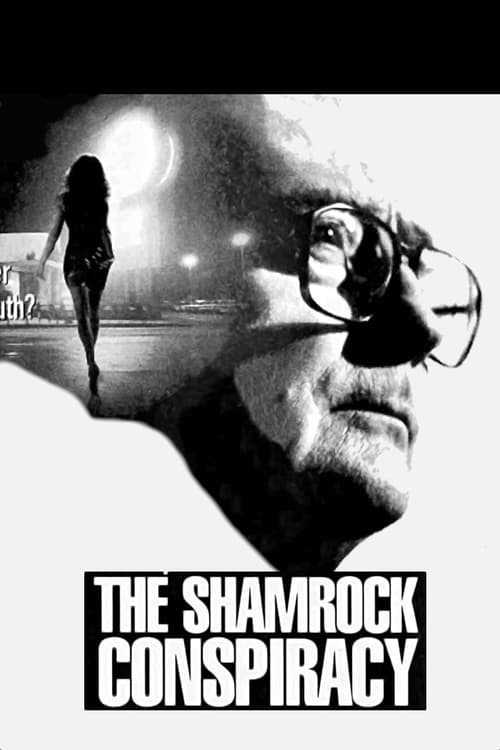
In the ending of "The Shamrock Conspiracy," the main characters confront the truth behind the conspiracy, leading to a climactic showdown. The protagonist, Detective Mike O'Rourke, uncovers the depth of the corruption involving the Irish mob and the police. The film concludes with a resolution of the conflict, revealing the fates of the key characters involved.
As the final act unfolds, Detective Mike O'Rourke finds himself in a tense standoff with the corrupt officials and mobsters who have been orchestrating the conspiracy. The atmosphere is thick with tension as Mike, driven by a sense of justice and personal loss, navigates through a series of confrontations that test his resolve. He is determined to expose the truth, not just for himself but for the victims of the conspiracy.
In a dimly lit warehouse, Mike confronts the main antagonist, a powerful mob leader who has been pulling the strings throughout the film. The scene is charged with emotion as Mike reflects on the personal stakes involved, including the loss of his partner and the betrayal he has faced from those he once trusted. The dialogue is sharp, filled with accusations and revelations that lay bare the extent of the corruption.
As the confrontation escalates, a physical altercation ensues. Mike's determination is palpable; he fights not only for his own redemption but for the integrity of the law. The struggle is intense, showcasing Mike's internal conflict as he grapples with the moral implications of his actions. He is pushed to his limits, both physically and emotionally, as he seeks to bring justice to those who have suffered.
In the climax, Mike manages to outsmart the mob leader, using his knowledge of the conspiracy to turn the tables. The scene is visually striking, with shadows and light playing across the warehouse, symbolizing the battle between good and evil. As the dust settles, law enforcement arrives, having been tipped off by Mike's earlier investigations. The corrupt officials are arrested, and the truth is finally brought to light.
In the aftermath, Mike stands amidst the chaos, reflecting on the cost of his pursuit of justice. He has lost friends and faced betrayal, but he has also reclaimed a sense of purpose. The film closes with a poignant moment as Mike looks out over the city, contemplating the ongoing struggle against corruption. His fate is one of bittersweet victory; he has exposed the conspiracy, but the scars of his journey remain.
The other key characters also face their fates. The mob leader is apprehended, his reign of terror coming to an end. The corrupt officials are brought to justice, but the film leaves a lingering question about the systemic issues that allowed such corruption to flourish in the first place. Mike's partner, who had been a victim of the conspiracy, is remembered, serving as a reminder of the personal stakes involved in the fight against crime.
In conclusion, the ending of "The Shamrock Conspiracy" encapsulates the themes of justice, betrayal, and the personal cost of fighting against corruption. Each character's fate is intertwined with the larger narrative, highlighting the complexities of morality and the ongoing battle for truth in a world rife with deception.
Is there a post-credit scene?
The Shamrock Conspiracy, produced in 1995, does not feature a post-credit scene. The film concludes its narrative without any additional scenes or content after the credits roll. The story wraps up with the resolution of the main plot, leaving no further developments or cliffhangers for the audience to ponder after the film ends.
What motivates the main character, Detective Mike O'Reilly, in his investigation?
Detective Mike O'Reilly is driven by a deep sense of justice and a personal connection to the case, as it involves the Irish community he is part of. His emotional state is often conflicted, torn between his duty as a police officer and his loyalty to his heritage. As he delves deeper into the conspiracy, his determination intensifies, fueled by a desire to protect his community from corruption.
How does the character of Sean McCarthy influence the plot?
Sean McCarthy serves as a pivotal character who embodies the complexities of loyalty and betrayal within the Irish community. His past connections to both the criminal underworld and the police force create tension and conflict. As O'Reilly uncovers McCarthy's role, it becomes clear that McCarthy's motivations are rooted in a desire for power and control, which complicates O'Reilly's investigation and personal relationships.
What role does the setting of Boston play in the story?
Boston is not just a backdrop but a character in itself, representing the rich Irish heritage and the struggles of its community. The city's streets, pubs, and neighborhoods are depicted with vivid detail, showcasing the cultural pride and the underlying tensions. O'Reilly's navigation through these familiar yet dangerous environments heightens the stakes of his investigation, as he confronts both the beauty and the darkness of his city.
How does the relationship between O'Reilly and his partner evolve throughout the film?
Initially, O'Reilly's partner, Detective Kelly, is portrayed as a supportive ally, but as the investigation progresses, their relationship becomes strained. Kelly's pragmatic approach clashes with O'Reilly's emotional investment in the case. This tension culminates in moments of doubt and confrontation, revealing their differing views on justice and loyalty, ultimately testing their partnership and friendship.
What is the significance of the shamrock symbol in the film?
The shamrock symbol serves as a powerful motif throughout the film, representing both the cultural identity of the Irish community and the corruption that has infiltrated it. As O'Reilly uncovers the layers of the conspiracy, the shamrock becomes a symbol of hope and resilience, but also a reminder of the betrayal and violence that can arise from misplaced loyalty. Its presence in key scenes underscores the emotional stakes for O'Reilly and his community.
Is this family friendly?
"The Shamrock Conspiracy," produced in 1995, contains several elements that may not be suitable for children or sensitive viewers. Here are some potentially objectionable aspects:
-
Violence: The film includes scenes of physical confrontations and threats, which may be intense for younger audiences.
-
Crime Themes: The plot revolves around conspiracy and criminal activities, which may be unsettling for some viewers.
-
Mature Language: There are instances of strong language that could be inappropriate for children.
-
Emotional Tension: The characters experience significant emotional distress and conflict, which may be upsetting for sensitive viewers.
-
Dark Themes: The overarching themes of betrayal and deception may be too complex or heavy for younger audiences to fully grasp.
These elements contribute to a tone that may not be considered family-friendly.








