











Popular
What is the significance of the character Dazzle in the film?
How does the relationship between Dazzle and his mother evolve throughout the film?
What role does the setting play in Dazzle's journey?
How does Dazzle's friendship with other children influence his character development?
What challenges does Dazzle face in his pursuit of his dreams?
Should I watch it?
Ask Your Own Question

What is the plot?
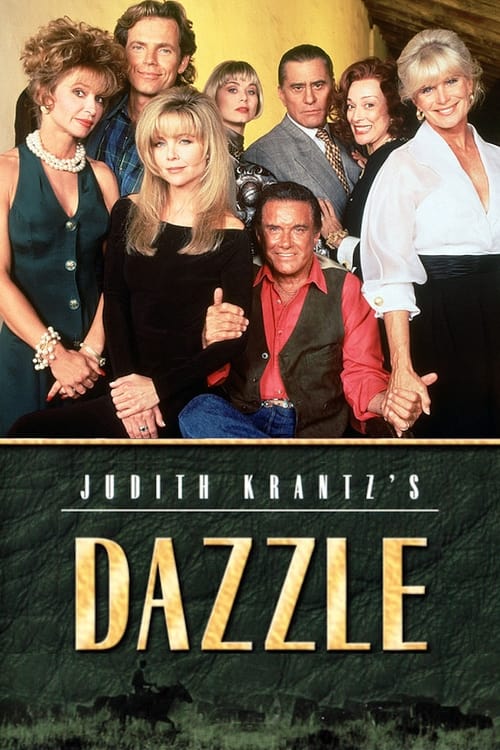
Dazzle opens with the sense that one family's grief is about to become a battlefield. Jazz Kilkullen is already a fully formed presence in Venice, California: a dazzling, successful photographer with a studio called Dazzle, a woman who has built a glamorous life around light, image, and control, yet still carries the deeper loyalty of a daughter who never really left her father's orbit. Her father, Mike Kilkullen, owns an enormous coastal ranch stretching across roughly 60,000 acres between Los Angeles and San Diego, land that is as emotionally loaded as it is commercially valuable. Before the trouble fully breaks, the ranch is already under pressure from developers and investors who see only profit in the open land, while Mike sees something larger and more delicate: responsible use, preservation, and a legacy that must not be carved apart.
Jazz's life at Dazzle gives the story its first contrast. In Venice she works with her partners, Mel and Pete, on commercial photography--food shoots, automotive work, polished assignments that depend on making the ordinary look irresistible. Her professional world is fast, stylish, and self-contained, and it proves that she is not merely the daughter of a rancher waiting for an inheritance. But the ranch is always there beneath the surface, a second identity she cannot ignore. The sources identify her as fiercely loyal to Mike, especially after her mother's death when Jazz is only eight years old, and that loyalty shapes everything that follows. The ranch is not just family property; it is the physical embodiment of Mike Kilkullen's dream.
The conflict ignites after Mike Kilkullen's death, which occurs before or at the beginning of the main struggle. The available sources do not specify the exact cause, time, or circumstances of his death, but they are clear about the effect: his passing opens the door to a ruthless inheritance fight. Suddenly the family is divided between those who want to preserve the ranch and those who want to cash out. The narrative is framed as a struggle against "evil half-sisters" and "evil land developers," and also against foreign investors who try to force the sale. The stakes are high because the ranch is not a modest parcel of land; it is a massive, coveted coastal expanse whose value makes greed almost inevitable.
Among the first people pressing in on Jazz are her own relatives, and the family tension has a sharp, poisonous intimacy. Her half-sisters, Valerie and Fernanda, stand in opposition to her, each representing a different flavor of selfishness and detachment. Valerie is described as a humorless interior designer, someone whose aesthetic world is polished and controlled but emotionally barren. Fernanda is more flamboyant, more openly impulsive, and the sources emphasize her endless search for the perfect lover, a joke that also underlines her self-absorption. Their mother, Liddy, Mike's ex-wife, is another force in the opposition, described as resentful and cunning. Together they embody the family's fracture: they do not share Jazz's attachment to the land, only its monetary value.
A further layer of pressure comes from the outside. The developers are not local dreamers but opportunists, including a Hong Kong developer and other investors who want the ranch subdivided and exploited. In the broader novel context, Phoebe Milbank represents interests in the larger business maneuvering around the property, adding another layer of scheming and negotiation. The sources do not lay out every meeting, contract, or legal tactic, but the shape of the battle is unmistakable: Jazz must outwit a web of relatives, investors, and developers who all think the land should be broken apart and monetized.
In the emotional center of the story stands Jazz's relationship to her father's legacy. The ranch is tied to an idea of responsible land use, a concept that echoes the real-life history of Orange County's Irvine Ranch, where development was meant to coexist with preservation rather than obliterate it. That philosophy gives the conflict moral weight. This is not simply a fight over money; it is a fight over whether a family's inheritance becomes a legacy or a liquidation. As the struggle deepens, Jazz becomes the person forced to carry both sides of her life at once: the modern, image-making career woman in Venice and the heir to a vast stretch of threatened land.
The story also surrounds Jazz with romantic and emotional counterweights. The sources identify several suitors, which suggests that the film and novel play the ranch conflict alongside Jazz's personal awakening. Sam, an Australian actor of striking beauty, is one such presence. Gabriel, a photojournalist who knew Jazz since she was 18 and once won her attention with a startlingly intimate gesture--flicking his tongue against her eyelashes--carries the history of an old, charged connection. But the man who most clearly fits the "reliable hero" role is Casey Nelson, an investor turned ranch foreman working for Mike on the sprawling property. Casey is important because he stands at the intersection of the financial and the practical worlds: he knows the ranch, works it, and can see what the developers cannot or will not respect. The sources indicate Jazz and Casey clash, yet their relationship turns toward mutual trust and attraction as the crisis unfolds.
As the pressure mounts, the story's tension shifts from simple inheritance dispute to a broader test of character. Jazz is not just defending property; she is defending the meaning of her father's life's work. The sources mention that she "fights other heirs to preserve his dream to use the land responsibly," and that phrasing reveals the emotional core of the narrative. Her opponents want immediate gain, but Jazz is trying to preserve something that has no quick market value: continuity, stewardship, memory. That is why the ranch matters so much in every confrontation. Every argument about subdivision is also an argument about who Mike Kilkullen really was, and whether his wishes die with him or continue through his daughter.
Although the available material does not provide a scene-by-scene breakdown, the narrative clearly builds toward a series of increasingly intense confrontations. Jazz must deal with her half-sisters' resentment, Liddy's manipulations, and the developers' pressure simultaneously. Each discussion over the ranch likely becomes a battle over motive and legitimacy: who loved Mike, who exploited him, who deserves to decide the fate of his land. The sources do not quote every exchange, but they do preserve the story's tone, which is one of high melodrama and hard-edged family conflict. Jazz's enemies are not merely wrong; they are positioned as predatory, eager to turn paradise into pavement.
The deeper twist in the story is that the ranch conflict is not only about current ownership but about a hidden continuity of family and land history. One review mentions "an ancient land grant" and a "happy solution to the econo-ecological bother," which suggests that the resolution depends on more than brute bargaining. That hint points to a late-stage discovery or legal-referential breakthrough that allows Jazz to defeat the development threat without losing the ranch entirely. The sources do not provide the exact document, clause, or legal mechanism, so it cannot be stated with certainty how the breakthrough is engineered, but they are consistent that Jazz eventually finds a way to keep most of the property. That means the final act is not a total victory in the simplistic sense; it is a compromise or strategic triumph that preserves the heart of the land.
The emotional and romantic pressures intensify in parallel. Jazz is surrounded by men who reflect different possibilities for her life: glamour, memory, safety, and renewal. Sam offers magnetic charm, Gabriel offers a history of passion and loss, and Casey offers steadiness and practical courage. The story's structure implies that Jazz's eventual "love and fulfillment" come not from escaping the ranch conflict but from surviving it and finding someone who understands the burden of stewardship. The sources do not spell out every romantic conversation or the exact moment of emotional surrender, but they do establish that fulfillment is part of the ending, and that the personal resolution arrives alongside the property resolution.
The climax centers on Jazz outmaneuvering the people who want the ranch broken apart. The film and book summaries make clear that she must "battle" her half-sisters and "evil land developers," which implies a final stretch of confrontation in which Jazz refuses to yield the family property despite pressure from every side. The outsiders are opportunistic; the relatives are greedy; the stakes are emotional and financial; and Jazz, increasingly isolated but more determined than ever, becomes the sole credible defender of Mike's legacy. The sources do not record a physical showdown or a single decisive speech, but they do show that the conflict resolves in Jazz's favor through a combination of intelligence, persistence, and a better understanding of the land's true value.
No deaths beyond Mike Kilkullen's are identified in the available sources. Because the material does not describe any murders, accidents, or additional fatalities, the only confirmed death to include is Mike's, and the cause remains unspecified in the provided references. That absence matters tonally: the drama is not built around body counts but around inheritance, betrayal, and the consequences of a patriarch's absence. Mike's death is the wound that never closes, and the entire story is the fallout from that single loss.
As the ending arrives, Jazz succeeds in preserving the ranch in part, not necessarily in full, but enough to keep Mike's dream alive. One source puts it plainly: "In the end I come up with a way to keep most of it." That line captures the practical shape of the resolution. Jazz does not simply defeat evil and walk away with a perfect victory; she wins a hard, partial, intelligent survival of the land. The developers are blocked from taking everything, the family's most destructive ambitions are checked, and the ranch remains intact enough to honor what Mike intended.
At the same time, Jazz's emotional life resolves toward love and fulfillment. The specific final romantic pairing is not detailed in the available sources, but the story makes clear that the ranch struggle does not leave her isolated. Instead, it gives her the clarity to choose a life that is both grounded and fully her own. The final movement of the story therefore joins public and private resolution: the land is saved from total destruction, her family's greed is outplayed, and Jazz emerges not merely as a daughter in mourning but as a woman who has claimed the right to define her future.
The closing impression is of a heroine standing on threatened land and realizing that preservation can be an act of intelligence rather than nostalgia. The ranch, once the site of grief and conflict, becomes the foundation of renewal. Mike Kilkullen is gone, but his vision survives through Jazz's defiance and through the compromise that protects most of the property. Valerie, Fernanda, Liddy, and the developers are beaten back; Casey Nelson remains the most grounded presence in Jazz's world; and the story ends with the sense that the family's great coastal inheritance has been rescued from complete betrayal.
More Movies Like This
Browse All Movies →





What is the ending?
In the ending of "Dazzle," the main character, a young boy named Billy, confronts the harsh realities of his life and the consequences of his actions. He ultimately finds a sense of closure and acceptance, leading to a bittersweet resolution for him and the other characters involved.
As the film approaches its conclusion, the tension escalates. Billy, who has been struggling with his identity and the pressures of his environment, faces a pivotal moment. He is torn between the allure of a life filled with glamour and the stark truth of his circumstances. The climax unfolds as he makes a choice that reflects his growth and understanding of the world around him.
In the final scenes, Billy's journey culminates in a poignant moment of self-realization. He acknowledges the impact of his decisions on those he cares about, particularly his mother, who has been a constant source of support despite her own challenges. The film closes with a sense of hope, as Billy takes steps toward a more authentic life, leaving behind the illusions that once captivated him.
Now, let's delve into the ending in a more detailed, chronological narrative.
As the film nears its climax, the atmosphere is charged with tension. Billy, having navigated a series of challenges throughout the story, stands at a crossroads. He is faced with a choice that will determine not only his future but also the futures of those around him. The weight of his decisions hangs heavily in the air, and the emotional stakes are palpable.
In a pivotal scene, Billy confronts his mother, who has been a steadfast figure in his life. Her face reflects a mixture of concern and love, and as they talk, the depth of their bond is revealed. She implores him to consider the consequences of his actions, urging him to think about the life he truly wants. Billy's internal struggle is evident; he grapples with the desire for acceptance and the need to stay true to himself.
As the conversation unfolds, Billy's emotions shift from defiance to vulnerability. He begins to understand the sacrifices his mother has made for him and the importance of their relationship. This moment serves as a catalyst for his transformation, igniting a spark of self-awareness that he had previously overlooked.
The climax reaches its peak when Billy is faced with a critical decision that could lead him down a path of superficiality or one of authenticity. The allure of a glamorous lifestyle tempts him, but he ultimately recognizes that it comes at a cost. In a powerful moment of clarity, he chooses to reject the facade and embrace the reality of his life. This decision is not made lightly; it is a culmination of his experiences, his mother's guidance, and his own desire for genuine connection.
In the final scenes, we see Billy taking steps toward a new beginning. He reaches out to those he has hurt, seeking forgiveness and understanding. The emotional weight of his journey is evident as he navigates these relationships, each interaction filled with a mix of hope and trepidation. The camera captures the subtle shifts in his demeanor, reflecting his growth and newfound resolve.
As the film concludes, Billy stands in a place of acceptance. He has come to terms with his past and is ready to face the future with a sense of purpose. The final shot lingers on his face, a mixture of determination and hope, as he steps forward into the unknown, leaving behind the illusions that once defined him.
The fates of the main characters are intertwined with Billy's journey. His mother, having supported him through his struggles, finds solace in his growth, knowing that he is on a path toward a more authentic life. The other characters, who have played significant roles in his story, also reflect the impact of his choices, each finding their own resolutions as the narrative closes.
In this bittersweet ending, "Dazzle" encapsulates the themes of identity, acceptance, and the importance of genuine connections, leaving the audience with a sense of hope for the characters' futures.
Is there a post-credit scene?
The movie "Dazzle," produced in 1995, does not have a post-credit scene. The film concludes its narrative without any additional scenes or content after the credits roll. The story wraps up with the main characters' arcs resolved, leaving no further developments or surprises for the audience to discover after the film's official ending.
What is the significance of the character Dazzle in the film?
Dazzle, played by the young actor, is a pivotal character who embodies the innocence and dreams of youth. His journey reflects the struggles of a child trying to navigate a world filled with adult complexities. Dazzle's interactions with other characters reveal his desire for acceptance and love, making him a symbol of hope amidst adversity.
How does the relationship between Dazzle and his mother evolve throughout the film?
Dazzle's relationship with his mother is central to the narrative. Initially, there is a sense of distance and misunderstanding between them, as she grapples with her own challenges. As the story progresses, moments of vulnerability and connection emerge, showcasing their emotional struggles and ultimately leading to a deeper bond as they confront their shared hardships.
What role does the setting play in Dazzle's journey?
The setting of the film, which includes both the vibrant and harsh realities of urban life, plays a crucial role in shaping Dazzle's experiences. The contrasting environments highlight his internal conflicts and the external pressures he faces. The bustling city serves as both a backdrop for his dreams and a reminder of the obstacles he must overcome.
How does Dazzle's friendship with other children influence his character development?
Dazzle's friendships with other children are instrumental in his character development. These relationships provide him with a sense of belonging and support, allowing him to express his true self. Through shared adventures and challenges, Dazzle learns valuable lessons about loyalty, trust, and the importance of community, which ultimately shape his identity.
What challenges does Dazzle face in his pursuit of his dreams?
Throughout the film, Dazzle faces numerous challenges in his pursuit of dreams, including societal expectations, familial pressures, and personal insecurities. These obstacles manifest in various forms, such as bullying from peers and the struggle to gain his mother's approval. Each challenge tests his resilience and determination, ultimately driving the narrative forward as he seeks to find his place in the world.
Is this family friendly?
"Dazzle," produced in 1995, is a film that centers around the themes of family, love, and the challenges of growing up. While it has a whimsical and adventurous tone, there are several elements that may be considered objectionable or upsetting for children or sensitive viewers.
-
Parental Struggles: The film explores the complexities of family dynamics, including themes of separation and emotional distress, which may be difficult for younger audiences to fully understand.
-
Conflict and Tension: There are scenes that depict conflict between characters, which may include raised voices or emotional confrontations that could be unsettling for some viewers.
-
Loss and Grief: The narrative touches on themes of loss, which may evoke feelings of sadness or discomfort, particularly for children who may not be familiar with such concepts.
-
Mature Themes: While not explicit, the film does address issues related to growing up and the challenges that come with it, which may include moments of confusion or emotional turmoil.
-
Visuals of Struggle: Certain scenes may depict characters in distressing situations, which could be visually intense or emotionally charged.
Overall, while "Dazzle" has a family-friendly premise, the emotional depth and some of the themes may require parental guidance for younger viewers.








