






























Popular
What is the significance of the scarlet letter 'A' that Hester Prynne wears?
How does Hester Prynne's relationship with Dimmesdale evolve throughout the film?
What role does Roger Chillingworth play in Hester's life and how does he affect her?
How does Pearl's character reflect the themes of innocence and societal judgment?
What is the significance of the forest scene between Hester and Dimmesdale?
Should I watch it?
Ask Your Own Question

What is the plot?
Sorry, we aren't able to watch and write up a full detailed plot yet. Check back in a few days.









What is the ending?
In the ending of the 1995 film "The Scarlet Letter," Hester Prynne confronts the consequences of her past actions and the societal judgment she has faced. Dimmesdale, tormented by his guilt, ultimately reveals his secret to the townspeople before dying in Hester's arms. Hester decides to leave the Puritan community, taking her daughter Pearl with her, seeking a new life away from the oppressive society that has shunned her.
As the film concludes, Hester and Pearl walk away from the town, symbolizing a new beginning, while the memory of Dimmesdale lingers in their hearts.
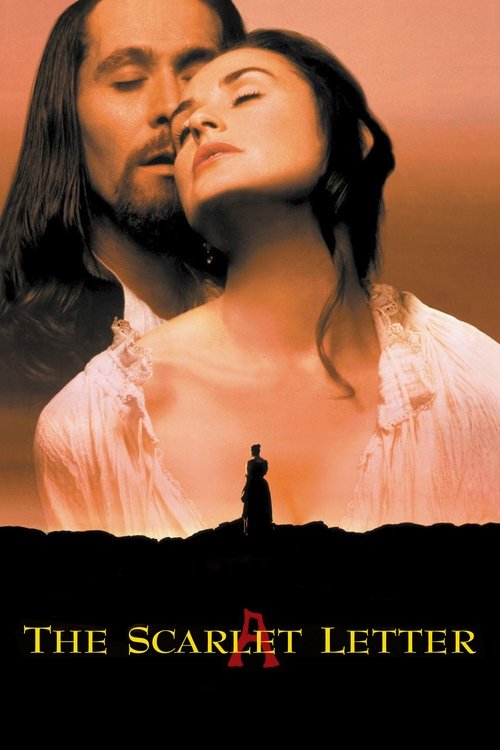
As the film approaches its climax, the tension in the Puritan community escalates. Hester Prynne, played by Demi Moore, stands resolute in front of the townspeople, clutching her infant daughter, Pearl, to her chest. The scarlet letter "A" emblazoned on her dress serves as a constant reminder of her sin and the judgment she has endured. The townsfolk, led by the stern Reverend Wilson, continue to condemn her for her act of adultery, but Hester remains defiant, embodying both shame and strength.
Meanwhile, Reverend Arthur Dimmesdale, portrayed by Gary Oldman, is consumed by guilt and inner turmoil. He has been secretly suffering since the night of their affair, and his health deteriorates as he grapples with his conscience. The weight of his hidden sin becomes unbearable, and he begins to experience hallucinations and visions of Hester and their child, which further complicates his emotional state.
In a pivotal scene, Dimmesdale, during a sermon, feels an overwhelming urge to confess his sin publicly. The congregation is captivated by his passionate words, but he struggles to find the courage to reveal his true identity as Pearl's father. The internal conflict is palpable; he desires redemption but fears the repercussions of his confession.
As the story unfolds, Hester learns of Dimmesdale's suffering and decides to confront him. They meet in the forest, a place that symbolizes freedom and nature, away from the judgmental eyes of the town. In this intimate setting, they share their pain and longing, and Hester urges Dimmesdale to escape with her and Pearl to start anew. Dimmesdale, torn between his love for Hester and his responsibilities as a minister, hesitates but ultimately agrees to leave the oppressive society behind.
However, the plan is thwarted when Dimmesdale, in a moment of clarity, realizes he must confront his sin before he can truly be free. In a heart-wrenching scene, he ascends the scaffold in the town square, where Hester once stood alone. The townspeople gather, and as he reveals his scarlet letter, the truth of his sin is laid bare. The shock ripples through the crowd, and Hester watches with a mix of pride and sorrow as Dimmesdale finally embraces his truth.
In his final moments, Dimmesdale collapses in Hester's arms, his body succumbing to the toll of his guilt and the weight of his confession. Hester, heartbroken yet relieved that he has found peace, cradles him tenderly, their love transcending the harsh realities of their lives.
The film concludes with Hester and Pearl leaving the town behind. Hester, now free from the shackles of her past, walks away with her daughter, symbolizing hope and the possibility of a new beginning. Pearl, who has been a constant reminder of their love, is seen as a bridge between Hester's past and her future. The final image of Hester and Pearl walking into the distance signifies their departure from a society that has judged them harshly, leaving behind the pain and seeking a life filled with possibility.
In the end, Hester Prynne emerges as a figure of resilience, while Dimmesdale's tragic fate serves as a poignant reminder of the consequences of hidden guilt and societal pressure. Pearl, embodying innocence and the potential for a new life, represents the hope that can arise from even the darkest circumstances.
Is there a post-credit scene?
The 1995 film "The Scarlet Letter," directed by Roland Joffé and starring Demi Moore as Hester Prynne and Gary Oldman as Reverend Dimmesdale, does not contain a post-credit scene. The film concludes with a dramatic and emotional climax, focusing on the resolution of Hester's struggles and the consequences of her affair with Dimmesdale. After the final scenes, the credits roll without any additional content or scenes following them. The film wraps up the narrative of Hester's journey and the societal implications of her actions, leaving the audience with a sense of closure regarding the characters' fates.
What is the significance of the scarlet letter 'A' that Hester Prynne wears?
In the 1995 film 'The Scarlet Letter', the scarlet letter 'A' that Hester Prynne is forced to wear serves as a symbol of her sin of adultery and her public shaming. It is a constant reminder of her transgression and the societal judgment she faces. Hester's emotional turmoil is palpable as she grapples with her identity, feeling both the weight of her shame and a sense of defiance against the oppressive Puritan society.
How does Hester Prynne's relationship with Dimmesdale evolve throughout the film?
Hester Prynne's relationship with Reverend Arthur Dimmesdale is fraught with tension and longing. Initially, there is a deep bond forged in their shared secret of love and sin. As the film progresses, Dimmesdale's internal struggle with guilt and his role as a revered minister creates a chasm between them. Hester's love for him is unwavering, but she is also tormented by his inability to publicly acknowledge their child, Pearl, and their connection. This emotional conflict culminates in a poignant scene where Hester confronts Dimmesdale, urging him to embrace their truth.
What role does Roger Chillingworth play in Hester's life and how does he affect her?
Roger Chillingworth, Hester Prynne's estranged husband, plays a pivotal role in her life as the embodiment of vengeance and obsession. Upon discovering Hester's affair, he becomes consumed by a desire to uncover Dimmesdale's identity and exact revenge. His transformation from a wronged husband to a sinister figure is marked by his manipulation and psychological torment of Dimmesdale. Hester's emotional state deteriorates as Chillingworth's presence looms over her, representing the dark consequences of hidden sin and the destructive power of revenge.
How does Pearl's character reflect the themes of innocence and societal judgment?
Pearl, the daughter of Hester Prynne and Arthur Dimmesdale, is a complex character who embodies both innocence and the harsh judgment of society. As a child born out of wedlock, she is often viewed as a living symbol of her mother's sin. Her wild, untamed nature reflects Hester's own struggles against societal constraints. Pearl's interactions with the townspeople and her mother reveal her acute awareness of the stigma attached to them. She oscillates between being a source of joy for Hester and a reminder of her shame, ultimately serving as a catalyst for Hester's journey toward self-acceptance.
What is the significance of the forest scene between Hester and Dimmesdale?
The forest scene between Hester and Dimmesdale is a crucial moment in the film, symbolizing a temporary escape from the oppressive societal norms of Puritan New England. In the forest, they find a moment of solace and freedom, allowing them to express their love and share their burdens. The natural setting contrasts sharply with the rigid structure of their lives in the village. This scene is charged with emotional intensity as they confront their feelings for each other, the pain of their separation, and the possibility of a future together, albeit fleetingly. It encapsulates their longing for connection and the weight of their shared secret.
Is this family friendly?
The 1995 film "The Scarlet Letter," while a dramatic adaptation of Nathaniel Hawthorne's classic novel, contains several elements that may not be suitable for children or sensitive viewers. Here are some potentially objectionable or upsetting aspects:
-
Themes of Adultery and Sin: The central plot revolves around the consequences of an affair, which may be difficult for younger audiences to understand or process.
-
Emotional Turmoil: Characters experience intense emotional struggles, including guilt, shame, and despair, which may be distressing for some viewers.
-
Violence and Punishment: There are scenes depicting public shaming and punishment, including the protagonist being subjected to scorn and humiliation by the townspeople.
-
Death and Loss: The film includes themes of loss and the impact of death on relationships, which can be heavy and upsetting.
-
Sexual Content: There are suggestive scenes and implications of sexual relationships that may not be appropriate for younger viewers.
-
Religious Intolerance: The film portrays a strict Puritan society, which can lead to harsh judgments and treatment of individuals, reflecting intolerance that may be unsettling.
These elements contribute to a mature narrative that may not be suitable for all audiences, particularly children.








