
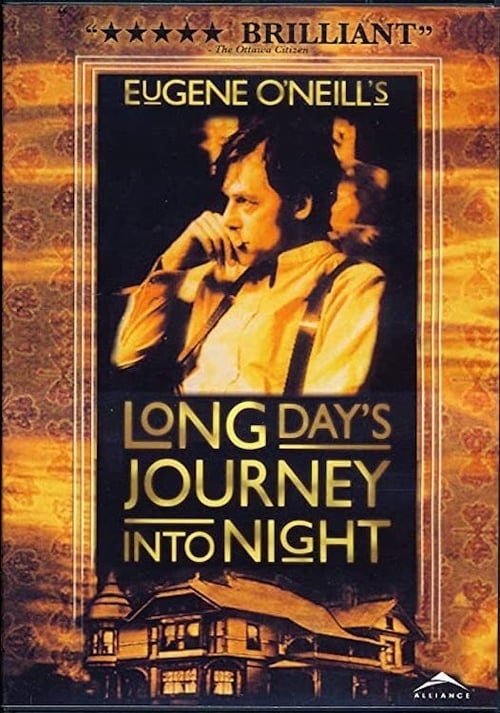







Popular
What are the main conflicts between the characters in Long Day's Journey Into Night?
How does Mary Tyrone's addiction affect her relationship with her family?
What role does the setting play in the story of Long Day's Journey Into Night?
How does Edmund's illness impact the family dynamics in the film?
What are the key moments that reveal the family's secrets in Long Day's Journey Into Night?
Should I watch it?
Ask Your Own Question

What is the plot?
Sorry, we aren't able to watch and write up a full detailed plot yet. Check back in a few days.







What is the ending?
In the ending of "Long Day's Journey Into Night," the Tyrone family is left in a state of despair and unresolved conflict. As the night deepens, the emotional turmoil among the family members escalates. James Tyrone, the patriarch, struggles with his own demons, while his wife, Mary, succumbs to her addiction. The sons, Jamie and Edmund, grapple with their own disappointments and the weight of their family legacy. The film concludes with a sense of hopelessness, as the characters remain trapped in their cycles of pain and dysfunction.
As the film approaches its conclusion, the atmosphere in the Tyrone household grows increasingly tense. The night is heavy with the weight of unspoken words and unresolved issues.
Scene 1: The family gathers in the living room, the dim light casting shadows on their faces. James Tyrone, the father, sits in his armchair, his demeanor weary and burdened. He attempts to engage with his family, but the conversation quickly turns to the past, revealing the deep-seated resentments and regrets that haunt them all. Mary, the mother, is visibly frail, her addiction to morphine becoming more apparent as she struggles to maintain her composure.
Scene 2: As the night progresses, Mary retreats into her memories, reminiscing about her youth and the dreams she once had. Her nostalgia is tinged with sadness, as she realizes how far she has strayed from those aspirations. The tension escalates when she confronts James about his neglect and the choices he made that led to their current situation. Her emotional state fluctuates between anger and despair, showcasing her internal battle with addiction and the longing for a life that could have been.
Scene 3: Jamie, the older son, attempts to mask his own pain with sarcasm and bravado. He lashes out at Edmund, the younger son, revealing the deep-seated jealousy and competition that exists between them. Their relationship is strained, and the weight of their father's expectations looms over them. As Jamie's bitterness surfaces, it becomes clear that he is grappling with his own failures and the fear of becoming like his father.
Scene 4: Edmund, who is battling tuberculosis, seeks solace in his family's chaos. He tries to connect with Mary, hoping to find some understanding and support. However, her withdrawal into her addiction creates a chasm between them. The emotional distance is palpable, and Edmund's vulnerability is met with Mary's inability to confront her own demons.
Scene 5: The climax of the film occurs when the family confronts the reality of their situation. James, Mary, Jamie, and Edmund are all trapped in their own cycles of pain, unable to break free from the past. The dialogue becomes increasingly heated, revealing the raw emotions that have been simmering beneath the surface. Each character's motivations and fears are laid bare, exposing the fragility of their relationships.
Scene 6: As the night deepens, the family members retreat into their own worlds of despair. Mary, overwhelmed by her addiction, becomes increasingly detached from reality. James, feeling the weight of his failures as a husband and father, is left to grapple with his own guilt and regret. Jamie's bravado crumbles, revealing a man who is deeply afraid of his own inadequacies. Edmund, caught in the crossfire, is left to navigate his own illness and the legacy of his family's dysfunction.
Scene 7: The film concludes with a haunting sense of unresolved conflict. The characters are left in a state of emotional turmoil, each grappling with their own demons. The final moments capture the essence of their struggles, as they remain trapped in a cycle of pain and disappointment. The fate of each character is left ambiguous, but the weight of their shared history lingers in the air, a testament to the enduring impact of their choices and the bonds that both connect and divide them.
Is there a post-credit scene?
The movie "Long Day's Journey Into Night," produced in 1996, does not have a post-credit scene. The film, based on Eugene O'Neill's semi-autobiographical play, focuses on the complex dynamics of the Tyrone family over the course of a single day. It delves deeply into themes of addiction, illness, and the haunting nature of the past, culminating in an emotionally charged narrative that concludes without any additional scenes after the credits. The film ends on a poignant note, leaving the audience to reflect on the characters' struggles and the weight of their shared history.
What are the main conflicts between the characters in Long Day's Journey Into Night?
The main conflicts in 'Long Day's Journey Into Night' revolve around the strained relationships within the Tyrone family. James Tyrone, the patriarch, struggles with his past choices and his financial concerns, which create tension with his wife, Mary, who battles her addiction to morphine. Their son, Jamie, feels resentment towards his father for his perceived failures and is burdened by guilt over his mother's condition. Edmund, the youngest son, grapples with his own health issues and seeks his father's approval while feeling overshadowed by Jamie's cynicism. These conflicts manifest in heated arguments, emotional outbursts, and moments of vulnerability, revealing deep-seated fears and regrets.
How does Mary Tyrone's addiction affect her relationship with her family?
Mary Tyrone's addiction to morphine profoundly impacts her relationship with her family, creating a cycle of denial, blame, and emotional turmoil. Initially, her addiction is a source of shame and frustration for James, who feels helpless and angry at her inability to confront her dependency. Jamie and Edmund oscillate between concern for their mother and resentment towards her for the pain her addiction causes. Mary's moments of lucidity are often overshadowed by her withdrawal into addiction, leading to heartbreaking confrontations where she oscillates between love for her family and the grip of her addiction. This dynamic creates a palpable tension in the household, as each family member struggles to cope with the reality of her condition.
What role does the setting play in the story of Long Day's Journey Into Night?
The setting of 'Long Day's Journey Into Night' is crucial to the narrative, taking place in the Tyrone family's summer home in Connecticut. The confined space of the house symbolizes the entrapment felt by each family member, as they are unable to escape their pasts and the emotional baggage they carry. The time of day, transitioning from morning to night, mirrors the characters' descent into despair and the gradual unveiling of their secrets. The physical environment, filled with reminders of their shared history, amplifies the tension and emotional weight of their interactions, as they confront their failures and the inevitability of their circumstances.
How does Edmund's illness impact the family dynamics in the film?
Edmund's illness, which is revealed to be tuberculosis, serves as a catalyst for the family's emotional unraveling. His health crisis brings to the forefront the family's fears of loss and mortality, particularly for Mary, who is haunted by the possibility of losing another child. This concern exacerbates her addiction, as she seeks solace in morphine to cope with her anxiety. James, while trying to maintain a facade of strength, is deeply affected by the prospect of losing Edmund, leading to moments of vulnerability where he expresses his love and concern. Jamie, on the other hand, feels a mix of guilt and anger, as he struggles with his own failures while trying to support his brother. Edmund's illness thus becomes a focal point for the family's collective grief and unresolved issues.
What are the key moments that reveal the family's secrets in Long Day's Journey Into Night?
Key moments that reveal the family's secrets in 'Long Day's Journey Into Night' occur during intense confrontations and candid discussions among the characters. One pivotal moment is when Mary, in a moment of clarity, admits to her addiction and the reasons behind it, exposing her feelings of inadequacy and loss. Another significant scene unfolds when Jamie confronts his father about his neglect and the impact of his choices on the family, leading to a raw exchange that uncovers long-held resentments. Additionally, Edmund's candid discussions about his illness and his desire for a different life force the family to confront their fears and regrets. These revelations are often accompanied by emotional outbursts, tears, and moments of silence that underscore the weight of their shared history.
Is this family friendly?
"Long Day's Journey Into Night," produced in 1996, is not considered family-friendly. The film, based on Eugene O'Neill's semi-autobiographical play, delves into heavy themes and contains several potentially objectionable or upsetting aspects.
-
Substance Abuse: The film portrays the characters' struggles with addiction, particularly the mother's morphine addiction and the father's alcoholism, which can be distressing to witness.
-
Family Conflict: Intense and emotional arguments occur between family members, showcasing deep-seated resentments and painful truths that can be uncomfortable for viewers.
-
Illness and Mortality: The characters grapple with illness and the specter of death, which may be upsetting for sensitive viewers, especially in the context of family dynamics.
-
Emotional Turmoil: The film explores themes of despair, regret, and longing, leading to moments of profound sadness and emotional breakdowns that may be difficult for children to process.
-
Depictions of Poverty: The family's struggles with financial instability and the impact it has on their relationships can be heavy and may resonate negatively with some viewers.
Overall, the film's mature themes and emotional weight make it more suitable for adult audiences.