
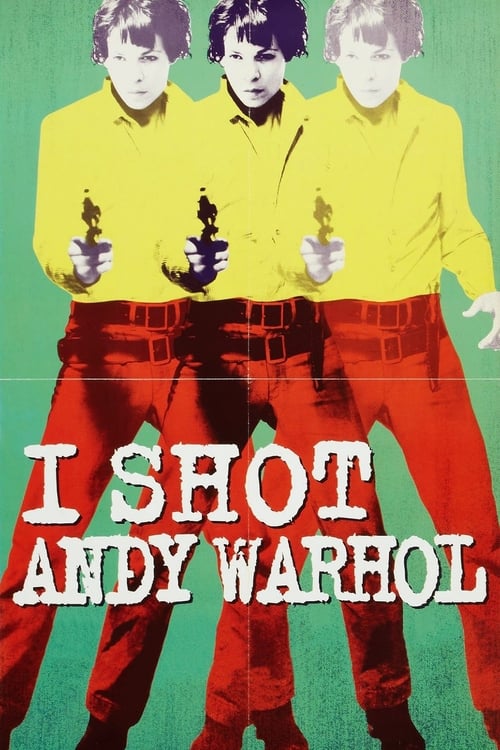









































Popular
What motivates Valerie Solanas to shoot Andy Warhol?
How does Valerie's relationship with her mother influence her character?
What role does the SCUM Manifesto play in the film?
How does the film portray Andy Warhol's character?
What is the significance of the scenes depicting Valerie's time in the mental institution?
Should I watch it?
Ask Your Own Question

What is the plot?
Sorry, we aren't able to watch and write up a full detailed plot yet. Check back in a few days.







What is the ending?
In the ending of "I Shot Andy Warhol," Valerie Solanas, after being arrested for the attempted murder of Andy Warhol, faces the consequences of her actions. The film concludes with her being institutionalized, reflecting on her life and the impact of her radical ideas. Warhol survives the shooting but is left physically and emotionally scarred, and the film hints at the complexities of their relationship and the art world they inhabit.
As the film approaches its conclusion, we see Valerie Solanas, portrayed with a fierce intensity, grappling with the aftermath of her violent act. The scene shifts to a stark, sterile environment, where Valerie is in a psychiatric facility. The walls are white, and the atmosphere is heavy with the weight of her actions. She sits in a small room, her expression a mix of defiance and vulnerability. The camera captures her isolation, emphasizing the emotional turmoil she experiences as she reflects on her life choices and the radical manifesto she wrote, "SCUM Manifesto."
In a parallel narrative, we see Andy Warhol, played with a haunting fragility, recovering from the shooting. The film portrays his physical scars, but it also delves into the emotional impact of the attack. Warhol's world, once vibrant and filled with the chaos of creativity, now feels muted and shadowed. He is seen in a hospital bed, surrounded by concerned friends and colleagues, but there is a palpable distance in his interactions. The shooting has altered his perception of life and art, leaving him introspective and changed.
As the story unfolds, Valerie's fate becomes increasingly intertwined with Warhol's. In a poignant scene, she is visited by a psychiatrist who attempts to understand her motivations. Valerie's fierce independence and her disdain for societal norms are evident as she articulates her beliefs, but there is also a sense of regret and confusion about her actions. The psychiatrist's probing questions reveal the depth of her internal conflict, showcasing her struggle between her radical ideals and the reality of her violent outburst.
The film culminates in a powerful moment where Valerie, still in the psychiatric facility, is confronted with the consequences of her actions. She is shown in a group therapy session, where she expresses her anger and frustration, but also hints at a desire for understanding and connection. The scene is charged with emotion, as Valerie's raw honesty resonates with the other patients, highlighting her complexity as a character.
Meanwhile, Warhol's recovery is depicted through a series of fragmented images, reflecting his disconnection from the world around him. He is seen attending art events, but his demeanor is subdued, and he often appears lost in thought. The film suggests that while he physically survives, the shooting has left an indelible mark on his psyche, altering his relationship with art and those around him.
In the final moments, the film juxtaposes Valerie's institutionalization with Warhol's continued presence in the art world. The screen fades to black, leaving the audience to ponder the fates of both characters. Valerie remains confined, a symbol of radicalism and the consequences of extreme actions, while Warhol, though alive, navigates a changed reality, embodying the complexities of fame, vulnerability, and the impact of violence.
The ending of "I Shot Andy Warhol" encapsulates the intertwined destinies of Valerie and Andy, showcasing the profound effects of their conflict and the broader themes of art, identity, and societal expectations. Each character's fate serves as a reflection of their choices, leaving a lasting impression on the audience about the nature of creativity and the human experience.
Is there a post-credit scene?
The movie "I Shot Andy Warhol," produced in 1996, does not have a post-credit scene. The film concludes with the story of Valerie Solanas, played by Lili Taylor, and her tumultuous relationship with Andy Warhol, portrayed by Jared Harris. The narrative wraps up as it reflects on the impact of Solanas's actions and her struggles with mental health, leaving the audience with a poignant sense of her isolation and the consequences of her radical ideas. The film ends without any additional scenes or content after the credits.
What motivates Valerie Solanas to shoot Andy Warhol?
Valerie Solanas, portrayed by Lili Taylor, is driven by a combination of personal and ideological motivations. She feels marginalized and exploited by the male-dominated art world, particularly by Warhol, who she believes has taken her work, the SCUM Manifesto, and disregarded her contributions. Her mental health struggles and feelings of betrayal culminate in her decision to confront Warhol violently.
How does Valerie's relationship with her mother influence her character?
Valerie's relationship with her mother is fraught with tension and neglect. Her mother, who is depicted as emotionally distant and critical, contributes to Valerie's feelings of inadequacy and isolation. This strained relationship shapes Valerie's worldview, fueling her anger towards societal norms and her eventual radicalization.
What role does the SCUM Manifesto play in the film?
The SCUM Manifesto, written by Valerie Solanas, serves as a critical element of her character and the narrative. It articulates her radical feminist views and her disdain for men, which she believes oppress women. The manifesto is not only a reflection of her ideology but also a catalyst for her actions, as she feels it is ignored by the very people she seeks to challenge, including Warhol.
How does the film portray Andy Warhol's character?
Andy Warhol, played by Jared Harris, is depicted as an enigmatic and detached figure, embodying the complexities of fame and artistic persona. His interactions with Valerie reveal a mix of fascination and indifference, as he often seems oblivious to her struggles and the impact of his actions on her life. This portrayal highlights the disconnect between Warhol's public persona and his private relationships.
What is the significance of the scenes depicting Valerie's time in the mental institution?
The scenes in the mental institution are significant as they provide insight into Valerie's psychological state and the societal perceptions of mental illness. These moments reveal her vulnerability and the stigma she faces, while also showcasing her resilience and determination to assert her identity. The institution serves as a backdrop for her internal struggles and the consequences of her actions, deepening the audience's understanding of her character.
Is this family friendly?
"I Shot Andy Warhol," produced in 1996, is not considered family-friendly due to its mature themes and content. Here are some potentially objectionable or upsetting aspects that may occur for children or sensitive viewers:
-
Violence: The film depicts the act of shooting, which is central to the plot. This includes graphic representations of the event and its aftermath.
-
Mental Health Issues: The protagonist, Valerie Solanas, struggles with mental health challenges, which are portrayed in a raw and sometimes distressing manner.
-
Sexual Content: There are scenes that involve sexual situations and discussions that may be inappropriate for younger audiences.
-
Substance Abuse: The film includes depictions of drug use and the effects of addiction, which may be unsettling for some viewers.
-
Strong Language: The dialogue contains profanity and harsh language that may not be suitable for children.
-
Themes of Alienation and Despair: The emotional tone of the film often explores feelings of isolation, anger, and existential despair, which could be distressing for sensitive viewers.
These elements contribute to the film's overall mature rating and may not be suitable for a younger audience or those who are sensitive to such themes.